The Bacchantes
 78
78

The Bacchantes
Leon Daudet's *The Bacchantes* presents a fascinating premise: a scientist striving to materialize the past through temporal "waves." The novel excels in its depiction of Romain Ségétan's sensory world, particularly after his vision is impaired and then restored. This experience is rendered with a visceral quality that elevates the narrative beyond standard sci-fi fare. However, the plot occasionally falters, becoming somewhat dense in its theoretical explanations of time manipulation, which can slow the pacing. A particular strength lies in the exploration of how erotic experience fuels Ségétan's scientific imagination, a less common but intriguing linkage. The novel's ambition to fuse hard science concepts with deeply personal sensory experience is commendable, though not always seamlessly executed. Ultimately, *The Bacchantes* offers a unique, if sometimes intricate, vision of temporal mechanics and perceptual shifts.
📝 Description
78
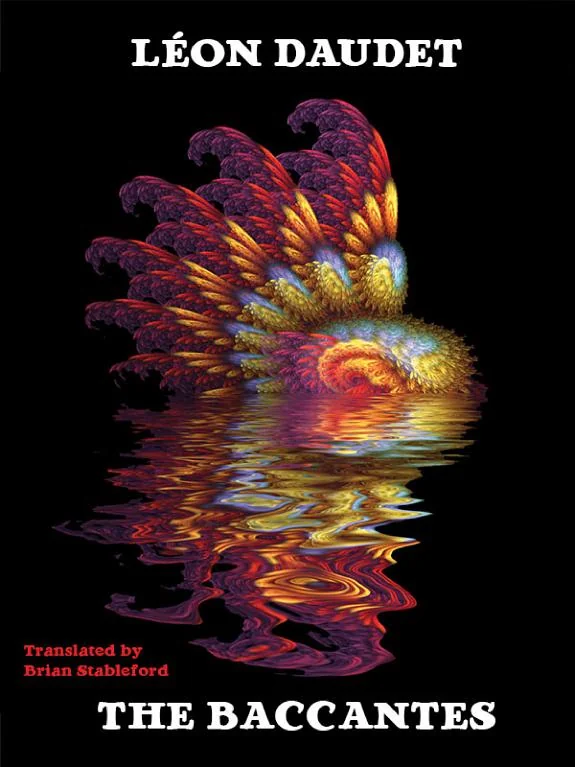
Leon Daudet's 2013 novel, The Bacchantes, concerns a scientist seeking to capture time's waves.
The Bacchantes follows Romain Ségétan, a scientist whose work on technology to capture and manipulate 'waves of time' is deeply entwined with his sensory and erotic life. His goal is to make past images and sounds clearer, effectively bringing history into the present. The narrative details his struggle as he attempts to develop this groundbreaking technology.
This speculative fiction appeals to readers interested in the junction of science, perception, and consciousness. Those who enjoy intellectual inquiry matched with psychological depth will find Ségétan's difficulties resonant. The book suits individuals who ponder the philosophical questions surrounding temporal manipulation and the subjective construction of reality.
Published in 2013, The Bacchantes engages with themes of temporal subjectivity and sensory input that have occupied thinkers since the early 20th century. Its exploration of scientific ambition and personal cost echoes mid-20th century science fiction and philosophical inquiries. The novel touches upon concepts related to altered states of perception, drawing parallels between Ségétan's visual experiences and the heightened awareness possible through altered consciousness.
💡 Why Read This Book?
• Gain insight into the concept of "waves of time" as explored by Daudet, offering a unique fictional framework for understanding temporal echoes beyond standard scientific models. • Understand the narrative's linkage of erotic experience and visual perception to scientific creativity, a specific lens through which Daudet examines the source of innovation. • Appreciate the metaphorical significance of Ségétan's temporary blindness and subsequent sight restoration, providing a concrete narrative arc about altered perception and heightened awareness.
⭐ Reader Reviews
Honest opinions from readers who have explored this book.
❓ Frequently Asked Questions
What is the main scientific concept explored in The Bacchantes?
The book centers on the scientific concept of "waves of time," a theoretical technology intended to capture and bring forward recurrent images and echoes from the past into clearer focus.
Who is the protagonist of The Bacchantes?
The protagonist is Romain Ségétan, a brilliant scientist whose creative process is intimately linked to his erotic and visual experiences.
What personal event significantly impacts the protagonist's journey?
Romain Ségétan is temporarily blinded by a jealous rival, an event that profoundly influences his perception and his drive to celebrate the restoration of his sight.
What is the connection between creativity and senses in the novel?
The novel posits that a scientist's creativity, particularly Ségétan's, is directly and intimately linked to their erotic experiences, especially their visual dimension.
When was The Bacchantes first published?
The Bacchantes by Leon Daudet was first published on April 25, 2013.
What kind of technology is the protagonist trying to develop?
Romain Ségétan is attempting to develop technology that can capture and control "waves of time," allowing past images and echoes to be accessed.
🔮 Key Themes & Symbolism
Temporal Echoes and Perception
The work examines the theoretical possibility of capturing "waves of time," suggesting that the past is not entirely lost but exists as residual energy or imagery. Romain Ségétan's quest to manifest these echoes challenges conventional notions of linear time. His personal journey, marked by a period of blindness and recovery, serves as a potent metaphor for how our sensory apparatus shapes our understanding of reality and memory. This theme invites contemplation on the subjective nature of experience and the potential for technology to alter or enhance our perception of what has been.
Creativity and Sensory Experience
A core tenet explored is the profound link between a scientist's creative output and their sensory, particularly erotic, experiences. Ségétan's breakthroughs are depicted as being intrinsically tied to his visual perception and intimate life. This perspective suggests that abstract scientific thought is not divorced from embodied experience but is, in fact, deeply nourished by it. The novel challenges the idea of a purely disembodied intellect, proposing that heightened sensory awareness, especially visual acuity and erotic engagement, can unlock new frontiers of discovery and innovation.
The Nature of Reality and Memory
The novel probes the very fabric of reality by questioning how we perceive and retain memories. The ability to bring "traces of the past" into clearer focus implies that memory is not merely a passive recollection but an active, potentially recoverable phenomenon. Ségétan's struggle to control these temporal waves reflects a broader human desire to understand and perhaps even revisit moments lost to time. This exploration touches upon the esoteric idea that the past continuously influences the present, and that a deeper understanding of consciousness might unlock access to these persistent temporal imprints.
💬 Memorable Quotes
Direct passages from the work, attributed to the author.
“The waves of time hold images, traces of what was.”
— This concept captures the novel's central speculative premise: that temporal events leave behind discernible traces that could, in theory, be detected and re-experienced.
“Creativity flows from the wellspring of lived, felt experience.”
— An interpretation of the novel's view that scientific and artistic innovation is not solely an intellectual pursuit but is fundamentally energized by sensory input and personal, often erotic, encounters.
“The rival's act, a darkness that paradoxically sharpened focus.”
— This reflects the notion that even negative or harmful events can inadvertently lead to greater insight or a more acute understanding of one's goals and capabilities.
“To capture time is to grasp at the fabric of existence itself.”
— This interpretation speaks to the immense ambition of Ségétan's project, framing the manipulation of time as an attempt to understand or control the most fundamental aspects of reality.
💡 Key Ideas
Editorial paraphrase of the work's core concepts — not direct quotes.
Sight restored, the world ignites with newfound clarity.
This paraphrased sentiment highlights the lasting impact of Ségétan's temporary blindness and subsequent recovery, emphasizing how sensory deprivation can lead to an intensified appreciation of perception.
🌙 Esoteric Significance
Tradition
The work touches upon Gnostic themes concerning the nature of perception and the potential for hidden knowledge to be revealed through altered states or specialized understanding. Ségétan's quest to perceive "waves of time" can be seen as a modern, technologically framed pursuit of gnosis – a direct, experiential knowledge of reality beyond the mundane. It departs from traditional Gnosticism by grounding this pursuit in scientific endeavor rather than purely spiritual or mystical revelation, yet retains the core idea of uncovering hidden layers of existence.
Symbolism
The primary symbol is the "wave of time" itself, representing residual energy, memory, or temporal echoes that permeate existence. Ségétan's temporary blindness and subsequent restoration of sight serve as a powerful motif for the nature of perception; the darkness represents a loss of ordinary input, while the return of sight symbolizes a heightened, perhaps esoteric, mode of seeing or understanding. The linkage of erotic experience to scientific breakthrough can be interpreted as symbolizing the vital, creative force inherent in physical existence, a force that fuels intellectual and spiritual progress.
Modern Relevance
Contemporary thinkers exploring consciousness studies, particularly those investigating subjective experience and the role of sensory input in shaping perceived reality, might find resonance in Daudet's work. The novel's premise also connects with modern discussions in transhumanism and the potential for technology to augment human perception and memory. Furthermore, artists and writers exploring the intersection of the physical and the metaphysical, or those interested in the creative process as a fusion of embodied experience and intellectual pursuit, can draw inspiration from Ségétan's journey.
👥 Who Should Read This Book
• Science fiction enthusiasts interested in speculative concepts of time and perception, particularly those who appreciate narratives that explore the philosophical implications of technological advancement. • Readers intrigued by the connection between sensory experience, particularly visual and erotic dimensions, and intellectual creativity, seeking a fictional exploration of how embodiment fuels innovation. • Those interested in modern interpretations of esoteric themes, where scientific inquiry is framed as a path to uncovering hidden aspects of reality, akin to ancient quests for gnosis.
📜 Historical Context
Published in 2013, *The Bacchantes* emerges in a literary landscape where science fiction frequently grapples with temporal paradoxes and the nature of consciousness. While Leon Daudet's work is a distinct creation, its thematic concerns echo the speculative inquiries found in authors like Philip K. Dick, who explored altered perceptions and the fluidity of reality in the latter half of the 20th century. The novel's focus on the scientific pursuit of intangible phenomena like "time waves" also aligns with a lineage of speculative fiction that pushes the boundaries of known physics. The early 21st century saw a continued interest in hard science fiction, but Daudet’s specific emphasis on the erotic and visual dimensions of scientific inspiration offers a unique angle, setting it apart from more purely cerebral or action-oriented narratives of the era. Its reception, appearing in 2013, would have occurred amidst ongoing philosophical debates about consciousness and artificial intelligence.
📔 Journal Prompts
Romain Ségétan's "waves of time": What echoes from your past might be perceptible?
The restoration of Ségétan's sight: How has a change in perception altered your understanding?
The linkage of eroticism and scientific insight: Explore a moment where intense feeling fueled a creative idea.
Reflect on the rivalry that led to Ségétan's blindness: How do external conflicts shape internal discovery?
The ambition to capture time: What aspect of the past would you most want to bring into clearer focus?
🗂️ Glossary
Waves of Time
A theoretical construct in the novel representing residual energy or imprints from past events that can potentially be captured and re-visualized through advanced technology.
Romain Ségétan
The protagonist, a scientist obsessed with developing technology to perceive and interact with temporal echoes from the past.
Erotic Experience
In the context of the novel, this refers to sensory and emotional experiences related to desire and intimacy, presented as a crucial catalyst for scientific creativity.
Visual Dimension
Refers to the importance of sight and visual perception in Ségétan's scientific process and his understanding of reality.
Jealous Rival
An antagonist figure whose envy leads to an act of violence against Ségétan, causing his temporary blindness.
Restoration of Sight
The event following Ségétan's blindness, symbolizing a potential shift or enhancement in his perception and understanding.
Traces of the Past
Images, sounds, or impressions from previous events that the "waves of time" technology aims to make perceptible.
This book appears in 1 collection
🔮 Readers Also Liked
Browse all →









From the “Orphic Mysteries” Collection
View all →







More Free Occult Philosophy Books
View all →