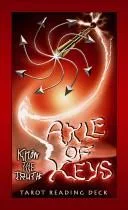
Geomancy for Beginners
 61
61

Geomancy for Beginners



Marcus Thorne (Esoteric Sciences Reviewer) — Richard Webster's 'Geomancy for Beginners' is an indispensable primer for anyone drawn to the earth-based wisdom of geomancy. Webster masterfully distills complex esoteric principles into an accessible, yet deeply insightful, framework. He illuminates the symbolic language of the sixteen geomantic figures with clarity, revealing their astrological and elemental correspondences. This work is particularly valuable for its practical approach, guiding readers through the process of generating and interpreting readings with confidence. It is an essential text for those seeking to connect with an ancient, potent form of divination and unlock its profound predictive and contemplative capabilities.
📝 Description
61
Richard Webster's 1991 book explains geomancy, a system of earth divination.
Richard Webster's 'Geomancy for Beginners' introduces readers to the practice of geomancy. The book details how to generate the sixteen geomantic figures, which are formed by patterns of dots. Webster explains how to interpret these figures to gain insights into various questions. He connects the figures to astrological and elemental correspondences, showing how they relate to broader cosmic forces.
The guide aims to make this ancient divinatory art accessible. It covers the symbolism inherent in each figure and how to use them for prediction and self-understanding. Webster intends for the book to serve as a practical tool for those interested in esoteric studies and divination. It encourages a connection with natural energies and the philosophical ideas behind geomancy.
Geomancy, or 'earth divination,' is an ancient system with roots in Arabic and European esoteric traditions, dating back centuries. It relies on casting lots or drawing patterns to create sixteen primary figures, each with astrological and elemental associations. These figures are then interpreted to answer questions or understand situations. The practice is related to other forms of divination like astrology and I Ching, seeking to find meaning in patterns that reflect underlying cosmic order. Webster's book places this tradition within a beginner-friendly framework.
💡 Why Read This Book?
Uncover the ancient secrets of earth divination. 'Geomancy for Beginners' offers a clear path to understanding the symbolic language of geomancy, ideal for spiritual seekers, occult scholars, and aspiring diviners. Learn to cast and interpret figures, gaining profound insights into personal questions and universal patterns. This book bridges the gap between theory and practice, empowering you to wield this potent tool for self-discovery and guidance.
⭐ Reader Reviews
Honest opinions from readers who have explored this book.
❓ Frequently Asked Questions
What is geomancy?
Geomancy, or 'earth divination,' is an ancient method of scrying and fortune-telling that involves interpreting patterns of dots formed by random casting, typically with earth, sand, or stones, to derive symbolic figures.
Who invented geomancy?
The origins of geomancy are ancient and debated, with roots potentially tracing back to Arab scholars in the Middle Ages, though similar earth-divination practices have existed in various cultures for millennia.
How many geomantic figures are there?
There are sixteen primary geomantic figures, each composed of four lines of one or two dots, representing specific astrological and elemental influences.
What are the main tools for geomancy?
Traditionally, materials like pebbles, seeds, or sand were used. Modern practitioners may use a stylus and paper, or digital tools to generate the figures.
Can geomancy predict the future?
Geomancy is often used for predictive purposes, but its deeper value lies in providing insight into the underlying forces at play in a situation, offering guidance rather than absolute prophecy.
🔮 Key Themes & Symbolism
The Sixteen Geomantic Figures
At the heart of geomancy lie the sixteen unique figures, each a complex range of symbolism derived from astrological principles and elemental forces. These figures, like 'Puer' (Boy) and 'Puella' (Girl), 'Acquisitio' (Acquisition) and 'Amissio' (Loss), are not mere abstract patterns but potent archetypes that reflect the dynamic interplay of energies in the cosmos and within human experience. Understanding their individual meanings, their relationships to the cardinal directions, planets, and zodiacal signs, is crucial for deciphering the messages the earth offers.
Earth as a Divinatory Medium
Geomancy posits the Earth itself as a living, responsive entity, a conduit for cosmic intelligence. The act of casting figures is a form of attunement, a dialogue with the planetary consciousness. By drawing patterns from the earth, practitioners tap into its latent energies and receive insights that mirror the macrocosm. This theme emphasizes a holistic worldview, where the physical world is imbued with spiritual significance, and even the simplest act of marking the ground can open portals to profound knowledge and understanding.
The Art of Interpretation and Symbolism
Beyond the mere generation of figures, the true art of geomancy lies in its interpretation. Webster guides readers through the symbolic language of each figure, exploring their elemental qualities, planetary associations, and potential meanings in relation to a query. This involves understanding how the figures interact within a geomantic chart, how they are influenced by the houses, and how to synthesize these layers of meaning into a coherent and insightful reading that addresses the seeker's deepest concerns.
💬 Memorable Quotes
Direct passages from the work, attributed to the author.
“Each dot is a whisper from the cosmos.”
— This poetic line underscores the cosmic connection inherent in geomancy, suggesting that the seemingly random arrangement of dots carries profound astrological and universal significance.
“Geomancy is not just prediction; it is understanding.”
— This emphasizes that the value of geomancy extends beyond foretelling events, focusing on the deeper insights and comprehension it offers regarding the underlying dynamics of a situation.
“The figures are keys to unlock the hidden doors of fate.”
— This metaphor suggests that the geomantic figures serve as tools or guides, enabling the practitioner to access and comprehend the veiled pathways of destiny and causality.
“Find wisdom in the earth beneath your feet.”
— This direct imperative encourages readers to look to their immediate environment and the practice of geomancy as sources of profound spiritual and practical knowledge.
💡 Key Ideas
Editorial paraphrase of the work's core concepts — not direct quotes.
The earth speaks in patterns, if only we learn to listen.
This quote highlights the core tenet of geomancy: the earth's ability to communicate through symbolic formations, emphasizing the importance of developing sensitivity and interpretive skill.
🌙 Esoteric Significance
Tradition
Geomancy is deeply rooted in Hermeticism and Islamic esotericism, drawing heavily from astrological principles and the concept of the microcosm reflecting the macrocosm. It aligns with traditions that view the universe as a divinely ordered system, where celestial patterns and elemental forces influence earthly events. Its practice emphasizes a holistic understanding of reality, where the physical act of divination is a sacred ritual connecting the practitioner to higher planes of consciousness and universal wisdom.
Symbolism
The core symbolism of geomancy resides in the sixteen figures, each representing specific astrological archetypes, elemental combinations, and planetary influences. Figures like 'Fortuna Major' (Greater Fortune) and 'Fortuna Minor' (Lesser Fortune) embody concepts of success and progress, while 'Rubeus' (Red) and 'Tristitia' (Sadness) denote conflict and sorrow. These figures are not merely predictive but symbolic representations of the dynamic forces at play in any given question or situation, offering a rich lexicon for understanding life's complexities.
Modern Relevance
In the contemporary spiritual landscape, geomancy offers a grounding and accessible form of divination. Its emphasis on earth energies and tangible symbolism provides a counterpoint to more abstract or technologically mediated practices. For modern practitioners, geomancy serves as a tool for self-reflection, problem-solving, and intuitive development. It encourages a mindful engagement with the present moment and an appreciation for the subtle interconnectedness of all things, offering practical guidance and philosophical depth in an often chaotic world.
👥 Who Should Read This Book
This book is an essential companion for the nascent seeker drawn to the earth's ancient wisdom. Aspiring diviners will find a clear, step-by-step introduction to the art of geomancy, clarifying its figures and methods. Occult scholars will appreciate its comprehensive exploration of the symbolism and historical context. For those on a path of spiritual growth, 'Geomancy for Beginners' offers a unique way to connect with planetary energies and gain profound self-insight. Practitioners of other divinatory systems may find it a valuable addition to their toolkit, expanding their understanding of symbolic languages.
📜 Historical Context
Geomancy, or 'earth divination,' flourished as a significant esoteric practice during the Middle Ages and Renaissance, particularly within the Islamic world and subsequently spreading into Europe. Its roots are often traced to the work of scholars like Abū al-Qāsim al-ʿIrāqī and later figures such as Cornelius Agrippa. During this era, the lines between science, magic, and religion were blurred, allowing for the systematic study and integration of divinatory arts like geomancy into philosophical and astrological frameworks. It was considered a respectable intellectual pursuit, utilized by scholars, mystics, and even royalty for guidance on matters of state, personal destiny, and spiritual inquiry. The Renaissance saw a resurgence of interest in classical and hermetic traditions, further cementing geomancy's place within the Western esoteric canon.
📔 Journal Prompts
Reflect on a recent situation where you felt uncertain. How might the principles of geomancy offer clarity or a new perspective?
If you were to cast a geomantic reading for yourself today, what question would you ask, and what do you anticipate the earth might reveal?
Consider the elemental associations of the geomantic figures. How do the elements (Fire, Air, Water, Earth) manifest in your daily life?
Explore the concept of the microcosm and macrocosm. How do you see the 'patterns' of the wider universe reflected in your personal experiences?
What personal qualities or challenges do you associate with the archetypes of the geomantic figures (e.g., Puer, Puella, Via, Populus)? How can you harness or navigate these energies?
🗂️ Glossary
Geomancy
An ancient divinatory art that involves casting and interpreting sixteen symbolic figures derived from patterns of dots, often associated with earth energies and astrological influences.
Geomantic Figures
The sixteen unique symbolic patterns generated in geomancy, each possessing specific astrological, elemental, and interpretive meanings that form the basis of a reading.
Scrying
A form of divination involving gazing into a reflective surface (like water, a mirror, or a crystal) to receive visions or insights, with geomancy being a form of earth-based scrying.
Astrological Correspondences
The connections and relationships between geomantic figures and planets, zodiac signs, and houses, which are crucial for a comprehensive interpretation of a geomantic reading.
Elemental Forces
The fundamental energies of Fire, Air, Water, and Earth, which are intricately woven into the symbolism and interpretation of the geomantic figures.
This book appears in 3 collections
🔮 Readers Also Liked
Browse all →







More by Richard Webster
All books →




From the “Geomancy” Collection
View all →









More Free Divination & Tarot Books
View all →