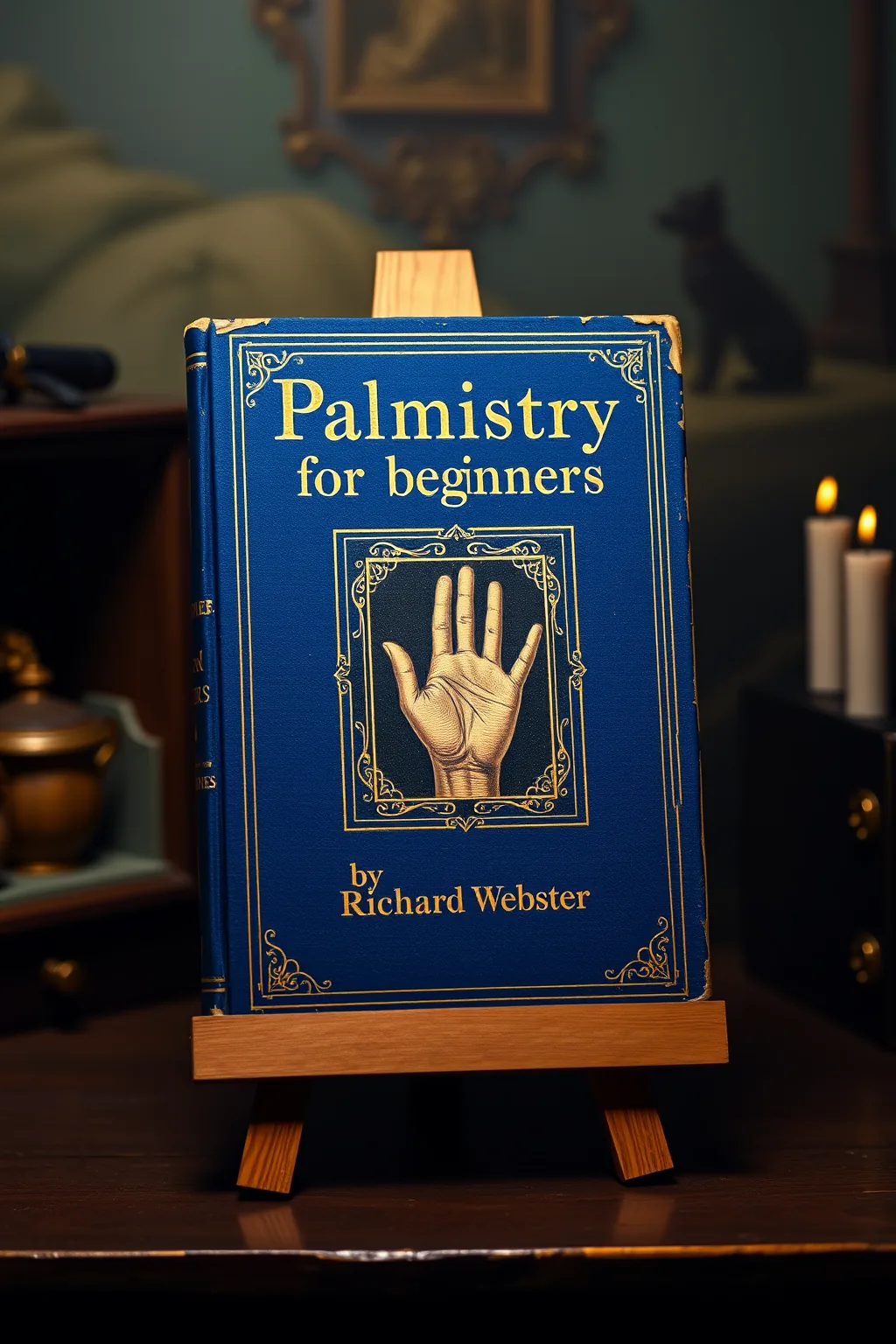
Palmistry for beginners
 62
62

Palmistry for beginners



Ophelia Vance, Mystical Literature Reviewer — Richard Webster's "Palmistry for Beginners" is a beacon of clarity in the often-obscure world of palmistry. Webster masterfully demystifies this ancient divination practice, presenting its esoteric principles with an accessible yet deeply insightful approach. He guides readers through the intricate symbolism of the palm, revealing how it serves as a profound mirror to the soul. This work is particularly commendable for its ability to distill complex concepts into digestible lessons, making it an invaluable resource for neophytes seeking genuine esoteric knowledge. It avoids sensationalism, focusing instead on the philosophical and psychological dimensions of hand reading, empowering practitioners with a tool for self-awareness and personal empowerment. A truly essential primer for anyone aspiring to understand the wisdom held within their hands.
📝 Description
62
Richard Webster's 1990 book demystifies palmistry for the uninitiated.
Richard Webster’s "Palmistry for Beginners" explains the practice of reading palms. The book covers the meaning of hand lines, mounts, and shapes. Webster details how these features are interpreted to understand a person’s character and potential life path. The text suggests that palmistry can be used as a method for self-reflection and personal development, going beyond simple fortune-telling. It presents Cheiromancy as a way to connect with inner self and energetic influences.
Readers will learn to interpret the marks on their hands. The book frames these as expressions of an individual's inner state and the forces that affect them. It aims to help readers engage more consciously with their lives by understanding the connections between the physical hand and unseen influences. Webster's approach focuses on introspection and spiritual growth through the study of palmistry.
This book fits within the Western esoteric tradition of Cheiromancy, which has historical roots dating back to ancient Greece and Rome. It connects to a long lineage of divinatory practices that seek to understand human nature and destiny through physical signs. While often associated with fortune-telling, this work positions palmistry as a tool for introspection, aligning with broader esoteric interests in self-knowledge and spiritual development. It draws upon a belief system where subtle energies and universal connections are reflected in the human form.
💡 Why Read This Book?
Unlock the ancient secrets of your hands with this essential guide. "Palmistry for Beginners" offers a clear, accessible path to understanding the profound symbolism etched on your palms, revealing insights into your character, destiny, and spiritual path. Ideal for seekers of self-knowledge, aspiring practitioners, and anyone curious about the metaphysical connections between our hands and the universe. Delve into this rich tradition and discover a powerful tool for personal growth and cosmic understanding.
⭐ Reader Reviews
Honest opinions from readers who have explored this book.
❓ Frequently Asked Questions
Is palmistry a form of fortune-telling or self-discovery?
While palmistry can offer glimpses into potential life paths, its primary focus is on self-discovery. It reveals innate potentials, challenges, and personality traits, empowering individuals to make conscious choices and shape their own destiny.
How detailed is the explanation of hand lines?
The book provides comprehensive explanations of major and minor hand lines, including the Life Line, Head Line, Heart Line, Fate Line, and Sun Line, detailing their diverse meanings and interpretations.
Are the mounts on the palm explained?
Yes, "Palmistry for Beginners" thoroughly explains the significance of the mounts (e.g., Venus, Jupiter, Saturn, Apollo) and how their prominence or flatness influences personality and life experiences.
Can I learn to read my own palm from this book?
Absolutely. Richard Webster's clear instruction and step-by-step approach are specifically designed to enable beginners to confidently read and interpret their own palms for personal insight.
What is the historical background of palmistry covered in this book?
The book touches upon the ancient roots of palmistry, acknowledging its presence in various cultures and its long-standing tradition as a method of understanding human nature and potential.
🔮 Key Themes & Symbolism
The Hand as a Cosmic Mirror
This theme explores the ancient belief that the palm serves as a microcosm of the universe, reflecting the energetic influences and karmic patterns that shape an individual's life. It looks at how the unique topography of each hand—its lines, mounts, and shape—acts as a symbolic blueprint, offering insights into one's innate character, talents, challenges, and the potential unfolding of their life's journey. The book emphasizes that the palm is not a fixed destiny, but a dynamic map of potential, encouraging active participation in shaping one's future through self-awareness and conscious choice.
Decoding the Language of Lines
This theme is dedicated to the intricate symbolism of the major and minor lines found on the palm. Each line—the Life Line, Head Line, Heart Line, Fate Line, and others—is presented as a narrative thread, conveying information about physical vitality, mental faculties, emotional landscape, life purpose, and external influences. The book meticulously details the various formations, breaks, and intersections of these lines, offering a nuanced interpretation of their combined meaning. It teaches the reader to perceive these markings not as arbitrary scars, but as profound glyphs of personal experience and inner wisdom.
The Philosophy of Mounts and Hand Shapes
Beyond the lines, this theme illuminates the significance of the fleshy mounds (mounts) located at the base of the fingers and palm. These mounts, associated with planetary energies and specific human attributes, are presented as indicators of personality traits, strengths, and areas of focus. The book also explores the diverse shapes of hands (e.g., square, spatulate, pointed, philosophical) and their corresponding elemental associations (earth, air, fire, water), providing a holistic framework for understanding how the physical structure of the hand complements the information derived from its lines.
💬 Memorable Quotes
Direct passages from the work, attributed to the author.
“The lines are not fate, but possibilities.”
— This highlights the empowering aspect of palmistry. It suggests that the markings on the palm indicate potential paths and tendencies, rather than fixed destinies, emphasizing free will.
“Each mount tells a story of your inner power.”
— This points to the significance of the fleshy mounds on the palm, framing them as indicators of innate strengths, desires, and the energetic forces that drive an individual's actions and personality.
“The subtle curve of a line speaks volumes.”
— This emphasizes the nuanced nature of palmistry interpretation, suggesting that even minor variations in the appearance of lines hold meaningful insights into a person's character and life experiences.
“To read the palm is to read the self.”
— This profound statement underscores the book's focus on palmistry as a tool for introspection and self-understanding, linking the external reading of the hand to the internal exploration of one's own being.
💡 Key Ideas
Editorial paraphrase of the work's core concepts — not direct quotes.
Your hands are a map of your soul.
This quote captures the core premise of palmistry as presented in the book: that the physical features of the hand are direct manifestations of an individual's inner being and spiritual journey.
🌙 Esoteric Significance
Tradition
Palmistry belongs to the ancient hermetic traditions, which seek to understand the correspondences between the microcosm (human being) and the macrocosm (the universe). It is deeply rooted in the principles of sympathetic magic and the belief that the physical form is a manifestation of spiritual essence. Within this framework, the hand is seen as a divine blueprint, imprinted with energetic patterns and karmic predispositions that reveal the individual's soul journey and potential.
Symbolism
The primary symbolism in palmistry lies in the lines and mounts of the hand, which are seen as direct representations of planetary influences and archetypal energies. The Life Line symbolizes vitality and physical well-being, the Head Line represents intellect and thought processes, and the Heart Line signifies emotional life and relationships. The mounts, such as the Mount of Jupiter (ambition) and the Mount of Venus (love and passion), further enrich this symbolic language, offering a holistic interpretation of the individual's character and life path.
Modern Relevance
In contemporary times, palmistry has experienced a resurgence, moving beyond mere fortune-telling to be recognized as a valuable tool for psychological insight and personal development. Its focus on self-awareness, understanding inherent strengths and challenges, and exploring potential life trajectories resonates deeply with modern seekers of meaning and purpose. The esoteric significance lies in its ability to foster a connection between the physical and the metaphysical, encouraging individuals to view their lives as a journey of continuous growth and conscious creation.
👥 Who Should Read This Book
This book is an indispensable companion for the burgeoning mystic, the curious novice, and the seasoned scholar of esoteric arts. Beginners will find Richard Webster's clear, step-by-step guidance a welcoming entry point into the profound world of palmistry. Those seeking deeper self-understanding will discover a powerful tool for introspection and personal growth. Practitioners of other divination methods, such as tarot or astrology, will find palmistry to be a complementary discipline, offering a unique perspective on life's intricate patterns. Ultimately, anyone drawn to the wisdom held within the human hand will find this book an clear and empowering resource.
📜 Historical Context
Palmistry, or Cheiromancy, boasts an lineage stretching back millennia, with roots deeply embedded in ancient Indian Vedic traditions, Chinese physiognomy, and Hellenistic mysticism. Its practice flourished across the ancient world, reaching its zenith during the Renaissance in Europe, where it was considered a legitimate intellectual pursuit, studied by scholars and physicians alike. Texts from figures like Aristotle and the Roman historian Suetonius attest to its prevalence. During periods of heightened spiritual and intellectual curiosity, palmistry was often intertwined with astrology and other esoteric arts, viewed as a method for understanding divine will and human potential. Richard Webster's work, while modern in its accessibility, draws upon this rich historical collection, reconnecting contemporary readers with an ancient wisdom that has long sought to decipher the secrets held within the human hand as a reflection of cosmic order and personal destiny.
📔 Journal Prompts
Examine the main lines on your dominant hand. What do they reveal about your core personality traits and life's journey?
Identify the most prominent mount on your palm. How do the associated qualities manifest in your daily life and aspirations?
Consider a specific line that appears complex or has unusual markings. What challenges or opportunities might this indicate for you?
How does the shape of your hand resonate with the elemental qualities (earth, air, fire, water) described in the book?
Reflect on how understanding your palmistry has provided new insights into your past experiences or future potential.
🗂️ Glossary
Cheiromancy
The ancient art and practice of reading palms, also known as palmistry. It involves interpreting the lines, mounts, and other features of the hand to gain insight into a person's character, destiny, and life experiences.
Mounts
The fleshy, raised pads on the palm, located at the base of the fingers and palm edges. Each mount is associated with a planet and represents specific aspects of personality, energy, and potential, such as the Mount of Jupiter for ambition or the Mount of Venus for love.
Life Line
A major line on the palm that typically curves around the base of the thumb. It is often interpreted as indicating vitality, physical health, and major life events, though not necessarily the length of one's life.
Fate Line
A line that often runs vertically up the palm, from the wrist towards the middle finger. It is traditionally associated with career, destiny, and external influences that shape a person's life path and sense of purpose.
Trident
A marking on the palm consisting of three distinct lines branching off from a single point, often found on a mount or a major line. It is generally considered a sign of good fortune, talent, and multiple opportunities within the area it appears.
This book appears in 1 collection
🔮 Readers Also Liked
Browse all →







More by Richard Webster
All books →





From the “Palmistry” Collection
View all →








More Free Divination & Tarot Books
View all →