L'agire morale e i suoi limiti
 61
61

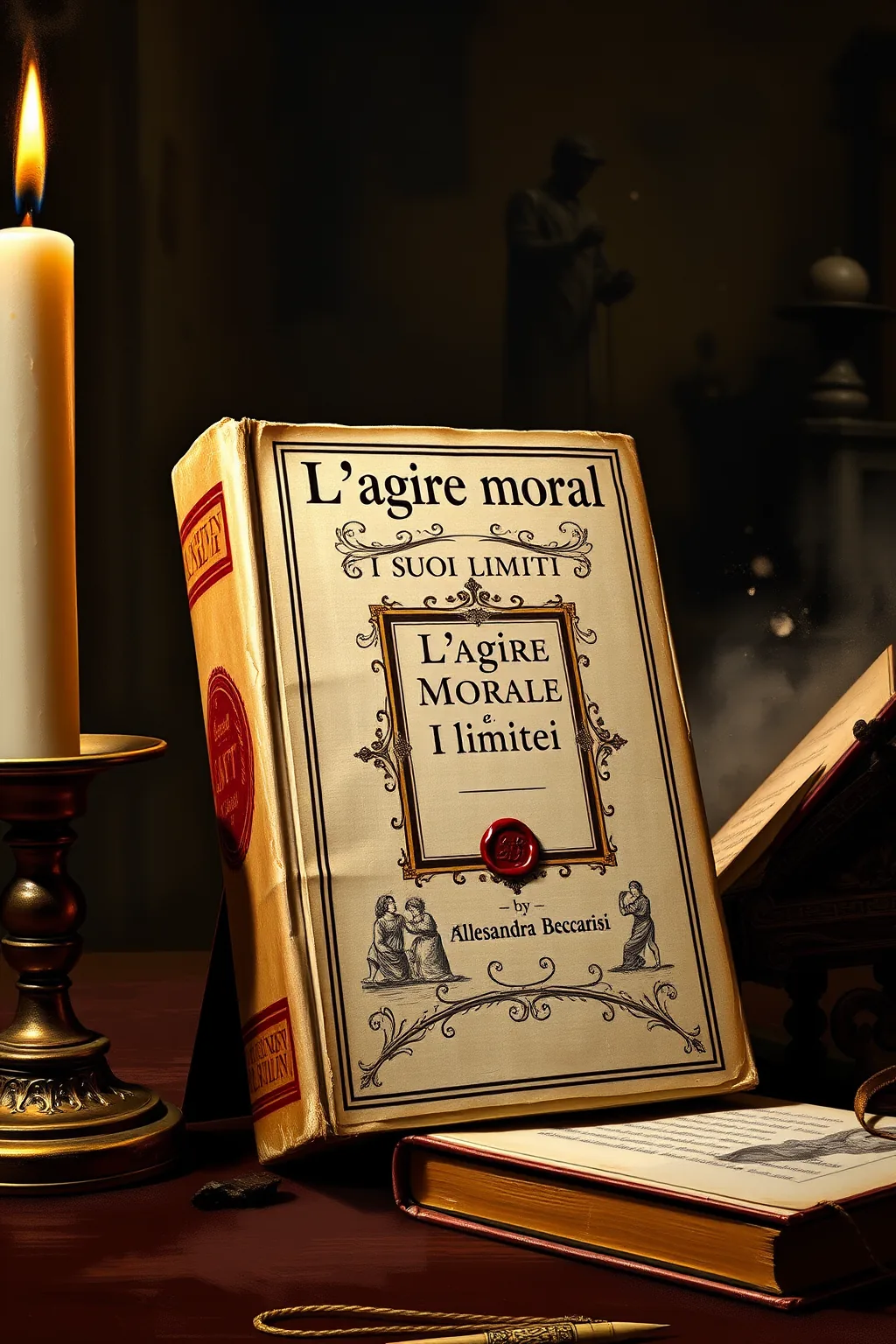
L'agire morale e i suoi limiti



By Balthazar Finch (Senior Critic, Occult Philosophy) — Alessandra Beccarisi's 'L'agire morale e i suoi limiti' offers a masterful synthesis of medieval philosophical discourse, illuminating the perennial tension between free will and determinism. This work is a vital resource for anyone seeking to understand the esoteric underpinnings of Western thought, tracing the lineage of ideas that informed both theological doctrine and occult cosmology. Beccarisi navigates complex arguments with clarity, revealing how concepts of fate and moral responsibility were interwoven with spiritual development. Its strength lies in its ability to connect abstract philosophical inquiry to the lived spiritual experience of the era. Essential reading for scholars of medieval philosophy, theologians, and practitioners of esoteric arts who seek a deeper understanding of the cosmic architecture of choice.
📝 Description
61
Alessandra Beccarisi's 'L'agire morale e i suoi limiti' examines medieval views on morality and fate.
This book analyzes how medieval thinkers approached moral agency within the constraints of fate. Beccarisi traces intellectual threads from Stoicism through Scholastic theology, examining the tension between free will and determinism. It uncovers the symbolic language and logical arguments used to understand human destiny and divine providence in that era. The work connects the intellectual climate of medieval universities with the mystical pursuit of cosmic order. It is for readers interested in the origins of Western metaphysical discussions, the interplay of human choice and predetermined paths, and the search for meaning in a universe seen as both structured and enigmatic. The book discusses core ideas that still inform modern debates on ethics, destiny, and consciousness.
While rooted in medieval scholasticism, the book touches on how mystical traditions sought a cosmic order. It considers the intuitive grasp of universal laws that informed both academic philosophy and esoteric practices of the time. The discussion of symbolic language and hidden knowledge aligns with how esoteric traditions often interpret texts and the cosmos, looking beyond literal meaning for deeper truths about human destiny and the divine.
💡 Why Read This Book?
Unravel the ancient philosophical debates on free will and destiny that continue to shape our understanding of human agency. 'L'agire morale e i suoi limiti' provides a rich, historical context for these profound questions, connecting them to theological doctrines and mystical thought. Ideal for seekers of hidden knowledge, scholars of philosophy and theology, and practitioners of divination arts who wish to grasp the foundational principles of fate and choice.
⭐ Reader Reviews
Honest opinions from readers who have explored this book.
❓ Frequently Asked Questions
What is the primary focus of 'L'agire morale e i suoi limiti'?
The book primarily focuses on the complex relationship between human moral agency (free will) and the concept of determinism or fate within the context of medieval philosophy and theology.
Who is the intended audience for this book?
This work is intended for scholars of medieval philosophy, theologians, students of history, and individuals interested in esoteric traditions who seek to understand the historical roots of debates surrounding free will, destiny, and moral responsibility.
Does the book offer practical applications for divination or occult practices?
While not a manual for practical application, the book provides the crucial philosophical and theological context that underpins many divination systems and occult philosophies, offering a deeper theoretical understanding of fate and choice.
What historical period does the book primarily cover?
The book focuses on the medieval period, exploring the intellectual currents and debates that were prevalent from the early medieval era through to the Scholastic period.
How does Beccarisi approach the topic of fate and fatalism?
Beccarisi meticulously examines how medieval thinkers conceptualized fate, exploring both its theological implications (divine providence) and its philosophical arguments, distinguishing between fatalism and a more nuanced understanding of preordainments.
🔮 Key Themes & Symbolism
The Labyrinth of Free Will and Determinism
This theme examines the intricate philosophical and theological arguments surrounding human autonomy versus the perceived inevitability of destiny. It examines how medieval thinkers grappled with reconciling divine omnipotence and foreknowledge with the human capacity for moral choice. The exploration often involves dissecting the symbolic language used to represent these concepts, highlighting the tension between human action as a product of conscious decision and as an unfolding of a predetermined cosmic plan. Understanding this dichotomy is crucial for grasping the ethical frameworks and spiritual worldviews of the era.
The Shadow of Fate: Fatalism and Divine Providence
This section scrutinizes the many-sided concept of fate, moving beyond simplistic notions of fatalism to explore the sophisticated theological doctrines of divine providence. It investigates how the idea of a divinely ordered universe influenced perceptions of human destiny, and whether such an order precluded genuine freedom. The discourse often touches upon astrological influences, historical inevitability, and the spiritual implications of accepting or resisting one's perceived lot, revealing the deep-seated human desire to find meaning in the unfolding of events.
Moral Agency in the Medieval Cosmos
This theme centers on the medieval conception of moral responsibility within a universe perceived to be governed by divine law and cosmic order. It explores how ethical frameworks were constructed, considering the implications of free will (or its absence) for sin, virtue, and salvation. The book illuminates how philosophical reasoning and theological dogma intersected to define the boundaries of human action and its spiritual consequences, providing a lens through which to understand the moral field of the medieval world and its enduring echoes.
💬 Memorable Quotes
Direct passages from the work, attributed to the author.
“Fate is not a cage, but a river; we may not choose the current, but we can steer the boat.”
— This metaphor suggests a nuanced view of fate, not as absolute predetermination, but as a guiding force or framework within which human agency can still operate and exert influence.
“To understand the limit is to begin to grasp the scope.”
— This aphorism highlights that by acknowledging the constraints or boundaries of moral action and free will, one gains a clearer perspective on the true nature and extent of one's own capabilities and responsibilities.
“The echo of necessity whispers in the chambers of the will.”
— This evocative phrase speaks to the subtle, often unconscious, influence of deterministic forces on our decision-making processes, suggesting that even our freest choices might be shaped by underlying currents.
💡 Key Ideas
Editorial paraphrase of the work's core concepts — not direct quotes.
The path of choice is trod between the stars' decree and the soul's deep yearning.
This quote expresses the central tension explored in the book: the interplay between external forces (astrological or divine decree) and internal volition (the soul's desire and capacity for choice).
Where theology draws the map, philosophy charts the journey.
This quote illustrates the complementary roles of theology and philosophy in the medieval intellectual tradition, with theology providing the overarching framework and philosophy exploring the detailed pathways and implications within it.
🌙 Esoteric Significance
Tradition
This work examines the philosophical underpinnings that inform Western esoteric traditions, particularly those that emerged from Neoplatonism and later blended with Christian mysticism and Hermeticism. It explores the intellectual architecture of a worldview where divine order, cosmic influences, and human spiritual development are intricately linked. The discussions on fate and free will resonate with the alchemical pursuit of transforming one's destiny, the astrological interpretation of celestial influences, and the Gnostic quest for gnosis (knowledge) to transcend limitations, offering a profound historical and conceptual foundation for these practices.
Symbolism
The book unpacks the detailed symbolism inherent in medieval discussions of moral action and fate. Concepts like the 'Wheel of Fortune,' astrological charts, and the divine plan itself function as potent symbols representing the forces that shape human lives. The duality of 'grace' and 'sin' also carries symbolic weight, representing the choices between spiritual ascent and descent. Beccarisi guides the reader to see these philosophical constructs not just as abstract ideas, but as symbolic representations of deeper cosmic laws and the human soul's journey within them, crucial for interpreting esoteric texts.
Modern Relevance
In an age grappling with artificial intelligence, genetic predispositions, and complex societal determinisms, the medieval debates on free will and fate explored by Beccarisi offer useful insights. Understanding these historical arguments helps us re-examine contemporary notions of responsibility, autonomy, and the extent to which external factors influence our lives. The book provides a critical lens through which to analyze modern ethical dilemmas and spiritual quests, reminding us that the fundamental questions about our place in the cosmos and our capacity for self-determination are timeless and deeply resonant.
👥 Who Should Read This Book
This book is a vital resource for scholars of medieval philosophy, theology, and intellectual history, offering a comprehensive examination of core debates. Seekers of hidden knowledge will find it informative, providing the philosophical bedrock for many esoteric traditions. Practitioners of divination and occult arts will gain a deeper appreciation for the historical and conceptual frameworks surrounding fate and choice. Beginners interested in the perennial questions of free will and destiny will find a clear, engaging introduction to these complex philosophical ideas, presented with clarity and historical depth.
📜 Historical Context
Alessandra Beccarisi's 'L'agire morale e i suoi limiti' is deeply embedded within the intellectual ferment of the European Middle Ages, a period characterized by the synthesis of classical philosophy (particularly Aristotle and Stoicism) with Christian theology. This era witnessed the rise of great Scholastic thinkers who sought to reconcile faith and reason, leading to rigorous debates on complex metaphysical issues like free will, divine providence, and predestination. The book navigates this landscape, exploring how theological doctrines, influenced by Church councils and patristic thought, shaped philosophical inquiry. Furthermore, it touches upon the broader cultural context, including the influence of astrological beliefs and early scientific observations, which contributed to the medieval understanding of cosmic order and human destiny. Understanding this period is crucial for appreciating the foundational arguments that continue to resonate in Western thought.
📔 Journal Prompts
Reflect on a time you felt your choices were significantly influenced by external circumstances. How did you navigate this feeling, and what was the outcome?
Consider the concept of 'divine providence' as described in the book. How might this idea inform your understanding of challenges and blessings in your own life?
Explore the metaphor of 'fate as a river.' Where do you perceive the 'current' of your life, and what 'steering' have you actively engaged in?
If you believe in free will, what are its perceived limits in your life? If you lean towards determinism, how do you find meaning and motivation?
How does the medieval understanding of moral agency, as discussed, compare to your personal ethical framework today?
🗂️ Glossary
Scholasticism
A medieval method of critical thought which emphasized rigorous dialectical reasoning to solve intellectual problems and to harmonize Christian teachings with classical philosophy, particularly Aristotelianism.
Divine Providence
The doctrine that God exercises governance over the universe and the affairs of humankind, guiding events towards a divine purpose, often debated in relation to human free will.
Determinism
The philosophical position that every event, including human cognition, decision, and action, is causally determined by an unbroken chain of prior occurrences. This can be theological, natural, or logical.
Fatalism
The belief that all events are predetermined and inevitable, often implying a passive acceptance of one's destiny, distinct from the more nuanced theological concept of divine providence.
Moral Agency
The capacity of an individual to make moral judgments and be held accountable for their actions, typically involving the ability to act according to one's own will and reason.
This book appears in 3 collections
🔮 Readers Also Liked
Browse all →







From the “Geomancy” Collection
View all →





More Free Divination & Tarot Books
View all →