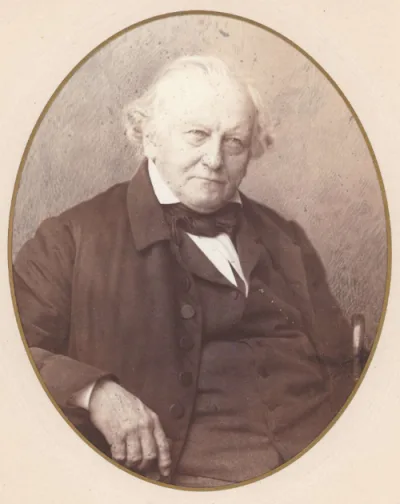
Richard Webster
Richard Webster was a British author who examined moral panics, psychoanalysis, and freedom of speech, often from a critical perspective.
Richard Webster (1950-2011) was a British author whose published works explored controversial topics including the debate surrounding Salman Rushdie's novel, The Satanic Verses, the theories of Sigmund Freud, and the phenomenon of moral panics related to child sexual abuse allegations in Britain. Born in Kent, Webster studied English literature and later taught at the University of East Anglia. He also ran a bookshop before moving to Oxford.
Webster's writings often challenged prevailing narratives. In "A Brief History of Blasphemy," he analyzed the Muslim reaction to "The Satanic Verses," advocating for a nuanced approach to free speech that considers potential harm to minority groups. His critique of psychoanalysis in "Why Freud Was Wrong" posited that Sigmund Freud had adopted a messianic role and that psychoanalysis itself was a continuation of religious traditions. "The Secret of Bryn Estyn" investigated a child abuse scandal, suggesting that public hysteria could contribute to the creation of abuse allegations. Webster's interest in such cases was partly influenced by historian Norman Cohn's work on collective fantasies and historical persecutions.
Critique of Psychoanalysis and Religious Parallels
In "Why Freud Was Wrong" (1995), Richard Webster presented a significant critique of Sigmund Freud and the field of psychoanalysis. Webster argued that Freud had positioned himself as a messianic figure and contended that psychoanalysis could be understood as a veiled continuation of the Judaeo-Christian tradition. This work was met with acclaim from various commentators, including literary critic Frederick Crews and scholars like Anthony Storr and Ritchie Robertson, who recognized it as a substantial critique of Freudian theory and its scientific underpinnings. Webster's analysis sought to expose perceived weaknesses in Freud's foundational ideas and their connection to older religious frameworks.
Examining Moral Panics and False Allegations
Richard Webster dedicated considerable attention to the dynamics of moral panics and the issue of false allegations, particularly in cases of alleged child sexual abuse. His book "The Secret of Bryn Estyn: The Making of a Modern Witch Hunt" (2005) examined a care home that became the subject of intense media scrutiny and police investigation. Webster suggested that widespread hysteria could play a role in the emergence of such abuse scandals. This line of inquiry was influenced by historian Norman Cohn's studies on collective fantasies and historical persecutions, particularly the European witch-hunts. Webster's work aimed to draw parallels between past irrational persecutions and contemporary moral panics, advocating for the recognition and opposition of present-day "witch-hunts."
Freedom of Speech and Cultural History
Webster's "A Brief History of Blasphemy" (1990) delved into the controversy surrounding Salman Rushdie's novel "The Satanic Verses." While acknowledging the condemnation of threats against Rushdie, Webster also sought to explain the offense taken by many Muslims. He argued against an absolute interpretation of free speech, suggesting that the publication of works causing distress to minorities or exacerbating racial tensions should be approached with caution. Webster, who described himself as an atheist raised in a Methodist household, viewed this issue within a broader context of cultural history. He believed that modern rationalism had led to a muddled understanding of cultural heritage, and his investigations into police practices were an attempt to apply this historical perspective in practice.
Key Ideas
- Psychoanalysis as a disguised continuation of Judaeo-Christian tradition
- Moral panics and public hysteria contributing to false allegations
- Nuanced approach to freedom of speech considering minority distress
- Modern rationalism's impact on understanding cultural history
Notable Quotes
“at the heart of almost everything I have written over the last twenty years or so is the view that, in our modern, proudly rationalist attempts to break the links which tie us to our superstitious, essentially religious past, we have become profoundly muddled about our own cultural history.”
Books by Richard Webster
22 free public domain books · Read online or download