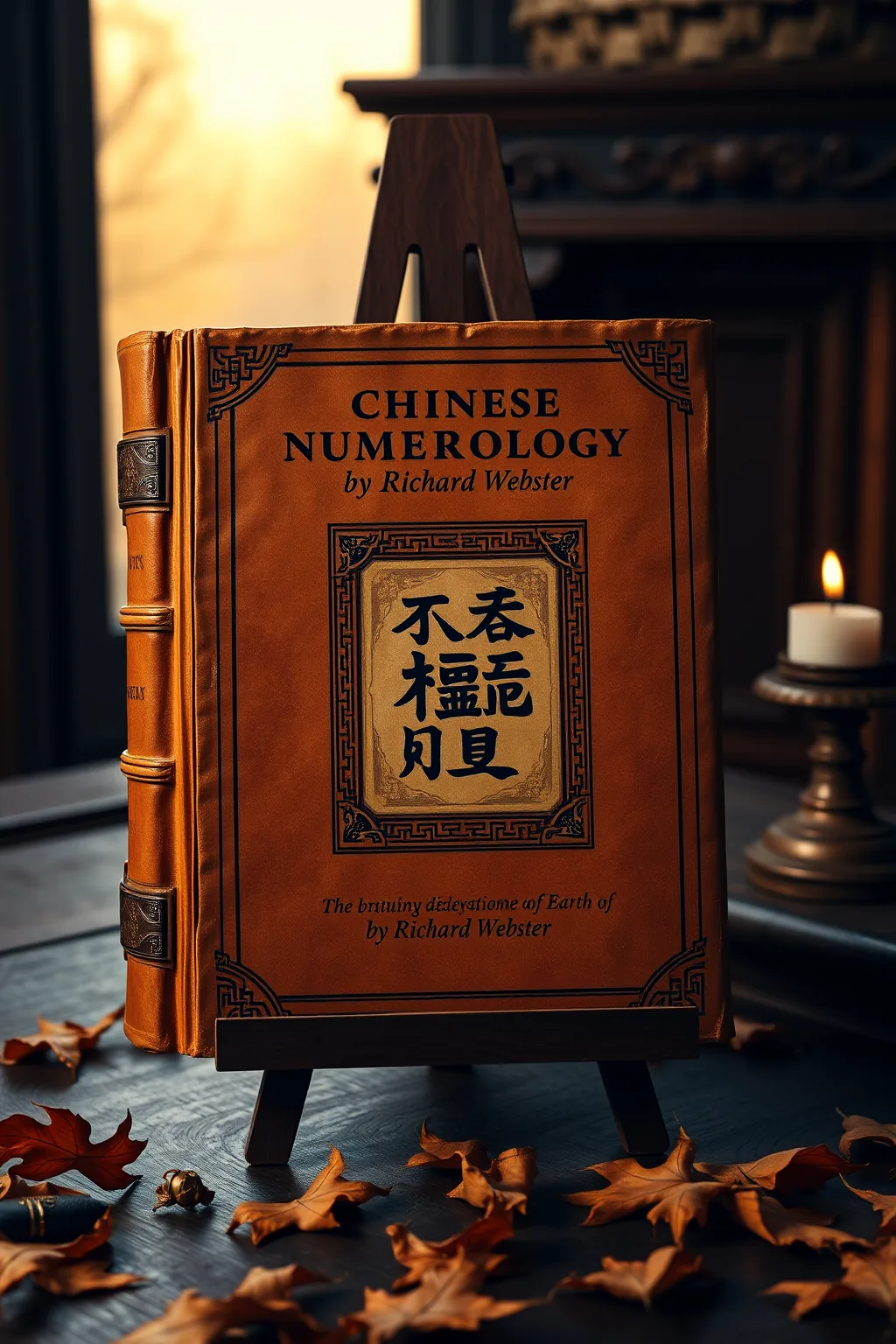
Chinese Numerology
 63
63

Chinese Numerology



Silas Hawthorne, Hermetic Studies Editor: Richard Webster's 'Chinese Numerology' stands as a beacon of clarity within the often-obscured landscape of Eastern esoteric arts. Webster masterfully distills complex numerical principles into accessible, yet deeply profound, insights. He guides the reader through the intricate interplay of numbers, elements, and personal destiny with an authoritative hand, revealing the hidden architecture of luck and life's unfolding patterns. This work is an invaluable resource for practitioners of divination and scholars of comparative mysticism, offering a gateway to understanding a fundamental pillar of Chinese metaphysical thought.
📝 Description
63
Richard Webster's 'Chinese Numerology' examines the symbolic meanings of numbers in Eastern traditions.
This book details the principles of Chinese numerology, explaining how numbers are believed to influence luck, fortune, and personal destiny. Webster connects numerical symbolism to core Chinese philosophical concepts like Yin and Yang, the Five Elements, and the I Ching. The text aims to show readers how to interpret these numerical patterns for self-understanding and spiritual alignment. It moves beyond simple calculations to present numerology as a system reflecting cosmic order.
The author guides readers through understanding the energies associated with each digit. The book encourages a deeper connection to the unseen forces that shape events. It presents numerology not just as a predictive tool but as a path to greater awareness. Readers can learn to use numerical insights to foster personal growth.
Chinese numerology is part of a broader esoteric tradition that views the universe as interconnected and governed by underlying symbolic patterns. This system draws from ancient Chinese cosmology, where numbers are not merely quantitative but hold qualitative and energetic significance. They are seen as reflections of natural cycles and celestial influences, much like in Taoist philosophy and the principles found within the I Ching. This approach treats numerical relationships as a key to understanding the hidden order of reality and an individual's place within it.
💡 Why Read This Book?
For seekers of ancient wisdom, 'Chinese Numerology' offers a direct conduit to the profound symbolic language of the East. It provides practical tools for self-discovery, revealing the numerical blueprint of your life. Scholars will appreciate its thorough yet accessible approach, while practitioners can integrate its principles into their divination systems. Uncover the hidden currents of fortune and gain a deeper understanding of cosmic harmony.
⭐ Reader Reviews
Honest opinions from readers who have explored this book.
❓ Frequently Asked Questions
What is the core principle of Chinese numerology?
The core principle is that numbers possess inherent energies and symbolic meanings, mirroring universal forces like the Five Elements. These energies influence destiny, personality, and events, offering insights into harmony and balance.
How does Chinese numerology differ from Western numerology?
While both systems use numbers, Chinese numerology is deeply intertwined with Taoist philosophy, the Five Elements, Yin/Yang, and astrological cycles, offering a more holistic and cosmological approach to understanding life's patterns.
Can I use this book to predict future events?
This book provides a framework for understanding tendencies and potential influences, rather than deterministic predictions. It empowers you to navigate life with greater awareness and conscious choice.
Is knowledge of Chinese culture required to understand this book?
No, Richard Webster presents the concepts in an accessible manner, explaining key cultural elements as they relate to numerology, making it suitable for beginners and those unfamiliar with Chinese traditions.
What are the 'lucky' and 'unlucky' numbers in Chinese numerology?
Numbers are considered 'lucky' or 'unlucky' based on their phonetic resemblance to auspicious or inauspicious words in Mandarin. For instance, 'eight' (ba) sounds like 'fa' (to prosper).
🔮 Key Themes & Symbolism
The Cosmic Dance of Numbers
Explore the profound belief that numbers are not mere quantities but vibrant conduits of cosmic energy. This theme examines how each digit, from the solitary 'one' to the complete 'nine,' embodies specific elemental forces, Yin and Yang principles, and influences the grand collection of existence. It reveals how these numerical vibrations interact, creating harmonious or discordant patterns that shape our lives, relationships, and worldly fortunes, providing a framework for understanding universal order.
Destiny, Fortune, and the Five Elements
Unravel the intricate connection between numerical calculations and the unfolding of personal destiny. This theme illuminates how birth dates, names, and other significant numerical sequences interact with the dynamic forces of the Five Elements (Wood, Fire, Earth, Metal, Water). Discover how to interpret these elemental influences to understand periods of prosperity, challenge, and personal growth, thereby gaining insight into one's innate potential and life path.
The Art of Applied Numerology
Beyond theoretical understanding, this theme focuses on the practical application of Chinese numerology. Learn how to interpret numerical charts for individuals, identify auspicious timings for significant events, and understand the symbolic significance of numbers in everyday life. This aspect empowers readers to harness numerical wisdom for practical decision-making, fostering luck, enhancing relationships, and reading through the complexities of the material world with greater clarity and intention.
💬 Memorable Quotes
Direct passages from the work, attributed to the author.
“Within each digit lies an echo of the Tao.”
— This highlights the deep philosophical roots of Chinese numerology, connecting numerical symbolism to the fundamental principles of balance and natural order found in Taoism.
“The cycle of numbers mirrors the rhythm of the cosmos.”
— This suggests that the predictable progression of numbers reflects the cyclical and ordered nature of all phenomena in the universe, from seasons to life itself.
“To know the numbers is to glimpse the face of fate.”
— This implies that understanding numerical patterns grants a degree of insight into the preordained aspects of one's life, offering a sense of informed acceptance or agency.
“Harmony is found where numerical energies align.”
— This points to the practical goal of numerology: achieving balance and well-being by understanding and harmonizing the inherent numerical forces within oneself and one's environment.
💡 Key Ideas
Editorial paraphrase of the work's core concepts — not direct quotes.
Numbers are the language of the universe, speaking in whispers of destiny.
This quote emphasizes the core esoteric belief that numerical patterns are not random but hold profound meaning, acting as a divine script for existence.
🌙 Esoteric Significance
Tradition
Chinese numerology is a core part of Taoist metaphysical arts, deeply embedded within the broader framework of Chinese esoteric traditions. It draws heavily from the principles of Yin and Yang, the Five Elements, and the Bagua, viewing numbers as manifestations of these fundamental cosmic forces. This system aims to reveal the underlying energetic blueprint of individuals and events, facilitating a deeper connection to the Tao and promoting spiritual harmony and personal alignment with universal principles.
Symbolism
Key symbols include the numbers 1-9, each representing specific elemental qualities, directions, and energies. The number '8' is highly auspicious due to its phonetic similarity to 'prosperity,' while '4' is often considered unlucky, sounding like 'death.' The interplay of Yin (even) and Yang (odd) numbers dictates the balance of energies. The Five Elements (Wood, Fire, Earth, Metal, Water) are intrinsically linked to numerical sequences, creating complex interactions that define personality traits, relationships, and life cycles.
Modern Relevance
In the modern era, Chinese numerology continues to offer a profound lens for self-understanding and navigating life's complexities. It provides practical insights into career choices, relationships, and personal growth by highlighting inherent strengths and potential challenges. For many, it serves as a tool for fostering mindfulness, cultivating positive intentions, and seeking balance in a fast-paced world, bridging ancient wisdom with contemporary aspirations for well-being and spiritual insight.
👥 Who Should Read This Book
This book is an essential companion for anyone drawn to the mysteries of Eastern spirituality and divination. Beginners will find Richard Webster's clear exposition an accessible entry point into the fascinating world of numerical symbolism. Scholars of comparative religion and esoteric studies will appreciate its depth and adherence to authentic tradition. Seekers of self-knowledge and personal growth will discover powerful tools for understanding their life path and inherent potentials. Practitioners of astrology, Tarot, or other divinatory arts will find valuable complementary knowledge to enrich their insights.
📜 Historical Context
Chinese numerology's roots are deeply entwined with ancient Chinese philosophical traditions, including Taoism and Confucianism, dating back to the Shang Dynasty (c. 1600–1046 BCE). The veneration of numbers as carriers of symbolic meaning was integral to early Chinese cosmology and divination practices. The development of the I Ching (Book of Changes), with its hexagrams based on binary principles, significantly influenced numerical interpretation. The Five Elements theory, formulated during the Warring States period (475–221 BCE), provided a framework for understanding the dynamic interactions of numerical energies. Throughout imperial China, numerology was integrated into various aspects of life, from architecture and urban planning to naming conventions and fortune-telling, reflecting a pervasive belief in the power of numbers to shape human destiny and maintain cosmic harmony.
📔 Journal Prompts
Reflect on the numerical patterns in your birth date and consider their potential elemental influences. How might these energies manifest in your personality?
Identify a 'lucky' and an 'unlucky' number in your life. Explore the cultural or personal significance you attribute to them.
How can understanding the concept of Yin and Yang in numbers help you find balance in a challenging situation?
Consider a significant event in your life and try to identify any numerical coincidences or patterns that might have been present.
What is one aspect of your life where you feel a strong desire for harmony? How might numerical principles offer guidance towards achieving it?
🗂️ Glossary
Yin
Represents passive, feminine, dark, and receptive energies in Chinese philosophy. In numerology, it is often associated with even numbers.
Yang
Represents active, masculine, light, and creative energies. In numerology, it is typically associated with odd numbers.
Five Elements (Wu Xing)
The fundamental forces in Chinese cosmology: Wood, Fire, Earth, Metal, and Water. These elements are believed to interact in cycles of creation and destruction, influencing all aspects of the universe and human life.
Bagua
An ancient Taoist diagram consisting of eight trigrams, each representing fundamental concepts of reality. It is often used in Feng Shui and numerological interpretations.
I Ching (Book of Changes)
An ancient Chinese divination text and foundational classic of Chinese philosophy. Its hexagrams, formed by combinations of broken and unbroken lines, are deeply rooted in numerical and symbolic interpretation.
This book appears in 2 collections
🔮 Readers Also Liked
Browse all →








More by Richard Webster
All books →





From the “Numerology” Collection
View all →








More Free Divination & Tarot Books
View all →