Conversations with the Tarot
 61
61

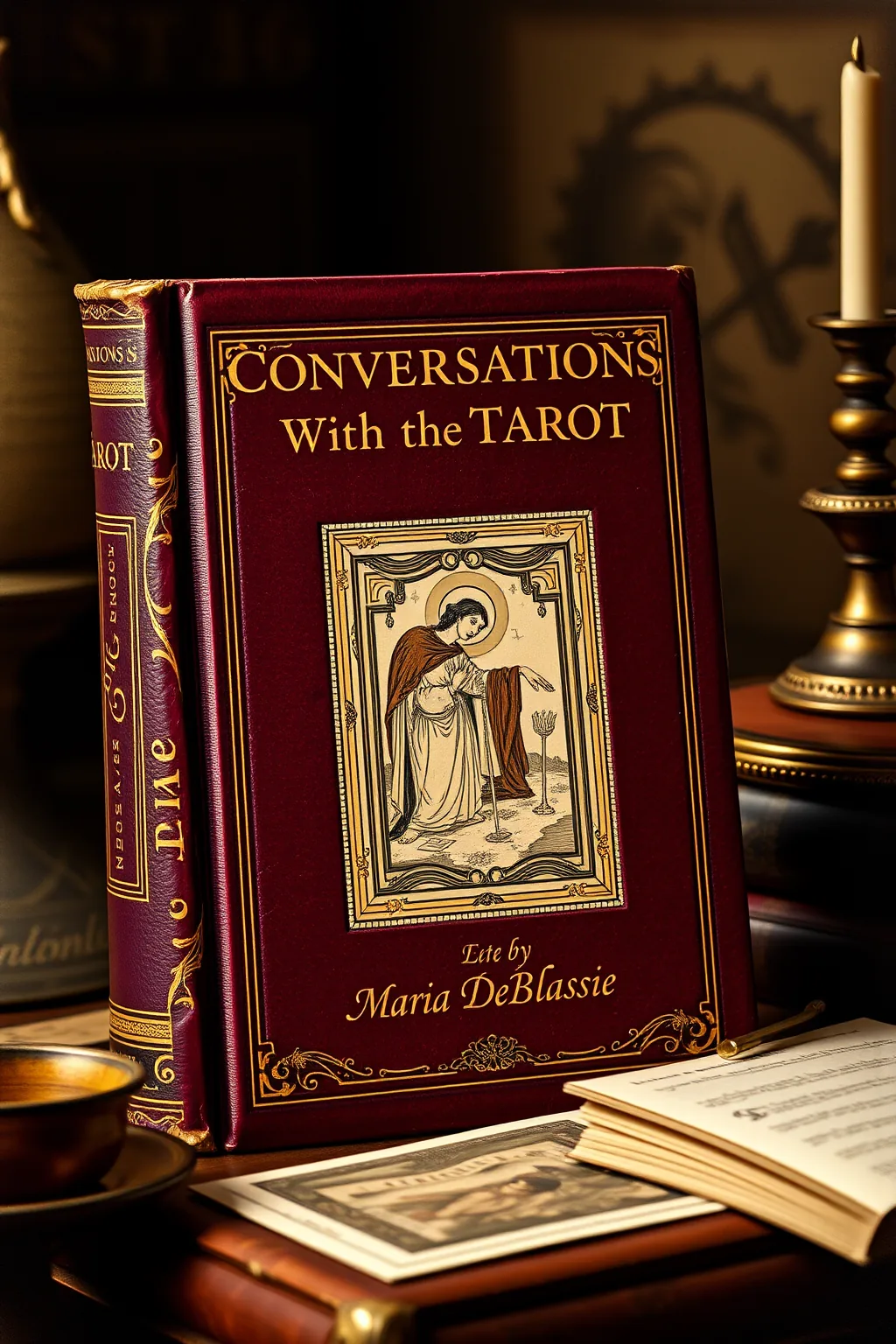
Conversations with the Tarot



Silas Hawthorne (Hermetic Studies Editor) — Maria DeBlassie's 'Conversations with the Tarot' is a luminous addition to the esoteric library. DeBlassie's approach transcends rote interpretation, delving into the poetic soul of the cards and their profound resonance with the human psyche. She masterfully unearths layers of meaning, connecting archetypal imagery to the currents of spiritual seeking. This work is particularly potent for those who appreciate a more contemplative and divinely inspired engagement with the Tarot. Its strength lies in its ability to foster an intimate, almost telepathic relationship between the reader and the deck, making it an invaluable companion for both neophytes and seasoned practitioners seeking to deepen their intuitive grasp of this ancient art.
📝 Description
61
Maria DeBlassie's 'Conversations with the Tarot' was published in 2023, moving beyond simple card meanings.
Maria DeBlassie's 'Conversations with the Tarot' approaches the 78 cards not as a static system, but as active participants in a dialogue. DeBlassie uses evocative language to connect the traditional symbols with inner experience. The book aims to help readers understand the Tarot as a tool for self-reflection and spiritual growth.
This work is intended for those who wish to deepen their relationship with the Tarot beyond rote memorization. It guides the reader to see the cards as reflections of the unconscious mind and as aids in understanding life's complexities. The intention is to foster a more personal and intuitive connection with the archetypes present in the deck.
This book sits within the modern esoteric tradition of Tarot interpretation, which views the cards as a symbolic language of the psyche and a guide for personal transformation. It follows in a lineage that moves beyond purely divinatory applications to embrace psychological and spiritual exploration. The approach aligns with Western esotericism's interest in symbolism as a means to access deeper levels of consciousness and understand universal principles.
💡 Why Read This Book?
Embark on a profound journey of self-discovery through the ancient wisdom of the Tarot. 'Conversations with the Tarot' offers a unique, poetic lens through which to understand the cards' symbolic language, fostering a deeper connection to intuition and the subconscious. Ideal for spiritual seekers, poets, and anyone yearning to unlock the mystical secrets held within these archetypal images, this book transforms mere card reading into a sacred, transformative dialogue.
⭐ Reader Reviews
Honest opinions from readers who have explored this book.
❓ Frequently Asked Questions
What makes 'Conversations with the Tarot' unique?
This book moves beyond standard interpretations, offering a poetic and deeply intuitive exploration of Tarot symbolism, fostering a personal and spiritual connection with the cards rather than just a technical understanding.
Is this book suitable for beginners?
Yes, while rich in depth, the poetic language and accessible approach make it an excellent starting point for those new to the Tarot, encouraging an intuitive rather than purely academic engagement.
Can experienced Tarot readers benefit from this book?
Absolutely. Experienced practitioners will find new layers of meaning and a fresh perspective on familiar cards, deepening their connection and enhancing their intuitive abilities.
What is the author's philosophical stance on the Tarot?
DeBlassie views the Tarot as a living oracle and a profound tool for self-exploration, emphasizing its role in connecting with the subconscious, archetypal wisdom, and the soul's journey.
How does the book's poetic style enhance its message?
The poetic prose imbues the Tarot's symbolism with emotional depth and mystical resonance, allowing readers to experience the cards on a visceral, intuitive level, making the wisdom more accessible and impactful.
🔮 Key Themes & Symbolism
The Archetypal Dialogue
This theme explores the profound, almost conversational relationship one can forge with the Tarot. It posits the cards not as static images but as dynamic archetypes that engage with the reader on a soul level. DeBlassie reveals how each card acts as a mirror, reflecting our inner landscapes and offering guidance through symbolic dialogue. The emphasis is on developing an intuitive connection, moving beyond memorized meanings to a place of direct knowing, where the cards whisper their secrets and illuminate the path of personal evolution.
Symbolism as a Sacred Language
Here, the focus is on the inherent mysticism within the visual language of the Tarot. DeBlassie explores the deep well of symbolism, uncovering the layers of meaning embedded in each card's imagery, colors, and numerology. This theme emphasizes that the Tarot is not arbitrary; its symbols are ancient keys that unlock universal truths and the hidden patterns of existence. The book encourages readers to become fluent in this sacred tongue, understanding how the interplay of symbols reveals the intricate collection of fate, destiny, and personal agency.
The Inner Journey and Spiritual Awakening
This theme centers on the transformative power of the Tarot as a catalyst for personal growth and spiritual awakening. DeBlassie frames the Tarot reading as a sacred ritual, a journey into the self that mirrors the larger spiritual quest. The cards become companions and guides, clear the shadows, celebrating the light, and facilitating a deeper understanding of one's purpose and path. It's about using the Tarot not just for prediction, but for profound self-reflection, healing, and ultimately, for shedding the illusions that obscure our true, divine nature.
💬 Memorable Quotes
Direct passages from the work, attributed to the author.
“In every shuffle, a universe unfolds, waiting to be understood.”
— This highlights the infinite potential and the profound mystery contained within each Tarot reading, suggesting that the cards offer glimpses into vast cosmic patterns.
“Listen not just with your ears, but with the quiet hum of your spirit.”
— Emphasizes the importance of intuitive listening and inner perception when engaging with the Tarot, moving beyond superficial understanding to a deeper, spiritual connection.
“The Fool's leap is not into oblivion, but into the boundless area of possibility.”
— Reinterprets a core Tarot archetype, framing the leap of faith not as recklessness, but as an act of courage that opens doors to new realities and potential.
“Each card is a whispered secret from the divine architect.”
— Positions the Tarot as a divinely inspired tool, where each card holds a piece of sacred knowledge meant to guide and enlighten the seeker on their path.
💡 Key Ideas
Editorial paraphrase of the work's core concepts — not direct quotes.
The cards are not dead symbols, but living traces of the soul's journey.
This quote underscores the book's central philosophy: the Tarot is an active, dynamic force that appeals to our deepest selves and mirrors our life's unfolding narrative.
🌙 Esoteric Significance
Tradition
This work deeply appeals to the Hermetic and Neoplatonic traditions, viewing the Tarot as a microcosm of the macrocosm. It aligns with the hermetic principle of 'As Above, So Below,' suggesting that the symbols on the cards reflect universal laws and spiritual truths that govern both the celestial realms and our earthly existence. The emphasis on archetypes and the journey of the soul echoes Gnostic and Kabbalistic ideas of spiritual ascent and the exploration of inner planes of consciousness.
Symbolism
DeBlassie's exploration of Tarot symbolism is rich and multi-layered. Key symbols like the Fool's journey, the High Priestess's intuition, the Emperor's structure, and the World's completion are presented not just as static images but as dynamic forces. The book explores the numerological, astrological, and elemental associations of each card, revealing how these interconnected symbols form a cohesive language that speaks to the unconscious mind and the spiritual journey, offering insights into fate, free will, and the unfolding of destiny.
Modern Relevance
In an age often characterized by information overload and disconnection, 'Conversations with the Tarot' offers a profound antidote. Its emphasis on intuition, personal connection, and the poetic interpretation of symbols resonates deeply with contemporary seekers looking for authentic spiritual pathways. The book provides a timeless framework for self-reflection, emotional processing, and discerning guidance, making the ancient wisdom of the Tarot accessible and relevant for working through the complexities of modern life and fostering personal growth.
👥 Who Should Read This Book
This book is a treasure for the introspective soul. Beginners will find it an inspiring and gentle introduction to the Tarot, fostering an intuitive connection rather than rote memorization. Seasoned practitioners seeking to deepen their understanding and imbue their readings with greater poetic and spiritual depth will find it invaluable. Scholars of esoteric traditions will appreciate the nuanced exploration of symbolism and archetypal resonance. Ultimately, anyone on a spiritual path, a seeker of hidden knowledge, or an individual drawn to the mystical interplay of art, intuition, and self-discovery will find 'Conversations with the Tarot' a profound and transformative companion.
📜 Historical Context
Maria DeBlassie's 'Conversations with the Tarot' emerges within a rich lineage of esoteric thought that has seen a resurgence of interest in divination and mystical practices. While the Tarot itself has roots tracing back to 15th-century Italy, its widespread adoption as a tool for occult and spiritual exploration gained significant traction in the late 19th and early 20th centuries, heavily influenced by figures like Eliphas Lévi and the Hermetic Order of the Golden Dawn. These movements sought to systematize occult knowledge, often integrating Tarot symbolism with Kabbalah, astrology, and other ancient traditions. DeBlassie’s work builds upon this foundation, but with a distinctly modern and poetic sensibility, reflecting a contemporary yearning for direct, personal spiritual experience and a more intuitive engagement with ancient wisdom. Her approach speaks to an era where the lines between art, spirituality, and self-inquiry are increasingly blurred, echoing the counter-cultural movements of the mid-20th century that also embraced the Tarot as a path to liberation and self-understanding.
📔 Journal Prompts
Reflect on the 'living echo' of a card that currently resonates most strongly with your life. How does its symbolism speak to your current experiences?
If the Tarot is a 'universe unfolding,' what is one new cosmic pattern you perceive in your recent readings?
Describe a moment when you listened with your 'spirit' to a Tarot card. What did you intuitively 'hear' or feel?
Consider the 'boundless area of possibility' the Fool steps into. What is a leap of faith you are contemplating, and how does this card inspire it?
If each card is a 'whispered secret,' what secret has a particular card revealed to you about your journey or purpose?
🗂️ Glossary
Archetype
In Jungian psychology and esoteric traditions, a universal, archaic pattern and image that derives from the collective unconscious and is inherited. The Tarot is rich with archetypal imagery.
Esoteric
Intended for or likely to be understood by only a small number of people with a specialized knowledge or interest; relating to or being occult, mystical, or supernatural subjects.
Hermeticism
A religious, philosophical, and esoteric tradition based primarily upon writings attributed to Hermes Trismegistus. It emphasizes divine wisdom and the interconnectedness of all things.
Kabbalah
A system of Jewish mysticism that seeks to understand the nature of God and the universe through esoteric interpretation of scripture and symbolic representation, often linked to Tarot.
Oracle
A person or agency considered to be a source of divine wisdom or prophetic prediction; a medium through which a divine will is expressed, such as the Tarot.
This book appears in 3 collections
🔮 Readers Also Liked
Browse all →
From the “Tarot” Collection
View all →
More Free Divination & Tarot Books
View all →