Living in the Heart
 71
71

Living in the Heart
Drunvalo Melchizedek's Living in the Heart revisits the idea of a primal, heart-centered awareness, a concept he has explored in prior works. The strength here lies in its persistent call to move beyond purely cerebral understanding towards a felt, intuitive knowing. Melchizedek's assertion that this 'sacred space' exists eternally, independent of the mind, offers a compelling counterpoint to dominant materialist philosophies. However, the book occasionally falters in providing concrete, actionable techniques for readers entirely new to these concepts, sometimes relying on familiarity with his established cosmology. A particularly resonant passage discusses how dreams offer a natural gateway to this heart space, a notion that feels both accessible and profound. For those already attuned to esoteric teachings, it’s a valuable reminder; for newcomers, it may require supplemental reading to fully grasp the mechanics.
📝 Description
71
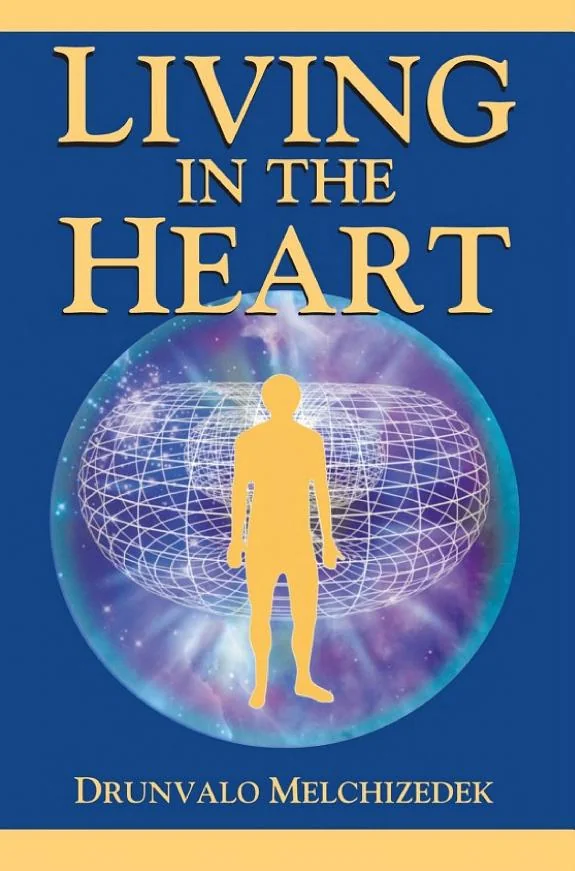
Drunvalo Melchizedek's 2012 book, Living in the Heart, claims a sacred space in the heart precedes analytical thought.
Living in the Heart, published in 2012, proposes that a distinct form of sensing and communication originates from a sacred space within the human heart. Melchizedek suggests this capacity predates the analytical mind and even creation itself, enduring beyond the universe's eventual end. The book guides readers to rediscover this innate, heart-centered awareness. It is aimed at individuals seeking deeper spiritual understanding and a more intuitive way of living. Those interested in consciousness studies, personal transformation, and esoteric philosophies will find resonance here. Readers familiar with Melchizedek's previous works on the Mer-Ka-Ba will recognize a continuation of his teachings.
Published in 2012, during a period of interest in New Age spirituality and Mayan calendar prophecies, Living in the Heart emerged within a milieu of authors discussing consciousness and ancient civilizations. Melchizedek's work synthesizes Gnostic and Hermetic ideas, presenting a unique perspective on spiritual paradigms for a global audience.
💡 Why Read This Book?
• Understand the 'Sacred Space of the Heart' as a non-cerebral center of consciousness, distinct from the analytical mind, allowing for direct intuitive perception. • Reconnect with an ancient human capacity for communication and sensing that predates current brain-based paradigms, fostering a more holistic approach to self and reality. • Explore the concept of 'Microcosmic and Macrocosmic Orbit' as presented by Melchizedek, providing energetic tools for maintaining heart-centered awareness beyond 2012.
⭐ Reader Reviews
Honest opinions from readers who have explored this book.
❓ Frequently Asked Questions
What is the 'Sacred Space of the Heart' according to Drunvalo Melchizedek?
Melchizedek describes the 'Sacred Space of the Heart' as a dimension of consciousness and energy that exists within every human being, independent of the brain. It's presented as the original source of intuition, love, and direct knowing, predating our current mode of existence.
How does Living in the Heart differ from other spiritual books on the heart?
This book emphasizes a specific energetic and dimensional aspect of the heart, linking it to ancient human capabilities and a cosmic understanding of consciousness. It differentiates itself by positing this sacred space as the primordial seat of awareness, preceding even the stars.
When was Living in the Heart first published and by whom?
Living in the Heart was first published on April 27, 2012, by Drunvalo Melchizedek. It continues his exploration of consciousness and esoteric anatomy.
What is the core message Drunvalo Melchizedek conveys in Living in the Heart?
The core message is that humans possess an innate, sacred space within their hearts that allows for profound connection and sensing, separate from the brain. The book serves as a remembrance and guide to reawakening this ancient capacity.
Are there practical exercises in Living in the Heart?
While the book focuses on conceptual understanding and remembrance, it guides readers towards cultivating awareness of the 'Sacred Space of the Heart.' It encourages a shift in perception and internal focus rather than prescribing specific, external exercises.
What does Melchizedek mean by 'Microcosmic and Macrocosmic Orbit'?
This refers to specific energetic flows and patterns within and around the human body, particularly as they relate to maintaining a connection to the 'Sacred Space of the Heart.' These orbits are described as essential for spiritual balance and expansion.
🔮 Key Themes & Symbolism
Sacred Space of the Heart
This theme centers on the book's primary assertion: the existence of a sacred, multidimensional space within the human heart that serves as the original center of consciousness and sensing. Melchizedek argues this space operates independently of the brain's analytical functions, offering a direct, intuitive connection to reality. The work posits that this space is eternal, existing before creation and persisting beyond it, and that rediscovering access to it is key to remembering our true nature. It's presented not just as a metaphor but as a tangible energetic and spiritual locus.
Heart-Based Consciousness
Living in the Heart advocates for a fundamental shift from brain-dominant awareness to a 'heart-based consciousness.' This involves reorienting one's perception and experience towards the intuitive, loving, and knowing qualities associated with the sacred heart space. Melchizedek suggests this was humanity's original mode of being, lost through evolutionary divergence. The book aims to guide readers back to this state, fostering a more integrated and authentic existence by prioritizing the heart's wisdom over the mind's limitations.
Ancient Sensing and Communication
A core concept is the exploration of an ancient, non-verbal, non-analytical form of sensing and communication that humans once possessed. This capacity, rooted in the heart space, allowed for a more direct and profound understanding of oneself and the surrounding universe. Melchizedek presents this as a lost art that can be reawakened, enabling individuals to perceive subtle energies, connect telepathically, and experience reality on a deeper, more unified level, transcending the limitations of current sensory apparatus.
Eternal Nature of Being
The book frequently touches upon the eternal quality of the human spirit and the sacred heart space. Melchizedek posits that this inner sanctuary is not bound by linear time or physical form, existing as a spark of the divine that predates the material universe and will endure beyond its dissolution. This perspective offers a cosmic context for personal spiritual growth, framing the journey of remembering the heart as a return to an everlasting source of being and consciousness.
💬 Memorable Quotes
Direct passages from the work, attributed to the author.
“You have always had this place within your heart, and it is still there now.”
— This statement underscores the book's central premise: the inherent existence of the 'Sacred Space of the Heart' within every individual. It serves as a reassurance that this profound inner resource is not something to be acquired but rather remembered and reactivated.
“It existed before creation, and it will exist even after the last star shines its brilliant light.”
— This emphasizes the eternal and cosmic nature of the heart space, positioning it as a fundamental aspect of reality that transcends physical existence and the lifespan of the universe itself, linking personal spirituality to universal principles.
“Long ago we humans used a form of communication and sensing that did not involve the brain in any way; rather, it came from a sacred place within our hearts.”
— This highlights the book's focus on pre-cognitive, heart-centered awareness as a forgotten human faculty. It suggests a return to this ancient mode of perception as a pathway to deeper understanding and connection, distinct from our current intellectual processes.
“At night when you enter your dreams, you leave your mind and enter the sacred space of...”
— This interpretation suggests that dreams provide a natural, albeit often unconscious, access point to the heart's sacred space. It implies that the dream state offers a respite from the analytical mind, allowing for a subtler form of consciousness to emerge.
“What good would it do to find this place again?”
— This rhetorical question frames the practical benefit of the book's teachings. It prompts the reader to consider the wide implications of reconnecting with the heart space for personal well-being, spiritual growth, and a more authentic way of living.
🌙 Esoteric Significance
Tradition
Melchizedek's work in Living in the Heart draws heavily from Gnostic and Hermetic traditions, particularly their emphasis on inner gnosis (direct knowing) and the concept of a divine spark within the human being. It aligns with Hermetic principles of correspondence ('as above, so below') by linking the individual heart space to cosmic principles. However, it departs by synthesizing these ancient ideas with a modern, energetic interpretation of consciousness, often referencing concepts like Merkaba fields, which are more contemporary esoteric developments.
Symbolism
The primary symbol is the 'Sacred Space of the Heart' itself, representing not just emotion but a dimensional locus of pure consciousness. The concept of 'Microcosmic and Macrocosmic Orbit' functions symbolically, illustrating the energetic connection between the individual and the universe, akin to the Hermetic concept of the 'World Soul.' Dreams are also symbolic, representing a natural, albeit often uncontrolled, gateway to this deeper, non-cerebral reality.
Modern Relevance
Living in the Heart continues to influence contemporary spiritual practitioners, meditation groups, and consciousness researchers. Its concepts are echoed in modern mindfulness practices that emphasize heart-centered awareness and emotional intelligence. Thinkers and practitioners in fields like energy healing, somatic experiencing, and even certain branches of transpersonal psychology can find resonance with Melchizedek's ideas about non-local consciousness and the primacy of heart-based knowing.
👥 Who Should Read This Book
• Individuals exploring consciousness and metaphysics seeking a framework for understanding the heart as a center of awareness beyond the brain. • Practitioners of meditation and energy work interested in deepening their connection to intuition and subtle energies through heart-centered practices. • Students of esoteric traditions looking for a modern interpretation that bridges ancient wisdom (Gnostic, Hermetic) with contemporary concepts of consciousness and energetic anatomy.
📜 Historical Context
Published in 2012, Drunvalo Melchizedek's Living in the Heart arrived during a period of significant interest in consciousness studies and alternative spirituality, partly fueled by the cultural phenomenon surrounding the Mayan calendar's predicted end-date. Melchizedek's work drew from and contributed to a broader New Age movement that explored esoteric anatomy, energy fields, and ancient wisdom. He stood alongside contemporaries like Gregg Braden and Doreen Virtue, who also popularized accessible forms of spiritual and metaphysical teachings. While not directly engaging in academic debates, Melchizedek's teachings on consciousness and the heart space offered a counter-narrative to purely materialistic scientific views, resonating with a global audience seeking deeper meaning beyond conventional paradigms.
📔 Journal Prompts
The 'Sacred Space of the Heart' as a concept: what personal experiences align with or contradict this idea?
Reflect on the distinction between brain-based knowing and heart-based sensing as described by Melchizedek.
Consider the implications of 'Microcosmic and Macrocosmic Orbit' for your daily energetic state.
What dreams or intuitive flashes have you experienced that felt separate from your rational mind?
How might embracing heart-based consciousness alter your perception of reality?
🗂️ Glossary
Sacred Space of the Heart
A specific, multidimensional energetic and conscious locus within the human being, distinct from the brain, believed by Melchizedek to be the original source of intuition and direct knowing.
Heart-Based Consciousness
A state of awareness and perception centered on the intuitive and loving qualities of the 'Sacred Space of the Heart,' as opposed to being dominated by analytical, brain-based thought processes.
Microcosmic Orbit
Energetic flows and patterns within the human body, particularly as they relate to the heart center, described as essential for maintaining spiritual balance and connection to higher consciousness.
Macrocosmic Orbit
Energetic connections and flows that extend beyond the individual human body, linking the microcosm (the individual) to the larger universe and cosmic consciousness.
Ancient Sensing
A hypothetical or remembered human capacity for perception and communication that operated directly from the heart space, bypassing the need for intellectual processing or physical senses.
Pre-Cognitive
Referring to a state or ability that precedes or exists independently of rational thought or intellectual understanding, often associated with intuition and direct knowing.
Eternal Nature
The concept that the 'Sacred Space of the Heart' and the essential consciousness it represents are timeless and indestructible, existing before and after physical creation.
This book appears in 1 collection
🔮 Readers Also Liked
Browse all →









From the “Flower of Life” Collection
View all →









More Free Sacred Texts & Gnosticism Books
View all →