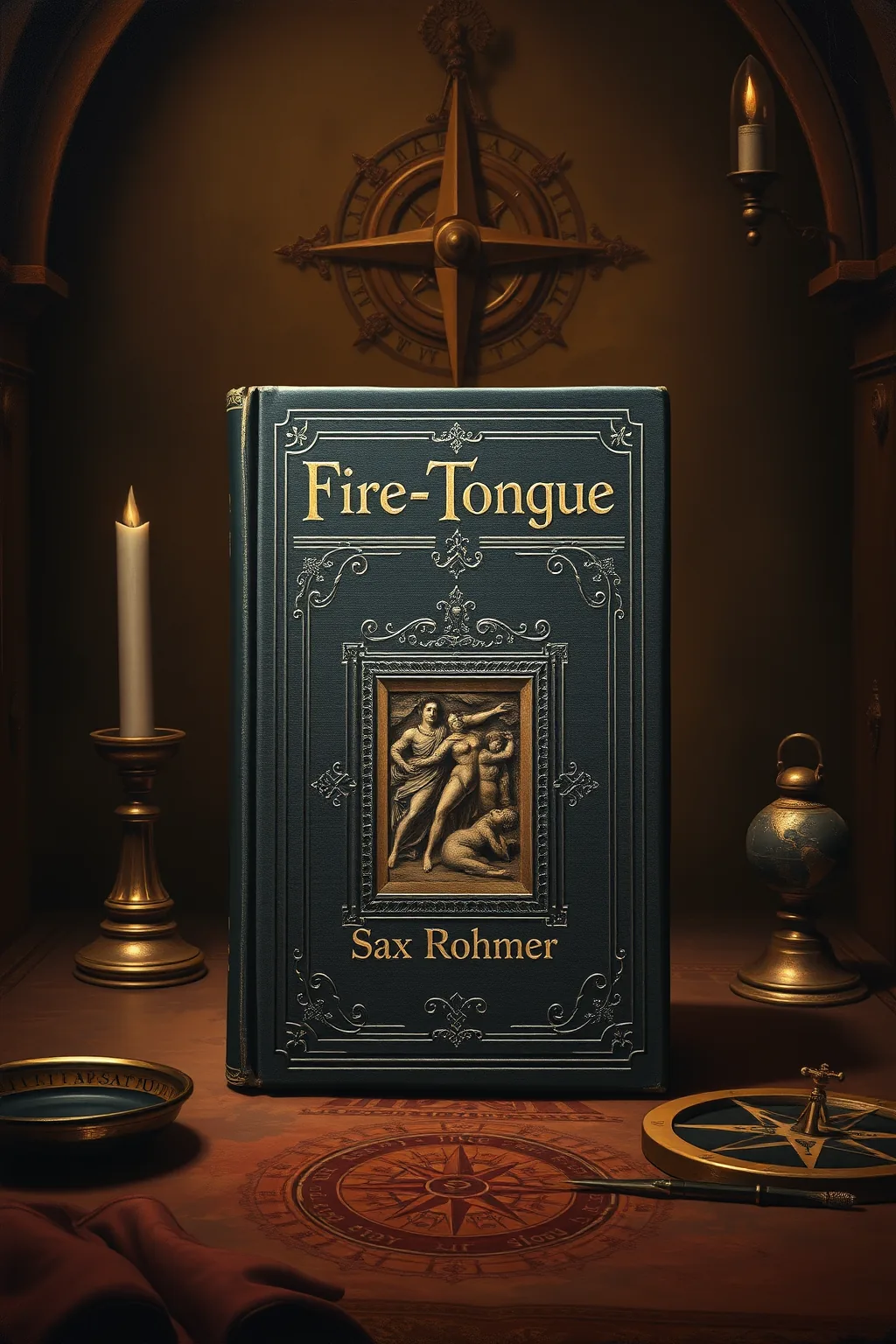
Fire-Tongue
 80
80

Fire-Tongue


"Fire-Tongue" by Sax Rohmer is a compelling read for those intrigued by the intersection of mystery and the occult. Rohmer's prose is both engaging and evocative, transporting readers into a world where Freemasonry and secret societies cast long shadows. The novel's strength lies in its ability to blend historical context with a gripping narrative, making it a valuable text for modern esoteric seekers. Rohmer's exploration of hidden knowledge and the power of secrecy is particularly resonant in today's world, where information and influence are often concealed behind layers of complexity. The characters in "Fire-Tongue" are well-drawn, each with their own motivations and secrets, adding depth to the story. The plot moves at a brisk pace, keeping readers on the edge of their seats as they uncover the mysteries hidden within the pages. For those interested in the esoteric, "Fire-Tongue" provides a rich and rewarding reading experience. It is a book that not only entertains but also invites readers to ponder the deeper meanings and mysteries that lie just beyond the surface.
📝 Description
80
Sax Rohmer's 1932 novel, Fire-Tongue, centers on a detective investigating a sinister occult organization.
Published in 1932, Sax Rohmer's Fire-Tongue uses the framework of a detective story to examine secret societies and occult practices. The plot follows a protagonist as he uncovers the activities of a mysterious cult, weaving in elements of mysticism and the forbidden. Rohmer fills the narrative with symbolic imagery and references to esoteric traditions, blurring the lines between the mundane and the supernatural. The novel questions humanity's attraction to the unknown and the secrets that lie just beyond common understanding.
This work is not merely a thriller; it is an engagement with the fascination for hidden knowledge that has long captivated certain circles. The story's structure allows for an accessible entry into themes often found in esoteric literature. Readers interested in the intersection of mystery and the occult will find Rohmer's depiction of clandestine groups and their supposed powers a notable element of the narrative.
Fire-Tongue belongs to a tradition of popular fiction that engages with occult themes, a trend prominent in the early 20th century. Authors of this period often incorporated elements of spiritualism, secret orders, and arcane rituals into their narratives, making esoteric concepts accessible to a wider audience. Rohmer's work taps into this vein, blending the sensationalism of pulp fiction with an interest in hidden lore and the perceived power structures operating outside conventional society. It reflects a cultural moment where the mysteries of the East and Western occult traditions held a particular fascination.
✍️ Author

Sax Rohmer
Sax Rohmer was an English novelist best known for his Fu Manchu series.
💡 Why Read This Book?
Reading "Fire-Tongue" today offers a unique blend of historical intrigue and esoteric exploration. It provides readers with a glimpse into the secretive world of Freemasonry and other occult societies, fostering a deeper understanding of their influence and mystique. For modern seekers of esoteric knowledge, this book serves as a gateway to exploring hidden histories and the power of secrecy. It challenges readers to think critically about the boundaries between reality and the supernatural, making it a valuable addition to any occult library.
⭐ Reader Reviews
Honest opinions from readers who have explored this book.
❓ Frequently Asked Questions
What is "Fire-Tongue" about?
"Fire-Tongue" is a crime fiction novel by Sax Rohmer that explores the world of Freemasonry and secret societies, blending mystery and esoteric themes.
Is this book suitable for modern readers?
Yes, "Fire-Tongue" remains relevant today due to its timeless exploration of secrecy, power, and the occult.
Where can I download "Fire-Tongue"?
You can download "Fire-Tongue" for free from Esoteric Library in EPUB or PDF format, or read it online.
🔮 Key Themes & Symbolism
Secret Societies
Fire-Tongue examines the shadowy world of secret societies, exploring their rituals, symbols, and hidden knowledge. The novel's atmosphere of intrigue and mystery invites readers to question the boundaries between reality and the occult.
Esoteric Symbolism
The story is rich with esoteric symbolism, drawing from various mystical traditions. These symbols serve as clues to the deeper meanings hidden within the narrative, enriching the reading experience for those familiar with occult lore.
Detective Narrative
The detective narrative structure provides a familiar framework for the exploration of mystical themes. The protagonist's investigation into the mysterious cult serves as a vehicle for uncovering the hidden truths and secrets that lie beneath the surface of everyday reality.
💡 Key Ideas
Editorial paraphrase of the work's core concepts — not direct quotes.
The veil between worlds grows thin, and the fire-tongue speaks in whispers.
This quote highlights the novel's exploration of the blurred lines between reality and the occult.
In the shadows, secrets take flight.
This line underscores the book's theme of hidden knowledge and the allure of the unknown.
The ritual's power lies in its mystery.
This quote emphasizes the importance of esoteric rituals and their symbolic significance.
The truth is hidden in plain sight.
This line reflects the novel's use of symbolism and hidden meanings within the narrative.
The path to enlightenment is paved with danger and deception.
This quote underscores the challenges and risks involved in the pursuit of esoteric knowledge.
🌙 Esoteric Significance
Tradition
Fire-Tongue belongs to the Hermetic tradition, which emphasizes the pursuit of hidden knowledge and the exploration of the mysteries of the universe. The novel draws from various esoteric symbols and rituals to create a collection of mystical themes.
Symbolism
Key symbols in the book include the fire-tongue, which represents the divine spark within all beings, and the mysterious cult's rituals, which serve as gateways to higher areas of consciousness. These symbols are integral to the novel's exploration of esoteric themes.
Modern Relevance
Today, Fire-Tongue remains relevant for practitioners of Hermetic and occult traditions, offering insights into the hidden dimensions of reality. Modern scholars and seekers continue to draw inspiration from Rohmer's work, using it as a guide to the mysteries of the universe.
👥 Who Should Read This Book
Beginners in esoteric studies will find Fire-Tongue an accessible introduction to the world of secret societies and hidden knowledge. Scholars of occult literature will appreciate the novel's strong symbolism and exploration of mystical themes. Spiritual seekers and practitioners of Hermetic arts will find valuable insights and inspiration within its pages.
📜 Historical Context
Fire-Tongue was written during a time when interest in the occult and secret societies was on the rise. Published in the early 20th century, the novel reflects the era's fascination with mystical themes and the exploration of hidden knowledge. Rohmer's work influenced subsequent generations of writers and thinkers, contributing to the collection of occult literature.
📔 Journal Prompts
How does the atmosphere of mystery and intrigue in Fire-Tongue enhance your understanding of occult themes?
What symbols in the novel resonate with your own spiritual journey?
How does the detective narrative structure contribute to the exploration of esoteric knowledge?
What insights can you gain from the novel's portrayal of secret societies and their rituals?
How does Fire-Tongue challenge or confirm your beliefs about the occult and the hidden dimensions of reality?
🗂️ Glossary
Fire-Tongue
A mystical symbol representing the divine spark within all beings and the pursuit of hidden knowledge.
Hermetic Tradition
An esoteric tradition that emphasizes the pursuit of hidden knowledge and the exploration of the mysteries of the universe.
Secret Societies
Groups that operate in secrecy, often with esoteric rituals and hidden knowledge.
Esoteric Symbolism
Symbols that hold hidden meanings and are used in mystical and occult traditions.
Occult
The study of hidden or mysterious knowledge, often involving esoteric rituals and symbols.
This book appears in 2 collections
🔮 Readers Also Liked
Browse all →
More by Sax Rohmer
All books →




From the “Secret Societies” Collection
View all →






More Free Freemasonry & Secret Societies Books
View all →