The Devil Doctor

 80
80

The Devil Doctor
Sax Rohmer’s The Devil Doctor excels in establishing an atmosphere of palpable dread and relentless pursuit. The character of Fu-Manchu, even when off-page, casts a long shadow, his intelligence and ruthlessness making him a truly formidable antagonist for his era. The depiction of London’s underbelly, particularly Chinatown, is vivid, drawing the reader into a world of shadows and intrigue. However, the narrative’s reliance on racial stereotypes, while historically accurate to the period’s sensationalism, can be jarring and limits its broader appeal today. A specific strength lies in the intricate plotting and the clever cat-and-mouse game between Fu-Manchu and Nayland Smith, particularly in Smith's determined, almost obsessive, efforts to uncover the Si-Fan’s plots. The book’s primary limitation is its overt Orientalism, which, while a product of its time, requires a critical lens for modern consumption. The verdict is that The Devil Doctor remains a significant artifact of pulp fiction, offering a thrilling, if problematic, glimpse into early 20th-century fears.
📝 Description
80
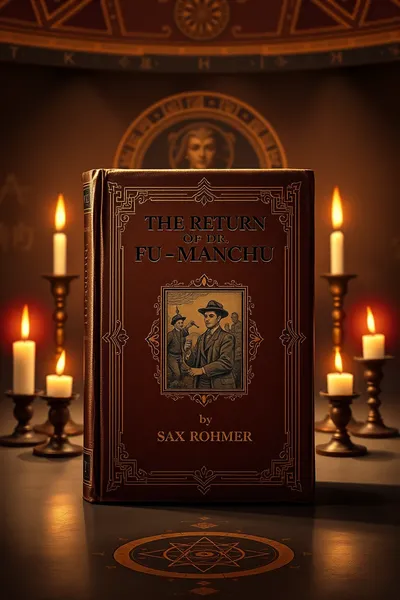
Sax Rohmer's 1922 novel, The Devil Doctor, introduced the world to Dr. Fu-Manchu.
The Devil Doctor plunges readers into the shadowy world of Dr. Fu-Manchu, a creation of Sax Rohmer that became a potent symbol of Oriental menace in early 20th-century popular fiction. Rohmer's novel is more than just a villain's tale; it embodies colonial anxieties and a fascination with the 'other.' The narrative weaves a complex plot of international intrigue, secret societies, and arcane knowledge, portraying the East as a source of formidable, often sinister, power. This work was published in 1922, a time of significant global shifts and increasing Western influence in Asia.
Fu-Manchu, first conceived in 1913, tapped into prevalent public fears and prejudices, mirroring a societal fascination with the perceived exotic dangers of Eastern cultures. The novel's sustained depiction of a foreign, intelligent, and formidable antagonist set it apart from many contemporary Western heroes. It centers on the pervasive threat of the Si-Fan, a secret society led by Fu-Manchu with ambitions for global domination. The concept of 'Yellow Peril' is central, reflecting contemporary Western anxieties about Asian immigration and perceived threats to Western civilization. Themes of scientific advancement misused for malevolent ends, the allure of hidden knowledge, and the struggle between East and West are also present.
While primarily a pulp fiction thriller, The Devil Doctor taps into a vein of Western esoteric thought that often demonized Eastern spiritual and occult traditions. The novel plays on fears of hidden Eastern knowledge and secret societies wielding powers beyond Western comprehension, a common theme in early 20th-century occult fiction. Fu-Manchu's mastery of poisons, strange sciences, and his connection to the Si-Fan organization reflect anxieties about a hidden, malevolent spiritual force that could undermine Western society. This portrayal aligns with a broader cultural fascination with the 'mysteries of the East,' often filtered through a lens of suspicion and exoticism.
💡 Why Read This Book?
• Understand the genesis of the 'Yellow Peril' trope by examining Fu-Manchu's portrayal and the Si-Fan's machinations, gaining insight into early 20th-century Western anxieties about Eastern influence. • Experience the fast-paced, intricate plotting characteristic of early pulp adventure fiction, appreciating Sax Rohmer’s skill in crafting suspenseful narratives and memorable antagonists like Nayland Smith. • Analyze the literary construction of the 'foreign menace' through specific scenes set in London's Chinatown, recognizing how setting and cultural signifiers were used to create an atmosphere of exotic danger.
⭐ Reader Reviews
Honest opinions from readers who have explored this book.
❓ Frequently Asked Questions
When was The Devil Doctor first published?
The Devil Doctor by Sax Rohmer was first published in 1922, making it a significant work of early 20th-century pulp fiction.
Who is the main antagonist in The Devil Doctor?
The primary antagonist is the infamous Dr. Fu-Manchu, the cunning and ruthless mastermind behind the secret society known as the Si-Fan.
What is the Si-Fan in The Devil Doctor?
The Si-Fan is a secret organization depicted in the novel, led by Dr. Fu-Manchu, with ambitions for global power and control.
Where does much of the action in The Devil Doctor take place?
While the intrigue is international, a significant portion of the action unfolds in London, particularly within its Chinatown district, creating an atmosphere of exotic mystery.
What literary movement or genre does The Devil Doctor belong to?
The Devil Doctor is a prime example of early 20th-century pulp fiction, falling within the adventure and detective genres, notable for its sensationalism and exotic themes.
What historical anxieties does The Devil Doctor reflect?
The novel reflects the 'Yellow Peril' anxieties prevalent in the West during the early 20th century, concerning the perceived threat of Asian influence and power.
🔮 Key Themes & Symbolism
The Peril of the 'Other'
The novel heavily engages with the concept of the 'Yellow Peril,' a pervasive Western fear of Asian expansion and dominance. Dr. Fu-Manchu embodies this threat not just as an individual but as the leader of the Si-Fan, a secret society with global ambitions. Rohmer uses exoticism and perceived cultural differences to construct Fu-Manchu as an intelligent, technologically advanced, and morally bankrupt antagonist, reflecting and amplifying colonial-era anxieties about the East's potential to undermine Western civilization.
Arcane Knowledge and Scientific Malice
Fu-Manchu's power stems from a blend of traditional Eastern esoteric knowledge and modern scientific application, creating a uniquely terrifying adversary. The Si-Fan utilizes poisons, obscure drugs, and sophisticated methods that appear almost supernatural to the uninitiated. This theme explores the dark side of intellectualism, where advanced understanding, whether mystical or scientific, can be wielded for destructive ends, blurring the lines between sorcery and science in the service of evil.
The Shadowy Underworld
London, particularly its Chinatown district, is transformed into a range of hidden dangers and clandestine operations. The novel immerses the reader in a secret war fought in the alleys and backrooms of the city, where ordinary life masks a sinister conspiracy. This theme highlights the fear of unseen forces operating within familiar environments, suggesting that threats can emerge from unexpected places, often cloaked in cultural or geographical otherness.
The Obsessive Investigator
Nayland Smith, the tenacious investigator tasked with combating Fu-Manchu, represents the determined Western mind confronting an inscrutable Eastern threat. His pursuit is relentless, driven by a sense of duty and an almost pathological need to unravel Fu-Manchu's schemes. This theme explores the psychological toll of confronting such an elusive and pervasive enemy, showcasing the protagonist's dedication and the personal sacrifices involved in maintaining order against a seemingly boundless malevolence.
💬 Memorable Quotes
Direct passages from the work, attributed to the author.
“The world-wide organisation of the Si-Fan is a peril of the first magnitude.”
— This statement captures the novel's core premise: Fu-Manchu and his organization, the Si-Fan, are not localized threats but a global danger, reflecting the 'Yellow Peril' anxieties of the era.
“He was a genius, a criminal genius of the highest order.”
— This describes Fu-Manchu, highlighting the author's intent to portray him not just as a villain, but as an exceptionally intelligent and capable adversary, making the conflict more compelling.
“The Chinaman's only language is murder.”
— A starkly prejudiced statement, this interpretation of a sentiment within the book underscores the extreme xenophobia and fear of the 'other' that permeates the narrative's perspective.
💡 Key Ideas
Editorial paraphrase of the work's core concepts — not direct quotes.
The crime was typical of the Chinaman—subtle, insidious, and utterly without mercy.
This quote exemplifies the racial stereotyping prevalent in the novel, attributing specific negative characteristics to an entire ethnicity to characterize Fu-Manchu's actions.
The East has come to London, and the East is on the warpath.
This paraphrased sentiment reflects the novel's depiction of Eastern influence as an invasive and aggressive force, turning the familiar setting of London into a battleground.
🌙 Esoteric Significance
Tradition
While not strictly adhering to a specific esoteric lineage, The Devil Doctor draws heavily on the popular imagination of Eastern mysticism and secret societies, common in Theosophical and occult circles of the era. Fu-Manchu's power is often presented as stemming from arcane knowledge and ancient traditions, aligning with a Western fascination with the perceived hidden wisdom of the East. The Si-Fan operates with a quasi-religious fervor and a global agenda, echoing themes found in fictionalized secret orders that populated esoteric literature, albeit framed through a lens of sinister intent rather than spiritual enlightenment.
Symbolism
The character of Dr. Fu-Manchu himself is a potent symbol, representing the feared 'other' – intelligent, alien, and menacing. The Si-Fan, as a secret society, symbolizes hidden power structures and conspiracies operating beyond the view of ordinary society. London's Chinatown serves as a symbolic space, transforming a familiar urban setting into an exotic and dangerous locale, representing the infiltration of the West by Eastern forces and the perceived loss of control.
Modern Relevance
Contemporary discussions of Orientalism and racial stereotyping in media frequently cite Fu-Manchu as a prime example. Scholars of literature and cultural studies analyze The Devil Doctor to understand the historical roots of these tropes. While the novel is rarely read for direct esoteric instruction, its influence on popular culture persists, impacting how certain narratives of conspiracy and foreign threat are constructed even today. It serves as a cautionary example in understanding the historical development of racialized villains in fiction.
👥 Who Should Read This Book
• Students of early 20th-century pulp fiction and the adventure genre seeking foundational examples of sensationalist storytelling and character archetypes. • Researchers of Orientalism and post-colonial studies interested in analyzing the literary construction of racialized antagonists and colonial anxieties in Western media. • Readers fascinated by the history of crime fiction and the evolution of detective narratives, particularly those exploring the impact of cultural prejudices on popular characters.
📜 Historical Context
Published in 1922, Sax Rohmer's The Devil Doctor emerged from a fertile period for adventure and mystery fiction, a landscape populated by figures like Arthur Conan Doyle's Sherlock Holmes and Edgar Wallace. The novel taps directly into the cultural anxieties of the 'Yellow Peril,' a widespread fear in the West during the early 20th century regarding the perceived threat of Asian immigration and influence. Fu-Manchu, first conceived in 1913, became the archetypal sinister Oriental villain, a stark contrast to the more grounded detectives of the era. While other authors explored international intrigue, Rohmer’s sustained focus on a non-Western antagonist with global ambitions was particularly potent. The character’s reception was immense, solidifying him as a cultural icon, though later scholars would critique the deeply ingrained racism within his portrayal, a common feature in much popular fiction of the time that engaged with colonialist sentiments.
📔 Journal Prompts
The Si-Fan's global ambitions and Dr. Fu-Manchu's leadership.
Nayland Smith's relentless pursuit and its psychological toll.
The symbolic representation of London's Chinatown within the narrative.
The fusion of Eastern mysticism and Western science in Fu-Manchu's methods.
How the 'Yellow Peril' trope functions in the novel's plot.
🗂️ Glossary
Si-Fan
A secret society depicted in The Devil Doctor, led by Dr. Fu-Manchu, with aims of global domination and control, representing a shadowy, pervasive threat.
Yellow Peril
A xenophobic trope prevalent in the late 19th and early 20th centuries, expressing Western fears of Asian immigration, influence, and perceived threats to Western civilization.
Orientalism
A term coined by Edward Said, describing the way Western cultures represent and perceive Eastern societies, often through stereotypes that emphasize exoticism, backwardness, or menace.
Pulp Fiction
A genre of popular fiction from the late 19th to mid-20th centuries, characterized by sensationalism, fast-paced plots, and often printed on inexpensive, low-quality paper ('pulp').
Chinatown (London)
The specific setting within London used in the novel to represent an exotic, mysterious, and potentially dangerous enclave where Fu-Manchu's operations are centered.
Nayland Smith
The primary protagonist and investigator in The Devil Doctor, tasked with thwarting Dr. Fu-Manchu's nefarious schemes through intelligence and persistence.
Arcane Knowledge
Refers to secret or mysterious knowledge, often of a mystical or occult nature, which Fu-Manchu is depicted as possessing and utilizing.
🔮 Readers Also Liked
Browse all →









More by Sax Rohmer
All books →




More Free Occult Philosophy Books
View all →