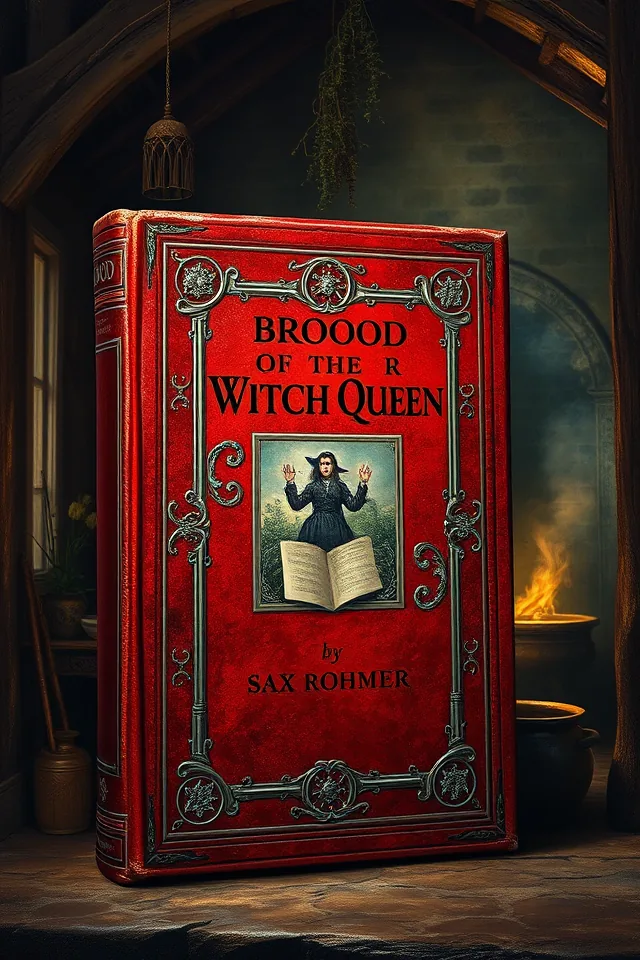
Brood of the Witch-Queen
 83
83

Brood of the Witch-Queen
Sax Rohmer’s *Brood of the Witch-Queen* is a peculiar blend of archaeological wonder and occult dread, attempting to channel the mystique of ancient Egypt into a pulp-fiction narrative. The novel’s strength lies in its evocation of a specific, almost tangible atmosphere of ancient menace, particularly when dealing with the resurrected Pheron. Rohmer skillfully conjures images of forgotten rituals and priestly power, a feat he achieved with his Fu Manchu tales but applied here to a different, arguably more primal, source of fear. However, the plot occasionally strains under the weight of its own supernatural premise, with character motivations sometimes feeling secondary to the unfolding of the curse. A particular passage detailing the spectral manifestations surrounding Myra, while effective, borders on the melodramatic. The narrative's exploration of Pheron's descent from ancient priest to a figure of pure, destructive will offers a compelling, if unsubtle, study of corrupted power. Ultimately, *Brood of the Witch-Queen* is an enjoyable, if somewhat dated, excursion into the occult thrills of a bygone era.
📝 Description
83
Sax Rohmer's 1924 novel, Brood of the Witch-Queen, concerns an ancient Egyptian priest awakened to fulfill a dark prophecy.
Published in 1924, Sax Rohmer's Brood of the Witch-Queen is an occult fiction novel set in Egypt. The story follows Dr. Arthur Leigh as he becomes involved with Pheron, a resurrected Egyptian priest. Pheron is tied to a prophecy and occult activities that center on a young woman named Myra. Rohmer, also known for his Fu Manchu stories, here focuses on ancient curses and Egyptian mysticism.
This work blends elements of horror, adventure, and the supernatural. It appeals to readers interested in the esoteric fiction of the interwar period, particularly those drawn to Egyptian mythology as interpreted through Western occult lenses. It suits those who enjoy vintage horror with supernatural themes and ancient mysteries. Readers with an interest in early 20th-century occultism and its portrayal in popular literature will find it engaging. Those seeking intricate philosophical works may prefer other titles, but fans of atmospheric tales featuring ancient evil and arcane power will appreciate this novel.
Brood of the Witch-Queen appeared in 1924, a time of heightened interest in Egyptology following the 1922 discovery of Tutankhamun's tomb. This period saw widespread fascination with ancient Egypt, often blended with occult theories and spiritualism. Helena Blavatsky's Theosophy, popular in the preceding decades, had already promoted ideas of Egyptian mysteries and hidden knowledge. Rohmer's novel reflects this cultural moment, offering a sensationalized depiction of Egyptian magic and priesthoods common in pulp fiction.
💡 Why Read This Book?
• Learn how the 1922 discovery of Tutankhamun's tomb fueled popular fascination with Egyptian occultism, as depicted through the character of Pheron and his ancient lineage. • Experience a narrative that channels the era's interest in spiritualism and ancient mysteries, exploring themes of resurrection and psychic manipulation. • Discover Rohmer’s unique approach to occult horror, distinct from his more famous works, focusing on primordial Egyptian curses and arcane priestly powers.
⭐ Reader Reviews
Honest opinions from readers who have explored this book.
❓ Frequently Asked Questions
What is the primary occult tradition explored in Brood of the Witch-Queen?
The novel draws heavily on a popular, sensationalized interpretation of ancient Egyptian magic and priesthoods, blending it with general occult themes of resurrection and arcane power prevalent in early 20th-century fiction.
When was Brood of the Witch-Queen first published and why is this significant?
It was first published in 1924, a period of heightened public interest in Egyptology following the discovery of Tutankhamun's tomb, making the themes of ancient curses and Egyptian mysticism particularly timely.
Who is the main antagonist in the book?
The primary antagonist is Pheron, an ancient Egyptian priest who is resurrected to fulfill a dark prophecy, wielding potent, ancient magical powers.
What role does Egypt play in the story?
Egypt serves as a symbolic backdrop, representing a source of ancient, potent magic and a connection to primordial forces that drive the narrative’s occult elements.
Is this book similar to Sax Rohmer's Fu Manchu series?
While both feature exotic settings and malevolent antagonists, *Brood of the Witch-Queen* focuses on ancient Egyptian occultism and curses, whereas the Fu Manchu series centers on a Chinese criminal mastermind and his nefarious plots.
What kind of supernatural elements are present?
The book features elements of ancient curses, resurrection, psychic influence or possession, spectral manifestations, and the wielding of forgotten magical powers.
🔮 Key Themes & Symbolism
Ancient Egyptian Sorcery
The novel posits a potent, lingering magic emanating from ancient Egypt, embodied by the resurrected priest Pheron. This theme explores the idea that forgotten rituals and priestly powers from antiquity can resurface to influence the modern world. It taps into the popular imagination's fascination with Egyptian mysteries, presenting a sensationalized view of hieroglyphs, tombs, and pharaonic curses as active forces rather than historical artifacts.
Resurrection and Ancient Curses
Central to the plot is the concept of a malevolent entity, Pheron, returning from the past to enact a prophecy. This trope plays on fears of the past intruding upon the present, with ancient evils reawakening. The narrative suggests that certain lineages or individuals are bound by these ancient forces, making them vulnerable to dark powers that have lain dormant for millennia.
Psychic Influence and Manipulation
The story examines the manipulation of individuals, particularly Myra, who appears to be a focal point for Pheron's occult designs. This theme explores psychic control, suggestion, or even a form of spiritual possession, where an ancient entity seeks to exert its will through a living person. It reflects early 20th-century anxieties about unseen forces influencing human consciousness.
The Clash of Rationality and the Supernatural
Characters like Dr. Arthur Leigh represent the rational, modern worldview attempting to comprehend or combat the inexplicable supernatural events driven by Pheron. The novel contrasts scientific understanding with the overwhelming power of ancient magic, often showing the limitations of logic when faced with arcane forces.
💬 Memorable Quotes
Direct passages from the work, attributed to the author.
“The very air seemed thick with the presence of Pheron.”
— This phrase captures the pervasive, almost palpable nature of the antagonist's influence. It suggests that Pheron's power extends beyond physical manifestation, subtly saturating the environment and affecting those within it.
“Myra was the key to the ancient prophecy.”
— This highlights Myra's a central role in the unfolding supernatural events. She is not merely a victim but an instrumental figure, central to the fulfillment of Pheron's dark agenda and the activation of ancient magic.
“The secrets of the tomb were stirring.”
— This evokes the imagery of ancient Egyptian burial sites as sources of dormant power. It suggests that the narrative's events are directly linked to disturbed relics and the reawakening of long-held magical energies.
“He wielded a power beyond mortal comprehension.”
— This describes Pheron's arcane abilities, emphasizing their alien and overwhelming nature. It positions his magic as fundamentally different from anything understood by the characters representing the modern world.
“A curse laid down by the priests of Ra.”
— This grounds the supernatural threat in specific, albeit fictionalized, ancient Egyptian religious practices. It attributes the malevolent force to a historical priesthood, lending it an air of authentic, albeit dark, antiquity.
🌙 Esoteric Significance
Tradition
The work draws loosely from Western esoteric interpretations of ancient Egyptian religion and magic, particularly as filtered through the lens of Theosophy and early 20th-century occult fiction. It engages with concepts of ancient priesthoods, hidden knowledge, and karmic cycles, though it presents these through a sensationalized, narrative-driven lens rather than a systematic exposition of a specific tradition like Hermeticism or Gnosticism.
Symbolism
Pheron himself symbolizes the reawakening of ancient, potentially malevolent, spiritual forces. Myra’s role suggests a vessel or conduit for these powers, perhaps representing a modern soul susceptible to primordial influences. The Egyptian setting functions as a symbolic locus of potent, archaic magic, a source from which the narrative’s supernatural events are drawn and amplified.
Modern Relevance
Contemporary practitioners of Egyptian-inspired magical paths or those interested in the history of occult fiction might find value in Rohmer's work as a cultural artifact. It reflects how ancient Egyptian themes were sensationalized and integrated into popular Western occult narratives, offering a point of comparison for understanding the evolution of these esoteric interests.
👥 Who Should Read This Book
• Readers interested in the history of occult fiction from the 1920s, particularly those exploring how ancient Egyptian themes were adapted for popular entertainment. • Enthusiasts of vintage horror and mystery who appreciate atmospheric storytelling and supernatural plots rooted in ancient curses and forgotten magic. • Students of comparative religion or cultural studies looking at the intersection of archaeology (like the discovery of Tutankhamun's tomb) and esoteric beliefs in early 20th-century literature.
📜 Historical Context
Published in 1924, *Brood of the Witch-Queen* arrived amidst a fervent public fascination with ancient Egypt, ignited by Howard Carter’s 1922 discovery of Tutankhamun's tomb. This era saw Egyptology become a popular obsession, with mystical interpretations of Egyptian culture permeating spiritualist and occult circles. Helena Blavatsky’s Theosophical Society, though founded decades earlier, had cultivated a significant following by the 1920s, popularizing ideas of ancient Egyptian wisdom and hidden lineages, which Rohmer draws upon. The novel sits within a tradition of adventure and mystery fiction that often exoticized Eastern cultures, blending them with supernatural elements. Contemporary authors like A. E. Waite were also exploring esoteric themes, though often with a more academic or devotional focus. Rohmer, however, aimed for a pulpier, more sensationalist thrill, capitalizing on the era's appetite for tales of pharaonic curses and rediscovered magic, contributing to a broader cultural landscape where ancient mysteries and the occult were intertwined in popular imagination.
📔 Journal Prompts
The pervasive influence of Pheron suggests an oppressive psychic atmosphere; how might such an environment manifest in one's own life?
Myra's role as a focal point for ancient prophecy invites reflection on inherited burdens or destinies.
Consider the narrative's contrast between Dr. Leigh's rational approach and Pheron's arcane power. Where do these forces meet in your own understanding?
The 'Brood of the Witch-Queen' implies a lineage of sorcerers; explore the concept of ancestral spiritual influence.
Reflect on the symbolism of Egyptian tombs as reservoirs of ancient, potent magic.
🗂️ Glossary
Pheron
The primary antagonist of the novel, an ancient Egyptian priest resurrected to fulfill a dark prophecy and wield potent magical powers.
Myra
A central female character in the novel, seemingly destined to play a central role in the unfolding occult events orchestrated by Pheron.
Ancient Curses
A recurring theme, suggesting that malevolent magical forces or prophecies laid down in antiquity can still affect the present day.
Psychic Influence
The concept that individuals can exert mental or spiritual control over others, often depicted as a means by which Pheron manipulates characters.
Esoteric Egyptian Magic
Refers to the fictionalized portrayal of ancient Egyptian rituals and sorcery, often sensationalized in popular fiction of the era.
Resurrection
The act of bringing a deceased individual back to life, a key element involving the character Pheron and his return from antiquity.
Brood
In the title, suggests a lineage or family of practitioners connected by shared occult knowledge or power, specifically linked to a 'Witch-Queen'.
🔮 Readers Also Liked
Browse all →








More by Sax Rohmer
All books →




More Free Occult Philosophy Books
View all →