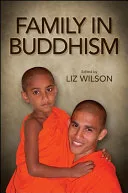
Family in Buddhism
 71
71

Family in Buddhism
Wilson's "Family in Buddhism" offers a compelling counter-narrative to the pervasive notion of Buddhism as inherently anti-familial. The collection succeeds admirably in showcasing the nuanced integration of kinship structures within Buddhist societies. A particular strength lies in the diverse case studies, spanning regions from Tibet to Southeast Asia, illustrating the adaptable nature of Buddhist practice. The chapter on monastic "families" as extended kin networks is especially insightful. However, the sheer breadth of the volume, while a strength, can sometimes lead to a lack of depth in individual analyses, leaving the reader wanting more detailed exploration of specific ethnographic or historical contexts. The work challenges readers to reconsider the dichotomy between renunciation and attachment, demonstrating how these are often fluidly managed. Ultimately, "Family in Buddhism" is a valuable corrective for anyone holding a monolithic view of Buddhist social life.
📝 Description
71
Liz Wilson's 2013 collection challenges Buddhism's image as solely a world-renouncing path.
This collection scrutinizes the common perception of Buddhism as a religion focused only on renunciation. It gathers scholarly contributions that examine the roles and structures of family within various Buddhist traditions across Asia. The book moves beyond the image of the monastic, celibate clergy to show how kinship, both biological and spiritual, functions within lay and monastic communities.
It is aimed at academics and students of Buddhist studies, anthropology, and sociology. The work will interest those seeking to understand lived Buddhist practice beyond doctrine, focusing on social and familial dimensions. Readers curious about the intersection of religion and social structures in Asian contexts will find it valuable.
The collection directly challenges a long-standing interpretation of Buddhism, particularly its early formulations by figures like the Buddha. The historical tendency to equate Buddhist renunciation with an opposition to familial ties is a key point of contention. Wilson's collection revisits this by presenting evidence from diverse historical periods and geographical locations throughout Asia.
The book engages with a specific academic debate about the historical trajectory of Buddhist thought and practice. It questions a prevalent interpretation that emphasizes monasticism and detachment from worldly affairs, including family. By examining family structures and kinship within Buddhist societies, it highlights the practical adaptations and lived realities that complicate this singular view. This approach situates the study within broader discussions of how religious ideals are lived and negotiated within diverse cultural and social frameworks.
💡 Why Read This Book?
• Gain a nuanced understanding of how Buddhist monastic communities function as extended kin networks, challenging the notion of isolation. • Explore the practical application of Buddhist principles within diverse Asian kinship systems, moving beyond abstract doctrine to lived experience, as seen in studies predating 2013. • Discover how the concept of "family" in Buddhism encompasses both biological ties and spiritual lineages, revealing a more complex social reality than often portrayed.
⭐ Reader Reviews
Honest opinions from readers who have explored this book.
❓ Frequently Asked Questions
What is the primary argument of Liz Wilson's "Family in Buddhism"?
The book's central argument is that Asian Buddhist traditions are not inherently inimical to family life. It demonstrates how kinship, both biological and spiritual, plays a vital and integrated role within Buddhist societies across various historical and geographical contexts.
How does "Family in Buddhism" address the Buddha's own renunciation?
It acknowledges the Buddha's departure from his family as a foundational act of renunciation but argues this did not preclude the development of strong familial and social bonds within the monastic order and lay communities that followed.
What types of "families" are discussed in the book?
The volume explores biological families, monastic "families" (often structured like extended kin), and spiritual families formed through teacher-disciple relationships, highlighting the multifaceted nature of kinship in Buddhist societies.
Which geographical regions are covered in the book?
The book examines Buddhist family structures and practices across a wide range of Asian regions, including but not limited to Tibet, Southeast Asia, and East Asia, showcasing diverse cultural adaptations.
Is "Family in Buddhism" suitable for beginners?
While accessible to those with some background in Buddhist studies or anthropology, the academic nature of the collected essays makes it most suitable for students and researchers seeking in-depth analysis rather than introductory material.
When was "Family in Buddhism" first published?
"Family in Buddhism" was first published on August 1, 2013, presenting contemporary scholarship on the topic.
🔮 Key Themes & Symbolism
Monastic Kinship Networks
This theme investigates how Buddhist monastic communities, often characterized by celibacy, develop structures akin to familial relationships. It examines the concept of the Sangha not just as a religious order but as an extended family, with abbots or senior monks acting as parental figures and fellow monks as siblings. The volume explores how these "spiritual families" provide social support, transmit teachings, and maintain continuity, challenging the idea that monasticism equates to total social detachment.
Lay Buddhist Family Life
Contrary to the emphasis on renunciation, this theme highlights the significant role of family in the lives of lay Buddhists. It explores how Buddhist ethical precepts and practices are integrated into domestic life, marriage, child-rearing, and inheritance. The volume showcases how lay practitioners read through the demands of family responsibilities while adhering to Buddhist principles, demonstrating a lived Buddhism that coexists with, rather than rejects, familial attachments.
Renunciation and Attachment
The book critically examines the Buddhist concept of renunciation, particularly in relation to attachment to family. It questions the simplistic dichotomy between leaving family for enlightenment and maintaining familial ties. The collected essays explore how different Buddhist cultures and historical periods have interpreted and enacted renunciation, often finding ways to balance spiritual aspirations with the realities of social and familial bonds, moving beyond the early Buddhist ideal of "going forth."
Cultural Adaptations of Kinship
This theme focuses on how Buddhist teachings and practices interact with diverse indigenous kinship systems across Asia. It illustrates how Buddhism has been adapted and interpreted within various cultural frameworks, leading to unique expressions of family and social organization. The volume provides examples of how Buddhist concepts of merit, karma, and rebirth are understood and applied within specific familial and lineage structures, demonstrating Buddhism's flexibility.
💬 Memorable Quotes
Direct passages from the work, attributed to the author.
“The Buddha enjoined his followers to go forth and 'become homeless.'”
— This foundational statement highlights the initial emphasis on renunciation in Buddhism. However, the book probes how this directive has been interpreted and adapted over centuries, leading to complex relationships between monastic life and established familial structures.
“Asian Buddhism is often regarded as a world-renouncing religion inimical to family life.”
— This perception, presented as a starting point for critique, sets up the volume's central thesis: that this view is an oversimplification. The book aims to dismantle this notion by presenting evidence of Buddhism's deep integration with family and social structures across Asia.
“The volume shows how Asian Buddhists... relate as kin to their biological...”
— This captures the core of the book's project: to demonstrate the active and ongoing role of biological kinship within Buddhist societies. It emphasizes that the monastic path does not erase or negate these fundamental human relationships.
“From biological families to families created in monasteries.”
— This phrase succinctly outlines the dual focus of the collection. It signals an exploration that encompasses both the traditional, blood-related family unit and the "found" families formed within the spiritual context of monastic life.
“A wide-ranging exploration of Buddhism and family in Asia.”
— This statement sets the scope of the work, indicating a broad survey across different geographical locations and historical periods within the Asian continent, promising a comprehensive look at the subject.
🌙 Esoteric Significance
Tradition
While not strictly an esoteric text in the Western sense (like Hermeticism or Kabbalah), "Family in Buddhism" engages with themes relevant to esoteric study by examining the tension between worldly engagement and spiritual detachment. It touches upon the practical application of spiritual ideals within social structures, a concern present in many esoteric traditions seeking to integrate inner transformation with outer life. The volume explores how Buddhist monasticism, as a path of radical renunciation, creates its own symbolic "family" structures, mirroring archetypal concepts of community formation found in various spiritual lineages.
Symbolism
The core symbolism explored revolves around the concept of "family" itself. Biological family represents worldly ties and attachments, often seen as obstacles to spiritual progress in traditional interpretations. Conversely, the monastic "family" symbolizes a chosen community, a spiritual lineage, where bonds are forged through shared practice and dedication to the Dharma. The act of "going forth" or becoming "homeless" is a powerful symbol of detachment, yet the book reveals how this symbol is reinterpreted to allow for the creation of new, spiritually oriented kinship structures.
Modern Relevance
Contemporary thinkers and practitioners interested in the integration of spiritual life with social responsibilities find resonance in this work. It speaks to modern discussions on work-life balance, the nature of community in secularizing societies, and the challenges of maintaining spiritual practice amidst familial duties. Schools of engaged Buddhism and mindfulness practitioners seeking to understand the social dimensions of their path can draw insights from how historical Buddhist communities navigated these very tensions, demonstrating that spiritual ideals are often lived out through social and familial interactions.
👥 Who Should Read This Book
['• Academic researchers in Buddhist studies and comparative religion seeking nuanced analyses of social structures within Buddhist traditions.', '• Anthropologists and sociologists interested in the intersection of religious belief and kinship systems across diverse Asian cultures.', '• Practitioners of Buddhism who wish to understand the historical and cultural contexts of family life and monasticism within their tradition.']
📜 Historical Context
Published in 2013, Liz Wilson's "Family in Buddhism" emerged at a time when Western academic discourse on Buddhism was increasingly moving beyond purely doctrinal or philosophical analyses to embrace social and cultural history. The volume directly confronts a historical interpretation, prevalent since early Buddhist scholarship, that viewed the religion as inherently opposed to domestic life due to its emphasis on renunciation, exemplified by the Buddha's own departure from his family. This perspective often contrasted with the social realities observed in Asian Buddhist societies. Wilson's collection intervenes in this ongoing debate, drawing on diverse case studies that challenge the monolithic view of Buddhism as solely world-renouncing. It engages with scholarship that began re-examining these assumptions throughout the 20th century, building upon the work of scholars like Gananath Obeyesekere who explored the psychological dimensions of renunciation and attachment. The book implicitly situates itself against the backdrop of a growing academic interest in lived religion and the nuanced ways traditions adapt to local contexts, moving away from earlier, more idealized portrayals.
📔 Journal Prompts
The concept of monastic "families" as extended kin.
Negotiating biological family ties with Buddhist spiritual ideals.
The Buddha's injunction to "become homeless."
How lay Buddhists integrate practice with domestic responsibilities.
The adaptation of kinship structures within Buddhist societies.
🗂️ Glossary
Sangha
The Buddhist monastic community of monks and nuns. In a broader sense, it can also refer to the community of all Buddhist followers, lay and ordained, and is explored in the book as a form of spiritual family.
Renunciation
The act of giving up worldly possessions, familial ties, and personal desires as a means to achieve spiritual liberation or enlightenment, a central concept challenged by the book's focus on family.
Kinship
The state of being related to another or others by blood, marriage, or adoption. The book examines how this concept is understood and enacted within both biological and monastic Buddhist contexts.
World-renouncing religion
A characterization of a religion that emphasizes detachment from worldly affairs, material possessions, and social relationships in pursuit of spiritual goals. The book questions this label as applied to Buddhism.
Dharma
In Buddhism, the teachings of the Buddha, the cosmic law and order, or the ultimate truth. It is often transmitted through spiritual lineages and communities, including families.
Lay practitioner
An individual who follows Buddhist teachings but is not ordained as a monk or nun. Their lives typically involve navigating family and societal responsibilities alongside their spiritual practice.
Going forth
A traditional Buddhist term referring to the act of renouncing lay life to become a monastic, signifying a departure from societal norms and familial obligations.