Essentials of Mysticism
 81
81

Essentials of Mysticism
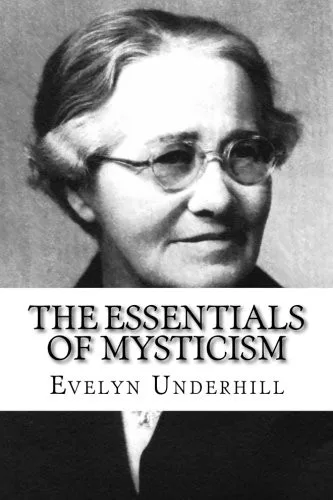
Evelyn Underhill's Essentials of Mysticism presents a meticulously structured analysis of the spiritual journey, a welcome antidote to the often amorphous discourse surrounding mystical states. Its strength lies in its systematic categorization of experiences, moving from the initial 'preludes' to the ultimate 'union.' The clarity with which Underhill defines terms and outlines progression is remarkable. A notable limitation, however, is the occasional density of the prose, which can obscure the very experiential phenomena it seeks to elucidate for the uninitiated reader. The section detailing the 'Sacramental' aspect of the mystical path, for instance, requires careful parsing to grasp its full import. Nonetheless, for those willing to engage deeply, it offers a rigorous framework for understanding profound spiritual phenomena. It is a foundational text for serious students of the subject.
📝 Description
81
Evelyn Underhill's 1911 work examines the stages of mystical experience from initial spiritual stirrings to union with the divine.
Essentials of Mysticism, first published in 1911, details the spiritual life through distinct phases and types of mysticism. Evelyn Underhill, a notable scholar of religious experience, organizes the text by the progression of the mystical path. It moves from the early awakenings of spiritual awareness to stages of illumination and eventual union with the divine.
The book grounds theological ideas in observable psychological and spiritual phenomena, making complex mystical concepts accessible. It is written for serious students of comparative religion, spiritual seekers, and academics interested in the phenomenology of religious experience. Readers who want a systematic categorization of the mystical path, rather than devotional material, will find it particularly useful. The text requires careful reading and engagement with its theological and philosophical content.
Underhill's work sits within the Christian mystical tradition, drawing on figures like St. Teresa of Avila and St. John of the Cross. It also engages with broader concepts of spiritual development that resonate across different contemplative practices. The book emerged during a period of renewed interest in the experiential aspects of religion, moving beyond purely doctrinal interpretations. It provides a framework for understanding the inner life that contrasts with the growing influence of rationalistic and materialist philosophies.
💡 Why Read This Book?
• Gain a structured understanding of the mystical path, from initial 'preludes' to ultimate 'union,' as meticulously detailed by Evelyn Underhill, offering a framework absent in more devotional works. • Grasp the distinction between the 'Higher Life' and 'Lower Life' as conceptualized by Underhill, providing specific terminology to articulate states of consciousness beyond ordinary perception. • Explore the concept of 'Sacramentalism' within mysticism, learning how outward forms can serve as conduits for inward spiritual experience, a nuanced perspective distinct from purely internal or purely ritualistic views.
⭐ Reader Reviews
Honest opinions from readers who have explored this book.
❓ Frequently Asked Questions
What is the core difference between the 'Higher Life' and 'Lower Life' as discussed in Essentials of Mysticism?
Evelyn Underhill differentiates the 'Lower Life' as the realm of ordinary human consciousness, focused on the material and temporal. The 'Higher Life,' conversely, represents an expanded spiritual awareness, characterized by direct experience of the divine and a detachment from worldly concerns.
When was Evelyn Underhill's Essentials of Mysticism first published?
While the original publication date is not specified, this edition of Essentials of Mysticism was first published in 2018, making it a contemporary release of a classic work.
What are the 'Preludes' to the mystical life according to Underhill?
Underhill describes the 'Preludes' as the preparatory stages for the mystical journey. These typically involve processes of purification, detachment from ego and worldly desires, and cultivating a receptive spiritual disposition.
Does Essentials of Mysticism focus on a specific religious tradition?
No, Essentials of Mysticism is designed to be comparative, exploring the universal characteristics of the mystical experience across various religious traditions and historical periods, rather than focusing on one.
How does Underhill define 'Sacramentalism' in the context of mysticism?
Underhill's concept of 'Sacramentalism' in mysticism refers to the belief and experience that outward forms, rituals, or objects can serve as meaningful channels or symbols for the apprehension of divine realities and inner spiritual states.
Is Essentials of Mysticism suitable for beginners in esoteric studies?
While accessible to dedicated beginners, Essentials of Mysticism is a scholarly work. It requires a thoughtful approach and a willingness to engage with complex theological and philosophical concepts, making it most suitable for serious students.
🔮 Key Themes & Symbolism
The Stages of the Mystical Path
Underhill meticulously outlines the progression of the mystic, from the initial 'Preludes' of purification and detachment, through the stage of 'Illumination' marked by profound spiritual insight, to the ultimate goal of 'Union' with the divine. This structured approach clarifies the often-perceived ineffable nature of mystical experience, presenting it as a discernible, albeit arduous, journey. The work emphasizes the active role of the individual in this progression, moving beyond passive reception of grace.
Distinction Between Higher and Lower Life
A central theme is the delineation between the 'Lower Life' and the 'Higher Life.' The 'Lower Life' represents ordinary consciousness, bound by the material world and egoic concerns. In contrast, the 'Higher Life' signifies an expanded state of being, characterized by direct apprehension of spiritual realities, selfless love, and a profound sense of unity. Underhill explores the transition between these states as the essence of the mystical endeavor.
The Role of Sacramentalism
Underhill addresses the concept of 'Sacramentalism,' not solely within formal religious rites, but as a broader principle of how outward forms and symbols can serve as vehicles for experiencing inward spiritual realities. This theme highlights how the material world, when viewed through a mystical lens, becomes imbued with divine significance, acting as a bridge to the transcendent rather than a barrier.
The Nature of Divine Union
The culmination of the mystical journey, 'Union,' is explored with careful nuance. Underhill differentiates various understandings of union, distinguishing between a union of will, affection, and eventually, a more profound union of consciousness. The book grapples with the paradox of achieving unity with the Absolute while retaining individual identity, a core concern in mystical theology.
💬 Memorable Quotes
Direct passages from the work, attributed to the author.
“The spiritual life is not a passive reception, but an active response.”
— This highlights Underhill's emphasis on agency within the mystical path. It suggests that spiritual attainment requires conscious effort, engagement, and a dynamic interaction with the divine, rather than merely waiting for grace.
“Mysticism is the direct apprehension of the Absolute.”
— This concise definition frames mysticism as an experiential, immediate knowing of ultimate reality, bypassing intellectual or mediate channels. It points to the core of the mystical claim: a direct, unmediated encounter with the divine.
“Illumination brings a new perception of reality.”
— This interpretation suggests that the stage of 'Illumination' involves not just intellectual understanding but a fundamental shift in how one perceives the world and its spiritual underpinnings, revealing hidden divine order.
💡 Key Ideas
Editorial paraphrase of the work's core concepts — not direct quotes.
The 'Preludes' involve the purification of the self.
This paraphrase points to the foundational work required before deeper mystical states can be accessed. It underscores the necessity of ethical and psychological preparation, involving the shedding of egoic attachments and imperfections.
True union involves both God and the soul actively participating.
This paraphrase emphasizes the reciprocal nature of divine union, countering notions of a one-sided absorption. It points to a relationship where both the divine and the individual soul engage in a dynamic, loving communion.
🌙 Esoteric Significance
Tradition
Underhill's work stands within the broad tradition of Christian mysticism but draws eclectically from various contemplative paths. While deeply rooted in the Western Christian contemplative lineage, particularly figures like the author of 'The Cloud of Unknowing' and St. John of the Cross, her systematic approach and comparative insights also align with the broader esoteric interest in universal spiritual principles. She bridges orthodox theology with experiential spirituality, making her work relevant to those seeking a structured understanding of the contemplative life across traditions.
Symbolism
A key symbolic motif is the journey itself, often depicted as an ascent or pilgrimage towards divine union. The concept of 'light' frequently symbolizes divine illumination and direct spiritual knowledge. Another important symbolic element is the 'inner citadel,' representing the soul's core where direct communion with God is possible, shielded from external distractions and worldly influences.
Modern Relevance
Contemporary spiritual seekers and scholars of religion continue to draw on Underhill's work for its clarity and systematic approach. Her detailed categorizations of mystical stages and experiences provide a valuable framework for understanding modern contemplative practices, mindfulness, and even certain forms of psychological inquiry into consciousness. Thinkers in fields ranging from comparative mysticism to spiritual direction often reference her foundational texts.
👥 Who Should Read This Book
• Students of comparative religion and theology seeking a rigorous, historically informed overview of mystical phenomena across traditions. • Spiritual practitioners interested in understanding the structure and stages of the contemplative path, moving beyond anecdotal accounts. • Academics and researchers in the fields of religious studies, philosophy of religion, and psychology of religion requiring a foundational text on mystical experience.
📜 Historical Context
Evelyn Underhill's work on mysticism emerged in the early 20th century, a period marked by burgeoning interest in psychology and the subjective experience of religion, alongside a continued engagement with classical theological and philosophical traditions. While figures like William James were popularizing the study of religious experience through a more empirical lens in his 1902 work 'The Varieties of Religious Experience,' Underhill offered a more classically theological and historically grounded approach. Her scholarship provided a detailed, systematic framework for understanding the inner life, often contrasting with the more individualistic or sensationalist accounts gaining traction. The intellectual currents of the time, influenced by idealism and a reaction against positivism, created fertile ground for explorations of consciousness and spirituality. Underhill's rigorous scholarship positioned her work as a serious academic contribution, engaging with contemporary debates on faith, reason, and experience.
📔 Journal Prompts
The 'Preludes' to the mystical life: What personal disciplines are most essential for spiritual readiness?
Reflect on the distinction between the 'Higher Life' and 'Lower Life' in your own experience.
Consider the concept of 'Sacramentalism': How do everyday objects or rituals hold deeper meaning for you?
The nature of Divine Union: What does 'unity' mean in the context of your spiritual aspirations?
Analyze the 'Illumination' stage: What are your most profound moments of spiritual insight and how did they alter your perception?
🗂️ Glossary
Preludes
The preparatory stages of the mystical journey, involving practices like purification, detachment, and cultivating spiritual receptivity before deeper experiences can occur.
Higher Life
A state of expanded spiritual consciousness characterized by direct experience of the divine, selfless love, and unity, contrasted with ordinary, ego-bound awareness.
Lower Life
The area of ordinary human consciousness, focused on the material world, temporal concerns, and egoic desires, which the mystic seeks to transcend.
Illumination
A stage in mystical development marked by profound spiritual insight and a transformed perception of reality, revealing divine order and truth.
Union
The ultimate goal of the mystical path, representing a profound communion or oneness with the Divine, understood in various degrees (will, affection, consciousness).
Sacramentalism
The principle that outward forms, symbols, or rituals can serve as meaningful conduits or expressions of inward spiritual realities and divine presence.
The Absolute
The ultimate, unconditioned reality; the Divine or Godhead in its transcendent and immanent nature, the object of mystical apprehension.
🔮 Readers Also Liked
Browse all →




![Science Without Bounds [A Synthesis Of Science, Religion And Mysticism].pdf (PDFy mirror)](/img/thumb/science-without-bounds-a-synthesis-of-science-religion-and-mysticism-pdf-pdfy-mirror.webp)

More by Evelyn Underhill
All books →





More Free Mysticism & Contemplation Books
View all →