Practical Mysticism

 71
71

Practical Mysticism



Silas Hawthorne (Hermetic Studies Editor) — Evelyn Underhill's 'Practical Mysticism' remains a cornerstone for those seeking authentic spiritual engagement beyond dogma. Her secular yet profound approach strips away the arcane, revealing mysticism as an attainable art of living. This work offers invaluable guidance on cultivating inner awareness and perceiving the numinous in the ordinary. It's an essential read for any serious student of contemplative practice or anyone aspiring to a more deeply realized existence, bridging the gap between the spiritual ideal and lived experience with remarkable clarity.
📝 Description
71
Evelyn Underhill's 1915 book 'Practical Mysticism' argues mysticism is accessible to all.
Published in 1915, Evelyn Underhill's 'Practical Mysticism' reframes the spiritual life. She contends that mysticism is not reserved for select individuals or monastic orders but is an inherent capacity within everyone. Underhill intends for her readers to understand and cultivate this inner spiritual aspect. The book offers a secular perspective on spiritual engagement, aiming to bring transcendent insight into everyday existence. Underhill suggests that through focused attention and consistent practice, one can perceive deeper realities and a connection to the cosmos. It aims to reveal the sacredness present in ordinary life.
Evelyn Underhill's 'Practical Mysticism' emerged during a period of renewed interest in spiritual disciplines outside established religious dogma. While not strictly tied to a single esoteric tradition, it aligns with movements that sought to demystify spiritual experience and make it a direct, personal encounter. The book shares common ground with theosophy and other late 19th and early 20th-century attempts to synthesize Eastern and Western mystical thought, emphasizing inner transformation and the potential for direct experience of the divine, often outside institutional frameworks.
✍️ Author
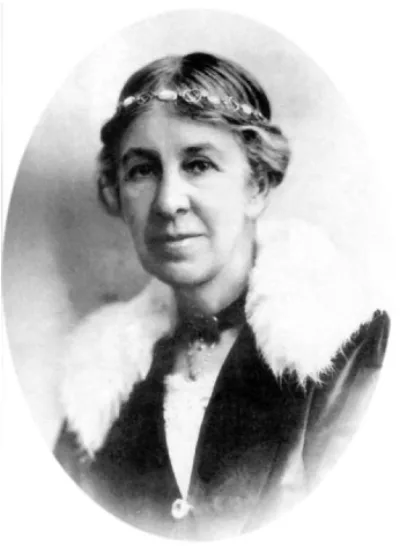
Evelyn Underhill
Evelyn Underhill was an English Anglo-Catholic writer known for her works on Christian mysticism.
Mystic
💡 Why Read This Book?
Embark on a transformative journey with 'Practical Mysticism.' Discover that profound spiritual connection is not a distant ideal but an accessible reality within your grasp. This book offers tangible methods for deepening awareness, perceiving the sacred in the everyday, and cultivating a richer inner life. It's an indispensable guide for seekers, scholars, and practitioners alike who wish to integrate spiritual insight into their daily existence.
⭐ Reader Reviews
Honest opinions from readers who have explored this book.
❓ Frequently Asked Questions
Is 'Practical Mysticism' tied to a specific religious tradition?
No, Evelyn Underhill intentionally presents mysticism in a secular framework, making its principles universally applicable to all individuals, regardless of their religious beliefs or affiliations.
What is the core message of 'Practical Mysticism'?
The core message is that mysticism, or the direct experience of a deeper reality, is an inherent human capacity accessible through conscious effort, attention, and practice, rather than an exclusive gift.
Who is the intended audience for this book?
This book is ideal for anyone seeking a more profound connection with life, including spiritual seekers, those interested in contemplative practices, and individuals curious about the nature of consciousness and reality.
Does the book offer practical exercises?
While not a manual of specific rituals, Underhill's approach is inherently practical, guiding readers toward cultivating specific states of attention and awareness that can be applied in daily life.
What makes Underhill's approach unique?
Underhill's unique contribution lies in her ability to articulate complex mystical concepts in clear, accessible language, emphasizing the 'practical' aspect of spiritual growth as an integrated part of human experience.
🔮 Key Themes & Symbolism
The Accessible Divine
Underhill champions the idea that the mystical experience is not a rare, ethereal gift bestowed upon a chosen few, but an inherent potential within every human being. She argues that the divine, or a deeper, transcendent reality, is not distant but intimately interwoven with our everyday existence. This theme encourages readers to shed the notion that spirituality is an exclusive club, empowering them to recognize and cultivate the sacred within their own lives through focused intention and practice.
Cultivating Inner Attention
A core part of Underhill's philosophy is the crucial role of 'attention' in spiritual awakening. She posits that by consciously directing and refining our focus, we can perceive the subtle energies and underlying truths that are often obscured by the distractions of the mundane world. This involves a disciplined yet gentle redirection of the mind, moving from superficial concerns to a deeper, more encompassing awareness of reality, thereby unlocking hidden dimensions of experience.
Spirituality as a Practical Art
Rejecting mystical thought as purely theoretical or esoteric, Underhill frames it as a 'practical art'—a skill to be developed through consistent effort and engagement. She emphasizes that spiritual growth is not a passive state but an active process, achievable through conscious practice and the integration of spiritual principles into daily life. This perspective transforms mysticism from an abstract concept into a tangible, achievable way of being in the world.
💬 Memorable Quotes
Direct passages from the work, attributed to the author.
“The spiritual life is not a thing to be acquired, but a thing to be realized.”
— This highlights that spiritual awakening is about uncovering an inherent truth rather than obtaining something external, emphasizing inner perception.
“The world is charged with the grandeur of God.”
— Echoing Hopkins, this suggests the immanent presence of the sacred, urging readers to perceive the divine spark within all aspects of creation.
“Mysticism is the art of making the unseen real.”
— This concise definition captures the essence of mysticism as the practice of bringing transcendent realities into conscious awareness and lived experience.
“We must learn to live in the light of the unseen.”
— This encourages a shift in perspective, advocating for an orientation towards spiritual truths and inner realities as guides for daily life.
💡 Key Ideas
Editorial paraphrase of the work's core concepts — not direct quotes.
True mysticism is not a matter of ecstatic vision, but of steady, loving attention.
This quote explains mysticism, positioning it as an ongoing practice of focused awareness and genuine affection, rather than fleeting, extraordinary experiences.
🌙 Esoteric Significance
Tradition
While secular in presentation, 'Practical Mysticism' draws implicitly from a collection of contemplative and mystical traditions, including Neoplatonism, Christian mysticism (though secularized), and Eastern contemplative practices. It emphasizes universal principles of consciousness, spiritual perception, and the direct experience of reality, aligning with the core aims of esoteric inquiry across various cultures and eras.
Symbolism
Underhill's work subtly employs symbolism by focusing on the 'unseen' and the 'inner landscape.' Concepts like 'light,' 'depth,' and the 'veil' serve as symbolic representations of spiritual awareness, higher consciousness, and the illusion of material reality. The symbolism is less about specific arcane glyphs and more about the experiential metaphors that illuminate the journey of inner transformation and perception.
Modern Relevance
In our hyper-connected yet often disconnected world, Underhill's emphasis on attention, inner awareness, and the integration of the spiritual into the everyday is profoundly relevant. 'Practical Mysticism' offers timeless wisdom for navigating modern anxieties, fostering mental clarity, and cultivating a sense of profound purpose and connection that transcends the superficial. It remains a vital guide for anyone seeking authentic spiritual grounding in the 21st century.
👥 Who Should Read This Book
This profound exploration is an essential read for a diverse spectrum of individuals. **Beginners** seeking an accessible entry point into contemplative life will find Underhill's clear prose and secular framework incredibly welcoming. **Scholars** of religion, philosophy, and psychology will appreciate her nuanced articulation of mystical experience and its psychological underpinnings. **Spiritual Seekers** yearning for a deeper, more direct connection with reality, irrespective of their religious background, will discover practical guidance and profound inspiration. **Practitioners** of meditation, mindfulness, or any form of inner discipline will find valuable insights into cultivating sustained spiritual awareness and integrating it into their daily lives.
📜 Historical Context
Written in 1915, amidst the turmoil of World War I, Evelyn Underhill's 'Practical Mysticism' emerged as a powerful counterpoint to the prevailing chaos and materialism. The era saw significant shifts in philosophical and spiritual thought, with a growing interest in subjective experience and inner life. The Victorian era's emphasis on rigid social structures and outward propriety began to wane, making space for more personal explorations of faith and consciousness. Underhill's secular approach resonated with a generation grappling with the limitations of traditional religious dogma and seeking a more direct, experiential connection to the transcendent. Her work provided a much-needed beacon of hope and inner resilience, offering a path to profound meaning amidst widespread destruction and uncertainty, influencing subsequent generations of spiritual thinkers and practitioners.
📔 Journal Prompts
Where in your daily life can you consciously practice 'steady, loving attention' today?
Identify a mundane activity that, with shifted attention, could feel imbued with deeper meaning.
Reflect on a time you felt a sense of 'realized' spirituality – what were the conditions?
How can you actively 'make the unseen real' in your interactions with others?
What 'veils' of distraction or illusion do you most need to lift to perceive deeper reality?
🗂️ Glossary
Mysticism
The direct, intuitive experience of God, the Absolute, or ultimate reality, often involving a sense of unity and transcendence beyond ordinary perception and intellect.
Contemplation
A form of prayer or meditation focused on deep, silent reflection and the cultivation of a passive, receptive state for experiencing divine presence or truth.
Attention
In Underhill's context, the conscious, focused, and sustained direction of awareness towards inner realities and the deeper aspects of existence.
The Unseen
Refers to the spiritual, transcendent, or underlying reality that exists beyond the physical senses and the mundane world.
Spiritual Life
The cultivation of one's inner being and connection to ultimate reality, characterized by awareness, purpose, and a pursuit of deeper meaning beyond material existence.
This book appears in 2 collections
🔮 Readers Also Liked
Browse all →








More by Evelyn Underhill
All books →





From the “Meditation” Collection
View all →








More Free Mysticism & Contemplation Books
View all →