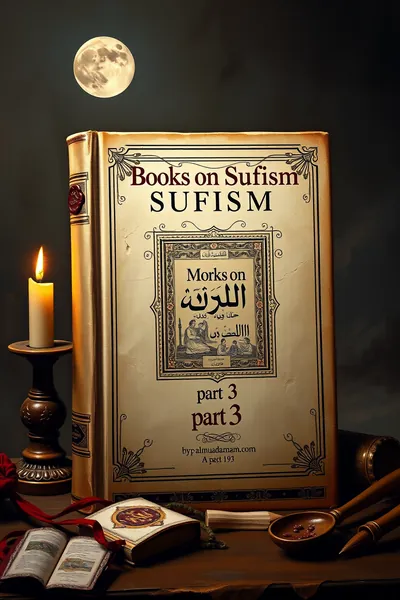
Sufism and Shariah - A study of shaykh Ahmad Sirhindi's effort to reform Sufism

 82
82

Sufism and Shariah - A study of shaykh Ahmad Sirhindi's effort to reform Sufism



Silas Hawthorne (Hermetic Studies Editor) — Smirna Si's "Sufism and Shariah" is a monumental contribution to our understanding of Islamic esotericism. Si's meticulous research into Shaykh Ahmad Sirhindi's reformist agenda reveals the delicate equilibrium between divine law and mystical experience. The book offers profound insights into the spiritual architecture Sirhindi championed, emphasizing the integration of Shariah as a potent vehicle for attaining direct gnosis. This work is indispensable for scholars and practitioners alike, particularly those interested in the Naqshbandi order and the intricate pathways to spiritual purification. Si’s lucid prose demystifies complex theological concepts, making it an authoritative yet accessible guide.
📝 Description
82
Smirna Si's 2009 study examines Shaykh Ahmad Sirhindi's 17th-century efforts to reform Sufism.
Smirna Si's "Sufism and Shariah" analyzes the work of Shaykh Ahmad Sirhindi, a significant figure in 17th-century Indian Islam. Sirhindi, known as the 'Renewer of the Second Millennium,' sought to reconcile Islamic law (Shariah) with the mystical path of Sufism. Si's study details Sirhindi's reformist agenda, which aimed to align outward religious practice with the inner spiritual quest for closeness to God.
The book discusses the spiritual insights, symbolic language, and theological discussions prevalent in Sufism during that era. It shows how Sirhindi attempted to harmonize the external requirements of Islam with the internal pursuit of divine knowledge. This work is relevant for understanding the historical development of Islamic mysticism and its relationship with orthodox religious structures.
This book sits within the study of Islamic esotericism, specifically the Naqshbandi Sufi order to which Shaykh Ahmad Sirhindi belonged. It addresses the historical tension and interplay between the exoteric legal framework of Islam and its inner, mystical dimension. Sirhindi's specific project aimed to purify and reorient Sufi practices, ensuring they remained grounded in Islamic scripture and law while pursuing direct spiritual experience. The work examines how a major Sufi figure sought to maintain the integrity of the mystical path within orthodox religious boundaries.
💡 Why Read This Book?
Uncover the profound synthesis of Islamic law and mystical practice. Explore the transformative reform efforts of Shaykh Ahmad Sirhindi, a pivotal figure in Sufism. This book is essential for scholars of comparative religion, seekers of esoteric wisdom, and practitioners aiming to deepen their understanding of the spiritual path within an orthodox framework. Discover the enduring relevance of integrating outward observance with inner realization.
⭐ Reader Reviews
Honest opinions from readers who have explored this book.
❓ Frequently Asked Questions
Who was Shaykh Ahmad Sirhindi?
Shaykh Ahmad Sirhindi (1564-1624) was a prominent Indian Sufi saint and scholar of the Naqshbandi order, revered as the 'Renewer of the Second Millennium' (Mujaddid-i Alf-i Thani) for his efforts to reform and revitalize Islamic spiritual life and jurisprudence.
What is the core tension between Sufism and Shariah explored in this book?
The book examines the historical and theological debate concerning the integration of Sufism's experiential, inward focus with the Shariah's emphasis on outward legalistic observance, and how Sirhindi sought to reconcile these apparent divergences.
What is the significance of the Naqshbandi order in this study?
The Naqshbandi order, to which Sirhindi belonged, is central as it provided the specific spiritual framework and methodology for his reformist initiatives, emphasizing sober intoxication and the integration of divine presence into daily life.
Is this book suitable for beginners to Sufism?
While academically rigorous, the book's clear explanations make it accessible to motivated beginners who are serious about understanding the foundational principles and historical context of Islamic mysticism and its relationship with Islamic law.
What does 'reform' mean in the context of Sirhindi's work?
Sirhindi's 'reform' aimed to purify Sufi practices from accretions that deviated from orthodox Islam, re-emphasize the primacy of the Shariah as the path to God, and articulate a refined understanding of divine unity (Tawhid) through the lens of Sufi experience.
🔮 Key Themes & Symbolism
The Unification of the Exoteric and Esoteric
This theme studies Shaykh Ahmad Sirhindi's groundbreaking efforts to bridge the perceived chasm between the outward observances of Islamic law (Shariah) and the inward, experiential journey of Sufism. It explores how Sirhindi argued that true spiritual realization is not found in abandoning Shariah, but in its deepest and most authentic application, allowing the exoteric to become a potent vehicle for the esoteric. The study illuminates the symbolic language and theological arguments employed to demonstrate that the outward forms of worship, when performed with profound inner consciousness, lead directly to divine proximity and the unveiling of hidden truths.
The Mujaddid's Spiritual Vision
The concept of the 'Mujaddid' or 'Renewer' is central, highlighting Sirhindi's role in revitalizing Islamic spiritual and legal thought during an important era. This theme examines his unique theological insights, particularly his reinterpretation of Tawhid (Divine Unity) in light of Sufi experiences, and his emphasis on the integration of human will with divine decree. The book explores how Sirhindi's vision aimed to purify the spiritual landscape from heterodox influences, re-establishing a robust synthesis of orthodox Islam and authentic mysticism, thereby guiding seekers back to the pristine teachings of the Prophet.
Symbolism and the Path of the Naqshbandi
This theme unravels the rich symbolic universe inherent in the Naqshbandi tradition, as articulated and reformed by Sirhindi. It investigates the subtle meanings embedded in practices such as dhikr (remembrance), muraqabah (contemplation), and the concept of 'sober intoxication.' The study illuminates how these symbols are not mere ritualistic acts but profound keys to unlocking deeper spiritual states, fostering a conscious awareness of God's omnipresence, and ultimately facilitating the soul's return to its primordial essence.
💬 Memorable Quotes
Direct passages from the work, attributed to the author.
“To know God is to know oneself, and to know oneself is to know God.”
— This highlights the reciprocal relationship between self-awareness and divine knowledge, a core tenet in many mystical traditions, suggesting that true introspection leads to the recognition of the divine within.
“The outward is the servant of the inward.”
— Sirhindi posits that external religious practices are subservient to and derive their true meaning from the internal state of the practitioner, advocating for a conscious and present engagement with worship.
“The journey of the heart is the true pilgrimage.”
— This underscores the Sufi emphasis on the internal spiritual journey and the cultivation of inner states as the paramount path towards divine proximity, surpassing mere physical travel.
💡 Key Ideas
Editorial paraphrase of the work's core concepts — not direct quotes.
The Shariah is the lamp, and the Tariqah is the light it illuminates.
This quote emphasizes Sirhindi's view that Islamic law provides the essential framework and guidance, while Sufi practice unlocks the deeper spiritual illumination and experiential understanding of divine truths.
In the stillness of the soul, the voice of the Divine is heard.
This quote points to the importance of inner silence and contemplative practice as the necessary conditions for receiving divine inspiration and direct spiritual perception.
🌙 Esoteric Significance
Tradition
This study is deeply rooted in the Sunni Islamic esoteric tradition, specifically the Naqshbandi Sufi order. It explores the intricate pathways of spiritual purification, divine gnosis, and the realization of Tawhid (Divine Unity) as understood within this lineage. The work highlights the Naqshbandi emphasis on sober intoxication, remembrance of God in all states, and the integration of spiritual discipline with adherence to Islamic law, offering a profound glimpse into one of the most influential branches of Islamic mysticism.
Symbolism
The book deciphers the strong symbolism inherent in Sirhindi's teachings and Naqshbandi practices. Key symbols include the 'lamp' (Shariah) and 'light' (Tariqah), representing the inseparable relationship between outer practice and inner illumination. Other potent symbols explored are the stages of the soul's journey, the concept of 'sober intoxication' as a state of constant divine awareness, and the subtle nuances of divine names and attributes as keys to understanding God's manifest and hidden realities. These symbols serve as profound esoteric keys to unlocking deeper spiritual perception and direct experience of the Divine.
Modern Relevance
In an age often characterized by fragmentation and a disconnect between outward actions and inner conviction, Sirhindi's emphasis on the harmonious integration of Shariah and Sufism holds profound modern relevance. His work offers a powerful model for spiritual practitioners seeking to live a life of integrated faith, where outward observance is infused with deep inner consciousness and a sincere pursuit of divine love. For scholars and seekers alike, it provides timeless wisdom on maintaining spiritual integrity, navigating theological complexities, and fostering a holistic approach to faith in the contemporary world.
👥 Who Should Read This Book
This book is indispensable for scholars of Islamic studies, comparative religion, and mysticism, offering a rigorous academic examination of a critical period in Sufi history. Practitioners of Sufism, particularly those within the Naqshbandi tradition or seeking to understand its foundations, will find profound guidance and theological depth. Spiritual seekers of all backgrounds interested in the intersection of law and mysticism, and those yearning to understand how outward religious practice can be a conduit for profound inner transformation, will also benefit immensely. Beginners seeking a serious introduction to the complexities of Islamic esotericism and its historical context will find it an clear, albeit challenging, read.
📜 Historical Context
Smirna Si's "Sufism and Shariah" is set against the backdrop of 17th-century Mughal India, a period marked by significant intellectual and spiritual ferment. This era saw the flourishing of various Islamic scholarly traditions, alongside the continued evolution of Sufi orders. Shaykh Ahmad Sirhindi emerged as a towering figure during this time, responding to perceived deviations within Sufi practices and theological interpretations. His reformist zeal was a direct response to the need to reassert the primacy of orthodox Islamic jurisprudence (Shariah) while simultaneously affirming the validity and necessity of the Sufi path (Tariqah) as a means to attain divine knowledge and closeness. The socio-political landscape, characterized by the consolidation of the Mughal Empire and the interplay of different religious and philosophical ideas, provided the fertile ground for Sirhindi's influential teachings, which sought to ensure the spiritual integrity and continuity of Islam for generations to come.
📔 Journal Prompts
Reflect on a time when you felt a disconnect between your outward actions and your inner intentions. How can the principles of Shariah and Sufism inform your approach to bridging this gap?
Consider the concept of 'sober intoxication' as described by Sirhindi. What does this state of being mean to you, and how might one cultivate it in daily life?
Analyze the relationship between the 'lamp' (Shariah) and the 'light' (Tariqah) as presented in the book. How does this metaphor enhance your understanding of religious practice?
Sirhindi sought to reform Sufism by re-emphasizing orthodox principles. What are the potential challenges and benefits of seeking reform within established spiritual traditions?
How does the idea of 'knowing oneself to know God' resonate with your personal spiritual journey? What practices might facilitate this self-discovery?
🗂️ Glossary
Shariah
The divine law of Islam, encompassing religious observances, moral conduct, and legal principles derived from the Quran and Sunnah, forming the outward framework of Islamic life.
Sufism (Tariqah)
The mystical dimension of Islam, focused on the inner journey of the soul towards direct experience of God through practices like contemplation, remembrance, and asceticism.
Mujaddid
An Arabic term meaning 'Renewer,' referring to a divinely appointed individual believed to appear at the beginning of each Islamic century to revive and reform the faith.
Tawhid
The absolute oneness and uniqueness of God in Islam, a central concept in Islamic theology and Sufism, explored in various dimensions of divine unity.
Dhikr
The remembrance of God, a core Sufi practice involving the repetition of divine names or phrases, often done individually or collectively, to cultivate spiritual awareness.
This book appears in 2 collections
🔮 Readers Also Liked
Browse all →








More by Smirna Si
All books →




From the “Christian Mysticism” Collection
View all →







More Free Mysticism & Contemplation Books
View all →