Mysticism
 72
72

Mysticism



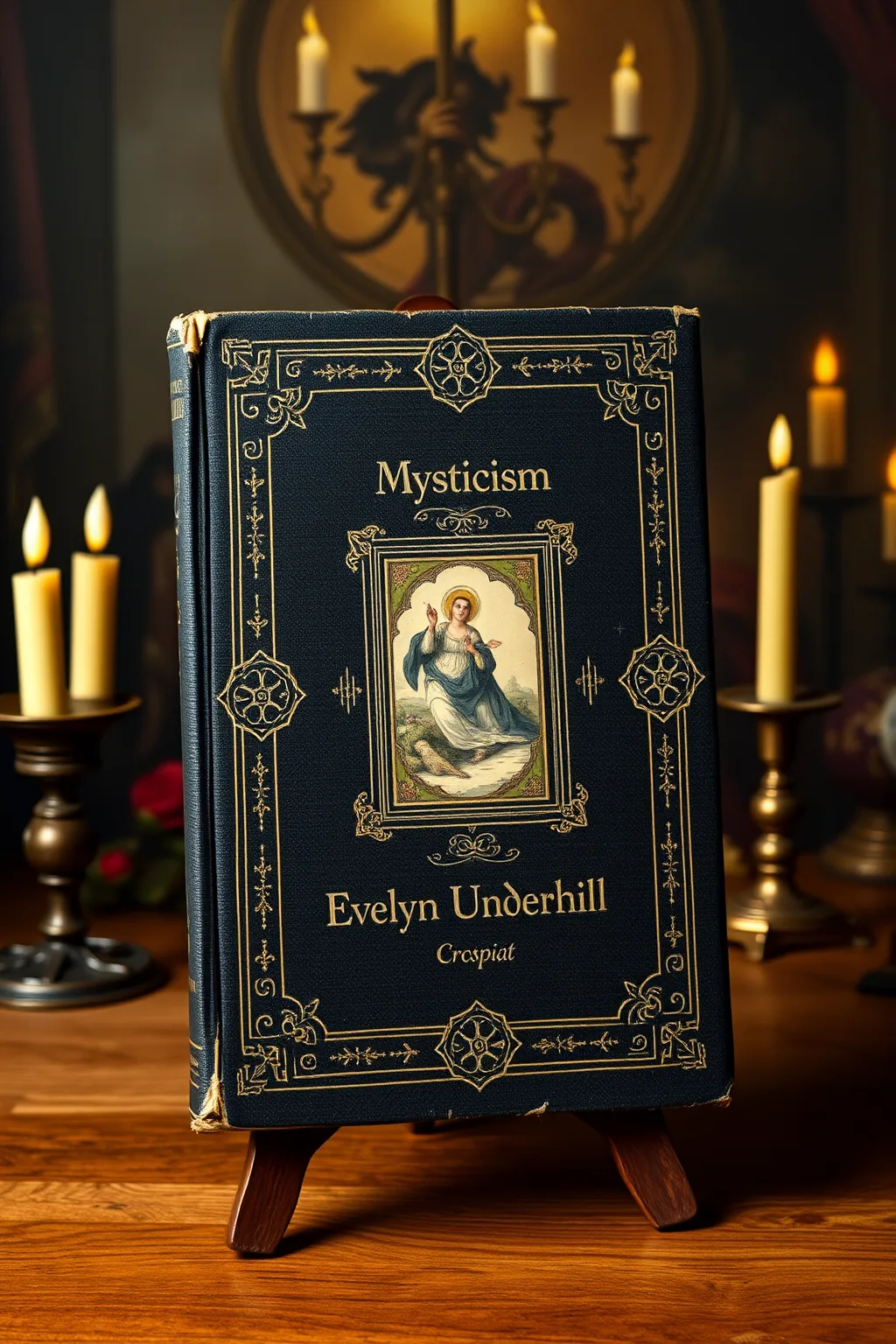
Evelyn Underhill's "Mysticism" stands as an enduring beacon in the study of spiritual consciousness. Eschewing simplistic classifications, Underhill offers a nuanced exploration of the mystic's journey, emphasizing its dynamic and transformative nature. Her profound understanding of historical figures, from Christian saints to Eastern sages, allows her to weave a compelling narrative of the soul's relentless pursuit of the Divine. This work is indispensable for scholars and practitioners alike, providing deep insights into the psychology and phenomenology of profound spiritual experience. It is a testament to the timeless quest for union with the Absolute.
📝 Description
72
Evelyn Underhill's 1911 book "Mysticism" examines the stages of the spiritual life.
Evelyn Underhill's "Mysticism," published in 1911, details the process of spiritual development. It moves beyond simple theology to analyze the lived experiences of individuals who sought direct connection with the divine. Underhill organizes this ascent into distinct phases, from initial awareness to full union. She draws on examples from various historical periods and traditions, including Christian mystics like Julian of Norwich and Teresa of Avila, as well as figures from other spiritual paths. The book focuses on the subjective experience of the mystic, including visions, ecstasies, and the integration of these experiences into daily life.
Rather than presenting mysticism as an arcane pursuit, Underhill frames it as a natural, albeit intense, human capacity. She addresses the language and symbolism mystics employ to describe their encounters with what she terms the "Absolute." The work aims to make these experiences understandable to a wider audience, offering a structured approach to a subject often shrouded in mystery. It is not an instruction manual but an analysis of the spiritual journey itself.
Published in 1911, Evelyn Underhill's "Mysticism" arrived during a period of renewed interest in spiritual and occult subjects, often termed the "New Age" or "Esoteric Revival." While Underhill focused primarily on Christian mysticism, her work engaged with broader questions about direct spiritual experience that resonated with contemporary occultists and spiritual seekers. She provided a systematic framework for understanding these phenomena, differentiating her approach from purely devotional or purely academic studies. Her analysis of stages, symbolism, and the nature of divine union contributed to the wider discourse on esoteric psychology and the human potential for transcendence.
💡 Why Read This Book?
Discover the universal language of the soul's quest for the Divine. "Mysticism" offers a profound and accessible exploration of spiritual transformation, unveiling the hidden patterns of mystic experience across cultures and eras. Ideal for seekers yearning for deeper connection, scholars unraveling spiritual traditions, and practitioners seeking to illuminate their contemplative path with timeless wisdom.
⭐ Reader Reviews
Honest opinions from readers who have explored this book.
❓ Frequently Asked Questions
Is Evelyn Underhill's 'Mysticism' a textbook?
No, Underhill explicitly states that 'Mysticism' is not a textbook. It's a deeply insightful and evocative exploration of the subject, focusing on the lived experience and spiritual journey rather than academic categorization.
What makes Underhill's approach to mysticism unique?
Underhill offers a more organic and dynamic view of mystical experience, diverging from rigid, four-part classifications. She emphasizes the progressive stages and the integration of the mystic's life with the ordinary world.
Which historical mystics are discussed?
The book delves into the lives and writings of numerous mystics, including figures like St. Augustine, Meister Eckhart, St. Teresa of Avila, St. John of the Cross, and many others, illustrating the universality of the mystic path.
Who is the intended audience for 'Mysticism'?
This book is for anyone interested in the profound depths of human spirituality, from serious students of mysticism and theology to those on a personal quest for spiritual understanding and connection.
Can this book be read by individuals from different religious backgrounds?
Absolutely. While Underhill writes from a Christian perspective, the core principles and experiences of mysticism she explores are universally applicable and resonate with seekers across all spiritual traditions.
🔮 Key Themes & Symbolism
The Ascent of the Soul
Underhill meticulously traces the soul's journey from its initial stirrings of spiritual awareness to its ultimate union with the Divine. This theme emphasizes the dynamic and progressive nature of mystical experience, illustrating how the seeker moves through stages of purification, illumination, and union, shedding the limitations of the ego to embrace a higher consciousness. It highlights the inherent human drive towards transcendence and the transformative power of encountering the Absolute.
Symbolism and the Language of the Divine
This work explores the rich symbolic language that mystics across ages and cultures have employed to articulate ineffable experiences. Underhill illuminates how symbols, metaphors, and allegories serve as crucial bridges between the material and spiritual realms, offering glimpses into truths that transcend ordinary language. Understanding this symbolic grammar is presented as key to unlocking the deeper meanings embedded within spiritual texts and personal mystical encounters.
The Integration of the Mystic Life
A central tenet explored is the idea that true mysticism is not an escape from the world but an integration of the spiritual into everyday life. Underhill argues that the clear insights gained through contemplation must ultimately inform and transform one's actions and relationships. This theme underscores the practical application of mystical awareness, demonstrating how a deepened connection with the Divine can lead to greater compassion, service, and a more meaningful engagement with existence.
💬 Memorable Quotes
Direct passages from the work, attributed to the author.
“Mysticism is the art of union with reality.”
— This concise statement expresses the core of Underhill's thesis, defining mysticism not as an abstract philosophy but as a lived practice aimed at achieving direct communion with the ultimate nature of existence.
“The whole of religion is a movement towards God.”
— This highlights the inherent teleological nature of spiritual pursuit, positing that all religious endeavors, at their deepest level, are expressions of the soul's innate orientation and yearning for divine connection.
“The divine is not something to be found, but something to be realized.”
— This clear insights shifts the focus from external seeking to internal recognition, suggesting that the Divine is not an external entity to be discovered but an immanent reality to be awakened to within oneself.
“Love is the bridge between the soul and God.”
— This emphasizes the central role of love, often understood as divine or unconditional love, as the primary force and means by which the human soul can achieve union with the Divine.
“The mystic sees the eternal in the temporal.”
— This points to the mystic's heightened perception, their ability to discern the timeless, sacred dimension of reality within the fleeting, ordinary moments of daily life.
🌙 Esoteric Significance
Tradition
Underhill's work is deeply rooted in the Christian esoteric tradition, particularly within the Anglo-Catholic movement. However, she transcends denominational boundaries by drawing parallels with mystical thought from Sufism, Neoplatonism, and Eastern traditions. Her focus on the direct, unmediated experience of the Divine aligns with perennialist views of spiritual truth, suggesting a universal core to the mystic path that is accessible across diverse cultural and religious expressions.
Symbolism
The book is rich with an exploration of esoteric symbolism. Underhill elucidates how mystics use metaphors of light, darkness, ascent, descent, marriage, and warfare to describe the soul's journey. These symbols are not merely decorative but represent fundamental archetypal patterns of transformation, bridging the gap between the visible and invisible realms. She highlights how the 'language of the sacred' operates through these potent images, unlocking deeper layers of meaning for the initiated reader.
Modern Relevance
In an era often characterized by secularism and fragmented consciousness, Underhill's "Mysticism" offers a vital antidote. It speaks to the enduring human longing for transcendence and deep connection, providing a framework for understanding profound inner experiences. Her emphasis on the integration of spiritual insight into daily life remains highly relevant for those seeking meaning and purpose amidst the complexities of modern existence, encouraging a more holistic and spiritually aware way of being.
👥 Who Should Read This Book
This important work is essential for a broad spectrum of readers. **Beginners** will find Underhill's prose lucid and inviting, offering a clear introduction to the fundamental concepts and historical range of mysticism without overwhelming jargon. **Scholars and theologians** will appreciate its rigorous scholarship, nuanced analysis, and its critical engagement with previous theories of mysticism. **Spiritual seekers** will discover a profound guide, useful the inner journey, offering inspiration, and providing a deeper understanding of the universal patterns of spiritual awakening. **Contemplative practitioners** will find rich material to deepen their practice, offering insights into the nature of meditation, prayer, and the ultimate goal of union with the Divine.
📜 Historical Context
Written in 1911, Evelyn Underhill's "Mysticism" emerged during a period of profound intellectual and spiritual ferment in the early 20th century. The late Victorian and Edwardian eras saw a growing interest in exploring the inner life, often in reaction to the perceived materialism and rationalism of the age. Influenced by figures like William James and the resurgence of interest in Christian mysticism, Underhill positioned her work within a landscape where established religious dogma was being re-examined and where new avenues of spiritual inquiry were being opened. Her nuanced approach, which sought to understand the subjective experience of the mystic, resonated with a readership grappling with existential questions and seeking deeper meaning beyond conventional societal structures. The book contributed significantly to the popularization and academic study of mysticism, bridging the gap between scholarly analysis and the lived reality of spiritual pursuit.
📔 Journal Prompts
Reflect on a moment in your life where you felt a profound sense of connection to something larger than yourself. How did this experience align with Underhill's descriptions of mystical awareness?
Underhill discusses the 'language of the sacred' through symbols. Identify a personal symbol that holds deep spiritual meaning for you and explore its significance in your life.
Consider the concept of 'union with reality.' What does this phrase mean to you personally, and what steps might you take to move closer to such a realization?
How does the idea of integrating mystical insights into everyday life resonate with your current experiences? What challenges and opportunities do you foresee in this integration?
Underhill traces the 'ascent of the soul.' Describe your own perceived spiritual journey, noting any moments of purification, illumination, or a longing for deeper union.
🗂️ Glossary
The Absolute
In mystical and philosophical contexts, 'The Absolute' refers to the ultimate, unconditioned reality that is beyond all finite existence and conceptual understanding. It is often synonymous with God, the One, or the ground of all being.
Ineffability
The quality of being impossible to describe in words. Mystical experiences are often characterized by ineffability, meaning they are so profound and unique that they defy ordinary language to articulate.
Noetic Quality
This refers to the sense of insight and knowledge conveyed by a mystical experience. Mystics often report feeling that they have gained profound, direct understanding or access to spiritual truths during their experiences.
Transcendence
The state of existing beyond or above the normal or physical level. In mysticism, transcendence refers to the experience of going beyond the ordinary limitations of the self and the material world to connect with a higher reality.
Contemplation
A deep, sustained form of prayer or meditation focused on experiencing the presence of God or the Divine. It involves quiet reflection, often leading to a state of loving union and profound spiritual insight.
This book appears in 1 collection
🔮 Readers Also Liked
Browse all →







From the “Christian Mysticism” Collection
View all →







More Free Mysticism & Contemplation Books
View all →