The Cloud of Unknowing
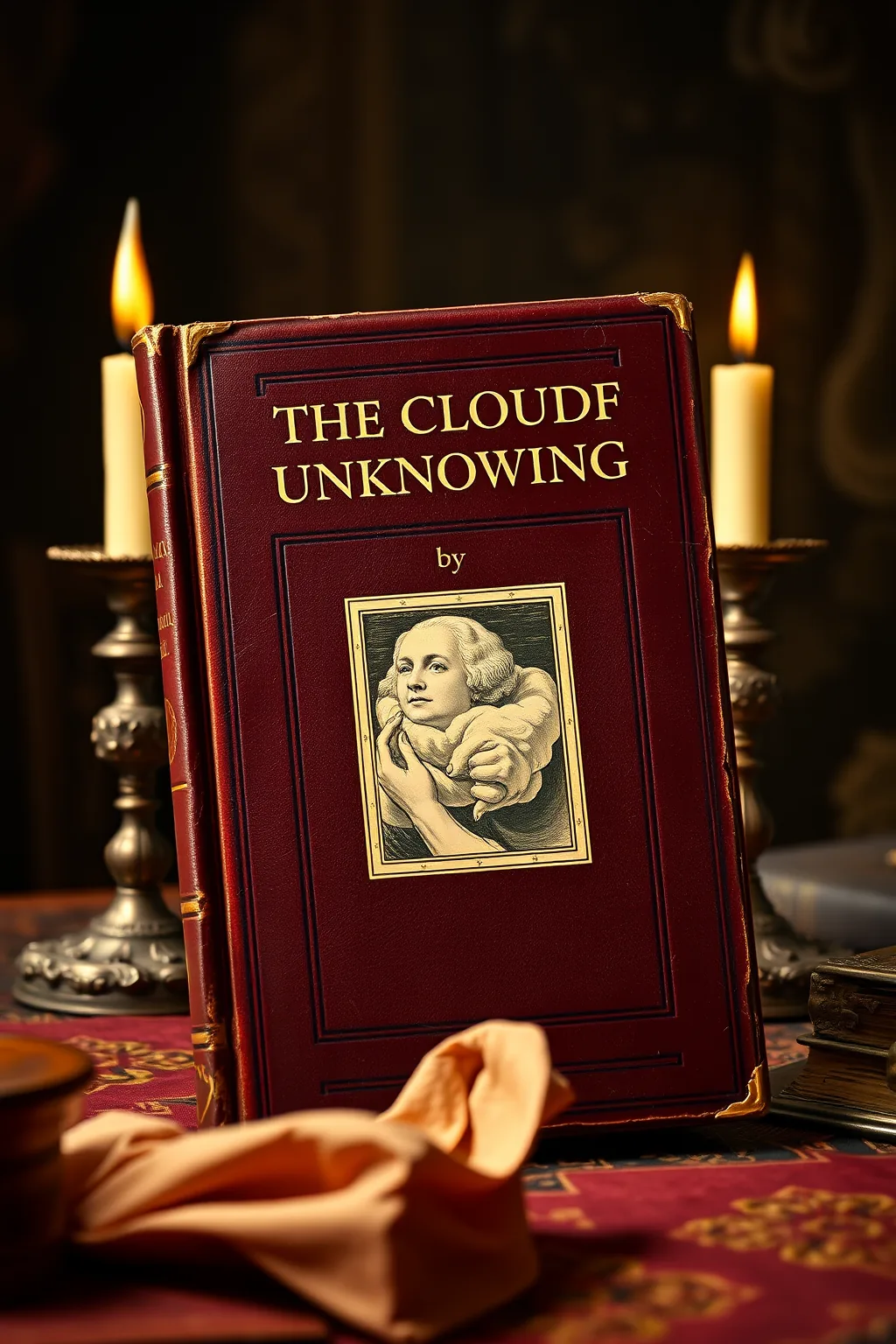
 82
82

The Cloud of Unknowing



Silas Hawthorne (Hermetic Studies Editor) — Evelyn Underhill's rendering of 'The Cloud of Unknowing' is an alchemical key, unlocking the profound wisdom of this anonymous medieval master. This text is not merely a devotional work; it is a sophisticated guide to theurgy of the soul, revealing the practical application of apophatic theology for direct spiritual apprehension. Underhill's lucid prose illuminates the core tenets: the necessity of 'charity' as the driving force and the 'working' of contemplative love as the supreme spiritual discipline. Essential for anyone serious about the contemplative path and the esoteric underpinnings of Christian mysticism, it offers timeless insights into the nature of divine union.
The Cloud of Unknowing
- Attribution
- Anonymous (English Christian mystic)
- Date
- Late 14th century
- Tradition
- Christian apophatic mysticism (English mystical tradition)
- Language
- Originally in Middle English. Most popular modern editions are based on Evelyn Underhill's 1922 modernization or the Edmund Underhill 1912 edition.
- Status
- Public domain: original text is medieval; Underhill 1912/1922 modernizations are public domain.
Note: Author unknown. Internal evidence suggests a single English monk, likely a Carthusian, writing in the East Midlands dialect of Middle English.
See also: Often grouped with Walter Hilton's 'The Scale of Perfection' and 'The Book of Margery Kempe' as part of the same 14th-century English mystical tradition.
Editorial provenance record — bibliographic facts verified against reference works. How we curate ↗
📝 Description
82
In 1912, Evelyn Underhill translated 'The Cloud of Unknowing,' a 14th-century text on contemplative prayer.
This translation of an anonymous 14th-century work presents a guide to mystical union with God. The author proposes that the soul must move beyond intellectual understanding and conceptual thought to experience the divine. This is achieved through a form of contemplative prayer that involves a deep interior quietude. The text describes a 'cloud' not as darkness or emptiness, but as a radiant divine presence that conceals God while simultaneously acting as the path to direct encounter.
The anonymous mystic advocates for a deliberate shedding of worldly concerns and mental constructs. This process of spiritual emptying is intended to prepare the individual for a direct, unmediated experience of the Absolute. The book encourages a personal, experiential knowledge of the sacred that exists outside of formal doctrine or rational analysis. It invites readers to seek a loving communion that transcends ordinary perception.
This text is a significant example of late medieval English mysticism, a tradition deeply influenced by Dionysius the Areopagite's concept of apophatic theology. It belongs to a lineage of Christian contemplative writings that emphasize direct experience of God over scholastic theology. The anonymous author's focus on the soul's ascent through a 'cloud of unknowing' reflects a desire to move beyond intellectual formulation towards a more intuitive and affective apprehension of the divine, a common pursuit within esoteric Christian circles.
✍️ Author
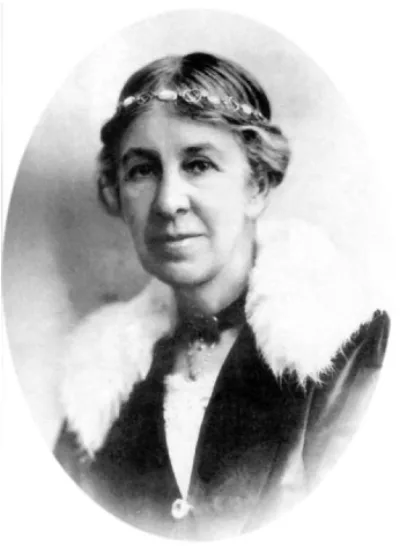
Evelyn Underhill
Evelyn Underhill was an English Anglo-Catholic writer known for her works on Christian mysticism.
Mystic
💡 Why Read This Book?
Embark on a transformative journey toward direct spiritual encounter. 'The Cloud of Unknowing' offers a rare glimpse into the heart of Christian mysticism, providing practical guidance for cultivating contemplative prayer and experiencing divine presence. Ideal for seekers yearning for deeper connection, scholars of esoteric traditions, and practitioners of meditation seeking to transcend the intellect.
⭐ Reader Reviews
Honest opinions from readers who have explored this book.
❓ Frequently Asked Questions
Who was the original author of 'The Cloud of Unknowing'?
The original author remains anonymous, believed to be an English mystic of the latter half of the 14th century. Evelyn Underhill is the translator and interpreter of this profound spiritual work.
What is the meaning of 'The Cloud of Unknowing'?
The 'cloud' represents the unknowable, ineffable nature of God, a divine mystery that cannot be grasped by the intellect but can be experienced through contemplative love and surrender.
What is the primary method advocated in the book?
The book advocates for contemplative prayer, emphasizing a 'cloud of forgetting' and a 'cloud of unknowing' to empty the mind of worldly distractions and intellectual judgments, thereby opening the soul to God's presence.
Is this book suitable for beginners in mysticism?
While profound, the book can be accessible to earnest beginners with guidance. Evelyn Underhill's translation and scholarly introductions provide valuable context and support for those new to contemplative practices.
What is the main goal of the spiritual path described?
The ultimate goal is union with God, a state of direct, loving knowledge and experience of the Divine Presence, achieved through spiritual surrender and contemplative stillness.
🔮 Key Themes & Symbolism
The Divine Ineffability and the Cloud
This theme explores the central metaphor of the 'cloud' as the divine mystery that transcends human comprehension. It explores how God's true nature is veiled from the rational mind, not by absence, but by an overwhelming, luminous presence. The text argues that true spiritual knowledge arises not from intellectual dissection, but from a humble surrender to this divine unknowability, allowing for a direct, intuitive apprehension of the Absolute.
Contemplative Prayer as the Path of Union
Central to the work is the practice of contemplative prayer, a method of interior stillness and loving attention directed towards God. The book outlines a disciplined approach to quieting the discursive mind, urging the reader to let go of thoughts, images, and even theological concepts. This 'working' or 'loving' prayer is presented as the most potent means to dissolve the ego's barriers and foster a profound, unitive relationship with the Divine.
Spiritual Surrender and the Emptying of Self
The treatise strongly emphasizes the necessity of radical spiritual surrender. This involves a profound 'emptying' of the self – a relinquishing of attachments to created things, personal desires, and intellectual pride. By divesting oneself of all that is not God, the soul creates a sacred space for divine infusion. This process of kenosis, or self-emptying, is depicted as the prerequisite for receiving God's transformative grace and achieving true spiritual liberation.
💬 Memorable Quotes
Direct passages from the work, attributed to the author.
“For God may be loved, but not comprehended.”
— Highlighting the ineffable nature of the Divine, this phrase underscores that true connection comes through love and intuitive experience, not intellectual mastery.
“For in this cloud of unknowing, I have fashioned me a ladder.”
— This powerful metaphor suggests that the very mystery and unknowability of God can become the means by which the soul ascends towards divine union.
“For God himself it is that worketh all.”
— This statement points to the divine agency in spiritual transformation, encouraging trust and surrender to God's active grace in the soul's journey.
💡 Key Ideas
Editorial paraphrase of the work's core concepts — not direct quotes.
And so, I counsel you, leave all things that are made, and the knowing of them.
This quote captures the core teaching of spiritual detachment, urging the seeker to move beyond the sensory and intellectual understanding of the material world to seek a higher truth.
Love can not be strained, nor by no means compelled.
Emphasizing the voluntary and pure nature of divine love, this quote warns against forced devotion and points towards authentic, heartfelt connection.
🌙 Esoteric Significance
Tradition
This work is a central to Christian Mysticism, specifically within the contemplative and apophatic traditions. It aligns with the 'via negativa' or negative theology, which seeks to describe God by what God is not, thereby pointing towards the divine transcendence. It shares kinship with Hesychasm in Eastern Orthodoxy and other mystical paths that emphasize inner stillness and direct apprehension of the Divine.
Symbolism
The central symbol is the 'Cloud of Unknowing,' representing the divine mystery that is both a veil and a gateway. Other potent symbols include the 'cloud of forgetting' (shedding worldly knowledge) and the 'cloud of unknowing' (facing the divine mystery). The 'eye of contemplation' and the 'dart of love' are symbolic of the spiritual faculties and the direct, forceful impulse of the soul towards God.
Modern Relevance
In an age saturated with information and intellectualization, 'The Cloud of Unknowing' offers a radical antidote. Its emphasis on stillness, surrender, and direct experience resonates deeply with contemporary seekers of mindfulness, meditation, and non-dual consciousness. The text provides a timeless blueprint for reading through the inner landscape, fostering emotional resilience, and cultivating a profound sense of peace and connection in a chaotic world.
👥 Who Should Read This Book
This profound text is a treasure for a diverse range of readers. **Beginners** seeking an introduction to contemplative spirituality will find Evelyn Underhill's translation useful. **Scholars** of theology, religious studies, and esoteric traditions will appreciate its historical depth and mystical insights. **Spiritual seekers** yearning for a deeper, more direct relationship with the Divine will discover practical guidance and profound encouragement. **Practitioners** of meditation and mindfulness will find resonances and advanced techniques for transcending the ego and cultivating inner peace.
📜 Historical Context
Written in the turbulent 14th century, a period marked by plague, schism, and social upheaval in England, 'The Cloud of Unknowing' emerged from a rich tradition of Christian mysticism. This era saw a flourishing of vernacular spiritual writing, seeking to make profound theological and contemplative insights accessible beyond the learned clergy. The anonymous author's work stands as a evidence of the enduring human quest for direct experience of the Divine, often in contrast to or in dialogue with scholastic theology. Evelyn Underhill, a prominent scholar of mysticism in the early 20th century, recognized its profound significance, translating and contextualizing it for a modern audience, bridging centuries of spiritual inquiry.
📔 Journal Prompts
Meditate on the concept of the 'cloud of unknowing.' What does this mystery evoke in you?
Reflect on the 'cloud of forgetting.' What aspects of worldly knowledge do you need to release to approach the divine?
How can the practice of 'loving' or 'working' prayer be integrated into your daily life?
Consider the idea of spiritual surrender. What are your greatest resistances, and how can you begin to let them go?
Write about your personal experience with moments of divine presence or ineffable connection. What triggered them, and what did you learn?
🗂️ Glossary
Apophatic Theology
A theological approach that seeks to understand God by negation, describing what God is not, rather than what God is, due to God's transcendent and ineffable nature.
Contemplative Prayer
A form of prayer characterized by stillness, interior silence, and a direct, loving attention to God, often transcending words and concepts.
Discursive Prayer
A form of prayer that involves reasoning, meditation, and the use of words or images to approach God, in contrast to contemplative prayer.
Via Negativa
Latin for 'negative way,' synonymous with apophatic theology, emphasizing the limits of human language and intellect in describing the divine.
Union with God
The ultimate spiritual goal described in the text, referring to a state of profound, loving communion and direct experience of the Divine Presence.
This book appears in 2 collections
🔮 Readers Also Liked
Browse all →







More by Evelyn Underhill
All books →




From the “Meditation” Collection
View all →




![Science Without Bounds [A Synthesis Of Science, Religion And Mysticism].pdf (PDFy mirror)](/img/thumb/science-without-bounds-a-synthesis-of-science-religion-and-mysticism-pdf-pdfy-mirror.webp)
More Free Mysticism & Contemplation Books
View all →