Sufism
 73
73

Sufism
Alexander Knysh’s survey of Sufism offers a welcome corrective to simplistic portrayals, presenting the tradition with admirable scholarly rigor. He effectively demonstrates Sufism’s historical ebb and flow, particularly noting its 20th-century decline and subsequent modern revival, a point often overlooked. The book excels in detailing the intellectual lineage and diverse practices that constitute Sufism across centuries. A minor limitation lies in its dense academic prose, which may challenge the casual reader seeking purely devotional material. However, the section discussing the debates between figures like Al-Ghazali and Ibn Arabi regarding the integration of mystical experience with Islamic law provides a particularly illuminating glimpse into the tradition’s internal intellectual ferment. Knysh’s work is an indispensable, if demanding, resource for serious students of Islamic mysticism.
📝 Description
73
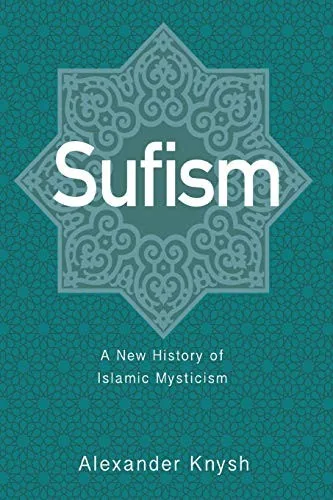
Alexander Knysh's 2016 book examines Sufism as a dynamic Islamic tradition, not a static doctrine.
This 2016 study approaches Sufism not as a single, unchanging entity, but as a living tradition within Islam. The author traces the roots of Islamic asceticism and mysticism back to the early centuries of Islam. He maps the formation of formal Sufi orders and their theological foundations. The book details the varied practices, beliefs, and societal roles Sufis have held across history. These roles ranged from advisors to royalty to wandering ascetics.
Knysh charts Sufism's path from its peak as a central mystical element in Islam to its diminished status in the 20th century. He also discusses its recent revival, framing this resurgence as a new expression of persistent spiritual energies rather than a simple return to earlier forms. The work places Sufi developments within the wider context of Islamic intellectual and social history. It investigates core Sufi ideas like *fana* (self-annihilation) and *baqa* (divine subsistence), as well as the importance of the spiritual teacher (*shaykh*). The complex interplay between Sufism and Islamic orthodoxy, marked by periods of both harmony and tension, is also a focus.
Sufism represents a mystical and contemplative dimension within Islam, seeking direct experience of the divine. This tradition, often viewed through the lens of its esoteric practices and teachings, explores concepts like spiritual annihilation (*fana*) and subsistence in God (*baqa*). Knysh's work situates these esoteric currents within the broader sweep of Islamic history, examining how they interacted with, and were sometimes challenged by, more orthodox interpretations of the faith. It highlights the internal diversity of Sufi thought, acknowledging both its sober legalistic expressions and its ecstatic mystical pronouncements.
💡 Why Read This Book?
• Gain a nuanced understanding of Sufism's historical trajectory, from its early ascetical roots to its 21st-century resurgence, moving beyond simplistic narratives. • Explore the complex interplay between Sufi metaphysics, such as *fana* and *baqa*, and orthodox Islamic jurisprudence, as analyzed by Knysh. • Appreciate the social and intellectual roles Sufis have played throughout Islamic history, from the medieval period to contemporary movements, as detailed in the book.
⭐ Reader Reviews
Honest opinions from readers who have explored this book.
❓ Frequently Asked Questions
When was Alexander Knysh's book 'Sufism' first published?
Alexander Knysh's comprehensive history of Sufism was first published on March 19, 2019, offering a contemporary scholarly perspective on this ancient tradition.
What is the primary focus of Knysh's 'Sufism'?
The book provides a pathbreaking history of Sufism, tracing its development from the earliest centuries of Islam to the present day, examining its decline and modern revival.
Is 'Sufism' by Alexander Knysh suitable for beginners?
While thoroughly researched, the book's academic nature makes it best suited for scholars and students of Islamic studies or comparative mysticism seeking in-depth knowledge.
Does the book cover Sufi practices?
Yes, the work explores the diverse practices, doctrines, and social roles of Sufis throughout history, offering insights into their spiritual paths.
What does the book say about Sufism's relationship with Islam?
Knysh examines the complex relationship between Sufism and Islamic orthodoxy, detailing periods of both integration and conflict within the broader Islamic tradition.
What historical periods does Alexander Knysh's 'Sufism' cover?
The book spans from the earliest centuries of Islam, through its medieval golden age, into the 20th century and its recent revival, providing a comprehensive historical arc.
🔮 Key Themes & Symbolism
Asceticism and Mystical Paths
The book meticulously charts the evolution of Sufism as Islam's primary ascetic-mystical current. It explores how early renunciants (*zuhhad*) laid the groundwork for later Sufi orders, emphasizing practices aimed at purifying the soul and achieving direct experiential knowledge of God. Knysh details the spectrum of these practices, from quiet contemplation to ecstatic states, highlighting their role in cultivating a deeper connection to the divine.
The Role of the Shaykh
Central to Sufi pedagogy is the figure of the spiritual guide, or *shaykh*. Knysh investigates the critical importance of this master-disciple relationship in transmitting esoteric knowledge and guiding initiates through the stages of the spiritual path (*tariqa*). The authority and function of the *shaykh* are examined across different historical periods and regional contexts, illustrating their enduring significance in Sufi communities.
Sufism and Islamic Orthodoxy
A persistent theme is the often-fraught relationship between Sufism and mainstream Islamic legal and theological traditions. Knysh analyzes historical instances of both accommodation and contention, showcasing how Sufi thinkers engaged with orthodox scholarship. Debates surrounding the permissibility of ecstatic utterances (*shath*) and the integration of mystical experience within Sharia law are presented, revealing the dynamic tension that shaped Sufi identity.
Modern Sufi Revival
The work dedicates significant attention to the 20th and 21st-century revival of Sufism following a period of decline. Knysh explores how contemporary Sufi movements adapt ancient traditions to modern contexts, addressing issues of globalization, secularization, and interfaith dialogue. This resurgence is portrayed not as a simple repetition of the past, but as an innovative adaptation of enduring spiritual principles.
💬 Memorable Quotes
Direct passages from the work, attributed to the author.
“Sufism saw a sharp decline in the twentieth century, only to experience a stunning revival in recent decades.”
— This observation highlights Sufism's dynamic historical trajectory, emphasizing its resilience and capacity for renewal against the backdrop of modern secularizing forces and internal challenges.
“Knysh explores how Sufism has been viewed by both its adherents and its critics throughout history.”
— This indicates the book's balanced approach, presenting Sufism not just through the lens of its followers but also acknowledging the external perspectives and critiques it has faced over centuries.
“The tradition in all its richness.”
— This phrase suggests the book aims to capture the many-sided nature of Sufism, moving beyond stereotypes to reveal its diverse expressions in theology, practice, and social engagement.
“A pathbreaking history of Sufism.”
— This positions the work as a significant contribution to the field, implying it offers new perspectives or synthesizes existing scholarship in a novel and impactful manner.
“From the earliest centuries of Islam to the present.”
— This emphasizes the book's comprehensive chronological scope, promising a deep historical dive that covers Sufism's entire lifespan within the Islamic tradition.
🌙 Esoteric Significance
Tradition
Sufism represents a central lineage within Islamic esotericism, deeply rooted in the Quranic emphasis on inner purification (*tazkiyat al-nafs*) and the pursuit of divine proximity. It shares common ground with other esoteric traditions in its focus on direct spiritual experience, the role of the adept, and the transmutation of the lower self. While distinct in its Islamic framework, its emphasis on love, gnosis (*ma'rifa*), and the stages of the soul's journey aligns with broader mystical and Gnostic currents.
Symbolism
Key symbols within Sufism, often explored in works like Knysh's, include the heart (*qalb*) as the locus of divine awareness, the journey of the lover (*'ashiq*) towards the Beloved (*ma'shuq*), and the concept of annihilation (*fana*) in the Divine presence. The *shaykh* often serves as a symbol of the perfected human being (*al-insan al-kamil*), a mirror reflecting divine attributes.
Modern Relevance
Contemporary thinkers and practitioners in various spiritual and philosophical circles draw upon Sufi concepts for insights into contemplative practice, ethics, and the nature of consciousness. Its emphasis on love, compassion, and the integration of the spiritual life with daily existence continues to inform spiritual seekers globally, including those in Western esoteric traditions seeking depth beyond purely intellectual pursuits.
👥 Who Should Read This Book
• Academic researchers in Islamic studies and comparative religion seeking a comprehensive, up-to-date historical and theological overview of Sufism. • Students of comparative mysticism and esoteric traditions interested in understanding a major spiritual path within Islam and its unique concepts. • General readers drawn to spiritual and philosophical inquiry who desire a nuanced, scholarly exploration of Sufism beyond popular or superficial accounts.
📜 Historical Context
Alexander Knysh's 'Sufism' emerges within a robust field of Islamic studies, building upon foundational work by scholars like R.A. Nicholson and Annemarie Schimmel. Published in 2019, it reflects decades of scholarship that moved beyond Orientalist interpretations to understand Sufism as an integral part of Islamic civilization. The book engages with the intellectual currents of the medieval Islamic world, including the theological debates between Ash'arites and Mu'tazilites, and later the philosophical explorations of figures like Ibn Arabi. It also addresses the impact of colonialism and modernist reforms in the 19th and 20th centuries, which often led to the marginalization or suppression of Sufi orders. The reception of Sufism in the West, particularly its romanticization or misunderstanding, is implicitly countered by Knysh's scholarly approach.
📔 Journal Prompts
The historical trajectory of Sufism from its early centuries to the present revival.
The significance of the *shaykh* in guiding initiates through the *tariqa*.
Analyzing the tension between Sufi ecstatic utterances (*shath*) and Islamic orthodoxy.
Reflecting on the concept of *fana* (annihilation) and its implications for the self.
Considering the adaptation of Sufi practices in the 21st century.
🗂️ Glossary
Sufism
The ascetic and mystical dimension of Islam, focused on the purification of the heart and the direct experience of God.
Tariqa
A Sufi order or spiritual path, characterized by specific teachings, practices, and a lineage of spiritual guides.
Shaykh
A spiritual guide or master in Sufism, responsible for leading disciples on the path to God.
Fana
Annihilation of the ego or self in the Divine presence, a key goal in Sufi spiritual development.
Baqa
Subsistence or abiding in God after the experience of *fana*, representing a stable state of divine consciousness.
Ma'rifa
Gnosis or intuitive knowledge of God, achieved through direct spiritual experience.
Shath
Ecstatic or unconventional utterances made by Sufis in states of intense spiritual intoxication, often challenging orthodox interpretations.