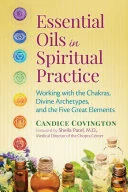
Essential Oils in Spiritual Practice
 74
74

Essential Oils in Spiritual Practice
Candice Covington’s "Essential Oils in Spiritual Practice" attempts a comprehensive integration of aromatherapy with elemental and chakra theory, moving beyond simple scent profiles to energetic applications. The strength lies in its systematic mapping of oils to the tattvas and their associated energetic components—archetypes, geometry, sound, and color—offering a unique lens for selection. However, the sheer volume of interconnected concepts, from personal vibrational signatures to imparting properties onto jewelry, can feel overwhelming, lacking the focused clarity found in more specialized texts. A particularly notable section explains how to identify dominant tattvas in one's energetic makeup, a concept that, while intriguing, requires significant personal introspection and potentially intuitive guidance to accurately assess. The work presents a dense, almost alchemical approach to essential oils, which will appeal to dedicated practitioners but may alienate those seeking a more accessible introduction. It serves as a detailed reference for those deeply invested in vibrational energetics.
📝 Description
74
Candice Covington's 2017 book examines essential oils as tools for spiritual advancement.
This volume details essential oils as more than just aromatics, but as potent instruments for spiritual growth. Covington posits that these concentrated plant essences carry unique energetic signatures that can affect an individual's energetic makeup and even their karmic path. The work lays out a system for understanding how specific oils interact with the subtle body. It is intended for practitioners of esoteric disciplines, those interested in energy work, and individuals seeking to deepen their spiritual practice with natural methods. The book is particularly useful for readers familiar with energetic anatomy and elemental theory, or those eager to combine these concepts with aromatherapy. It speaks to seekers interested in vibrational healing and applying ancient wisdom to contemporary life.
The book's core ideas center on tattvas, the five great elements—Earth, Water, Fire, Air, and Ether—and how they relate to the human energetic system. It explains how to identify and use essential oils based on their energetic signatures, which connect to specific tattvas, chakras, archetypes, sacred geometry, sounds, and colors. The text also guides readers in finding their personal vibrational signature and applying these vibrational properties.
Published in 2017, this book emerged during a period of renewed interest in both holistic wellness and esoteric studies. While aromatherapy has a long history, Covington's work frames it within specific yogic tattvas and chakra systems. This approach aligns with contemporary spiritual movements that blend Eastern and Western esoteric traditions. The mid-2010s saw a rise in books discussing plant magic and energetic healing, making this volume part of a broader trend.
💡 Why Read This Book?
• You will learn to identify the energetic signatures of essential oils by their association with the Five Great Elements (tattvas) and chakras, as detailed in Covington's framework from 2017. • You will gain practical methods for discerning your personal vibrational signature and purifying your energy body, enabling more targeted spiritual work with plant essences. • You will discover techniques for imbuing objects, such as jewelry, with specific vibrational properties using essential oils, a practice elaborated within the book's chapters.
⭐ Reader Reviews
Honest opinions from readers who have explored this book.
❓ Frequently Asked Questions
What are the Five Great Elements (Tattvas) as discussed in "Essential Oils in Spiritual Practice"?
The book explains the Five Great Elements, or tattvas, as fundamental building blocks of existence: Earth (Prithvi), Water (Jala), Fire (Agni), Air (Vayu), and Ether/Space (Akasha). Covington details how essential oils can be associated with these elements to influence one's energetic makeup.
How does Candice Covington link essential oils to chakras and archetypes?
Covington associates specific essential oils with each of the seven major chakras. For each oil, she explores its energetic signature, including its corresponding archetype, sacred geometry, sacred sound, and color, offering a multi-layered energetic profile.
Can "Essential Oils in Spiritual Practice" help me understand my personal energy?
Yes, the book provides methods for identifying your personal vibrational signature. It guides you through understanding which tattvas might be dominant in your energetic composition, allowing for a more personalized approach to spiritual practice with oils.
What practical applications are covered for using essential oils spiritually?
Beyond direct application, the book covers practical techniques such as purifying your energy body and imparting vibrational properties of essential oils onto objects like jewelry, using principles of energetic transference.
When was "Essential Oils in Spiritual Practice" first published?
The book "Essential Oils in Spiritual Practice" by Candice Covington was first published on November 21, 2017.
Does the book explain how to use yantras with essential oils?
Yes, the work explores how to work with yantras, sacred geometric diagrams used in meditation and ritual, in conjunction with essential oils to enhance their energetic and spiritual effects.
🔮 Key Themes & Symbolism
Tattvas and Elemental Energetics
The central theme is the application of the Five Great Elements (Tattvas) – Earth, Water, Fire, Air, Ether – to understand the energetic properties of essential oils. Covington meticulously details how each oil speaks to specific tattvas, influencing one's energetic makeup and karmic patterns. This framework moves beyond simple aromatherapy, presenting oils as tools for elemental attunement and energetic balancing, drawing from ancient Indian philosophical systems.
Chakra System and Vibrational Signatures
Essential oils are mapped onto the seven primary chakras, with each oil's energetic signature explored in relation to its specific chakra correspondence. This includes associations with archetypes, sacred geometry, sound frequencies (mantras), and colors. The book guides readers in identifying their personal vibrational signature, enabling a more precise selection of oils for chakra balancing and overall energetic purification.
Energetic Imprinting and Sacred Geometry
A unique aspect of this work is its exploration of energetic imprinting. Covington explains how to impart vibrational properties of essential oils onto objects, particularly jewelry, and how to work with yantras (sacred geometric diagrams) for focused spiritual practice. This theme highlights the tangible application of energetic principles derived from oils and sacred forms.
Karmic Influence and Energetic Purification
The book posits that essential oils can be used to influence energetic make-up and address karmic patterns. By aligning with specific elemental and vibrational frequencies, practitioners can work towards purifying their energy bodies and potentially mitigating karmic influences. This approach integrates aromatherapy into a broader context of spiritual evolution and karmic resolution.
💬 Memorable Quotes
Direct passages from the work, attributed to the author.
“The energetic signatures of essential oils are keys to unlocking elemental imbalances and karmic imprints.”
— This statement expresses the book's core premise: that oils are not just fragrant but carry specific energetic frequencies capable of interacting with and transforming deeper energetic structures within the individual.
“Identifying your dominant tattva is the first step toward energetic harmony.”
— This highlights the foundational importance placed on understanding one's elemental constitution, as described by the tattvas, as a prerequisite for effectively using essential oils for spiritual and energetic work.
“Sacred geometry provides the blueprint for the energetic expression of an oil's essence.”
— This points to the intricate connection Covington draws between the visual language of sacred geometry and the subtle energetic properties of essential oils, suggesting a universal energetic architecture.
“Vibrational properties can be consciously imparted to objects through focused intent and elemental essences.”
— This concept emphasizes the active role the practitioner plays in energy work, demonstrating how essential oils can be utilized not just for personal use but for energetically charging external items.
“Each chakra speaks to specific archetypes, colors, and sounds, amplified by corresponding oils.”
— This illustrates the multi-faceted approach the book takes, linking essential oils to the complex energetic ecosystem of the chakras through various symbolic and vibrational modalities.
🌙 Esoteric Significance
Tradition
This work draws heavily from Indian philosophical traditions, particularly the Samkhya school's concept of the Tattvas (Five Great Elements). It integrates this with chakra theory, a core component of Tantric and Yogic practices. Covington applies these frameworks to Western aromatherapy, creating a unique synthesis that bridges Eastern esoteric cosmology with the subtle energetic properties of plants, fitting within the broader New Age movement's eclectic approach to spiritual traditions.
Symbolism
Key symbols include the Tattvas, representing fundamental states of existence, and the chakras, energy centers within the subtle body. Sacred geometry, such as specific yantras or elemental shapes, is employed as a visual representation of these energies and their interaction with essential oils. Archetypes also serve as symbolic anchors, providing recognizable energetic patterns associated with particular oils and elemental forces.
Modern Relevance
Contemporary practitioners of vibrational healing, energy medicine, and advanced aromatherapy often reference or build upon Covington's systematic approach. Thinkers and practitioners in fields like sound healing, crystal therapy, and somatic experiencing may find her integrated model of elemental and energetic correspondences useful. The book's detailed methodology for energetic attunement continues to inform modern spiritual wellness practices.
👥 Who Should Read This Book
• Advanced aromatherapy practitioners seeking to deepen their understanding beyond therapeutic benefits, interested in the energetic and spiritual applications of essential oils. • Students of Indian philosophy and yogic traditions looking for practical, tangible methods to engage with concepts like tattvas and chakras through natural essences. • Esoteric practitioners interested in vibrational healing and energy work who wish to incorporate specific elemental and archetypal correspondences into their rituals and personal practice.
📜 Historical Context
Candice Covington's "Essential Oils in Spiritual Practice," published in 2017, emerged during a period marked by a renewed global interest in alternative healing and esoteric traditions. The work situates itself within a lineage that bridges classical aromatherapy with yogic philosophy and vibrational energetics, a trend visible in contemporary spiritual publishing. While figures like Robert Svoboda had previously explored Ayurvedic principles in relation to plant energies, Covington's specific focus on the tattvas, archetypes, and sacred geometry in relation to essential oils offered a novel synthesis. This era saw a significant increase in books exploring plant magic and elemental correspondences, often drawing from Hermetic and Neopagan currents, but Covington’s detailed mapping to the Indian tattva system provided a distinct framework. The work benefited from, rather than competed with, the broader spiritual wellness movement, avoiding significant controversy or censorship.
📔 Journal Prompts
The energetic signature of frankincense and its association with the Ether tattva.
Your dominant elemental tattva and corresponding essential oil needs.
The archetype linked to the essential oil you feel most drawn to currently.
How the concept of sacred geometry applies to your chosen essential oil.
Methods for purifying your energy body using essential oils.
🗂️ Glossary
Tattvas
The five fundamental principles or elements in Indian philosophy: Prithvi (Earth), Jala (Water), Agni (Fire), Vayu (Air), and Akasha (Ether/Space). These form the basis of all creation and influence energetic composition.
Chakra
Energy centers within the subtle body, typically numbering seven, that govern various physical, emotional, and spiritual functions. Each chakra is associated with specific colors, sounds, and energetic qualities.
Vibrational Signature
An individual's unique energetic frequency or resonance. The book suggests this can be identified and influenced through practices like aromatherapy and meditation.
Energetic Make-up
The subtle energy field and composition of an individual, encompassing elements, chakras, and other energetic structures, which can be influenced by external agents like essential oils.
Karmic Patterns
The residual effects of past actions and their influence on present circumstances and future experiences, which the book suggests can be addressed through energetic work with essential oils.
Yantra
A sacred geometric diagram used in meditation and ritual, often representing deities or cosmic principles. It serves as a focal point for concentrating energy and intention.
Sacred Geometry
The study of geometric shapes and patterns believed to hold symbolic and spiritual meaning, representing universal principles and the underlying structure of creation.
This book appears in 1 collection
🔮 Readers Also Liked
Browse all →









From the “Archetypes” Collection
View all →




More Free Occult Philosophy Books
View all →