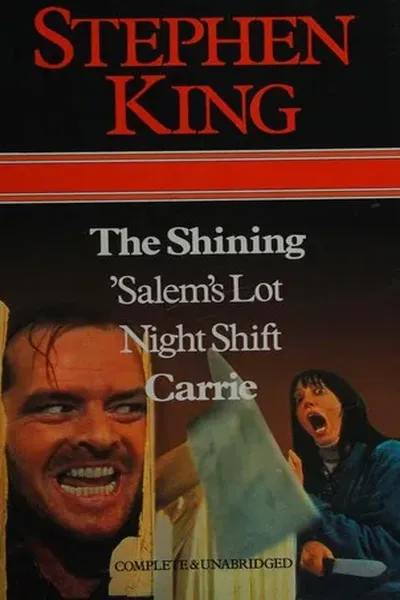
Works (Carrie / Night Shift / 'Salem's Lot / Shining)

 79
79

Works (Carrie / Night Shift / 'Salem's Lot / Shining)
Stephen King's early output, as represented in this 1985 compilation, demonstrates a singular talent for translating visceral fear into narrative. *Carrie*'s exploration of telekinetic rage born from abuse and *'Salem's Lot*'s descent into a small-town vampire infestation are particularly potent. The work's strength lies in its grounding of the supernatural within recognizable human frailties and societal pressures. However, the sheer volume of the collected stories, while generous, can feel overwhelming, and some of the shorter pieces in *Night Shift* lack the sustained impact of the novels. The depiction of the Overlook Hotel in *The Shining* as a malevolent entity in its own right is a masterful stroke of atmospheric horror. This collection remains a significant marker in the genre's development.
📝 Description
79
Stephen King's first four novels, published between 1974 and 1978, defined early supernatural horror.
This compilation gathers Stephen King's initial novels: *Carrie*, *Night Shift*, *'Salem's Lot*, and *The Shining*. Written between 1974 and 1978, these books cemented King's early career by examining how supernatural elements intersect with everyday human fears. They consistently address themes of alienation, social exclusion, and the hidden dangers within ordinary life.
Readers interested in the origins of modern horror fiction will find these stories significant. The collection appeals to those who enjoy narratives that look at the psychological roots of fear, moving past superficial shocks to investigate the origins of human dread. Fans of classic supernatural stories and psychological thrillers will also recognize familiar elements.
Published during the mid-1970s, a period marked by renewed public interest in occultism and folk horror, King's early novels resonated with a cultural fascination for the paranormal and unsettling events. These works tapped into the era's zeitgeist, offering a uniquely American style of terror. His stories often centered on the disintegration of domestic stability and community structures, reflecting anxieties of the time and channeling them into narratives of supernatural dread.
💡 Why Read This Book?
• Understand the origins of King's signature horror style by examining the specific supernatural threats and psychological terrors presented in *'Salem's Lot*, first published in 1975. • Analyze the portrayal of societal alienation and its consequences through the lens of Carrie White's telekinetic breakdown in the 1974 novel *Carrie*. • Experience the potent symbolism of place as a source of dread, particularly the sentient hotel in *The Shining*, a key element from its 1977 publication.
⭐ Reader Reviews
Honest opinions from readers who have explored this book.
❓ Frequently Asked Questions
What is the significance of the publication year 1985 for this collection?
The 1985 publication date signifies a compilation of King's earlier, foundational works, consolidating his growing reputation in the horror genre for readers seeking his most impactful novels from the 1970s.
Does this collection include all of Stephen King's early works?
No, this collection specifically features *Carrie*, *Night Shift*, *'Salem's Lot*, and *The Shining*, representing a selection of his influential early novels and short stories from the 1970s.
How do these novels connect to broader horror themes?
These novels are central to modern horror, exploring themes of the outsider, corrupted innocence, and the uncanny manifestation of evil in everyday settings, directly influencing subsequent generations of writers.
What kind of supernatural elements are present in these books?
The collection features a range of supernatural elements including telekinesis (*Carrie*), vampirism (*'Salem's Lot*), hauntings and psychological disintegration (*The Shining*), and various paranormal phenomena in the short stories of *Night Shift*.
Is *Night Shift* a novel or a collection of short stories?
*Night Shift* is a collection of short stories, offering a diverse array of supernatural and horror narratives, distinct from the longer novel formats of the other included works.
What makes the Overlook Hotel in *The Shining* unique?
The Overlook Hotel is depicted not just as a setting but as a parasitic, malevolent entity that actively influences and corrupts its inhabitants, a key concept from its 1977 publication.
🔮 Key Themes & Symbolism
The Corrupting Influence of Evil
These narratives repeatedly demonstrate how malevolent forces, whether supernatural entities like the vampires in *'Salem's Lot* or psychic energies in *The Shining*, can infect and destroy individuals and communities. This isn't merely about external threats but about the internal erosion of sanity and morality. The work explores how proximity to evil, or an inherent susceptibility to it, leads to a breakdown of personal will and societal order, often with devastating, irreversible consequences for those involved.
The Outsider and Latent Power
A recurring motif is the ostracized individual, most notably Carrie White in *Carrie* (1974), who possesses extraordinary, destructive abilities. These characters are often products of intense abuse or neglect, their marginalized status breeding resentment and unleashing terrifying potential. The work examines the societal role in creating monsters, suggesting that rejection can forge potent, dangerous forces. This theme questions whether such power is inherently evil or a response to unbearable external cruelty.
The Uncanny in the Familiar
King excels at transforming mundane settings into arenas of horror. The small town of Jerusalem's Lot in *'Salem's Lot* (1975) becomes a nest of vampiric evil, and the isolated Overlook Hotel in *The Shining* (1977) evolves into a sentient trap. This approach taps into a primal fear of the familiar turning hostile, suggesting that the greatest horrors are not distant but intimately close, lurking beneath the veneer of everyday life and domestic stability.
Cycles of Trauma and Violence
The narratives often depict how trauma and violence are passed down through generations or perpetuated within closed systems. The Torrance family's struggles in *The Shining* echo past tragedies associated with the Overlook, while Carrie's abusive upbringing directly fuels her destructive telekinesis. This suggests a cyclical nature to suffering, where past wounds fester and manifest in new horrors, creating a sense of inescapable destiny or inherited curse for the characters involved.
💬 Memorable Quotes
Direct passages from the work, attributed to the author.
“They say the past is always with us, and sometimes it's a burden too heavy to bear.”
— This sentiment, captured in reflections on characters' histories, speaks to the way unresolved trauma and past actions perpetually haunt the present. It suggests that for many of King's characters, escape from their history is impossible, and its weight directly fuels their present-day struggles and fears.
“Home is where the monsters are.”
— This concept highlights King's frequent inversion of domesticity. It suggests that the places and people most expected to provide safety and comfort can instead become the source of deepest terror, a subversion of the ideal that plays on profound psychological anxieties.
“When you're an outsider, the world looks different, and sometimes, different is dangerous.”
— This interpretation of the outsider experience underscores the theme of alienation. It posits that those on the fringes of society perceive realities hidden from the mainstream, and this unique perspective can lead them into, or make them targets of, dangerous supernatural or psychological phenomena.
“Fear isn't just about what you see, but what you imagine lurks just beyond your sight.”
— This idea emphasizes the psychological dimension of horror. It suggests that King's terror often stems from the unseen, the implied threat, and the power of the human mind to conjure horrific possibilities, making the internal landscape as perilous as the external one.
“Some places soak up the bad things like a sponge, and then they let them out.”
— This vivid metaphor describes the malevolent nature of certain locations, as seen with the Overlook Hotel. It conveys the idea that some environments accumulate negative energy or historical trauma, which then actively influences or harms new occupants, turning the setting itself into an antagonist.
🌙 Esoteric Significance
Tradition
While not explicitly aligning with a single esoteric tradition, King's work frequently touches upon Gnostic themes of inherent corruption within the material world and the idea of individuals possessing hidden, potent powers that set them apart. The concept of the "outsider" as a vessel for extraordinary, often destructive, forces echoes Gnostic notions of the elect or those with secret knowledge. His narratives explore the struggle against oppressive systems, whether societal or metaphysical, which appeals to Gnostic dualism.
Symbolism
The vampire, as seen in *'Salem's Lot*, functions as a potent symbol of parasitic corruption, draining life and vitality from a community, representing a perversion of natural order. The haunted hotel in *The Shining* serves as a symbol of trapped psychic residue and malevolent consciousness, an amplifier of inner darkness. Carrie White's telekinesis can be interpreted as a symbol of repressed feminine rage and the destructive potential of ostracized individuals when pushed beyond their limits.
Modern Relevance
Contemporary horror authors and filmmakers continue to draw inspiration from King's methods of grounding supernatural threats in psychological realism. His exploration of familial trauma, the dark side of Americana, and the nature of evil as both external and internal remains highly relevant in current explorations of occultism and dark fantasy. Thinkers and practitioners interested in archetypal horror, the power of place, and the psychology of fear find fertile ground in his foundational narratives.
👥 Who Should Read This Book
• Aspiring horror writers seeking to understand foundational techniques in building suspense and character dread, particularly through analyzing the narrative structures of *Carrie* and *'Salem's Lot*. • Students of American folklore and occultism interested in how contemporary literature reflects and shapes cultural anxieties surrounding supernatural phenomena and the uncanny. • Readers of psychological thrillers who appreciate narratives that explore the darker aspects of human nature and the potential for societal pressures to unleash destructive forces.
📜 Historical Context
Published in 1985, this collection gathers Stephen King's formative horror novels from the 1970s, a period marked by societal anxieties and a burgeoning interest in the supernatural within popular culture. The mid-70s saw continued cultural shifts following the Vietnam War and Watergate, fostering a sense of unease and distrust in institutions. King's work tapped into this, often depicting the breakdown of American ideals and the dark undercurrents within seemingly normal communities and families. His contemporaries included authors like Peter Straub, who also explored psychological horror, and Dean Koontz. King's particular brand of accessible, character-driven horror, blending the supernatural with relatable human drama, quickly set him apart. The reception was overwhelmingly positive, solidifying his status as a leading voice in contemporary horror, though some critics initially debated the literary merit of his genre focus.
📔 Journal Prompts
Carrie White's telekinetic power as a manifestation of suppressed trauma.
The cyclical nature of evil within the Overlook Hotel's history.
Jerusalem's Lot as a microcosm of societal decay under supernatural influence.
The role of isolation in amplifying supernatural or psychological threats.
Symbolism of the vampire in feeding on community vitality.
🗂️ Glossary
Telekinesis
The purported ability to move or influence objects by mental power alone, a key supernatural element in Stephen King's novel *Carrie* (1974).
Vampirism
A form of supernatural affliction or condition where an entity sustains itself by consuming the life essence (often depicted as blood) of others, central to *'Salem's Lot* (1975).
The Uncanny
A psychological concept referring to the feeling of unease or strangeness evoked by something that is simultaneously familiar and alien, often employed in *The Shining* (1977).
Haunting
The phenomenon of a spirit or supernatural entity manifesting itself in a place, often associated with past traumatic events, a core element of *The Shining* (1977).
Outsider Archetype
A character type characterized by social isolation, alienation, and often possessing unique or dangerous abilities, prominently featured in *Carrie* (1974).
Folk Horror
A subgenre of horror that uses folklore, rural settings, and ancient beliefs to create a sense of dread and otherness, influencing King's small-town narratives.
Psychological Horror
A subgenre focusing on the mental and emotional states of characters, emphasizing internal fears, paranoia, and the breakdown of sanity, a hallmark of King's style.
🔮 Readers Also Liked
Browse all →









More by Stephen King
All books →

More Free Occult Philosophy Books
View all →