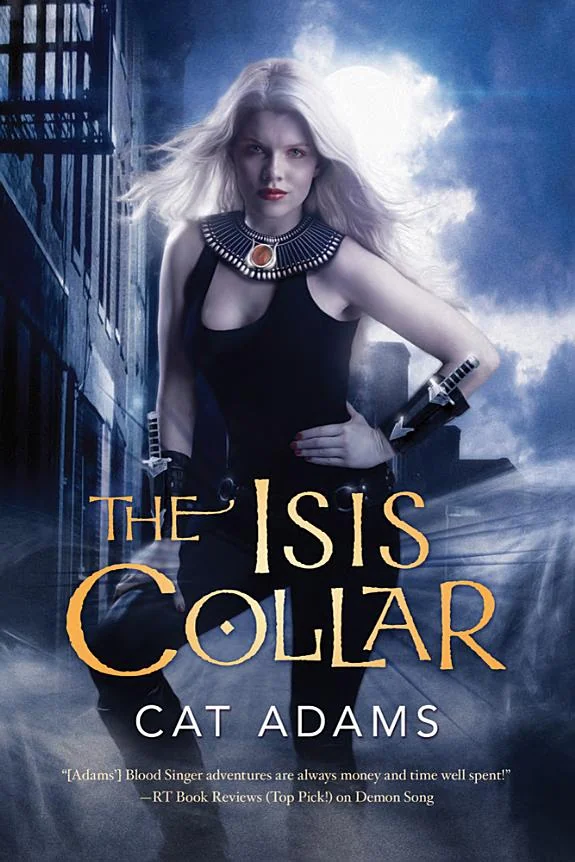
The Isis Collar
 71
71

The Isis Collar
Cat Adams' The Isis Collar presents a formidable challenge for its protagonist, Celia, who must juggle Siren powers, vampiric urges, and a burgeoning zombie apocalypse. The initial setup, focusing on a seemingly minor magical incident at an elementary school, cleverly escalates into a full-blown supernatural crisis. Adams excels at portraying Celia's internal conflict; the tension between her Siren nature and her vampire existence is palpable and grounds the fantastical elements in relatable human (or inhuman) struggles. However, the plot occasionally buckles under the weight of its own ambition. The introduction of family foibles, while intended to add emotional depth, sometimes distracts from the more pressing zombie threat and the mystery surrounding Celia's boyfriend's disappearance. The pacing falters slightly in the middle sections, where the narrative feels less focused. Despite these minor stumbles, the book offers a compelling exploration of hybrid identities and the chaotic intersection of magic and monstrousness. The strength lies in its unique premise and Adams' ability to craft visceral supernatural encounters. The Isis Collar succeeds as an entertaining, if occasionally overstuffed, entry into the urban fantasy landscape.
📝 Description
71
Cat Adams' 2012 novel, The Isis Collar, begins with a seemingly small magical incident at an elementary school.
The Isis Collar, published in 2012, follows Celia, a Siren grappling with her new vampiric nature. When a minor magical event at an elementary school turns out to be the start of a zombie plague, Celia is drawn into a dangerous conflict. The story weaves together Celia's personal struggles, including the disappearance of her boyfriend and conflicts within her family, with the escalating supernatural threat. This creates a high-stakes narrative that examines the consequences of unchecked magic and the challenges of maintaining one's identity in the face of overwhelming change.
The novel appeals to readers of urban fantasy who enjoy complex character development and stories that blend mythological creatures with modern settings. It focuses on the ethical considerations faced by hybrid supernatural beings and their integration into society. Adams' work features Sirens and vampires, incorporating elements of mystery, horror, and romance into a plot driven by magical systems and their repercussions.
Published in 2012, The Isis Collar arrives during a period where urban fantasy authors increasingly fused ancient mythologies with contemporary anxieties. This era saw a rise in complex female protagonists navigating supernatural worlds, a trend exemplified by authors like Charlaine Harris and Kim Harrison. Adams' novel contributes to this by re-examining established supernatural archetypes, placing Sirens and vampires within societal structures. The book reflects a broader cultural interest in the occult and paranormal, integrating these elements into popular narratives.
💡 Why Read This Book?
• Gain insight into the intricate balancing act of hybrid supernatural identities, as demonstrated by Celia's struggle to reconcile her Siren and vampire natures, a core conflict explored throughout the narrative. • Experience a unique blend of mythological creatures and horror, particularly the chilling depiction of a zombie plague triggered by magical means, as detailed in the book's escalating plot. • Understand the narrative impact of specific magical artifacts or symbols, such as the titular "Isis Collar," and its potential role in controlling or defining power within the story's magical framework.
⭐ Reader Reviews
Honest opinions from readers who have explored this book.
❓ Frequently Asked Questions
When was "The Isis Collar" by Cat Adams first published?
The Isis Collar by Cat Adams was first published on March 13, 2012, marking its entry into the urban fantasy genre.
What supernatural creatures are featured in "The Isis Collar"?
The novel prominently features Sirens and vampires, with the protagonist, Celia, embodying both identities and struggling with their conflicting natures.
What is the central conflict in "The Isis Collar"?
The central conflict involves Celia balancing her Siren powers with her new vampire nature while confronting a zombie plague and the disappearance of her boyfriend.
What genre does "The Isis Collar" belong to?
The Isis Collar is primarily categorized as urban fantasy, blending elements of supernatural thriller, mystery, and horror.
Who is the author of "The Isis Collar"?
The author of "The Isis Collar" is Cat Adams.
What event triggers the main crisis in the book?
A seemingly ineffective magical bomb at an elementary school triggers a much larger crisis, revealing a zombie plague.
🔮 Key Themes & Symbolism
Hybrid Identity and Internal Conflict
The novel deeply explores the challenges of possessing multiple, often conflicting, supernatural natures. Celia's Siren abilities clash with her vampiric existence, creating a constant internal struggle for control and self-understanding. This theme examines how individuals, even non-human ones, grapple with disparate aspects of their being, forcing them to forge a cohesive identity amidst chaos. The narrative uses her hybridity not just as a plot device but as a source of profound personal conflict, highlighting the difficulty of integrating seemingly incompatible facets of oneself.
Supernatural Outbreaks and Societal Collapse
The emergence of a zombie plague serves as a potent metaphor for uncontrolled forces threatening societal order. The book details the terrifying spread of contagion and the breakdown of normal life, forcing characters to confront primal survival instincts. This theme studies the consequences of magical misfires or deliberate acts, illustrating how even localized supernatural events can cascade into widespread disaster, challenging established norms and exposing the fragility of civilization.
Family Dynamics Under Duress
Amidst supernatural crises, the novel emphasizes the enduring, yet often strained, significance of family ties. Celia's relationships with her family members become both a source of support and complication as they read through the escalating dangers. This theme explores how extreme circumstances test familial bonds, revealing underlying tensions, loyalties, and the complex interplay of love and obligation when survival is at stake. The personal drama underscores the human element within the fantastical narrative.
The Nature of Power and Control
The "Isis Collar" itself likely represents a focal point for discussions on power, its acquisition, and the means of its control. Whether it's Celia's innate magical strength, her vampiric predatory instincts, or external magical artifacts, the narrative examines who wields power and how. This theme probes the corrupting influence of power, the responsibility that comes with it, and the struggle to maintain autonomy when forces seek to dominate or exploit. The presence of such an object suggests a narrative arc focused on mastering or breaking free from imposed limitations.
💬 Memorable Quotes
Direct passages from the work, attributed to the author.
“Struggling to balance her powers as a Siren with her new vampire nature, Celia is perplexed by a seemingly ineffective magical bomb at a local elementary school only to discover that a zombie plague has been triggered...”
— This excerpt from the original blurb expresses the core premise: the protagonist's internal conflict and the external supernatural threat she must confront, setting a high-stakes stage for the narrative.
“The Isis Collar”
— The title itself suggests a significant magical artifact or symbol, likely central to the plot's resolution or the protagonist's journey of understanding her powers and constraints.
“a zombie plague has been triggered”
— This phrase highlights the horrific, large-scale supernatural threat introduced in the book, moving beyond personal supernatural struggles to a crisis with broader societal implications.
“family foibles and the disappearance of her boyfriend”
— This indicates that alongside the supernatural elements, the novel grounds its narrative in personal relationships and emotional stakes, crucial for character development and plot tension.
“Cat Adams (first published 2012-03-13)”
— This provides essential bibliographical information, situating the work within its publication context and identifying the author responsible for its creation.
🌙 Esoteric Significance
Tradition
While not strictly adhering to a single ancient tradition, The Isis Collar draws heavily from Greco-Roman mythology (Sirens) and European folklore (vampires). The incorporation of a 'zombie plague' suggests an engagement with themes of undeath and corruption often found in occult traditions concerned with necromancy or spiritual decay. The title's reference to Isis, the Egyptian goddess, hints at ancient Egyptian magical practices or symbolism, potentially linking the narrative to Hermeticism or broader ancient mystery traditions, though its exact role requires deeper textual analysis.
Symbolism
The 'Isis Collar' is a primary symbol, likely representing control, binding, or a source of power tied to ancient Egyptian deities. Sirens, traditionally symbols of dangerous allure and destructive temptation, are re-contextualized through Celia's hybrid nature. Vampirism, often symbolizing predatory instincts, immortality, and the shadow self, contrasts and merges with Siren characteristics. The 'zombie plague' symbolizes uncontrolled chaos, decay, and the breakdown of natural order, a potent symbol in many esoteric traditions warning against spiritual or physical corruption.
Modern Relevance
Contemporary urban fantasy authors and readers continue to explore the complex nature of hybrid supernatural beings, a trend The Isis Collar contributed to. Discussions around identity politics and the integration of marginalized or 'monstrous' aspects of self resonate with Celia's journey. The blend of mythological creatures with modern threats like plagues also speaks to current anxieties and the genre's ongoing adaptation to reflect contemporary concerns, making its themes relevant to writers and readers exploring complex character arcs and high-stakes supernatural scenarios.
👥 Who Should Read This Book
• Fans of urban fantasy seeking protagonists who embody multiple supernatural archetypes, particularly those interested in the intricate internal conflicts of hybrid beings like Sirens and vampires. • Readers who enjoy fast-paced thrillers that blend mythological elements with horror, specifically those intrigued by scenarios involving magical disasters and outbreaks like zombie plagues. • Individuals interested in exploring themes of identity, power, and familial relationships under extreme pressure within a supernatural context, appreciating narratives that ground fantastical events in personal stakes.
📜 Historical Context
The Isis Collar, published in 2012, emerged within the vibrant field of early 21st-century urban fantasy. This period was characterized by a proliferation of series that explored the integration of mythological beings and supernatural phenomena into contemporary urban settings. Authors like Patricia Briggs and Ilona Andrews were popularizing complex paranormal systems and strong female leads. Adams' work fits into this trend by presenting a protagonist, Celia, who embodies multiple supernatural identities—Siren and vampire—and grapples with the inherent conflicts. The year 2012 also saw continued public fascination with vampire lore, fueled by franchises like Twilight, though Adams' approach leaned more towards the gritty, action-oriented side of the genre. Compared to the more gothic or romantic vampire narratives, The Isis Collar appears to engage with a more action-packed, crisis-driven plot, including a zombie outbreak, which distinguishes it from some of its contemporaries. The reception in 2012 would have placed it alongside a wave of paranormal romance and urban fantasy novels vying for reader attention.
📔 Journal Prompts
Celia's dual Siren and vampire nature.
The symbolic meaning of the 'Isis Collar' in relation to power.
The cascading effects of the zombie plague.
The role of family dynamics amidst supernatural crisis.
The juxtaposition of Siren allure and vampiric predation.
🗂️ Glossary
Siren
In mythology, a creature, often depicted as a beautiful woman, whose enchanting singing lured sailors to shipwreck. In this context, it refers to a supernatural being with inherent magical abilities tied to sound or persuasion.
Vampire
A mythical or folkloric being who subsists by feeding on the vital essence (generally in the form of blood) of the living. Often associated with immortality, supernatural strength, and a need for blood.
Zombie Plague
A catastrophic outbreak where deceased individuals are reanimated and driven by a primal urge to consume the living. Represents uncontrolled contagion and societal collapse.
Isis Collar
A central artifact or symbolic element in the book, likely referencing the Egyptian goddess Isis. It suggests themes of protection, magic, control, or constraint related to the protagonist's powers or the narrative's conflict.
Hybrid Identity
The state of possessing or embodying multiple, often conflicting, identities or natures. In this book, it refers to Celia's simultaneous existence as both a Siren and a vampire.
Magical Bomb
An explosive device imbued with supernatural energies or designed to unleash magical effects, serving as the inciting incident for the larger crisis in the novel.
Family Foibles
Peculiar or trivial eccentricities or habits within a family. These add personal drama and complicate the protagonist's efforts to deal with supernatural threats.
This book appears in 1 collection
🔮 Readers Also Liked
Browse all →







From the “Shapeshifting” Collection
View all →



More Free Occult Philosophy Books
View all →