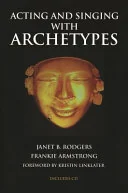
Acting and Singing with Archetypes
 74
74

Acting and Singing with Archetypes
Rodgers and Armstrong's *Acting and Singing with Archetypes* offers a compelling framework for performers seeking to deepen their connection to character. The methodical breakdown of fifteen archetypes, supported by vocal exercises and mask work, provides a tangible pathway into embodying complex psychological forces. A notable strength is the book's practical application; it doesn't merely theorize but offers concrete exercises that can be implemented directly in rehearsal or practice. However, the reliance on specific exercises might feel restrictive for those with less formal training or different learning styles. The exploration of the 'Devil' archetype, while potentially potent, could benefit from more nuanced historical or psychological context to avoid simplistic interpretations. Ultimately, it serves as a potent, if specialized, toolkit for the dedicated performer.
📝 Description
74
First published in November 2009, Acting and Singing with Archetypes offers a unique performance method.
Developed by Janet B. Rodgers and Frankie Armstrong, this book details a pedagogical approach for actors and singers. The method uses fifteen distinct archetype explorations, each designed to deepen character work and vocal expression. It integrates specific vocal exercises and mask work to connect internal psychological states with external performance. The text is a resource for performers, voice coaches, and theatre educators interested in innovative techniques. It appeals to those drawn to the psychological aspects of performance, particularly concepts from Jungian psychology and mythology as applied to the arts. Performers seeking to move beyond superficial characterization and connect with more resonant energies will find value in its practical application.
The book's core is a structured approach to embodying archetypal energies. Rodgers and Armstrong suggest that understanding and engaging with archetypes like the Mother, the Lover, the Trickster, and the Spiritual Leader allows performers to access a wider range of emotional and physical expression. Masks are presented as a tool for facilitating identification with these universal patterns, enabling more authentic performance.
This work emerged as interdisciplinary approaches to performance studies gained traction. It built on earlier psychological explorations of archetypes, such as Carl Jung's work, and applied these ideas directly to acting and singing. The focus on experiential learning through vocalization and mask work distinguished it from more theoretical texts available at the time.
This book situates itself within traditions that view human experience and expression as rooted in universal patterns or archetypes. Drawing inspiration from Carl Jung's analytical psychology, it applies these concepts to the practical domain of performing arts. The method posits that by consciously engaging with archetypal energies, performers can tap into deeper psychological wells, leading to more authentic and resonant artistic output. The integration of mask work further connects the practice to ancient ritualistic and theatrical traditions where masks served as conduits for embodying transformative energies.
⭐ Reader Reviews
Honest opinions from readers who have explored this book.
❓ Frequently Asked Questions
What is the primary purpose of using archetypes in acting and singing?
The book posits that archetypes are universal essences within the human spirit. By exploring them, actors and singers can access deeper emotional and physical dimensions, enriching their character portrayals and vocal expression beyond conventional methods.
What specific tools does 'Acting and Singing with Archetypes' recommend?
The method utilizes fifteen archetype explorations, incorporating specific vocal exercises and the use of masks. These tools are designed to help performers embody archetypal energies in a tangible, experiential way.
Who are the authors, Janet B. Rodgers and Frankie Armstrong?
Janet B. Rodgers and Frankie Armstrong are the creators of this experiential method for performers. Their combined expertise in performance and vocal work led to the development of this unique approach.
When was 'Acting and Singing with Archetypes' first published?
The book was first published in November 2009, offering a contemporary approach to archetype exploration in performance arts.
Does the book focus on specific archetypes?
Yes, it explores fifteen archetypes, including well-known figures like the Mother, the Lover, the Trickster, and the Spiritual and Temporal Leader, among others, providing dedicated exercises for each.
Is this book suitable for beginners in acting or singing?
While it offers a deep dive, the experiential nature and structured exercises make it accessible to dedicated beginners interested in a psychological approach to performance, as well as seasoned professionals.
🔮 Key Themes & Symbolism
Archetypal Embodiment
The central theme is the direct embodiment of universal archetypes as a means to deepen performance. The book details fifteen distinct archetypes, such as the Mother and the Trickster, presenting them not as abstract concepts but as dynamic forces to be inhabited. This approach encourages performers to tap into primal energies, moving beyond superficial characterization to a more resonant and authentic expression rooted in shared human patterns.
Vocal and Mask Integration
This theme focuses on the practical tools used to access archetypal states. Vocal exercises are specifically designed to align the voice with the energetic qualities of each archetype, while the use of masks serves as a physical catalyst for embodying these roles. The synergy between vocalization and masked performance is presented as a powerful method for unlocking subconscious potential and exploring the full spectrum of human experience.
Psychological Depth in Performance
The book applies principles from psychology, particularly those related to Carl Jung's concept of archetypes, to the craft of acting and singing. It suggests that understanding these deep-seated psychological patterns allows performers to create characters with greater authenticity and complexity. By exploring archetypes like the Spiritual Leader or the Devil, performers can gain insight into the motivations and emotional landscapes that drive human behavior.
Experiential Learning Method
A core tenet is the emphasis on 'learning by doing.' The book is structured around fifteen experiential explorations, designed for active participation. This contrasts with purely theoretical texts, offering a hands-on approach where performers actively engage their bodies, voices, and minds to understand and embody archetypal energies, fostering a profound internal shift through direct practice.
💬 Memorable Quotes
Direct passages from the work, attributed to the author.
“The Mother, the Lover, the Trickster, the Spiritual and Temporal Leader, the Devil—these are just some of the universal essences...”
— This introductory statement sets the stage for the book's focus on recognizable, powerful archetypal forces that reside within everyone and can be consciously accessed and performed.
“Acting and Singing with Archetypes is a groundbreaking, experiential book that uses archetypes as the basis of an unprecedented method of study for actors and singers.”
— This blurb highlights the book's innovative nature, emphasizing its experiential, archetype-driven methodology as a novel approach to performer training that deviates from traditional techniques.
“By using fifteen archetype explorations that employ vocal exercises, mask...”
— This points to the specific pedagogical tools—a structured set of fifteen explorations, vocal work, and mask use—that form the practical core of the book's method for embodying archetypes.
“these are forces that we all recognize and embody in some capacity.”
— This interpretation underscores the universality of archetypes, suggesting that even if not consciously recognized, these fundamental human patterns are present and active within all individuals.
“an unprecedented method of study for actors and singers.”
— This phrase emphasizes the originality of the book's approach, positioning its archetype-based technique as a novel and potentially transformative addition to the existing methods for training performers.
🌙 Esoteric Significance
Tradition
This work draws implicitly from Jungian psychology, which itself has deep roots in esoteric traditions, particularly alchemy and Hermeticism, through its exploration of universal symbols and the collective unconscious. While not overtly aligning with a specific esoteric lineage like Theosophy or Kabbalah, it applies archetypal concepts—often considered foundational to Western esotericism—to a practical, performative domain, treating them as potent forces for transformation.
Symbolism
The book employs archetypes like the 'Mother' and 'Lover' which, within esoteric traditions, often symbolize primal creation, nurturing forces, and passionate energy. The 'Spiritual Leader' can represent the divine spark or the guide on the path of initiation, while the 'Devil' might symbolize the shadow self or the tests encountered on the spiritual journey. Masks themselves are ancient esoteric tools for transformation and channeling other identities.
Modern Relevance
Contemporary practitioners in somatic theatre, psychodrama, and even certain branches of transpersonal psychology echo the book's approach. Thinkers and artists exploring embodied cognition, mythopoetic psychology, and performance as ritual can find resonance in Rodgers and Armstrong's method. Its focus on archetypes as dynamic forces for personal and artistic development aligns with current trends in self-actualization and the integration of psychological and creative practices.
👥 Who Should Read This Book
['• Actors and singers seeking to deepen their character work by exploring the psychological and mythical dimensions of human experience through embodied archetypes.', '• Theatre educators and voice coaches looking for innovative pedagogical tools that integrate psychological theory with practical vocal and physical exercises.', '• Students of Jungian psychology or mythology interested in applying archetypal concepts to practical creative endeavors and understanding their manifestation in performance.']
📜 Historical Context
Published in November 2009, *Acting and Singing with Archetypes* entered a landscape where psychological approaches to performance were established, influenced by figures like Stanislavski and his successors, and by Jungian psychology's broader cultural reach. While Jung's theories on archetypes were well-known in academic and therapeutic circles since the mid-20th century, their direct, systematic application to vocal and mask-based acting training was less common. The book emerged as an experiential counterpoint to more intellectualized explorations of character. It coincided with a growing interest in somatic and embodied practices within theatre studies. Unlike purely theoretical analyses of archetypes, Rodgers and Armstrong’s work provided a practical, technique-focused system. While not directly engaging with contemporaries in a polemical way, its methodology implicitly offered an alternative to approaches focused solely on emotional recall or external technique, carving out a niche for archetype-driven, embodied performance training.
📔 Journal Prompts
The 'Trickster' archetype's role in disrupting norms: how has this energy manifested in your performance practice?
Reflect on the 'Spiritual and Temporal Leader' archetype and its influence on your vocal projection and stage presence.
Explore the 'Mother' archetype through a vocal exercise; what emotional tones emerge?
How can the mask work described for the 'Lover' archetype inform your expression of intimacy on stage?
Consider the 'Devil' archetype's potential for generating dramatic tension in your current roles.
🗂️ Glossary
Archetype
Universal, archaic patterns and images that derive from the collective unconscious and are the psychic counterpart of instinct. In this context, they are fundamental human essences that can be embodied for performance.
Collective Unconscious
A term coined by Carl Jung, referring to a layer of the unconscious psyche common to all human beings, containing inherited archetypes and instincts.
Embodiment
The process of physically and vocally inhabiting a character or archetype, integrating its psychological and energetic qualities into one's own being for performance.
Experiential Learning
A pedagogical approach that emphasizes direct experience and reflection as the primary means of learning, as opposed to purely theoretical instruction.
Mask Work
The use of masks in performance training or creation, serving as a tool to facilitate transformation, explore character, and access different states of being.
Vocal Exercises
Specific drills and practices designed to develop, train, and enhance the voice, here tailored to explore the qualities of different archetypes.
Universal Essences
Fundamental, recognizable patterns of human behavior, emotion, and motivation that are shared across cultures and time periods, represented by archetypes.
This book appears in 1 collection
🔮 Readers Also Liked
Browse all →









From the “Archetypes” Collection
View all →




More Free Occult Philosophy Books
View all →