Siddhartha
 82
82

Siddhartha
Hesse’s "Siddhartha" offers a compelling, if somewhat idealized, portrayal of a spiritual seeker’s path. The narrative’s strength lies in its elegant depiction of Siddhartha’s gradual shedding of intellectualism in favor of embodied wisdom, particularly his time spent as a merchant and with the ferryman Vasudeva. Kohn’s translation, while flowing, occasionally feels a touch too modern in its phrasing, perhaps losing some of the starkness present in earlier versions. A notable passage is Siddhartha’s profound realization by the river, where he perceives the unity of all existence, a moment that encapsulates the book’s core message. However, the novel's relative simplicity, while accessible, might leave those deeply versed in Buddhist philosophy wanting more nuanced engagement with specific doctrines. Ultimately, "Siddhartha" remains a potent, accessible exploration of the perennial human quest for meaning.
📝 Description
82
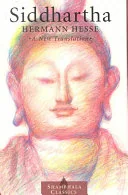
Hermann Hesse published 'Siddhartha' in 1922, charting a spiritual awakening in ancient India.
Hermann Hesse's novel 'Siddhartha' follows the spiritual awakening of a young Brahmin's son in ancient India. Set during the time of the Buddha, Siddhartha rejects the teachings of his father and the Brahmins, seeking truth through direct experience. His quest leads him through various stages of life, from asceticism to worldly pleasures, and finally to a profound understanding gained through a simple ferryman. This edition features a translation by Sherab Chödzin Kohn, noted for its poetic accuracy and sensitivity to Buddhist concepts.
The narrative examines the tension between intellectual knowledge and lived wisdom. Siddhartha grapples with the nature of the Self, the cycle of rebirth known as Samsara, and the reality of suffering, Dukkha. His journey illustrates the interconnectedness of all existence and the ultimate discovery that enlightenment arises from within, independent of external doctrines or religious systems. The novel appeals to those interested in Eastern philosophy, consciousness, and the personal evolution of self-awareness.
Published in 1922, 'Siddhartha' emerged from a European fascination with Eastern religions and philosophies. Hesse drew upon Hindu and Buddhist concepts, presenting a narrative that paralleled contemporary psychological explorations of individuation, such as those by Carl Jung. The novel engages with themes of spiritual seeking and the personal path to enlightenment, moving beyond prescribed doctrines to emphasize direct, lived experience as the means to self-understanding. It reflects a broader interest in contemplative practices and the inner life prevalent in the early 20th century.
💡 Why Read This Book?
• Gain insight into the concept of 'Om' as the unity of all things, as Siddhartha learns from the river’s ceaseless flow, understanding that the divine is immanent and accessible through direct experience. • Explore the spiritual efficacy of embracing the mundane world, as Siddhartha’s period as a wealthy merchant and lover teaches him about desire and suffering, demonstrating that enlightenment can be found amidst Samsara. • Appreciate the Buddhist notion of 'Dukkha' (suffering) not as an external evil to be escaped, but as an intrinsic part of existence, which Siddhartha must directly confront and understand through his own lived experiences to achieve liberation.
⭐ Reader Reviews
Honest opinions from readers who have explored this book.
❓ Frequently Asked Questions
Is Siddhartha a follower of the Buddha?
No, Siddhartha is a contemporary of the Buddha, Gautama, whom he meets but ultimately chooses not to follow. Siddhartha seeks his own unique path to enlightenment, distinct from the teachings of the historical Buddha.
What does the river symbolize in Siddhartha?
The river, particularly under Vasudeva's guidance, symbolizes the eternal flow of life, the unity of all existence, and the cyclical nature of time. It represents the voice of the divine and the ultimate source of wisdom that Siddhartha learns to hear.
When was Hermann Hesse's Siddhartha first published?
Hermann Hesse's "Siddhartha" was first published in Germany in 1922, making it a significant work of early 20th-century literature exploring Eastern spiritual themes.
What is the meaning of 'Om' in the book?
In "Siddhartha," 'Om' represents the sacred sound and the spiritual essence of the universe, signifying the unity of all things. Siddhartha achieves a profound understanding of 'Om' through his contemplation of the river.
How does Siddhartha achieve enlightenment?
Siddhartha achieves enlightenment not through formal teachings but through a lifetime of diverse experiences – asceticism, sensual pleasure, business, and deep contemplation, particularly with the ferryman Vasudeva by the river.
Who is Sherab Chödzin Kohn?
Sherab Chödzin Kohn is the translator of this specific edition of "Siddhartha." He is noted for his long-standing engagement with Buddhism and Eastern philosophy, aiming to convey the spiritual nuances of Hesse's work.
🔮 Key Themes & Symbolism
The Unity of All Things
The novel consistently returns to the idea that all phenomena, from the smallest insect to the grandest cosmic cycle, are interconnected. Siddhartha's eventual realization, particularly through observing the river, emphasizes the illusory nature of separation. This concept aligns with Advaita Vedanta philosophy, which posits the oneness of the individual soul (Atman) and the universal consciousness (Brahman), a core tenet explored through Siddhartha's personal journey.
Experiential vs. Intellectual Knowledge
Hesse contrasts the wisdom gained through direct lived experience with the limitations of theoretical learning. Siddhartha, initially a learned Brahmin, finds formal teachings insufficient. His journey through asceticism, sensual indulgence, and commerce serves to dismantle his intellectual pride, demonstrating that true understanding arises from confronting the world's dualities firsthand, a path that mirrors certain yogic traditions emphasizing embodied practice.
The Cycle of Samsara
The novel portrays life as an endless cycle of birth, death, and rebirth, a concept central to Hinduism and Buddhism. Siddhartha’s struggles with desire, attachment, and disillusionment are depicted as integral parts of this cycle. His eventual liberation comes not from escaping Samsara, but from fully experiencing and understanding its nature, recognizing that enlightenment is found within the very fabric of existence.
The Path of the Ferryman
Vasudeva, the ferryman, represents a unique spiritual archetype – one who finds profound wisdom in simple, attentive service and deep listening. His role is to guide Siddhartha toward understanding the river's lessons. This figure embodies the esoteric ideal of finding the sacred in the ordinary and the useful insights available through patient observation and a connection to natural rhythms.
💬 Memorable Quotes
Direct passages from the work, attributed to the author.
“Within me there is a hunger for knowing, a thirst for experiencing, which I have satisfied by the world.”
— This statement captures Siddhartha's driving motivation – a deep, inherent desire to understand existence through direct engagement with life's myriad forms, rather than through passive acceptance of doctrine.
“Wisdom cannot be communicated. Wisdom can only be discovered.”
— Hesse highlights the limitations of teaching spiritual truths. True insight, the novel suggests, is an internal realization cultivated through personal struggle and contemplation, not something that can be simply imparted from one person to another.
“The world is perfect. All flaws are yourself. You are your own flaw.”
— This reflects a profound shift in perspective, where external blame dissolves. The focus turns inward, suggesting that perceived imperfections in the world are projections of one's own internal state and unresolved issues.
“He learned from the river that time is an illusion.”
— Through constant observation of the river's flow, Siddhartha grasps a spiritual concept: that linear time is a human construct. The river embodies past, present, and future simultaneously, hinting at a timeless, unified reality.
“When one seeks, it happens that the seeker only finds what he seeks. When one finds, it happens that the seeker has lost himself.”
— This paradox suggests that the act of searching can be a distraction from true self-discovery. The focus on the goal may obscure the transformative process of the journey itself, leading to a loss of authentic self-awareness.
🌙 Esoteric Significance
Tradition
While "Siddhartha" draws heavily on Buddhist and Hindu concepts like Samsara, Dukkha, and Brahman, its narrative structure and focus on individuation align with broader Western esoteric traditions like the perennial philosophy and psychological archetypes explored by Jung. The novel presents a synthesis, using Eastern frameworks to illustrate universal spiritual principles accessible through personal realization, departing from strict adherence to any single doctrine.
Symbolism
The river is a paramount symbol, representing the eternal flow of life, the unity of all existence, and the voice of the divine. The 'Om' sound embodies the interconnectedness of all things. Siddhartha's own journey from asceticism to sensualism and finally to contemplative wisdom symbolizes the integration of all life experiences as valid paths toward self-realization, mirroring the alchemical process of integrating opposites.
Modern Relevance
Contemporary readers continue to engage with "Siddhartha" for its exploration of mindfulness, self-discovery, and the search for meaning in a secularizing world. It informs modern mindfulness practices, self-help literature focused on personal growth, and comparative religious studies. Its themes of finding wisdom outside conventional structures resonate with individuals seeking alternative spiritual paths and personal fulfillment.
👥 Who Should Read This Book
• Seekers of spiritual wisdom unfamiliar with Eastern traditions: This book offers an accessible, narrative-driven introduction to core concepts like enlightenment, suffering, and the nature of the self, presented through a relatable human story. • Students of comparative religion and philosophy: "Siddhartha" provides a fictional yet insightful exploration of the tensions between different paths to truth, particularly the contrast between doctrine and lived experience in ancient Indian thought. • Individuals undergoing personal transformation: Readers navigating significant life changes or questioning their current path will find Siddhartha's journey of self-discovery and his struggle to reconcile inner truth with external reality compelling.
📜 Historical Context
First published in 1922, Hermann Hesse’s "Siddhartha" arrived in a post-World War I Europe grappling with disillusionment and seeking new meaning. The novel tapped into a growing Western fascination with Eastern religions, particularly Hinduism and Buddhism, which offered alternatives to traditional Western thought. Hesse himself had been deeply influenced by his studies of Indian philosophy and psychoanalysis, particularly the work of Carl Jung, who explored archetypes and the process of individuation. "Siddhartha" resonated with readers looking for spiritual guidance outside the established church, presenting a deeply personal quest for enlightenment. It was published the same year as T.S. Eliot's "The Waste Land," another key work reflecting the era's spiritual and cultural anxieties, though Eliot's approach was more fragmented and less directly spiritual. "Siddhartha" was initially met with mixed reviews, some critics finding it overly romanticized, but its enduring popularity speaks to its powerful exploration of the individual spiritual journey.
📔 Journal Prompts
Siddhartha's contemplation of the river's unity.
The contrast between Kamala's teachings on love and Vasudeva's wisdom.
The significance of the 'Om' sound in achieving inner peace.
Siddhartha's disillusionment with the Samanas.
The role of suffering (Dukkha) in Siddhartha's path to enlightenment.
🗂️ Glossary
Brahmin
A member of the highest Hindu caste, traditionally priests and scholars. Siddhartha begins his journey as the son of a respected Brahmin, steeped in religious knowledge.
Samanas
Ascetics in ancient India who practiced severe self-discipline and renunciation. Siddhartha joins them early in his quest, seeking enlightenment through deprivation.
Gotama (the Buddha)
The historical Buddha, Siddhartha Gautama. The novel's protagonist shares the same name but follows a distinct, personal spiritual path.
Om
A sacred syllable and mantra in Hinduism, Buddhism, and Jainism, representing the sound of the universe and the ultimate reality (Brahman). It signifies unity and spiritual completion.
Samsara
The cycle of death and rebirth, a continuous process of birth, life, death, and reincarnation, influenced by karma. It is often associated with suffering and illusion.
Dukkha
A fundamental concept in Buddhism and Hinduism, often translated as 'suffering,' 'stress,' or 'dissatisfaction.' It refers to the inherent unsatisfactoriness of conditioned existence.
Atman
The individual soul or self in Hinduism. The ultimate goal in some Hindu philosophies is the realization that Atman is identical with Brahman.
This book appears in 1 collection
🔮 Readers Also Liked
Browse all →









From the “Enlightenment” Collection
View all →







More Free Occult Philosophy Books
View all →