The Enlightenment
 81
81

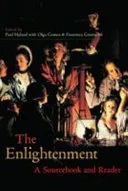
The Enlightenment
Paul Hyland, Olga Gomez, and Francesca Greensides' "The Enlightenment" offers a structured approach to a vast intellectual landscape. Its strength lies in the thematic organization, allowing readers to trace specific lines of argument across different thinkers, a method that illuminates the interconnectedness of Enlightenment thought. The inclusion of modern critical opinions in the final section provides a valuable counterpoint, preventing a purely historical reading. However, the selection, while broad, occasionally feels constrained by the chosen themes, potentially glossing over nuances within individual thinkers' contributions. A particularly effective passage is the thematic grouping under 'Religion and Belief,' which clearly demonstrates the period's tension between deism, atheism, and reformist critiques of established churches. The volume serves as a competent, if not entirely revelatory, compilation for academic study.
📝 Description
81
Published in 2003, The Enlightenment collects key 18th-century texts on politics, religion, and aesthetics.
This collection gathers significant writings from the 18th-century intellectual movement, organized thematically. It presents texts by thinkers who shaped modern political theory, religious discourse, and philosophical aesthetics. The editors have arranged the selections to highlight the period's major contributions, rather than following a strict chronological order. Introductory notes accompany each excerpt, offering context and background for readers. This approach allows for a focused study of interconnected ideas from the era.
The volume is intended for students and academics specializing in Western philosophy and history. It is particularly useful for understanding the Enlightenment's lasting impact on contemporary thought, political structures, secularism, and the scientific method. Individuals seeking direct engagement with primary source material, structured for thematic analysis, will find this compilation valuable. It provides a window into a period that fundamentally reshaped European and global intellectual frameworks.
While the Enlightenment is primarily known for its emphasis on reason and empirical observation, this collection engages with thinkers whose ideas also touched upon the esoteric traditions of the time. The critique of superstition and the exploration of natural religion, for instance, sometimes brushed against or reacted to currents that were not strictly materialist. Examining concepts like the human relationship with the natural world, through the lens of reason, can also reveal an underlying quest for understanding deeper, perhaps less conventional, orders of existence that resonated with esoteric thought.
💡 Why Read This Book?
• Understand the foundational arguments for social contract theory, as presented by thinkers like Rousseau, enabling a deeper grasp of modern democratic principles originating in the late 18th century. • Analyze the Enlightenment's diverse perspectives on religion and belief, examining how figures like Diderot challenged traditional dogma, providing context for contemporary secularism debates. • Explore the period's evolving aesthetic theories concerning art and nature, as detailed in sections like 'Art and Nature,' offering insights into the roots of modern environmental and artistic philosophies.
⭐ Reader Reviews
Honest opinions from readers who have explored this book.
❓ Frequently Asked Questions
Which major Enlightenment thinkers are featured in "The Enlightenment"?
The book includes selections from prominent Enlightenment figures such as Thomas Hobbes, Jean-Jacques Rousseau, Denis Diderot, and Immanuel Kant, showcasing their contributions to political theory, religion, and art.
What historical period does "The Enlightenment" by Hyland, Gomez, and Greensides cover?
It focuses on the 18th-century Enlightenment, a period of intense intellectual and philosophical activity in Europe that emphasized reason, individualism, and skepticism.
How is the content of "The Enlightenment" organized?
The book is thematically organized into sections covering political theory, religion and belief, and art and nature, rather than a strictly chronological approach.
What is the purpose of the 'critical reflections' section?
This final section provides modern critical opinions on the Enlightenment period, offering contemporary perspectives and analyses from various scholars.
Who would benefit most from reading "The Enlightenment"?
Students and scholars of philosophy, history, and political science, as well as anyone interested in the intellectual origins of modern Western thought, would find this book valuable.
When was "The Enlightenment" first published?
The book was first published in 2003, bringing together key texts and analyses of the Enlightenment era.
🔮 Key Themes & Symbolism
Political Theory and Governance
This collection looks at the core tenets of Enlightenment political philosophy, featuring excerpts that dissect concepts like the social contract, natural rights, and the separation of powers. Thinkers like Hobbes and Rousseau are presented to illustrate the spectrum of thought on ideal governance, from absolute sovereignty to popular will. The thematic organization allows for direct comparison of their foundational ideas, highlighting how these debates shaped the trajectory of modern political systems and the very notion of the state.
Religion, Reason, and Belief
The volume examines the complex relationship between reason and faith during the Enlightenment. It showcases critiques of established religious institutions and dogma, alongside explorations of deism and atheism. Diderot's contributions, for instance, are contextualized within the broader intellectual milieu that questioned traditional doctrines. This section illuminates the era's drive to rationalize belief systems and understand humanity's place in the cosmos through empirical observation and logical inquiry, rather than solely through revelation.
Art, Nature, and Aesthetics
Central to Enlightenment thought was a re-evaluation of humanity's relationship with the natural world and its artistic expressions. This collection explores how thinkers began to analyze nature not just as a divine creation but as a subject for scientific and aesthetic contemplation. The section on 'Art and Nature' presents ideas that bridge philosophy and art criticism, reflecting the period's growing emphasis on human perception, beauty, and the role of the artist in interpreting the world through rational and emotional lenses.
Critical Reflections and Legacy
Beyond presenting primary source material, "The Enlightenment" incorporates modern critical perspectives. This final section, featuring assessments by contemporary writers, offers a crucial layer of analysis. It allows readers to engage with the long-term impact and ongoing debates surrounding Enlightenment ideals. By contrasting historical viewpoints with modern interpretations, the book encourages a nuanced understanding of the period's achievements and its limitations, prompting reflection on its continued relevance in the 21st century.
💬 Memorable Quotes
Direct passages from the work, attributed to the author.
“The selection gathers writings on political theory, religion, and art.”
— This statement highlights the book's structural approach, organizing the vast intellectual output of the Enlightenment into thematic categories that emphasize the period's key areas of discourse and inquiry.
“Hobbes, Rousseau, Diderot, and Kant are featured thinkers.”
— By naming these specific philosophers, the book signals its focus on foundational figures whose ideas profoundly shaped Western political and philosophical thought during the 18th century.
“Extracts are gathered thematically.”
— This organizational principle is crucial for understanding the book's methodology, prioritizing the exploration of concepts across different authors rather than a strict chronological survey.
“The work illustrates the importance and achievements of the Enlightenment.”
— This expresses the editors' intent: to demonstrate the significant impact and lasting value of this historical intellectual movement through curated textual evidence.
“Modern critical opinions are included.”
— This indicates the inclusion of a layer of contemporary analysis, providing readers with a dual perspective—historical context alongside modern scholarly engagement with Enlightenment ideas.
🌙 Esoteric Significance
Tradition
While not strictly esoteric in the occult sense, the Enlightenment's emphasis on reason, individual enlightenment, and the critique of superstition aligns with certain Hermetic principles of self-knowledge and the pursuit of truth through intellectual rigor. It represents a secularized path to 'illumination,' distinct from mystical revelation but sharing a common goal of understanding the universe through discernible principles.
Symbolism
The 'light' of enlightenment itself serves as a primary symbol, representing knowledge, reason, and the dispelling of ignorance or 'darkness.' The 'natural world' also becomes a symbolic text, interpreted through reason and scientific observation, moving away from purely allegorical or divine interpretations prevalent in earlier eras.
Modern Relevance
Contemporary movements focused on critical thinking, secular ethics, and scientific inquiry owe a direct lineage to Enlightenment ideals. Thinkers and practitioners in fields ranging from political activism to cognitive science continue to engage with and debate the legacy of Enlightenment principles regarding human rights, governance, and the pursuit of knowledge.
👥 Who Should Read This Book
• Students of Western philosophy and history seeking a structured introduction to Enlightenment concepts, particularly those interested in the development of political thought from 1600-1800. • Comparative religion scholars examining the historical shifts in attitudes towards faith, reason, and secularism, with specific interest in the critiques of established churches during the 18th century. • Individuals interested in the intellectual foundations of modern democratic societies, wanting to trace the origins of ideas like natural rights and social contract theory as discussed by key figures.
📜 Historical Context
The Enlightenment, roughly spanning the 18th century, represented a seismic shift in European intellectual history, moving away from tradition and toward reason and individualism. This period saw the rise of figures like Voltaire and Hume, who challenged established religious and political authorities. The collection "The Enlightenment" situates itself within this intellectual current, offering a thematic exploration of core ideas that fueled revolutions and scientific advancements. Published in 2003, this volume revisits a time when thinkers grappled with concepts that still define modern society. Critically, the Enlightenment stood in contrast to the preceding Baroque era's emphasis on divine right and ornate dogma, instead championing empirical evidence and rational discourse, a tension evident in the selections concerning religion and governance.
📔 Journal Prompts
The concept of the social contract as articulated by Hobbes and Rousseau.
Critiques of religious dogma presented in the 'Religion and Belief' section.
The Enlightenment's evolving perspective on nature.
Kant's definition of enlightenment.
The influence of Enlightenment political theory on subsequent revolutions.
🗂️ Glossary
Social Contract Theory
A philosophical concept suggesting that individuals implicitly agree to surrender certain freedoms and submit to authority in exchange for protection of their remaining rights and the maintenance of social order.
Deism
A religious belief that posits a creator God who established the universe and its natural laws but does not intervene in human affairs or reveal divine will through scripture or miracles.
Natural Rights
Inherent rights believed to be possessed by all individuals by virtue of their humanity, not granted by governments or societies, often including life, liberty, and property.
Empiricism
The philosophical stance that knowledge is primarily derived from sensory experience and observation, forming a core part of the scientific method.
Rationalism
The philosophical view that reason is the chief source and test of knowledge, emphasizing logic and deduction over sensory experience.
Secularism
The principle of separating religious institutions from the state and public life, advocating for a society governed by civil law rather than religious doctrine.
Aesthetics
The branch of philosophy concerned with the nature of beauty, art, and taste, and the creation and appreciation of beauty.
This book appears in 1 collection
🔮 Readers Also Liked
Browse all →








From the “Enlightenment” Collection
View all →








More Free Esoteric History & Biography Books
View all →