Einführung in das Wesen der Mythologie

 72
72

Einführung in das Wesen der Mythologie
The "Introduction to the Essence of Mythology" presents a compelling argument for the psychological reality of myth. Jung and Kerényi articulate a sophisticated framework where ancient narratives are not just stories, but direct transmissions from the collective unconscious. Their exploration of the archetype, particularly the 'divine child' or 'hero' figures, offers a powerful lens through which to view both ancient texts and modern psychological struggles. The strength lies in its intellectual rigor and the authors' deep engagement with classical sources, grounding abstract psychological concepts in concrete mythological examples. However, the dense prose and specialized vocabulary, particularly for those less familiar with Jungian terminology, can present a barrier. A passage detailing the 'Great Mother' archetype’s dual nature—both creative and destructive—illustrates this vividly, showcasing the nuanced psychological dynamics at play. This work is a vital, if demanding, study for anyone seeking to understand the psychological underpinnings of human culture.
📝 Description
72
Carl Jung and Karl Kerényi published 'Introduction to the Essence of Mythology' in 1999.
Published in 1999, Einführung in das Wesen der Mythologie brings together Carl Gustav Jung and Karl Kerényi to examine mythology through the lens of analytical psychology. The authors argue that myths are not simply stories but are expressions of the human psyche, revealing universal patterns. They analyze how these narratives function as psychic realities, influencing thought and behavior across different cultures and time periods.
The book is written for students and practitioners of depth psychology, especially those interested in Jungian analysis. It also appeals to scholars in comparative mythology, religious studies, and cultural anthropology who are looking for a psychoanalytic viewpoint. Readers curious about the archetypal structures that shape human consciousness, creation myths, hero narratives, and divine figures will find significant content within its pages.
This work emerges from the tradition of depth psychology, specifically the analytical psychology developed by Carl Jung. It sits within a broader interest in the unconscious mind and its symbolic expressions, which was prominent in mid-20th century intellectual circles. Jung and Kerényi's collaboration sought to understand myth not just as historical artifact but as a living psychic force, connecting classical philology and religious history with psychological interpretation. Their approach posits an inherent psychological truth within myths, distinct from purely historical or sociological analysis.
💡 Why Read This Book?
• Gain a psychoanalytic framework for interpreting myths, understanding how figures like the hero archetype function as psychic realities, as discussed in the book's analysis of narrative structures. • Explore the concept of the collective unconscious, learning how inherited psychological patterns, distinct from personal experience, shape mythological themes and symbols presented by Jung and Kerényi. • Grasp the psychological significance of primordial images, appreciating how encountering archetypal figures, such as the Great Mother or Wise Old Man, can illuminate personal psychological development.
⭐ Reader Reviews
Honest opinions from readers who have explored this book.
❓ Frequently Asked Questions
What is the relationship between Carl Jung, Karl Kerényi, and mythology?
Carl Jung, a psychiatrist, and Karl Kerényi, a classical philologist, collaborated to explore mythology from a psychological perspective. They proposed that myths are not mere tales but manifestations of the collective unconscious, first published in their joint work in 1999.
What does "Einführung in das Wesen der Mythologie" mean?
"Einführung in das Wesen der Mythologie" translates from German to English as "Introduction to the Essence of Mythology." It signifies the book's aim to explore the fundamental nature and psychological significance of myths.
What is the 'collective unconscious' as described by Jung and Kerényi?
The collective unconscious, as explored in their work, is a hypothesized layer of the unconscious mind shared by all humans. It contains archetypes, which are universal, inherited patterns of thought and imagery that manifest in myths and symbols.
How do Jung and Kerényi view the function of myths?
They view myths as vital psychic realities that reveal the structure of the human psyche. Rather than being simply historical or fictional accounts, myths are seen as spontaneous expressions of the collective unconscious, providing insight into universal human experiences.
Is this book a good starting point for understanding Jungian psychology?
Yes, particularly for understanding Jung's theories on archetypes and their application to cultural phenomena. While it assumes some familiarity with psychological concepts, its focus on myth provides a concrete entry point into his ideas, as evidenced by its exploration of primordial images.
When was "Einführung in das Wesen der Mythologie" originally published?
The collaboration between Carl Gustav Jung and Karl Kerényi, "Einführung in das Wesen der Mythologie," was first published in 1999, consolidating their extensive discussions on the psychological essence of myths.
🔮 Key Themes & Symbolism
Archetypes as Psychic Structures
This work posits that archetypes are not mere literary devices but fundamental, inherited structures of the human psyche. Jung and Kerényi demonstrate how these universal patterns, such as the Hero, the Great Mother, or the Trickster, manifest across diverse mythological systems. The book argues that understanding these archetypes provides a direct window into the unconscious mind, revealing the common psychological threads that bind humanity together across cultures and historical periods, offering a powerful interpretive key for mythic narratives.
Myth as Psychic Reality
A central thesis is that myths possess a profound psychological reality, functioning as living expressions of the unconscious. The authors contend that the power of myth lies not in its historical accuracy but in its ability to articulate fundamental truths about the human condition. By examining specific myths, the book illustrates how they serve as vehicles for unconscious processes, helping individuals and societies grapple with existential questions, inner conflicts, and developmental stages, thus acting as vital psychological regulators.
The Nature of the Collective Unconscious
The collaboration elaborates on Jung's concept of the collective unconscious—a transpersonal dimension of the psyche containing inherited potentials for experience and imagery. The book uses mythological narratives from various cultures, including classical Greek myths, as evidence for this shared psychic inheritance. It explores how these universally recognized patterns and motifs emerge spontaneously, shaping human perception, behavior, and symbolic expression, suggesting a profound interconnectedness in the human psychic experience.
Psychological Interpretation of Divine Figures
The authors examine the psychological significance of divine figures within mythology, interpreting them not as literal deities but as personifications of psychic forces and complexes. Gods and goddesses, from Zeus to Isis, are analyzed as embodiments of archetypal energies and psychological states. This perspective allows for a deeper understanding of the internal dynamics that mythological narratives represent, offering insights into the human psyche's relationship with its own creative and destructive potentials, as well as its quest for meaning.
💬 Memorable Quotes
Direct passages from the work, attributed to the author.
“Myths are psychic occurrences, the spontaneous expression of the soul.”
— This statement captures the core argument that myths are not fabrications but inherent expressions of the human psyche's inner workings. It suggests that they arise organically from the unconscious, reflecting deep psychological truths.
“The archetype is a tendency to form representations of a motif.”
— This interpretation clarifies that archetypes are not fixed images but rather innate potentials or predispositions within the psyche to form specific symbolic patterns or themes when triggered by experience.
“The mythological world is a psychic world.”
— This concise assertion emphasizes the book's central premise: that the area of myths should be understood primarily through the lens of psychological reality, reflecting the inner field of the human mind.
“We must distinguish between the mythological image and the historical event.”
— This important distinction underscores the authors' approach, urging readers to recognize that the symbolic meaning and psychological function of a myth are paramount, regardless of its historical verifiability or factual accuracy.
💡 Key Ideas
Editorial paraphrase of the work's core concepts — not direct quotes.
The hero’s journey reflects the soul’s struggle for individuation.
This paraphrased concept highlights how archetypal narratives, like the classic hero's quest, serve as symbolic blueprints for the psychological process of becoming a whole, integrated individual.
🌙 Esoteric Significance
Tradition
This work is deeply rooted in the analytical psychology tradition founded by Carl Gustav Jung, which itself draws heavily from Hermetic, Gnostic, and alchemical symbolism. While not strictly a text of an ancient esoteric school, it acts as a modern hermeneutic key to understanding the symbolic language inherent in many esoteric traditions. It bridges academic scholarship with a psychological exploration of the soul's journey, aligning with the Gnostic emphasis on inner knowledge and the Hermetic focus on understanding universal principles through symbolic correspondence.
Symbolism
Central symbols explored include the archetype of the Hero, representing the ego's struggle for consciousness and individuation against the forces of the unconscious. The Great Mother archetype, embodying both nurturing creation and destructive dissolution, is another key motif, reflecting the dual nature of psychic energies. The authors also analyze the symbolism of divine figures, interpreting them as personifications of profound psychological complexes and archetypal patterns that govern human experience and behavior.
Modern Relevance
Contemporary Jungian analysts, psychotherapists, and scholars of mythology continue to draw heavily on Jung and Kerényi's work. Their framework is influential in fields like depth psychology, comparative religion, and the study of consciousness. Modern practitioners of archetypal psychology and narrative therapy utilize their insights to understand personal and collective psychological dynamics. Furthermore, their work informs contemporary discussions on the role of myth in identity formation, cultural understanding, and the search for meaning in a secularized world.
👥 Who Should Read This Book
• Students of Jungian psychology: Gain a foundational understanding of archetypes and the collective unconscious through concrete mythological examples, enhancing their grasp of Jung's core theories. • Scholars of comparative mythology and religious studies: Access a psychoanalytic interpretive framework that complements historical and anthropological approaches, offering new perspectives on ancient narratives. • Individuals seeking self-understanding: Explore how universal mythic patterns are reflected in personal psychological experiences, aiding in the recognition of inner dynamics and the process of individuation.
📜 Historical Context
The collaboration between Carl Gustav Jung and Karl Kerényi, culminating in works like "Einführung in das Wesen der Mythologie," emerged during the mid-20th century, a fertile period for depth psychology and its engagement with cultural studies. Jung's groundbreaking theories on the collective unconscious and archetypes, developed from the 1910s onward, provided a new framework for understanding myth beyond purely historical or anthropological lenses. Kerényi, a leading classical philologist and historian of religion, brought rigorous scholarship in ancient Greek and other mythologies to their joint discussions. Their work challenged prevailing positivist and historical-critical approaches to myth, proposing instead that myths possess an inherent psychological validity. This psychoanalytic perspective offered a significant departure from contemporary scholarship, which often treated myths as primitive explanations or historical artifacts. Their dialogue, which began in the late 1930s, directly influenced the burgeoning field of comparative mythology and the study of religion, positioning myth as a fundamental expression of the human psyche.
📔 Journal Prompts
The archetype of the Trickster and its manifestation in personal behavior.
Reflect on the 'psychic reality' of a personal myth or recurring dream.
The dual nature of the Great Mother archetype in contemporary life.
How does the hero's journey archetype inform your own life path?
Analyzing the symbolic language of a chosen myth through the lens of the collective unconscious.
🗂️ Glossary
Archetype
A universal, inherited pattern of thought or imagery derived from the collective unconscious, which influences human behavior and perception. Examples include the Hero, the Mother, and the Wise Old Man.
Collective Unconscious
A hypothesized layer of the unconscious mind shared by all humanity, containing inherited psychic predispositions and archetypes, distinct from personal memories and experiences.
Individuation
In Jungian psychology, the lifelong process of psychological development whereby a person becomes an individual, integrated whole, differentiating from the collective and realizing their unique potential.
Psychic Reality
The area of the mind and its contents (thoughts, feelings, images, fantasies) considered as a fundamental reality, independent of external, objective verification.
Mythological Motif
A recurring theme, symbol, character, or narrative element found across different myths and cultures, often representing an underlying archetype.
Psyche
The totality of the human mind, including consciousness, the personal unconscious, and the collective unconscious, encompassing all psychic processes.
Depth Psychology
A branch of psychology, pioneered by figures like Freud and Jung, that explores the unconscious mind and its influence on conscious behavior and experience.
This book appears in 1 collection
🔮 Readers Also Liked
Browse all →









From the “Eleusinian Mysteries” Collection
View all →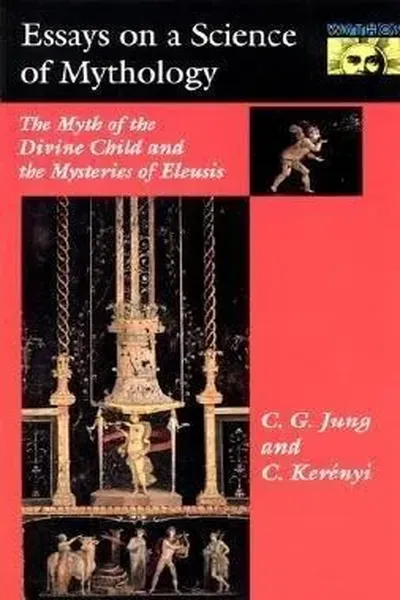








More Free Occult Philosophy Books
View all →