Buddhism
 81
81

Buddhism
Huston Smith and Philip Novak’s *Buddhism* provides a solid, if conventional, overview. Smith’s initial chapters on the history and divergent schools, particularly his emphasis on the Mahayana-Theravada split, are lucid and informative, drawing on his renowned expertise in religious studies. The work skillfully unpacks the historical development of Buddhist thought, grounding it in its Indian origins. However, Novak’s continuation, while competent, feels less authoritative, and the text as a whole could benefit from a deeper engagement with the subtler philosophical arguments or the lived experiences of practitioners beyond the academic perspective. The exploration of the Eightfold Path is particularly well-explained. Ultimately, it’s a reliable primer for the uninitiated, though perhaps less illuminating for those already acquainted with Buddhist texts.
📝 Description
81
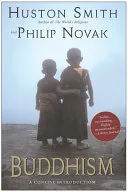
Huston Smith and Philip Novak's 2009 volume introduces Buddhism's major traditions.
This book offers a thorough introduction to Buddhism, charting its origins and growth across its main branches. It explains the core beliefs and historical path of this significant world religion. The authors clearly map out the differences and similarities between the Theravada and Mahayana schools.
It is for people who want an easy way to start learning about Buddhist philosophy and history. Students of comparative religion, those drawn to Eastern spiritual practices, and Westerners new to Buddhist ideas will find it especially helpful. No prior experience with the subject is needed.
The work addresses the rise in Western interest in Buddhism in the late 20th and early 21st centuries. It situates Buddhist traditions within the wider context of world religions, noting their growing importance and the need for careful study. The authors trace Buddhist thought from its beginnings.
This work engages with Buddhist thought, a tradition deeply rooted in contemplative practices and philosophical inquiry. It examines concepts central to the path of liberation and self-understanding within Eastern spirituality. The book details the lineage of teachings that aim for a transformation of consciousness, placing Siddhartha Gautama's insights at its core.
💡 Why Read This Book?
• Gain a clear understanding of the historical evolution of Buddhism, from Siddhartha Gautama's teachings to the development of the Mahayana and Theravada traditions, providing essential context for further study. • Grasp core Buddhist doctrines like the Four Noble Truths and the Eightfold Path, presented in an accessible manner that clarifies their practical implications. • Differentiate between the Theravada and Mahayana schools, understanding their unique philosophical underpinnings and historical divergences as outlined by scholars Huston Smith and Philip Novak.
⭐ Reader Reviews
Honest opinions from readers who have explored this book.
❓ Frequently Asked Questions
What are the main differences between Mahayana and Theravada Buddhism discussed in the book?
The book highlights that Theravada emphasizes the original teachings of the Buddha and the path of the Arhat, while Mahayana expands on these, incorporating concepts like Bodhisattvas and a broader array of scriptures, reflecting different interpretations and practices that emerged over centuries.
Who is Huston Smith and what is his contribution to this book?
Huston Smith was a highly respected scholar of world religions. In this book, he authored the first half, tracing the historical development of Buddhism and focusing on the distinctions between its major traditions, drawing on his extensive knowledge.
When was the book 'Buddhism' by Huston Smith and Philip Novak first published?
The book 'Buddhism' by Huston Smith and Philip Novak was first published on March 17, 2009, reflecting a significant period of growing interest in Eastern philosophies in the West.
What is the significance of the Eightfold Path in Buddhist teachings as presented in the book?
The Eightfold Path is presented as the practical framework for achieving enlightenment in Buddhism, encompassing right understanding, right thought, right speech, right action, right livelihood, right effort, right mindfulness, and right concentration.
Does the book cover the historical figure Siddhartha Gautama?
Yes, the work explores the historical context of Buddhism, including the life and teachings of Siddhartha Gautama, the founder of Buddhism, providing foundational biographical and philosophical background.
Is this book suitable for someone completely new to Buddhism?
Absolutely. The book is designed as an accessible guide for newcomers, explaining complex concepts and historical details in a clear and organized manner, making it an excellent starting point for understanding Buddhism.
🔮 Key Themes & Symbolism
Theravada vs. Mahayana
The work meticulously differentiates between the Theravada and Mahayana traditions, two primary branches of Buddhism that diverged historically and philosophically. Theravada, often considered the 'School of the Elders,' focuses on the original Pali Canon and the ideal of the Arhat. Mahayana, the 'Great Vehicle,' encompasses a broader range of sutras and emphasizes the Bodhisattva ideal, aiming for the enlightenment of all beings. This distinction is crucial for understanding the diverse expressions of Buddhist practice and thought worldwide.
The Path to Enlightenment
Central to Buddhist philosophy is the concept of achieving enlightenment, or Nirvana. The book details the foundational teachings, particularly the Four Noble Truths—suffering, its cause, its cessation, and the path to cessation—and the practical application through the Eightfold Path. This ethical and contemplative framework guides practitioners toward liberation from the cycle of rebirth and suffering.
Historical Development
The book traces the historical trajectory of Buddhism from its origins in ancient India with Siddhartha Gautama. It examines how the teachings spread across Asia, adapting and evolving through various cultural contexts. Understanding this historical dimension is key to appreciating the diversity of Buddhist schools and their unique interpretations of core doctrines over centuries.
Core Buddhist Tenets
Beyond the main traditions, the work explores fundamental principles such as karma, rebirth (samsara), impermanence (anicca), and non-self (anatta). These concepts form the bedrock of Buddhist philosophy, explaining the nature of existence, the cycle of cause and effect, and the path toward spiritual awakening. The book provides accessible explanations for these complex ideas.
💬 Memorable Quotes
Direct passages from the work, attributed to the author.
“The first half of the book is written by Smith, the world’s premier authority on religious traditions.”
— This statement highlights the credibility and depth of the initial section, positioning Huston Smith as a leading voice whose expertise lends significant weight to the historical and comparative analysis of Buddhism presented.
“Smith traces the history of Buddhism, with a special focus on the differences and similarities between the Mahayana and Theravada traditions.”
— This indicates a core organizational principle of the book: a comparative approach to Buddhism's major schools, focusing on historical evolution and doctrinal distinctions crucial for scholarly understanding.
“Noted scholar (and former student of Smith) Novak then traces t”
— This suggests a structured handover of expertise, with Philip Novak, a scholar with a direct lineage to Smith's tutelage, continuing the exploration, likely building upon or offering a complementary perspective.
“a quickly growing tradition with an increasing presence and importance in the Western world.”
— This observation frames the book's relevance, indicating its purpose is to address the rising Western engagement with Buddhism by providing an informed and accessible overview.
“offer a highly readable and incisive guide to the heart of Buddhism”
— This phrase emphasizes the book's accessibility and depth, suggesting it aims to present complex Buddhist philosophy and history in a clear, engaging manner for a broad audience.
🌙 Esoteric Significance
Tradition
While not strictly an esoteric text in the Western Hermetic or Kabbalistic sense, *Buddhism* serves as a crucial bridge for understanding Eastern spiritual philosophies that have significant esoteric dimensions. It provides the foundational historical and doctrinal context necessary for exploring Buddhist meditation practices, Vajrayana symbolism, and concepts like emptiness (sunyata), which resonate with Gnostic ideas of liberation from illusion. The book grounds these often abstract concepts within their original lineage.
Symbolism
The lotus flower, a recurring symbol in Buddhist art and literature, represents purity, enlightenment, and spiritual awakening, emerging unstained from muddy waters. The Dharma wheel (Dharmachakra) symbolizes the Buddha's teachings and the path to liberation, its eight spokes often representing the Eightfold Path. These symbols, though not always deeply analyzed in this introductory text, are fundamental to Buddhist iconography and meditative visualization.
Modern Relevance
Contemporary Western Buddhism, mindfulness movements, and even secularized meditation practices often draw implicitly or explicitly on the foundational teachings discussed in this book. Thinkers and practitioners exploring mindfulness-based cognitive therapy (MBCT) or engaged Buddhism, influenced by figures like Thich Nhat Hanh, benefit from the clarity this work provides on core concepts like suffering and the path to its cessation.
👥 Who Should Read This Book
["• Beginning students of comparative religion: Gain a structured and authoritative overview of one of the world's major spiritual traditions, differentiating its key schools and historical development.", '• Individuals exploring Eastern philosophies: Understand the foundational concepts of Buddhism, such as the Four Noble Truths and the Eightfold Path, presented accessibly by leading scholars.', '• Westerners encountering Buddhist thought: Obtain a clear, readable guide to the history and core tenets of Buddhism, clarifying its presence and importance in the contemporary world.']
📜 Historical Context
Published in 2009, *Buddhism* arrived during a period of significant expansion for Eastern spiritual traditions in Western discourse. Huston Smith, already a towering figure in the study of world religions following his seminal *The World's Religions*, brought his authoritative voice to this focused exploration. The intellectual climate was ripe for accessible introductions to traditions like Buddhism, which had gained traction through figures like the Dalai Lama and various meditation movements. Smith's work, co-authored with his former student Philip Novak, aimed to provide a scholarly yet approachable overview, distinguishing itself from more academic treatises or purely devotional texts. It implicitly engaged with the burgeoning field of comparative religion and Buddhist studies, offering a narrative that acknowledged both the historical roots in India and the modern Western reception, a landscape also populated by scholars like Richard Gombrich.
📔 Journal Prompts
The Four Noble Truths: How does the concept of suffering (dukkha) manifest in your own experience?
The Eightfold Path: Reflect on the relationship between Right Speech and Right Action in daily interactions.
Theravada vs. Mahayana: Consider the implications of the Arhat ideal versus the Bodhisattva ideal for personal spiritual goals.
The historical spread of Buddhism: Analyze how cultural adaptation might influence core teachings over time.
Siddhartha Gautama's renunciation: What does this foundational event signify about the pursuit of spiritual truth?
🗂️ Glossary
Theravada
One of the two major branches of Buddhism, often considered the 'School of the Elders,' emphasizing the original teachings of the Buddha as recorded in the Pali Canon and the path to Arhatship.
Mahayana
The 'Great Vehicle' of Buddhism, characterized by a broader canon of scriptures and the ideal of the Bodhisattva, who seeks enlightenment for all sentient beings. It encompasses diverse schools like Zen and Tibetan Buddhism.
Four Noble Truths
The foundational teachings of Buddhism: 1. the truth of suffering (dukkha), 2. the truth of the cause of suffering (craving/attachment), 3. the truth of the cessation of suffering (Nirvana), and 4. the truth of the path to the cessation of suffering (the Eightfold Path).
Eightfold Path
The practical guide to achieving enlightenment in Buddhism, comprising eight interconnected practices: Right Understanding, Right Thought, Right Speech, Right Action, Right Livelihood, Right Effort, Right Mindfulness, and Right Concentration.
Siddhartha Gautama
The historical founder of Buddhism, later known as the Buddha ('the awakened one'), whose life and teachings form the basis of Buddhist philosophy and practice.
Karma
The principle of cause and effect, where intentional actions (physical, verbal, or mental) have consequences that influence an individual's present and future lives within the cycle of rebirth.
Nirvana
The ultimate goal in Buddhism; the cessation of suffering and the cycle of rebirth (samsara), achieved through enlightenment and the extinguishing of craving and ignorance.