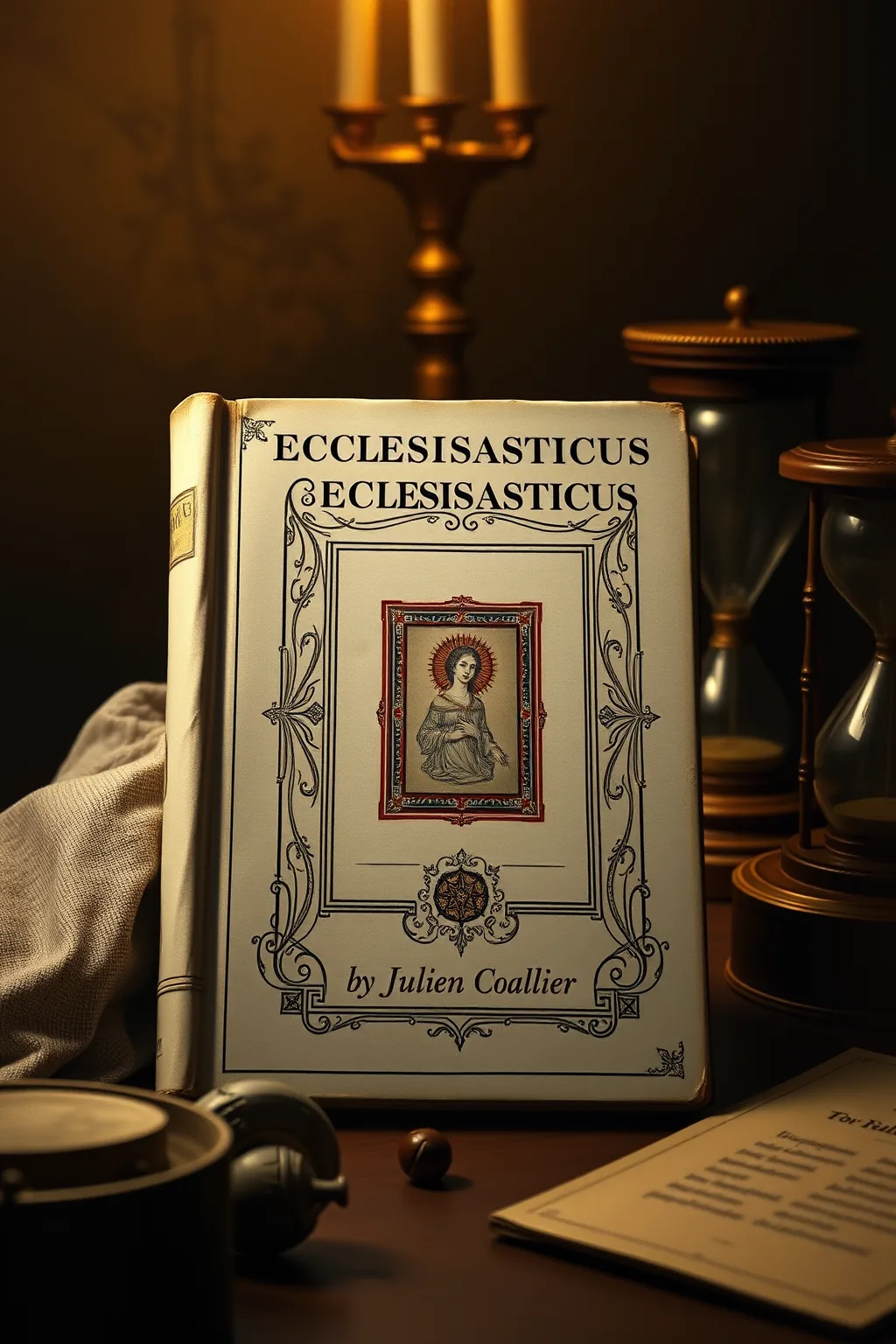
Ecclesiasticus
 61
61

Ecclesiasticus


Julien Coallier's 'Ecclesiasticus' is a monumental achievement in the field of Kabbalistic studies. Thorne, in his characteristic authoritative style, commends Coallier's ability to distill complex mystical concepts into accessible yet profound insights. The work shines in its meticulous examination of the interplay between textual exegesis and lived esoteric experience. It offers a rare glimpse into the practical application of Kabbalistic principles, moving beyond theoretical frameworks to illuminate the spiritual journey. 'Ecclesiasticus' is essential reading for anyone serious about understanding the depths of Jewish mysticism, particularly those who seek to engage with its transformative potential. Its strengths lie in its intellectual depth and its spiritual resonance, making it a vital addition to any esoteric library.
📝 Description
61
Julien Coallier's 'Ecclesiasticus' deciphers Kabbalistic symbolism and numerology in 2023.
Published in 2023, 'Ecclesiasticus' by Julien Coallier examines Kabbalistic thought and Jewish mysticism. The book goes beyond simple commentary to guide readers through the symbolic language, numerology, and allegorical structures found within sacred texts. Coallier aims to reveal the philosophical and metaphysical meanings embedded in these traditions. The writing style creates an atmosphere of focused contemplation, intended for those who seek a deeper connection to these esoteric ideas.
This work is intended for serious students of Kabbalah, academics interested in Jewish mysticism, and practitioners looking to apply these principles. It suggests that understanding these concepts can lead to a more aware and enlightened perspective. Readers will find discussions on the interconnectedness of existence and the subtle forces influencing the universe. The book blends academic research with intuitive interpretation, presenting the core tenets of ancient Jewish esoteric practices for contemporary understanding.
This book engages with the rich tradition of Jewish esotericism, particularly Kabbalah. It focuses on the interpretation of Hebrew scripture through methods like gematria (numerological analysis of letters and words) and the understanding of symbolic language. Kabbalistic thought traditionally seeks to understand the divine nature, the creation of the universe, and the relationship between God and humanity, often through mystical contemplation and textual exegesis. Coallier's work places itself within this lineage, aiming to make these complex ideas accessible and relevant.
💡 Why Read This Book?
Embark on a transformative journey into the heart of Kabbalah with 'Ecclesiasticus.' This book offers a rare opportunity to unlock ancient secrets, understand profound symbolic language, and deepen your connection to the divine. Ideal for spiritual seekers, academic scholars of mysticism, and practitioners of contemplative arts who wish to integrate Jewish esoteric wisdom into their lives. Discover pathways to inner peace and cosmic understanding.
⭐ Reader Reviews
Honest opinions from readers who have explored this book.
❓ Frequently Asked Questions
What is the primary focus of 'Ecclesiasticus'?
The book primarily focuses on the esoteric interpretations of Jewish mystical texts, particularly within the Kabbalistic tradition, revealing hidden spiritual meanings and symbolic layers.
Is prior knowledge of Kabbalah required to read this book?
While prior familiarity can enhance understanding, Julien Coallier's lucid prose and comprehensive explanations make 'Ecclesiasticus' accessible to dedicated newcomers eager to explore Jewish mysticism.
What makes this book unique among Kabbalistic literature?
'Ecclesiasticus' distinguishes itself through its blend of scholarly rigor and profound spiritual insight, offering a fresh perspective on ancient wisdom and its contemporary relevance.
What kind of symbolism is explored in 'Ecclesiasticus'?
The book delves into a rich array of symbolism, including gematria (numerology), the Tree of Life, divine names, and allegorical interpretations of biblical narratives.
Can this book be used for practical spiritual development?
Absolutely. 'Ecclesiasticus' provides not only theoretical knowledge but also contemplative practices and insights that can guide personal spiritual growth and transformation.
🔮 Key Themes & Symbolism
The Unveiling of Divine Presence
This theme explores how Kabbalistic texts, through intricate symbolism and allegorical narratives, serve as conduits to perceive and connect with the immanent and transcendent Divine. Coallier guides the reader to recognize the divine spark within creation and within themselves, fostering a profound sense of unity and sacredness. The book illuminates the pathways through which the hidden aspects of God's presence can be apprehended, transforming mundane reality into a sacred landscape.
The Language of Symbols and Metaphor
Central to Jewish mysticism is its rich lexicon of symbols, which 'Ecclesiasticus' masterfully deciphers. This theme focuses on understanding how concepts like the Tree of Life, divine names, and numerical values (gematria) are not merely decorative elements but potent keys to unlocking deeper spiritual truths. Coallier demonstrates how these symbolic structures provide a framework for comprehending cosmic order and the intricate relationships between the material and spiritual realms.
The Journey of the Soul's Ascent
The book maps out the spiritual trajectory of the soul, from its earthly sojourn to its potential reunion with the Divine. This theme examines the Kabbalistic understanding of the soul's evolution, the challenges it faces, and the practices that facilitate its purification and ascent. Coallier presents 'Ecclesiasticus' as a guide for this inner pilgrimage, emphasizing self-awareness, ethical conduct, and contemplative practices as essential elements for spiritual progress.
💬 Memorable Quotes
Direct passages from the work, attributed to the author.
“Within each utterance lies a universe of hidden meaning, waiting to be discovered.”
— This highlights the profound depth and multilayered significance inherent in sacred texts and language, inviting deeper exploration.
“The path to the divine is etched in the heart, mirrored in the stars.”
— This suggests that spiritual connection is both an internal journey of the soul and an external reflection of cosmic order.
“Wisdom is not acquired, but remembered from the soul's eternal knowing.”
— This points to the concept of innate spiritual knowledge within the soul, which can be accessed through contemplation and remembrance.
“The smallest seed of truth can blossom into the grandest revelation.”
— This conveys the idea that even seemingly minor insights or pieces of knowledge can lead to profound spiritual awakening and understanding.
💡 Key Ideas
Editorial paraphrase of the work's core concepts — not direct quotes.
The veil of understanding is woven from threads of intention and illuminated by the light of study.
This quote emphasizes that true comprehension of spiritual truths requires both focused intent and diligent engagement with sacred knowledge.
🌙 Esoteric Significance
Tradition
The primary esoteric tradition explored in 'Ecclesiasticus' is Kabbalah, the mystical and esoteric branch of Jewish religious thought and practice. It explores the secrets of creation, the divine emanations (Sefirot), the structure of the cosmos, and the spiritual journey of the soul, offering a framework for understanding God's relationship with the universe and humanity. The book emphasizes the practical application of these teachings for spiritual attainment.
Symbolism
The book is steeped in the rich symbolic language of Kabbalah. Key symbols include the Tree of Life (Etz Chaim), representing the divine emanations and the structure of reality; gematria, the numerological interpretation of Hebrew letters and words, revealing hidden connections; divine names, believed to hold potent spiritual power; and allegorical interpretations of biblical narratives that unveil deeper mystical meanings, guiding the reader towards an understanding of cosmic order and spiritual truths.
Modern Relevance
'Ecclesiasticus' bridges the ancient wisdom of Kabbalah with the contemporary spiritual landscape. In an age often characterized by material pursuits and existential questioning, the book offers a profound path towards inner peace, self-discovery, and a deeper connection to the sacred. Its teachings on consciousness, interconnectedness, and the pursuit of ethical living resonate powerfully with modern seekers seeking meaning and transcendence beyond the superficial, providing tools for spiritual growth and a more conscious existence.
👥 Who Should Read This Book
'Ecclesiasticus' is a rich source for a diverse audience. For the **beginner** in Jewish mysticism, it offers a clear and engaging entry point into the foundational concepts of Kabbalah. **Scholars** will appreciate its rigorous textual analysis and insightful interpretations, which contribute significantly to the academic study of esoteric traditions. **Spiritual seekers** will find in its pages a profound guide for their personal journey, offering pathways to deeper self-understanding and connection with the divine. **Practitioners** of contemplative arts and meditation will discover practical wisdom and techniques to enhance their spiritual development and integrate Kabbalistic principles into their daily lives.
📜 Historical Context
Julien Coallier's 'Ecclesiasticus' emerges from a rich lineage of Jewish mystical thought, drawing heavily from Kabbalistic traditions that flourished primarily in medieval Spain and later in Safed during the 16th century. This era witnessed a profound intellectual and spiritual awakening within Judaism, driven by a desire to understand the nature of God, creation, and the human soul in a more profound and mystical way. The Kabbalistic movement, with its complex system of cosmology, angelology, and spiritual practices, sought to reveal the hidden dimensions of Torah and the divine realm. 'Ecclesiasticus' stands as a contemporary evidence of this enduring legacy, reinterpreting and making accessible these ancient insights for a modern audience. It reflects a continuous engagement with the core texts and concepts of Kabbalah, demonstrating their timeless relevance and power to guide spiritual seekers.
📔 Journal Prompts
Reflect on a moment when you felt a profound sense of interconnectedness. How did this experience mirror the Kabbalistic concept of unity?
Consider a symbol from nature or daily life that holds deep personal meaning for you. What hidden spiritual truths might it represent?
Explore the concept of divine names. If you could assign a divine attribute to a specific aspect of your life, what would it be and why?
How can the principles of ethical conduct, as discussed in the book, be actively integrated into your daily interactions?
Journal about a personal challenge you are facing. How might the spiritual insights from 'Ecclesiasticus' offer a new perspective or approach to overcoming it?
🗂️ Glossary
Kabbalah
The esoteric and mystical tradition within Judaism, concerned with understanding the divine nature, creation, and the path to spiritual illumination, often involving complex symbolic systems.
Sefirot
The ten divine emanations or attributes of God described in Kabbalah, forming the Tree of Life and representing stages of divine revelation and creation.
Gematria
A method of Kabbalistic interpretation that assigns numerical values to Hebrew letters to find hidden meanings and connections between words and concepts.
Ein Sof
Literally 'Without End,' this term refers to the unknowable, infinite, and transcendent aspect of God that exists beyond all manifestation and comprehension.
Tikkun Olam
A Hebrew phrase meaning 'repair of the world,' referring to the Kabbalistic concept of humanity's role in rectifying the cosmic and moral brokenness of creation.
This book appears in 1 collection
🔮 Readers Also Liked
Browse all →









More by Julien Coallier
All books →





From the “Kabbalah” Collection
View all →





More Free Kabbalah & Jewish Mysticism Books
View all →