Kabbalah, tradition of hidden knowledge

 61
61

Kabbalah, tradition of hidden knowledge

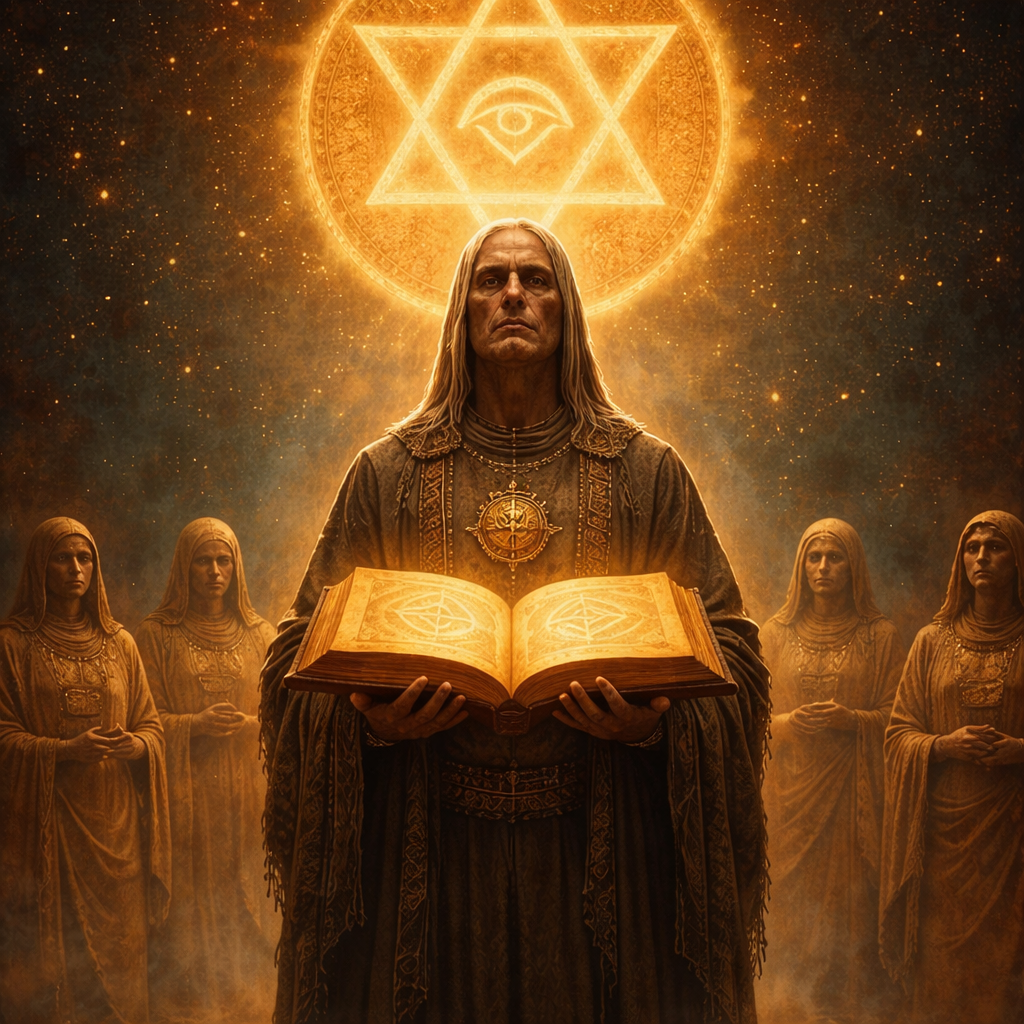

Silas Hawthorne (Hermetic Studies Editor) — Z'ev ben Shimon Halevi's "Kabbalah, Tradition of Hidden Knowledge" stands as a cornerstone for serious students of the esoteric. Halevi's profound scholarship and intuitive grasp of Kabbalistic principles are evident on every page, rendering complex ideas with remarkable clarity and spiritual depth. He bridges the gap between theoretical understanding and practical application, making the esoteric accessible without sacrificing its inherent mystery. This work is indispensable for anyone seeking to grasp the foundational architecture of Western esotericism, offering invaluable insights into the nature of the cosmos and our place within it. A truly essential read for practitioners and scholars alike.
📝 Description
61
Z'ev ben Shimon Halevi published "Kabbalah, Tradition of Hidden Knowledge" to explain Jewish mysticism.
This book details the core concepts of Kabbalah, the Jewish mystical tradition. Halevi explains the symbolism of the Tree of Life and the Sephiroth, which are central to understanding the divine and the structure of reality in this system. The text moves beyond simple explanation to present Kabbalah as a path for spiritual growth and self-understanding.
Halevi aims to make complex ideas accessible, describing the emanations of divinity and the human soul's place within this cosmic order. The book is written for those interested in the deeper aspects of Jewish thought and esoteric traditions, offering a structured approach to concepts that have long intrigued seekers.
Kabbalah is a body of Jewish mystical teachings and practices that aims to understand the divine nature and the creation of the universe. It emerged within Jewish communities over centuries, drawing on biblical texts, Talmudic lore, and later philosophical and mystical developments. Halevi's work places itself within this lineage, interpreting its symbols and cosmology for a modern audience seeking to grasp its spiritual dimensions. It connects the abstract concepts of Kabbalah to practical application for personal transformation.
💡 Why Read This Book?
This book offers a compelling entry point into the profound mysteries of Kabbalah, demystifying its complex symbolism. It provides a structured, insightful exploration of the Tree of Life and its cosmic implications, ideal for spiritual seekers and scholars of mysticism. Readers will discover a path to deeper self-understanding and a unique perspective on the divine, making it an essential read for those drawn to ancient wisdom and esoteric traditions.
⭐ Reader Reviews
Honest opinions from readers who have explored this book.
❓ Frequently Asked Questions
What is the primary focus of "Kabbalah, Tradition of Hidden Knowledge"?
The book primarily focuses on the esoteric teachings of Kabbalah, particularly the Tree of Life, its Sephiroth, and the principles of divine emanation, offering a comprehensive guide to this rich mystical tradition.
Is this book suitable for beginners interested in Kabbalah?
Yes, Z'ev ben Shimon Halevi's clear prose and structured approach make it accessible to beginners, while still offering profound insights for more advanced practitioners.
What is the significance of the Tree of Life in Kabbalah?
The Tree of Life is the central diagram in Kabbalah, representing the divine emanations and the structure of the cosmos. It serves as a map for spiritual ascent and understanding the relationship between God and humanity.
Does the book discuss practical Kabbalistic exercises?
While primarily a theoretical and philosophical exploration, the book lays the groundwork for practical understanding and personal application of Kabbalistic principles for spiritual growth.
What makes this book a 'tradition of hidden knowledge'?
Kabbalah is considered a tradition of hidden knowledge because its deepest meanings are often veiled in symbolism and require dedicated study and contemplation to unlock, leading to profound spiritual insights.
🔮 Key Themes & Symbolism
The Tree of Life as a Cosmic Blueprint
This central tenet of Kabbalah, as elucidated by Halevi, presents the Tree of Life not merely as a symbolic diagram but as a divine blueprint of creation. It maps the outflow of divine energy from the Ein Sof (Infinite) through ten Sephiroth, or emanations, detailing the structure of the universe, the levels of consciousness, and the path of spiritual evolution. Understanding this intricate structure provides a framework for comprehending the interconnectedness of all things and the divine essence that permeates existence.
Symbolism and Divine Language
Kabbalah is fundamentally a system of symbolic language, where Hebrew letters, numbers, and archetypal images serve as keys to unlocking profound spiritual truths. Halevi masterfully decodes this sacred lexicon, revealing how each symbol points towards deeper realities and divine principles. The book emphasizes that this symbolism is not arbitrary but a divinely inspired method for communicating the ineffable, allowing the adept to perceive the hidden order within the manifest world and commune with the divine mind.
The Path of Spiritual Ascent
Beyond theoretical knowledge, "Kabbalah, Tradition of Hidden Knowledge" outlines a profound path for personal transformation and spiritual growth. It illustrates how understanding the dynamics of the Sephiroth and the interplay of divine forces can guide the individual on a journey of inner refinement and spiritual ascent. The book offers a contemplative framework for aligning oneself with divine will, integrating spiritual wisdom into daily life, and ultimately achieving union with the divine.
💬 Memorable Quotes
Direct passages from the work, attributed to the author.
“The Tree of Life is the key to the whole of creation.”
— This statement highlights the central importance of the Kabbalistic Tree of Life as a comprehensive model for understanding the universe and its divine underpinnings.
“To know God is to know oneself.”
— This aphorism expresses the Kabbalistic principle of the microcosm reflecting the macrocosm, implying that self-knowledge is a direct path to understanding the divine.
“The Kabbalah is a living tradition.”
— This emphasizes that Kabbalistic wisdom is not static but a dynamic, evolving spiritual practice that can be applied and experienced in the present moment.
“Hidden knowledge opens the inner eye.”
— This suggests that esoteric wisdom, particularly Kabbalah, has the power to awaken higher perception and grant access to spiritual realities beyond ordinary senses.
💡 Key Ideas
Editorial paraphrase of the work's core concepts — not direct quotes.
Symbolism is the language of the soul.
This quote suggests that the deep, intuitive understanding of the universe is conveyed through symbolic language, which resonates directly with our inner spiritual essence.
🌙 Esoteric Significance
Tradition
Kabbalah represents a core part of Western esotericism, offering a sophisticated system of cosmology, theology, and spiritual psychology. Its emphasis on divine emanations, the interconnectedness of all existence, and the potential for human spiritual ascent places it firmly within the Hermetic, Gnostic, and mystical traditions. It provides a unique framework for understanding the relationship between the divine and the material world, and a map for the soul's journey towards ultimate realization.
Symbolism
The esoteric significance of Kabbalah lies heavily in its rich and multi-layered symbolism. The Tree of Life, with its ten Sephiroth and twenty-two connecting paths, is the primary symbolic map, representing the divine attributes, the stages of creation, and the human psyche. Hebrew letters, gematria (numerical value of letters), and biblical narratives are further employed as keys to unlock hidden meanings, revealing divine secrets and the underlying order of the cosmos.
Modern Relevance
In contemporary times, Kabbalah continues to offer clear insights into consciousness, spirituality, and the nature of reality. Its principles provide a powerful lens through which to examine personal growth, ethical development, and the search for meaning in a complex world. The emphasis on interconnectedness speaks to modern ecological and social awareness, while its contemplative practices offer solace and guidance for reading through the challenges of the 21st century.
👥 Who Should Read This Book
This profound exploration of Kabbalah is ideally suited for a diverse audience. **Beginners** seeking a clear, structured introduction to Jewish mysticism will find Halevi's accessible yet deep exposition invaluable. **Scholars** of comparative religion and esoteric traditions will appreciate the rigorous scholarship and nuanced interpretations. **Spiritual seekers** yearning for a deeper understanding of the divine architecture and their place within it will find a rich wellspring of wisdom. **Practitioners** of meditation and contemplative arts will discover potent frameworks for inner work and spiritual development.
📜 Historical Context
The Kabbalah, as explored in Z'ev ben Shimon Halevi's work, emerged from the rich intellectual and spiritual milieu of medieval Judaism, particularly in 12th and 13th-century Provence and Spain. Its development occurred during a period of intense philosophical inquiry, mystical exploration, and cultural exchange. The foundational texts, such as the Sefer Yetzirah and the Zohar, were compiled and disseminated, offering esoteric interpretations of biblical texts and Jewish law. This era saw a blossoming of creative thought, seeking to reconcile faith with reason and to explore the deeper, mystical dimensions of the divine. Kabbalistic thought profoundly influenced subsequent Jewish mystical movements and later found resonance in various Western esoteric traditions, demonstrating its enduring appeal and adaptability across different cultural and spiritual landscapes.
📔 Journal Prompts
Reflect on a moment when you felt a deep sense of interconnectedness with the universe. How might the principles of Kabbalah explain this experience?
Consider one of the Sephiroth. How does its essence manifest in your own life, both positively and negatively?
What does the concept of 'hidden knowledge' mean to you personally? How might approaching life with a spirit of inquiry unlock new perspectives?
Meditate on the symbolism of light in Kabbalah. What does divine light represent in your understanding, and how can you cultivate it within yourself?
If the Tree of Life is a map, what is the destination of your spiritual journey, and what paths are you currently exploring?
🗂️ Glossary
Sephiroth
The ten divine emanations or attributes that form the structure of the Kabbalistic Tree of Life, representing the stages of divine manifestation and the unfolding of creation.
Tree of Life
The central diagram in Kabbalah, depicting the ten Sephiroth and their interconnections, serving as a map of the cosmos, divine consciousness, and the path of spiritual development.
Ein Sof
The Kabbalistic term for the Infinite, the unknowable, undifferentiated Godhead that precedes all manifestation and from which all existence emanates.
Gematria
A system of Jewish numerology where Hebrew letters are assigned numerical values, used in Kabbalah to find hidden meanings and connections within sacred texts.
Tikkun
A central Kabbalistic concept meaning 'rectification' or 'repair.' It refers to the cosmic task of restoring harmony and wholeness to creation, often through human action and spiritual practice.
This book appears in 1 collection
🔮 Readers Also Liked
Browse all →









More by Z'ev ben Shimon Halevi
All books →





From the “Kabbalah” Collection
View all →









More Free Kabbalah & Jewish Mysticism Books
View all →