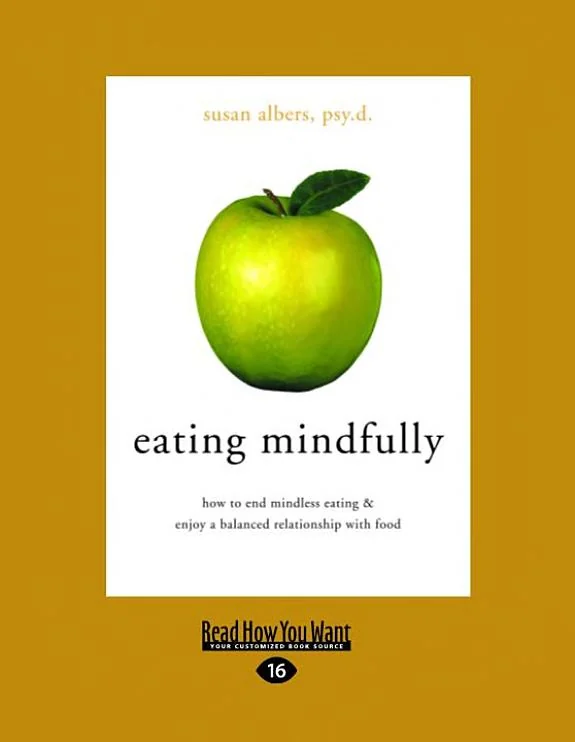
Eating Mindfully
 81
81

Eating Mindfully
Susan Albers’s "Eating Mindfully" tackles the pervasive, often unconscious, consumption of food with a refreshingly direct approach. The book’s strength lies in its clear identification of common mindless eating patterns, such as emotional eating or eating past fullness, which many readers will recognize from their own lives. Albers avoids overly spiritual jargon, grounding her advice in practical observations of everyday behavior. A particularly resonant point is the discussion of guilt as a driver for eating, a concept that often goes unaddressed in diet-focused literature. However, the book occasionally feels more descriptive than prescriptive, leaving some readers to desire more explicit, step-by-step guidance for implementing mindful eating techniques. The initial publication date of 2009 means some of the societal context has evolved, though the core issues remain. Despite this, "Eating Mindfully" offers a valuable framework for understanding and altering one's relationship with food.
📝 Description
81
Susan Albers' 2009 book, 'Eating Mindfully,' identifies the problem of eating without awareness.
The book addresses "mindless eating," a habit of consuming food without paying attention to hunger cues, fullness, or emotional states. Albers argues this uncontrolled approach contributes to health problems. Many people, she notes, continue eating past the point of fullness, restrict calories despite hunger, or let guilt influence their food choices. This indicates a disconnect from the body's natural needs, often worsened by societal pressures and complicated feelings about food.
This guide is for those experiencing difficulties with uncontrolled eating. This includes people who overeat often, feel guilty about food, or lack control over their eating habits. It is especially useful for individuals who have tried diets without lasting success, suggesting a behavioral root to their eating issues. Albers offers practical methods to build a healthier relationship with food, moving away from strict diets toward intuitive eating. Her aim is to assist a wide range of readers, from those with minor concerns to those preoccupied with weight, which she calls an epidemic in the United States.
While categorized as esoteric, 'Eating Mindfully' engages with a tradition of self-help and psychological approaches that seek to restore an individual's connection to their inner wisdom. Albers' work taps into the idea that true nourishment comes not from external rules or restrictions, but from listening to the body's innate signals. This aligns with esoteric thought that emphasizes inner guidance and the healing potential of returning to natural states, often obscured by modern life and its pressures. The book’s focus on cultivating awareness around eating can be seen as a spiritual discipline, aiming for harmony between the physical self and mental state.
💡 Why Read This Book?
• Learn to identify the specific triggers for your mindless eating, moving beyond generalized guilt by understanding concepts like "eating past fullness" as presented in Albers's analysis. • Discover practical techniques to reconnect with your body's natural hunger and satiety signals, a core tenet discussed throughout the 2009 publication. • Develop a non-judgmental awareness of your eating habits, a crucial element for breaking cycles of restriction and overconsumption, as detailed in the book's core recommendations.
⭐ Reader Reviews
Honest opinions from readers who have explored this book.
❓ Frequently Asked Questions
What is the core concept of Susan Albers's 'Eating Mindfully'?
The core concept is 'mindless eating,' characterized by consuming food without awareness of hunger, fullness, or emotional state. The book, published in 2009, provides strategies to counter this by fostering conscious awareness of eating behaviors.
How does 'Eating Mindfully' differ from traditional dieting books?
Unlike diet books that focus on restriction, 'Eating Mindfully' emphasizes awareness and internal cues. It aims to change the relationship with food rather than just dictating what or how much to eat, addressing the psychological roots of eating concerns.
Who is the author Susan Albers?
Susan Albers is a psychologist specializing in eating issues. Her work, including 'Eating Mindfully' from 2009, draws on her clinical experience to help individuals develop healthier relationships with food and their bodies.
What are the health consequences of mindless eating discussed in the book?
The book highlights that uncontrolled eating contributes to 'epidemic proportions' of eating concerns and weight obsessions, leading to serious health consequences for a large part of the population, as observed around the time of its 2009 publication.
Can 'Eating Mindfully' help with emotional eating?
Yes, a central theme is understanding how emotions like guilt or stress drive mindless eating. By fostering awareness, the book aims to equip readers with tools to differentiate between emotional urges and genuine physical hunger.
What is the publication year of 'Eating Mindfully'?
The book 'Eating Mindfully' by Susan Albers was first published on December 14, 2009.
🔮 Key Themes & Symbolism
The Cycle of Mindless Eating
Albers details how common it is to eat in an uncontrolled, unaware manner, a habit prevalent by the late 2000s. This includes behaviors like continuing to snack when full, restricting calories despite hunger, or using guilt as a dietary guide. The book illustrates how societal pressures and a complex relationship with food contribute to this cycle, leading to widespread eating concerns and weight obsessions that reached epidemic proportions in the United States. The work explores how these patterns become automatic, often disconnected from genuine physical needs, and how recognizing these automatic behaviors is the first step toward change.
Reclaiming Intuitive Eating
Central to the book's philosophy is the idea of returning to intuitive eating, guided by internal bodily signals rather than external rules or emotional impulses. The work advocates for paying attention to the sensory experience of food—its taste, texture, and aroma—and honoring the body's signals of hunger and satiety. This shift from external control to internal wisdom is presented as a path to a more balanced and sustainable relationship with food. By cultivating awareness, individuals can move away from guilt-driven eating and toward a more mindful, satisfying, and health-promoting approach to nourishment.
Mindfulness as a Tool
The book positions mindfulness not as a spiritual practice but as a practical tool for observing one's eating habits without judgment. Albers encourages readers to become curious about their eating behaviors, understanding the context, emotions, and physical sensations associated with each meal or snack. This non-judgmental awareness is crucial for dismantling the guilt and shame often associated with eating concerns. By applying mindfulness, individuals can begin to identify the root causes of their mindless eating patterns and develop more conscious, intentional choices, fostering a healthier and more peaceful relationship with food.
Societal Impact on Eating
Albers touches upon the broader societal landscape that contributes to uncontrolled eating, noting that by 2009, eating concerns and weight obsessions had reached epidemic proportions in the United States. This contextualizes mindless eating not merely as an individual issue but as a phenomenon influenced by cultural norms, diet fads, and societal pressures regarding body image. The work implicitly critiques a culture that often fosters an unhealthy relationship with food, making it difficult for individuals to listen to their bodies. Understanding this backdrop is key to realizing why such habits are so widespread.
💬 Memorable Quotes
Direct passages from the work, attributed to the author.
“How common and effortless it is to eat in an uncontrolled, unaware, mindless manner.”
— This opening observation immediately frames the central problem: eating without conscious thought has become a default behavior for many, underscoring the need for the mindful approach Albers advocates.
“If you've ever continued to snack when you were full, cut calories despite being hungry, or used guilt to guide your eating, you've experienced mindless eating firsthand.”
— This highlights specific, relatable examples of mindless eating, serving as a diagnostic tool for readers to recognize these patterns in their own lives and understand the book's relevance.
“Deciding what to eat is not an easy task. It's so tricky that in the United States eating concerns and weight obsessions have reached epidemic proportions.”
— This statement underscores the complexity of modern eating and links individual struggles to a larger public health crisis, justifying the book's focus on the psychological and behavioral aspects of food consumption.
“Let's face it. The United States eating concerns and weight obsessions have reached epidemic proportions.”
— This blunt assessment, made around the book's 2009 publication, emphasizes the severity and widespread nature of disordered eating patterns, framing the need for mindful eating as a critical public health issue.
💡 Key Ideas
Editorial paraphrase of the work's core concepts — not direct quotes.
The work explores how guilt can guide eating.
This paraphrased concept points to the significant role of negative emotions, particularly guilt, in dictating food choices and consumption patterns, which Albers aims to help readers overcome through awareness.
🌙 Esoteric Significance
Tradition
While not explicitly aligned with a single esoteric lineage, "Eating Mindfully" draws heavily on principles that echo Buddhist mindfulness (Vipassanā) and Taoist concepts of natural flow and balance. The emphasis on present-moment awareness, non-judgment, and attunement to internal bodily wisdom aligns with practices aimed at achieving inner harmony and transcending ego-driven desires. It can be seen as a modern, secular interpretation of ancient contemplative techniques applied to the very mundane, yet deeply significant, act of eating.
Symbolism
The act of eating itself can be viewed symbolically as a process of integration—taking the external world (food) into the internal self. In the context of mindful eating, the plate of food symbolizes the present moment and the opportunity for conscious engagement. The body's signals of hunger and satiety function as symbolic messages from the deeper self, urging attention and respect. Overcoming mindless eating can be seen as a symbolic act of reclaiming sovereignty over one's inner life, moving from a state of unconscious reaction to conscious choice.
Modern Relevance
The principles of mindful eating, as articulated by Albers and others, have found significant traction in contemporary wellness and psychological practices. They are integrated into mindfulness-based stress reduction (MBSR) programs, cognitive behavioral therapy (CBT) for eating disorders, and general health coaching. Thinkers and practitioners in fields ranging from positive psychology to intuitive eating advocacy continue to build upon this foundation, recognizing the wide impact of mindful awareness on overall well-being. The work remains relevant for anyone seeking to address the psychological and behavioral aspects of eating in a health-conscious society.
👥 Who Should Read This Book
• Individuals struggling with emotional eating or stress-related food consumption, seeking practical tools to differentiate between emotional urges and physical hunger. • People who have tried numerous diets without sustainable success and are looking for a behavioral approach to change their relationship with food. • Practitioners of mindfulness or meditation seeking to apply these principles to a core daily activity, enhancing self-awareness and presence in their lives.
📜 Historical Context
Published in 2009, Susan Albers's "Eating Mindfully" emerged during a period of heightened public awareness regarding obesity and eating disorders in the United States. The early 21st century saw a surge in diet culture, with countless weight-loss programs and books vying for attention. This environment, characterized by a focus on restriction and external rules, created a fertile ground for Albers's work, which offered a counter-narrative centered on internal awareness and psychological well-being. While figures like Barry Popkin were widely discussing the 'epidemic' of obesity, Albers's contribution focused on the behavioral underpinnings of this trend, particularly the pervasive issue of mindless eating. The book's reception, while not marked by specific major events like censorship or major awards, contributed to the growing discourse around mindful eating practices, which was gaining traction as an alternative to conventional dieting. It resonated with individuals seeking a more sustainable and less punitive approach to food and body image.
📔 Journal Prompts
Your habitual eating patterns before recognizing mindless eating.
The role of guilt in your food choices.
Noticing the sensory details of your next meal.
Identifying physical hunger versus emotional craving.
A moment of eating past fullness and your feelings about it.
🗂️ Glossary
Mindless Eating
The practice of consuming food without conscious awareness of hunger cues, fullness signals, emotional states, or the sensory experience of eating. It often involves automatic or habitual consumption.
Mindful Eating
The practice of paying full attention to the process of eating, engaging all senses, and acknowledging physical hunger and satiety cues without judgment. It is the antithesis of mindless eating.
Eating Concerns
A broad term encompassing various psychological and behavioral issues related to food and eating, including disordered eating patterns, obsessions with weight, and unhealthy relationships with food.
Satiety
The state of feeling full or satisfied after eating, signaling that the body has received sufficient nourishment and does not require further food intake.
Guilt (in eating)
A negative emotional response associated with food consumption, often stemming from perceived transgressions against dietary rules or societal expectations about body weight and food choices.
Intuitive Eating
An approach that emphasizes listening to the body's internal hunger and fullness cues, making peace with food, and rejecting diet mentality. Mindful eating is a key component of this.
Weight Obsessions
An excessive and persistent preoccupation with body weight and shape, often leading to unhealthy behaviors, anxiety, and a distorted body image. This was noted as reaching epidemic proportions by 2009.
This book appears in 1 collection
🔮 Readers Also Liked
Browse all →







From the “Mindfulness” Collection
View all →








More Free Occult Philosophy Books
View all →