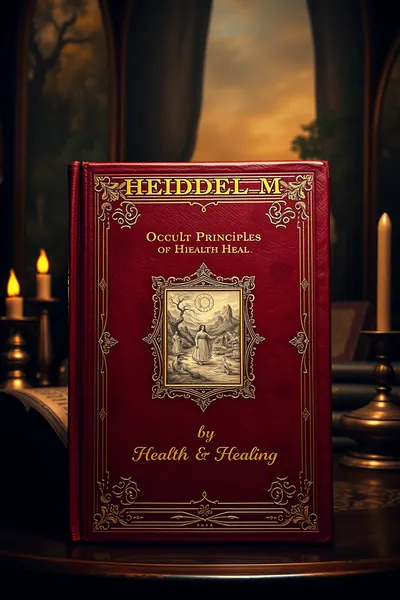
The Darkest Hour

 75
75

The Darkest Hour
Erin Hunter's *The Darkest Hour* presents a starkly rendered vision of societal collapse, focusing less on the spectacle of destruction and more on the grim calculus of survival. The strength of the work lies in its unflinching depiction of human desperation; the moment when a character must choose between their last rations and the survival of a stranger is particularly potent, stripping away sentimentality. However, the narrative occasionally falters by relying on archetypal characters whose motivations, while understandable in extremis, feel somewhat predictable. The ambiguity surrounding the initial catastrophic event, while intended to heighten suspense, can sometimes feel like a narrative shortcut, leaving the reader wanting a firmer grounding for the ensuing chaos. Despite these limitations, the book offers a compelling, albeit bleak, examination of what happens when the lights go out.
📝 Description
75
Erin Hunter's The Darkest Hour was published in 2016, exploring societal collapse.
The Darkest Hour, released in 2016, imagines a world shattered by an unspecified catastrophe. Civilization crumbles, leaving a small group of survivors to confront the immediate aftermath. The narrative focuses on their struggle to adapt to a reality devoid of familiar structures and comforts. It examines the primal instincts that emerge when society's veneer is stripped away.
This book appeals to readers interested in post-apocalyptic settings that prioritize psychological and sociological examination over pure action. It probes human behavior under extreme pressure, the dissolution of social bonds, and the raw imperatives of survival. Those who ponder what remains of human nature when civilization fails and how individuals react to absolute scarcity will find this work resonant.
While not explicitly occult, The Darkest Hour taps into a tradition of apocalyptic and post-apocalyptic fiction that examines humanity's relationship with existential threats. This genre often reflects anxieties about societal fragility and the potential for regression to more primitive states. Similar to Gnosticism's view of the material world as flawed or a fallen state, the book portrays civilization's collapse as a revelation of underlying, often harsh, realities. It questions the nature of order and the true essence of humanity when external structures dissolve.
💡 Why Read This Book?
• You will gain an understanding of the psychological impact of societal breakdown, as depicted through the characters' struggles after the 2016 event, a specific anchor for the narrative's anxieties. • You will encounter the stark concept of the 'civilizing contract' being tested to its limits, offering a unique perspective on ethical compromises in extremis. • You will experience a narrative focused on primal instincts emerging when familiar structures disappear, providing a raw look at human nature beyond the scope of typical survival stories.
⭐ Reader Reviews
Honest opinions from readers who have explored this book.
❓ Frequently Asked Questions
What is the central theme explored in Erin Hunter's The Darkest Hour?
The central theme is the breakdown of societal structures and the resurfacing of primal human instincts when civilization collapses. The work explores how individuals cope with extreme scarcity and the absence of established order, particularly in the wake of the 2016 event.
Does The Darkest Hour offer a hopeful outlook on humanity's future?
The outlook is largely bleak, focusing on the harsh realities and difficult choices individuals face. While it shows resilience, the narrative prioritizes a realistic, often grim, portrayal of survival rather than overt optimism.
What kind of 'event' causes the societal collapse in The Darkest Hour?
The specific nature of the catastrophic event is left deliberately ambiguous. This lack of detail serves to emphasize the universal impact of collapse and the immediate, instinctual reactions of the survivors, rather than focusing on the cause.
How does The Darkest Hour compare to other post-apocalyptic novels published around 2016?
While many novels from that period focused on specific threats like zombies or nuclear war, *The Darkest Hour* distinguishes itself by its focus on the psychological and sociological disintegration stemming from an unspecified global failure.
Are there any specific characters whose journeys are central to The Darkest Hour?
The narrative follows a group of survivors, often shifting focus to illustrate different facets of the collapse. While no single character dominates, their collective experiences highlight the varied responses to the 'darkest hour'.
What is the significance of the title 'The Darkest Hour'?
The title refers to the absolute nadir of civilization and individual hope following a catastrophic event. It signifies the moment when established norms dissolve, and the most fundamental, often brutal, aspects of human nature come to the fore.
🔮 Key Themes & Symbolism
Erosion of Social Order
The work meticulously details the rapid disintegration of societal structures following a global catastrophe. Concepts like law, governance, and even basic civility vanish, leaving individuals to confront a vacuum of authority. This theme is particularly pronounced as characters grapple with the absence of consequence, forcing them to create new, often brutal, rules for survival in the post-2016 world.
Primal Instincts vs. Civilization
A core exploration is the thin veneer of civilization and how easily it cracks under pressure. The narrative illustrates how fear, hunger, and self-preservation become dominant motivators, overriding moral considerations. Characters are forced into situations where 'survival of the fittest' becomes the operative principle, challenging the notion of inherent human goodness when faced with absolute scarcity.
Psychological Resilience and Decay
The book examines the profound psychological toll of living through a world-ending event. It depicts both the remarkable resilience of the human spirit in adapting to unimaginable loss and the rapid decay of mental stability under prolonged stress and isolation. The characters' internal struggles with grief, paranoia, and the loss of identity are as central as their external battles.
The Nature of Humanity
Ultimately, *The Darkest Hour* questions what it means to be human when stripped of all external validation and societal roles. It posits that beneath the layers of culture and progress lie fundamental drives that emerge in extremis. The narrative prompts readers to consider whether humanity's core is cooperative or inherently selfish when faced with ultimate challenges.
💬 Memorable Quotes
Direct passages from the work, attributed to the author.
“When the world ended, the rules ended with it.”
— This statement expresses the central premise: the collapse of civilization means the dissolution of established laws and moral codes, leaving survival as the primary directive.
“Hunger erases everything else.”
— This highlights the power of basic biological needs to override complex ethical considerations, suggesting that primal drives become paramount in extreme circumstances.
“Trust was a luxury no one could afford.”
— This reflects the breakdown of social cohesion and the pervasive fear that permeates the post-apocalyptic landscape, where alliances are fragile and betrayal is a constant threat.
“We became ghosts in our own lives.”
— This poignant interpretation speaks to the loss of identity and purpose experienced by survivors, feeling detached from their former selves and the world they once knew.
“The silence was the loudest sound.”
— This emphasizes the profound emptiness and isolation that follows the destruction of society, where the absence of human activity becomes a deafening presence.
🌙 Esoteric Significance
Tradition
While not overtly occult, *The Darkest Hour* can be interpreted through Gnostic lenses, particularly concerning the breakdown of a flawed material world. The 'darkest hour' can be seen as a metaphor for the Archons' dominion collapsing, forcing souls (survivors) to confront their true nature stripped of societal illusions. It departs from traditional Gnosticism by focusing on practical survival rather than spiritual liberation.
Symbolism
The pervasive 'darkness' symbolizes ignorance and the absence of divine or societal light. Scarcity, particularly of food and water, represents the depletion of spiritual or existential resources necessary for true life. The breakdown of communication symbolizes the loss of connection to a higher truth or collective consciousness.
Modern Relevance
Contemporary thinkers exploring eco-philosophy and degrowth movements might find resonance in the book's depiction of systems failing and the need for radical adaptation. It also speaks to modern anxieties about societal fragility, resonating with discussions around resilience planning and the potential for sudden, widespread disruption in our interconnected world.
👥 Who Should Read This Book
• Readers interested in philosophical explorations of human nature under extreme pressure, particularly those who question the stability of modern society. • Students of dystopian literature seeking to understand the psychological and sociological impacts of societal collapse beyond typical action-adventure narratives. • Individuals drawn to narratives that examine ethical dilemmas and the redefinition of morality when established laws and norms cease to exist.
📜 Historical Context
Published in 2016, *The Darkest Hour* arrived on the literary scene during a period of significant global uncertainty and a robust market for dystopian and post-apocalyptic narratives. This genre had been heavily influenced by works like *The Road* (2006) and the pervasive popularity of zombie fiction, which often explored similar themes of societal collapse and human nature under duress. The year 2016 itself was marked by geopolitical shifts and growing concerns about environmental stability, potentially creating fertile ground for narratives that questioned the resilience of modern civilization. While *The Darkest Hour* did not engage directly with specific philosophical movements, its themes of survivalism and the critique of societal fragility echoed broader cultural anxieties. It stands apart from more action-oriented entries in the genre by focusing on the psychological and ethical implications of collapse, offering a more introspective, albeit grim, perspective on humanity's potential breaking point.
📔 Journal Prompts
The concept of the 'civilizing contract' and its absence.
Reflections on primal instincts versus learned morality.
The psychological toll of isolation and loss.
Defining humanity when societal structures disappear.
The symbolism of darkness and scarcity in the narrative.
🗂️ Glossary
The Darkest Hour
The period of extreme societal collapse and breakdown of civilization depicted in the book, characterized by scarcity, fear, and the erosion of moral norms.
Civilizing Contract
An implicit agreement among members of a society to cooperate for mutual benefit, adhering to laws and social norms. Its breakdown is central to the narrative's premise.
Primal Instincts
Basic, innate drives such as survival, fear, and self-preservation that surface and dominate behavior when external societal controls are removed.
Scarcity
The state of extreme lack of essential resources like food, water, and safety, which drives much of the conflict and ethical compromise in the story.
Societal Collapse
The rapid disintegration of social structures, governance, and infrastructure, leading to widespread chaos and a return to more primitive forms of existence.
Psychological Decay
The deterioration of mental and emotional well-being due to extreme stress, trauma, isolation, and the loss of hope experienced by survivors.
Archetypal Characters
Characters who represent fundamental human types or roles, often simplified to embody specific traits or reactions to extreme situations.
🔮 Readers Also Liked
Browse all →








More by Erin Hunter
All books →





More Free Occult Philosophy Books
View all →