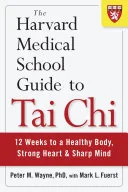
The Harvard Medical School Guide to Tai Chi
 82
82

The Harvard Medical School Guide to Tai Chi
Peter Wayne’s collaborative effort, The Harvard Medical School Guide to Tai Chi, offers a welcome scientific lens on an ancient practice. The book excels in translating the nuanced benefits of T'ai Chi, long understood by its adherents, into language accessible to the skeptical or scientifically-minded. Wayne effectively presents research findings, citing studies that confirm improvements in balance and mobility, particularly for older adults. A notable strength is the clear, actionable daily program presented, which feels grounded in the research discussed. However, the guide occasionally leans towards the clinical, potentially sacrificing some of the philosophical depth that draws many to T'ai Chi. The section on the physiological mechanisms, while informative, could benefit from a more evocative description of the energetic flow T'ai Chi practitioners often speak of. Nevertheless, for those seeking empirical evidence to support their practice or to begin one, this book serves as a robust, scientifically-backed resource.
📝 Description
82
Published in 2013, The Harvard Medical School Guide to Tai Chi connects ancient movement with modern science.
Peter Wayne and Mark L. Fuerst's 2013 guide, The Harvard Medical School Guide to Tai Chi, synthesizes traditional Chinese movement with contemporary scientific research. It aims to bridge the experiential knowledge of T'ai Chi masters with findings from Western medical studies. The book details how consistent T'ai Chi practice can improve physical vitality, enhance balance, and promote overall well-being. It is structured for a wide audience, including experienced practitioners seeking scientific backing and newcomers needing a clear, evidence-based introduction. The guide offers practical advice and daily programs adaptable to different fitness levels and lifestyles, appealing to those interested in complementary medicine and non-drug health approaches.
The book emerges from a period of growing academic interest in mind-body practices during the late 20th and early 21st centuries. It reflects a greater acceptance of these methods and efforts to understand their physiological effects. This work is a product of research that began to quantify the benefits of T'ai Chi, which were previously understood mainly through tradition. It discusses core concepts like mindful movement, linking breath, intention, and physical form, and explores proprioception, explaining how T'ai Chi cultivates awareness of the body's position and movement.
While T'ai Chi has centuries of history in Chinese culture, its integration into Western scientific and medical discussions gained traction in the late 20th and early 21st centuries. This book is a product of that era, originating from Harvard Medical School. It represents a move to understand the physiological mechanisms behind practices long known for their benefits through tradition. The guide grounds these ancient practices in empirical research, seeking to quantify their effects on well-being and physical health.
💡 Why Read This Book?
• Learn about the scientifically validated benefits of T'ai Chi, such as improved balance and reduced fall risk, as detailed in studies referenced by the book's research from Harvard Medical School. • Discover a practical, age-inclusive daily program for T'ai Chi, offering structured guidance that goes beyond generic exercise advice and is designed for consistent practice. • Understand the mind-body connection through the lens of T'ai Chi's principles, exploring concepts like proprioception and mindful movement as explained in the text.
⭐ Reader Reviews
Honest opinions from readers who have explored this book.
❓ Frequently Asked Questions
What specific age groups can benefit from the T'ai Chi program in this guide?
The guide is designed for practitioners of all ages. It emphasizes that the principles and exercises of T'ai Chi can be adapted to suit the physical capabilities of younger adults, seniors, and everyone in between, focusing on accessible movements and mindful practice.
Does the book offer scientific evidence for T'ai Chi's health benefits?
Yes, the book presents current scientific research, including findings from Harvard Medical School, that support T'ai Chi's positive effects on vigor, flexibility, balance, mobility, and overall well-being.
Is this guide suitable for complete beginners to T'ai Chi?
Absolutely. The guide includes a practical daily program and explanations of core concepts, making it accessible for individuals with no prior experience in T'ai Chi, while still offering depth for those who do.
What are the main physical improvements associated with practicing T'ai Chi according to this book?
The book highlights improvements in balance and mobility, increased flexibility and vigor, and a general enhancement of the sense of well-being. These benefits are supported by scientific research discussed within the guide.
Who are the authors of The Harvard Medical School Guide to Tai Chi?
The book is authored by Peter Wayne, a researcher and teacher of T'ai Chi, and Mark L. Fuerst. It draws upon Wayne's extensive experience and research conducted at Harvard Medical School.
When was The Harvard Medical School Guide to Tai Chi first published?
The book was first published on April 9, 2013, reflecting a period of significant scientific investigation into the health benefits of mind-body practices like T'ai Chi.
🔮 Key Themes & Symbolism
Scientific Validation of Ancient Practice
This theme explores the intersection of modern scientific inquiry and the millennia-old Chinese art of T'ai Chi. The book meticulously presents research, including studies conducted at Harvard Medical School, that empirically demonstrate the physical and mental benefits of T'ai Chi. It aims to bridge the gap between traditional wisdom, which has long recognized T'ai Chi's efficacy for health and well-being, and the Western scientific method, providing evidence-based support for concepts like improved balance, flexibility, and stress reduction. This theme is crucial for legitimizing T'ai Chi within conventional health paradigms.
Mindful Movement and Proprioception
Central to the guide is the concept of mindful movement, emphasizing the deliberate connection between breath, intention, and physical posture inherent in T'ai Chi. The book studies how this conscious engagement with movement enhances proprioception – the body's intrinsic sense of its position and motion in space. By detailing exercises and principles that cultivate this awareness, the authors illustrate how T'ai Chi can significantly improve balance and coordination, thereby reducing the risk of falls, particularly among older adults. This focus highlights T'ai Chi as a practice for cultivating embodied awareness.
Accessible Daily Practice Program
A significant contribution of this guide is its practical, actionable daily program designed for practitioners of all ages and experience levels. It translates complex T'ai Chi principles into accessible exercises that can be integrated into daily life. The program is structured to foster consistent engagement, promoting gradual improvements in physical vitality, flexibility, and overall well-being. This theme underscores the book's utility not just as an informative text but as a practical manual for self-improvement through consistent, evidence-informed movement.
💬 Memorable Quotes
Direct passages from the work, attributed to the author.
“Conventional medical science on the Chinese art of T’ai Chi now shows what T’ai Chi masters have known for centuries: regular practice leads to more vigor and flexibility, better balance and mobility, and a sense of well-being.”
— This statement expresses the book's core thesis: the convergence of empirical research and traditional knowledge. It highlights how scientific study is validating the long-held experiential benefits of T'ai Chi, making its advantages comprehensible and credible within modern health frameworks.
“Cutting-edge research from Harvard Medical School also supports the long-standing claims that T’ai Chi also...”
— This excerpt points to the specific institutional backing and the ongoing nature of scientific investigation into T'ai Chi. It suggests that the guide will present contemporary findings that corroborate the efficacy of this ancient practice.
“A practical daily program for practitioners of all ages.”
— This phrase emphasizes the book's utility as a hands-on guide. It signals that the content extends beyond theoretical discussion to offer concrete, actionable steps for integrating T'ai Chi into one's life, regardless of age or current skill level.
“Regular practice leads to more vigor and flexibility.”
— This concise statement directly links consistent engagement with T'ai Chi to tangible physical improvements. It underscores the cumulative effect of the practice, suggesting that sustained effort yields notable gains in physical vitality and suppleness.
“Better balance and mobility.”
— This highlights key functional benefits derived from T'ai Chi. The emphasis on balance and mobility is particularly relevant for addressing age-related decline and improving overall physical independence and confidence.
🌙 Esoteric Significance
Tradition
While T'ai Chi is deeply rooted in Taoist philosophy and traditional Chinese medicine, its practice, particularly as explored through its energetic principles and mindful movement, aligns with broader esoteric traditions focused on cultivating internal energy (Qi/Prana) and harmonizing mind, body, and spirit. It shares common ground with Hermetic principles of "As Above, So Below" by seeking internal balance that reflects external well-being. The emphasis on flow, intention, and energetic cultivation speaks to practices found in Qigong and certain Neidan (internal alchemy) traditions, though this specific guide focuses on the scientifically observable aspects.
Symbolism
Within T'ai Chi, the practice itself can be seen as symbolic. The slow, flowing movements often mimic natural forms like clouds or water, representing adaptability, yielding, and the cyclical nature of existence, core Taoist concepts. The concept of Yin and Yang is fundamental, with movements embodying the interplay of soft and hard, yielding and asserting, stillness and motion. The cultivation of Qi, or vital energy, is a central symbolic and practical aim, representing life force that, when balanced and flowing, promotes health and longevity.
Modern Relevance
In contemporary esoteric and wellness circles, T'ai Chi continues to be a significant practice. Its scientifically validated benefits for physical health, stress reduction, and mental clarity make it highly relevant. Thinkers and practitioners in fields like embodied cognition, somatics, and integrative health frequently draw upon T'ai Chi principles. Many modern Qigong lineages and even some Western martial arts and contemplative practices incorporate T'ai Chi forms or elements, recognizing its efficacy in developing internal awareness, resilience, and a balanced approach to life's challenges.
👥 Who Should Read This Book
• Individuals seeking evidence-based methods to improve physical balance and reduce the risk of falls, particularly seniors or those with mobility concerns, who will gain practical exercises and scientific understanding. • Practitioners of T'ai Chi who wish to deepen their knowledge with scientific validation and structured practice routines, benefiting from the research-backed explanations. • Healthcare professionals and wellness coaches looking for credible resources on mind-body interventions, gaining insights into the physiological mechanisms and proven benefits of T'ai Chi.
📜 Historical Context
The Harvard Medical School Guide to Tai Chi, published in 2013, emerged during a period of burgeoning scientific interest in mind-body practices. By the early 21st century, institutions like Harvard were increasingly dedicating resources to studying disciplines like yoga and T'ai Chi, moving them from the periphery of alternative medicine into mainstream academic research. This guide is a product of that era, specifically reflecting efforts to quantify the health benefits of T'ai Chi using rigorous scientific methodologies. It stands in contrast to earlier, more anecdotal or purely philosophical explorations of the practice. While competing schools of thought in Western medicine often viewed such practices with skepticism, the research presented here aimed to provide empirical data. This work is part of a broader trend exemplified by scholars like Herbert Benson, who pioneered research into the relaxation response, demonstrating physiological changes associated with meditative states.
📔 Journal Prompts
Reflect on the concept of Qi as presented in the context of scientific inquiry and traditional understanding.
Analyze the connection between mindful movement and improved proprioception as described in the guide.
Consider how the daily program for T'ai Chi practice could be integrated into your current routine.
Evaluate the scientific evidence presented for T'ai Chi's benefits on vigor and flexibility.
Explore the balance between ancient wisdom and modern research highlighted in the book.
🗂️ Glossary
T'ai Chi (Taijiquan)
An ancient Chinese martial art practiced for both its defense training and its health benefits. It involves slow, flowing movements, deep breathing, and mental focus, often described as 'meditation in motion'.
Qi (Chi)
A fundamental concept in traditional Chinese culture, often translated as 'vital energy' or 'life force.' It is believed to flow through the body and is central to practices like T'ai Chi and Qigong for health and well-being.
Proprioception
The sense of the relative position of one's own parts of the body and strength of effort being employed in movement. T'ai Chi is known to enhance this sense, improving balance and coordination.
Mindful Movement
A practice that involves paying close attention to the physical sensations, breath, and intentions during movement. T'ai Chi exemplifies mindful movement by emphasizing awareness throughout its forms.
Vigor
Physical or mental strength, good health, and energy. The guide suggests that regular T'ai Chi practice can lead to increased vigor.
Harvard Medical School
A leading institution for medical research and education. Its involvement signifies a rigorous scientific approach to studying the benefits of T'ai Chi.
Daily Program
A structured routine or set of exercises recommended for regular practice. This guide provides a specific daily program for T'ai Chi practitioners.