Between the Gates
 74
74

Between the Gates
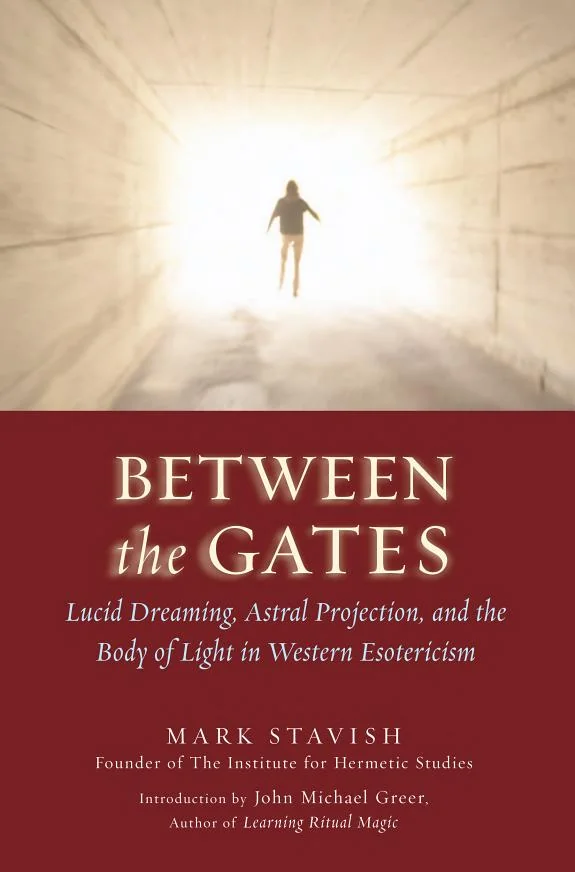
Mark Stavish’s *Between the Gates* offers a competent, if occasionally dry, roadmap for aspiring astral travelers and lucid dreamers. Its strength lies in its methodical, step-by-step approach, eschewing the more flamboyant claims found in some occult literature for grounded instruction. Stavish’s explanation of the “Body of Light” concept, for instance, is particularly clear, detailing its energetic construction rather than treating it as a purely metaphorical construct. However, the prose can sometimes feel overly clinical, lacking the evocative quality that might better serve such an experiential subject. For instance, the repeated emphasis on “basic methods” might underwhelm those seeking more advanced or nuanced techniques. Despite this, the book provides a solid foundation for disciplined practice.
*Between the Gates* serves as a valuable primer for systematic consciousness work.
📝 Description
74
Mark Stavish's 2008 book, Between the Gates, details how to consciously interact with altered states of consciousness.
Between the Gates offers a structured method for engaging with altered states, including lucid dreaming and astral projection. Stavish provides practical techniques to guide readers through these experiences, functioning as a self-study manual for spiritual awareness. The book progresses from basic methods toward the manifestation of the Body of Light, a concept common in many esoteric traditions.
This text targets individuals who want to deepen their practical understanding of consciousness exploration. It is for those who prefer direct personal experience over theory. Readers curious about dreams, out-of-body experiences, or the subtle body will find specific direction. The book suits practitioners ready to move beyond introductory ideas into systematic self-initiation.
Published in 2008, Between the Gates connects to a lineage of esoteric literature that saw renewed interest in the late 20th and early 21st centuries. This era featured many accessible guides to psychic development and astral projection, often drawing from Theosophy and Western Hermeticism. Stavish's work, however, emphasizes direct experiential practice over academic study, aligning with a wider cultural focus on mindfulness and embodied spiritual practice.
💡 Why Read This Book?
• Learn the specific methods for initiating lucid dreams and conscious astral projection, as detailed in Stavish’s systematic approach, enabling direct experience of non-ordinary reality. • Understand the practical steps involved in constructing the "Body of Light," a key concept in esoteric traditions, as explained in Chapters 7-9, allowing for energetic self-development. • Gain a structured framework for self-initiation in consciousness exploration, moving beyond theoretical study to practical, verifiable techniques presented in the book's A-to-Z format.
⭐ Reader Reviews
Honest opinions from readers who have explored this book.
❓ Frequently Asked Questions
What is the primary goal of practicing the techniques in 'Between the Gates'?
The primary goal is the liberation of spiritual consciousness, achieved through mastering lucid dreaming and astral projection to ultimately create the "Body of Light."
Is 'Between the Gates' suitable for absolute beginners in esotericism?
Yes, the book is designed as an accessible A-to-Z guide, suitable for beginners interested in systematic self-initiation into dream states and astral projection.
What is the 'Body of Light' mentioned in the book?
The "Body of Light" is an energetic construct, a subtle body developed through conscious practice, which serves as a vehicle for higher consciousness and spiritual advancement.
When was 'Between the Gates' first published?
The book 'Between the Gates' by Mark Stavish was first published on February 1, 2008.
Does the book offer practical exercises or just theory?
The book is primarily a manual of self-initiation and offers practical, basic methods for experiencing dream states and conscious astral projection.
What subjects does 'Between the Gates' cover?
It covers lucid dreaming, astral projection, and the creation of the Body of Light, presented as a guide to spiritual consciousness.
🔮 Key Themes & Symbolism
Conscious Dream States
The work emphasizes the potential of dreams not merely as random neurological events but as accessible realms for conscious exploration and spiritual development. Stavish details methods to achieve lucidity within dreams, transforming them into opportunities for self-discovery and practice. This theme highlights the dream state as a gateway, offering a controlled environment to experiment with consciousness independent of the physical body, a concept explored in various esoteric traditions.
Astral Projection Techniques
A core focus is the systematic instruction on achieving conscious out-of-body experiences, commonly referred to as astral projection. The book breaks down the process into manageable steps, guiding the reader from initial sensations and disorientation to stable projection. This practice is presented as a vital tool for expanding awareness beyond physical limitations and gathering direct experiential knowledge of subtle realms.
Development of the Body of Light
The ultimate culmination presented is the creation or manifestation of the "Body of Light." This concept refers to an advanced energetic form that can act as a refined vehicle for consciousness, facilitating higher perception and spiritual evolution. The book outlines how consistent practice in dream and astral states contributes to the formation and strengthening of this subtle energetic body.
Self-Initiation and Liberation
Throughout the text, the emphasis is on self-directed spiritual growth. Stavish frames the techniques as tools for personal initiation, empowering the reader to undertake their own spiritual journey without reliance on external authorities. The overarching goal is liberation – the freeing of consciousness from perceived limitations through direct, experiential understanding and mastery of inner states.
💬 Memorable Quotes
Direct passages from the work, attributed to the author.
“The path to the Body of Light begins with disciplined awareness in ordinary states.”
— This highlights that mastery of subtle realms doesn't negate the importance of groundedness and focus in waking life. It suggests that the foundational work for advanced esoteric practices is built upon consistent attention and self-control.
“Dreaming is not an escape, but a frontier for conscious exploration.”
— This reframes the common perception of dreams as mere subconscious processing or escapism. It positions dreaming as an active, vital space for personal growth and the acquisition of knowledge about consciousness itself.
“Astral projection offers direct experiential knowledge unavailable through study alone.”
— This emphasizes the experiential epistemology central to many esoteric paths. It argues that true understanding of consciousness and reality comes not just from reading or intellectualization, but from direct perception and interaction with subtle energies.
“The subtle body is not a metaphor; it is a construct that can be consciously developed.”
— This statement underscores the practical, operative nature of the "Body of Light" concept. It asserts that this energetic form is tangible in its own way and can be intentionally cultivated through specific practices outlined in the book.
“Mastery of the inner world is the key to true liberation.”
— This succinctly captures the core philosophy of the book: that external freedom or enlightenment is achieved through internal discipline and understanding. It points to the power an individual holds over their own consciousness and reality.
🌙 Esoteric Significance
Tradition
This work fits within the Western Esoteric Tradition, particularly drawing from Hermeticism and its modern manifestations, including elements found in ceremonial magic and Theosophy concerning subtle bodies. It emphasizes practical techniques for consciousness development, aligning with operative magic's focus on achieving tangible results through inner work. Stavish’s approach is less about ritualistic magic and more about direct psychospiritual cultivation, positioning it as a bridge between older traditions and contemporary experiential practices.
Symbolism
A primary symbol is the "Gates" themselves, representing thresholds between ordinary consciousness and expanded states like dreaming or astral projection. The "Body of Light" is another crucial symbol, representing the perfected or advanced energetic form an adept can manifest. It symbolizes spiritual attainment, immortality, and the ability to traverse realms consciously, a concept echoed in Gnostic ideas of the pneumatikos or the luminous body of the resurrected Christ.
Modern Relevance
Stavish’s work continues to be relevant for modern practitioners of lucid dreaming, astral projection, and energy work. It provides foundational techniques for those exploring consciousness beyond the confines of conventional materialism. Contemporary schools focusing on subtle energy bodies, energy healing, and consciousness studies often reference or build upon the principles outlined in works like *Between the Gates*, particularly its emphasis on systematic practice and self-initiation.
👥 Who Should Read This Book
['• Aspiring practitioners of astral projection and lucid dreaming seeking a structured, step-by-step guide to initiate these experiences.', '• Individuals interested in developing their subtle energetic body and understanding concepts like the "Body of Light" from a practical perspective.', '• Students of Western Esotericism looking for operative techniques to complement their theoretical studies of consciousness and psychic development.']
📜 Historical Context
Mark Stavish’s *Between the Gates*, published in 2008, arrived during a period of burgeoning interest in practical esoteric sciences, often termed "occultism" or "metaphysics." This era saw a proliferation of books offering accessible guides to phenomena like lucid dreaming and astral projection, many drawing implicitly or explicitly from earlier 20th-century movements such as Theosophy and the Hermetic Order of the Golden Dawn. Stavish’s work distinguishes itself by presenting a systematic, almost workbook-like approach, contrasting with more philosophical or historical treatments of similar subjects. While not directly engaging with contemporary academic discourse on altered states, its practical methodology aligns with a broader cultural trend towards embodied spiritual practices and self-help paradigms, making it relevant to individuals seeking direct experience rather than theoretical frameworks. The work implicitly engages with a tradition that values direct perception, a lineage traceable through figures like Aleister Crowley and later figures in the New Age movement.
📔 Journal Prompts
Reflection on the initial sensations described in Chapter 3 during attempted dream recall.
Analysis of the "Body of Light" concept in relation to personal spiritual goals.
Comparison of the dream state techniques versus astral projection methods presented.
Identification of personal barriers to lucid dreaming and strategies to overcome them.
Consideration of the ethical implications of exploring non-physical realms.
🗂️ Glossary
Body of Light
An advanced energetic construct, or subtle body, developed through conscious practice, serving as a vehicle for higher consciousness and spiritual advancement.
Astral Projection
The experience of consciousness leaving the physical body to travel in non-physical realms, often referred to as the astral plane.
Lucid Dreaming
The state of being aware that one is dreaming while the dream is occurring, allowing for conscious control and exploration within the dreamscape.
Subtle Body
An energetic or non-physical aspect of the human organism, distinct from the physical body, composed of various energies and consciousness.
Self-Initiation
A process of spiritual or personal development undertaken by the individual without reliance on external masters or formal organizations.
Consciousness Liberation
The state of freeing one's awareness from perceived limitations, often through direct experience of expanded states of being and understanding.
Dream States
Various levels or types of consciousness experienced during sleep, including REM sleep dreams, hypnagogic states, and lucid dreams.
This book appears in 1 collection
🔮 Readers Also Liked
Browse all →








From the “Lucid Dreaming” Collection
View all →







More Free Occult Philosophy Books
View all →