Peter Pan
 75
75

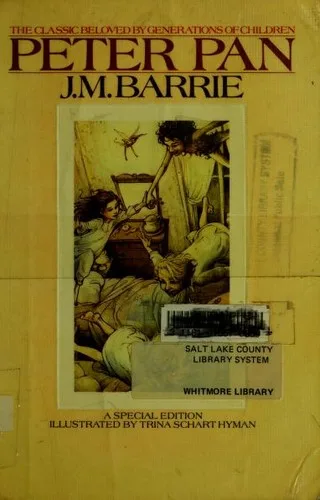
Peter Pan
Barrie's "Peter Pan" is more than a simple children's story; it is a profound, albeit sometimes unsettling, meditation on the nature of memory and identity. The evocation of Neverland is potent, a vibrant, dangerous space born from the collective unconscious of childhood. However, the narrative's underlying melancholy regarding the inevitability of adulthood, particularly evident in Wendy's eventual return to London, can feel somber. The depiction of the "Indian" tribe, while reflective of its 1911 publication era, now reads as a significant limitation, showcasing dated and problematic stereotypes. Despite this, the enduring appeal lies in its exploration of Peter's eternal, yet lonely, existence. The book's true strength is its uncanny ability to tap into the primal fear of losing one's imaginative spark. Ultimately, "Peter Pan" remains a complex, layered work that invites reflection on what it means to leave childhood behind.
📝 Description
75
J. M. Barrie's Peter Pan novel appeared in 1911, adapting his 1904 play about a boy who never ages.
The story follows Wendy, John, and Michael Darling as they are taken to Neverland by Peter Pan. In this magical place, they meet pirates led by Captain Hook, alongside mermaids and indigenous peoples.
Barrie's tale examines childhood innocence, the power of imagination, and the inevitable march of time. It contrasts the freedom of Neverland with the structured world of adulthood, reflecting on the transition from youth to maturity. The narrative offers a unique perspective on growing up, suggesting it involves a certain loss of wonder. The enduring mythos of Peter Pan has since become a significant part of popular culture.
While not overtly occult, Barrie's creation of Neverland as a space outside conventional time and space resonates with esoteric interests in spiritual realms and psychological escape. The concept of a place where one can evade the mundane realities of aging and societal expectation touches upon a yearning for transcendence. Similar to how figures like Helena Blavatsky explored hidden dimensions of existence, Barrie conjures a world that, for children, bypasses the ordinary laws of nature and development. This offers a fictional parallel to the desire for spiritual renewal or an escape from material limitations.
💡 Why Read This Book?
• Understand the archetypal symbolism of eternal youth and the shadow of mortality, as embodied by Peter Pan and Captain Hook, offering a lens through which to view personal transitions. • Explore the concept of "Neverland" as a metaphor for the subconscious mind and the power of imagination, providing insights into creative processes and escapist tendencies. • Examine the societal views on childhood and adulthood prevalent around 1911, as reflected in the narrative's treatment of growing up and responsibility, enriching historical literary analysis.
⭐ Reader Reviews
Honest opinions from readers who have explored this book.
❓ Frequently Asked Questions
What is the original publication year of Peter Pan?
J. M. Barrie's "Peter Pan in Kensington Gardens" was first published in 1906, followed by the novel "Peter and Wendy" in 1911, which adapted the material from his 1904 play.
Who are the main characters in Peter Pan?
The primary characters include Peter Pan, the boy who refuses to grow up; Wendy Darling, who becomes a mother figure; her brothers John and Michael; and the antagonist Captain Hook, leader of the pirates.
What does Neverland symbolize in Peter Pan?
Neverland is often interpreted as a representation of the boundless realm of childhood imagination, a place outside the constraints of time and adult reality, where fantasy reigns.
What is the significance of Captain Hook?
Captain Hook symbolizes the encroaching forces of adulthood, mortality, and the consequences of a life lived in opposition to natural progression, serving as a dark mirror to Peter Pan.
Is Peter Pan based on a true story?
While J. M. Barrie drew inspiration from his relationships with the Davies children, Peter Pan is a fictional creation, not based on a single true story.
What are the main themes explored in Peter Pan?
Key themes include the nature of childhood, the fear of growing up, memory, imagination, the passage of time, and the contrast between fantasy and reality.
🔮 Key Themes & Symbolism
The Refusal of Adulthood
The central theme is the conscious rejection of 'growing up,' personified by Peter Pan. This concept can be viewed through an esoteric lens as a resistance to the mundane, material world in favor of an enduring connection to the imaginative, spiritual self. Neverland represents a state of being where time's relentless march is defied, allowing for the preservation of innocence and wonder. The narrative questions whether the perceived maturity of adulthood is truly a gain or a loss of essential vitality and connection to the numinous aspects of existence.
Neverland as Liminal Space
Neverland functions as a liminal space, a threshold between childhood innocence and adult reality, or even between the conscious and subconscious mind. Esoterically, it can be seen as a representation of the astral plane or a psychic landscape where thoughts and desires manifest more readily. The presence of mythical creatures like mermaids and the altered perception of time within its borders suggest a realm governed by different laws, akin to other planes of existence explored in occult traditions.
The Mother Archetype and Lost Souls
The yearning for a mother figure, represented by Wendy's role, highlights the need for nurturing and order even in a area of pure fantasy. The Lost Boys, who have forgotten their mothers, symbolize souls adrift, disconnected from their origins and requiring guidance. This appeals to concepts of soul retrieval and the search for spiritual anchors within various esoteric traditions, where the primal feminine principle is often seen as a source of creation and belonging.
Memory and Identity
The story grapples with the nature of memory and its role in shaping identity. Peter's inability to remember is a deliberate choice, a defense against the pain of loss and change. This can be interpreted as an exploration of how clinging to a static self, devoid of the evolution that memory facilitates, leads to a peculiar form of existence. The narrative prompts reflection on whether a self that forgets is truly alive or merely existing in a perpetual present, detached from personal history.
💬 Memorable Quotes
Direct passages from the work, attributed to the author.
“It is sad, of course, to be made of flesh and blood, for there is always so much drawing you away from what you mean to do.”
— This reflects a weariness with the physical limitations and distractions of mortal existence. The 'drawing away' suggests the constant pull of the material world, which interferes with one's true intentions or spiritual pursuits, a sentiment familiar in ascetic traditions.
“Second star to the right, and straight on till morning.”
— This iconic direction serves as a magical incantation, a navigational key to a realm beyond ordinary geography. It represents the journey into the imaginative or subconscious, guided by intuition and celestial (or symbolic) markers rather than conventional maps.
“You always know about a thing that is going to happen.”
— This observation speaks to an intuitive understanding or precognition, a sense of knowing the future that Peter and the Lost Boys possess. It hints at a deeper connection to the flow of events, suggesting an awareness that transcends linear time.
💡 Key Ideas
Editorial paraphrase of the work's core concepts — not direct quotes.
All the world is made of faith, and trust, and pixie dust.
This line expresses the magical thinking central to the story, suggesting that reality itself is constructed from belief and imagination. It implies that the intangible forces of faith and imagination possess a tangible power to shape the world, a concept echoed in many manifestation and law of attraction philosophies.
Never say goodbye, because saying goodbye means going away, and going away means forgetting.
This quote speaks to Peter's fundamental fear of temporal progression and loss. It highlights the idea that emotional connection is tied to memory, and that severing ties is akin to erasing existence, suggesting a desire for stasis and permanence that defies natural cycles.
🌙 Esoteric Significance
Tradition
While not strictly adhering to a single esoteric lineage, "Peter Pan" draws parallels with archetypal psychology and Jungian concepts of the self, particularly the puer aeternus (eternal boy). It touches upon Gnostic ideas of escaping the material world (the 'Krooks' of adulthood) for a purer, eternal realm. The narrative's focus on imagination as a creative force also aligns with Hermetic principles, where the mind is seen as a powerful tool for shaping reality.
Symbolism
The 'Lost Boys' symbolize souls adrift, disconnected from their spiritual source or primal origins, needing guidance back to wholeness. Neverland itself acts as a potent symbol of the astral plane or the subconscious, a realm where thoughts manifest and time is fluid. Peter Pan embodies the archetype of eternal youth, representing a state of pure, unadulterated spirit, detached from the earthly burdens of aging and mortality, yet also from the fullness of human experience.
Modern Relevance
Contemporary thinkers in Jungian analysis continue to explore the 'Peter Pan syndrome' as a psychological phenomenon. Modern fantasy literature and spiritual movements focusing on mindfulness and maintaining childlike wonder often reference the mythos. The work's themes of escapism and the tension between responsibility and freedom remain relevant in discussions of mental well-being and the search for meaning in a complex world.
👥 Who Should Read This Book
• Individuals interested in archetypal psychology and the concept of the 'puer aeternus' or eternal youth, seeking to understand its manifestations in literature and personal development. • Students of comparative mythology and folklore, examining how universal themes of childhood, immortality, and the fantastical are represented across different narratives. • Readers exploring the psychological underpinnings of escapism and the allure of fantasy, particularly as a response to the pressures of modern adult life.
📜 Historical Context
J. M. Barrie's "Peter Pan," first serialized in 1902 and adapted into the play "Peter Pan, or The Boy Who Wouldn't Grow Up" in 1904, solidified its novel form as "Peter and Wendy" in 1911. This period in Britain was marked by a growing interest in psychoanalysis, influenced by figures like Sigmund Freud, and a fascination with the subconscious and the nature of childhood. While Barrie was not directly aligned with the Theosophical Society, founded by Helena Blavatsky decades earlier, his exploration of eternal youth and a magical realm resonated with a broader cultural current seeking escape from the perceived rigidity of Victorian and Edwardian society. The Edwardian era (1901-1910) saw a burgeoning interest in spiritualism and the occult, though "Peter Pan" approached its themes through a literary and psychological lens rather than explicit esoteric doctrine. Its immediate success and enduring popularity suggest it tapped into a deep-seated cultural yearning for innocence and escape, even as it subtly critiqued the limitations of both childhood and adulthood.
📔 Journal Prompts
The nature of Peter Pan's existence outside of conventional time.
Wendy's desire to 'mother' the Lost Boys and its symbolic implications.
Captain Hook as the embodiment of mortality and consequence.
The function of Neverland as a psychic landscape.
The significance of forgetting in maintaining eternal youth.
🗂️ Glossary
Neverland
A fantastical island where Peter Pan and the Lost Boys reside, characterized by its timeless quality and freedom from adult rules. It represents a area of pure imagination and arrested development.
Lost Boys
Children who fell out of their prams and were taken to Neverland by Peter Pan. They symbolize a state of perpetual childhood, disconnected from their past and societal norms.
Pixie Dust
A magical substance enabling flight, often associated with belief and imagination. It represents the spark of enchantment required to transcend ordinary limitations and enter fantastical realms.
Hook's Crocodile
A crocodile that consumed Captain Hook's hand and also swallowed a clock, its ticking serving as a constant reminder of approaching time and mortality for Hook.
Mermaids' Lagoon
A location in Neverland inhabited by mermaids, representing a seductive yet dangerous aspect of the fantastical world, often associated with allure and peril.
Pirates
The antagonists led by Captain Hook, representing the forces of chaos, malice, and the encroaching threat of the adult world within Neverland.
Shadow
Peter's shadow becomes detached and is later retrieved by Wendy. It symbolizes the subconscious or darker aspects of the self that can become separated from conscious awareness.
🔮 Readers Also Liked
Browse all →








More by J. M. Barrie
All books →




More Free Occult Philosophy Books
View all →