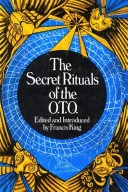
The Secret Rituals of the O.T.O.
 75
75

The Secret Rituals of the O.T.O.
Francis King's "The Secret Rituals of the O.T.O." offers a remarkably detailed, if somewhat dry, exposition of the Ordo Templi Orientis's initiatory structure. For anyone seeking to understand the mechanics of this influential order, King provides an invaluable blueprint, meticulously outlining the degrees and their associated ceremonies. The strength lies in its systematic approach, presenting the O.T.O.'s inner workings with a clarity that few other texts achieve. However, its academic tone, while thorough, can make the material feel less accessible to those seeking a more experiential or devotional approach. A particular passage detailing the symbolic significance of the IX degree's rituals, though rendered with King's characteristic reserve, highlights both the book's value and its potential limitations for readers expecting overt mystical effusions. It is a critical reference for the serious student of ceremonial magic, offering indispensable clarity on a subject often shrouded in conjecture.
📝 Description
75
Francis King published The Secret Rituals of the O.T.O. in 1974, detailing its initiatory structure.
This 1974 book examines the Ordo Templi Orientis, a Western esoteric order. Francis King lays out the initiatory degrees and ceremonial framework that shape the O.T.O.'s practices. The work goes beyond historical accounts to clarify the practical use and symbolic meanings within these rituals. It offers a structured way to understand the organization's distinct approach to magical and spiritual growth.
The book targets serious students of Western esotericism, especially those interested in the O.T.O.'s lineage and methods. It is for readers who want to grasp the structure of initiatory orders and the function of ritual within them. Anyone studying the history of occultism in the 20th century, or the contributions of figures like Aleister Crowley and Theodor Reuss to modern magical systems, will find value. This text is not for casual readers but for those ready for in-depth study.
Francis King's study is grounded in the early 20th-century occult revival. The O.T.O. itself arose from a milieu influenced by groups such as the Hermetic Order of the Golden Dawn and the German occult revival led by figures like Theodor Reuss. The book reflects the O.T.O.'s development from its founding in the late 19th and early 20th centuries, a time of significant idea exchange among magical orders and esoteric philosophies. King's analysis shows the organization's growth and its relation to contemporary magical traditions.
💡 Why Read This Book?
• Gain a precise understanding of the O.T.O.'s initiatory structure, moving beyond hearsay to the documented degrees as presented by Francis King, offering clarity on the organization's progression. • Explore the symbolic language underpinning O.T.O. rituals, learning how concepts like the magical will are woven into specific ceremonies, providing a framework for interpreting esoteric practices. • Contextualize the O.T.O. within the early 20th-century occult revival, understanding its relationship to Theodor Reuss and other contemporary magical currents, enriching your historical perspective.
⭐ Reader Reviews
Honest opinions from readers who have explored this book.
❓ Frequently Asked Questions
What is the Ordo Templi Orientis (O.T.O.)?
The O.T.O. is a Western esoteric organization founded by Theodor Reuss and Aleister Crowley in the early 20th century. It focuses on initiatory degrees and the practice of ceremonial magic, emphasizing the Law of Thelema.
What kind of information does Francis King's book provide about the O.T.O.?
The book details the initiatory degrees, the structure of ceremonies, and the symbolic teachings of the O.T.O., offering a systematic look into the order's internal practices from its historical formation.
Is 'The Secret Rituals of the O.T.O.' suitable for beginners in occult studies?
While informative, the book is best suited for those with some background in Western esotericism or a specific interest in initiatory orders, as it delves into detailed ceremonial structures.
When was the O.T.O. founded and by whom?
The O.T.O. was established in the late 19th or early 20th century, with Theodor Reuss being a key figure in its early development and subsequent direction by Aleister Crowley.
Does the book contain actual ritual instructions that can be performed?
The book describes and analyzes the rituals and their symbolic meanings rather than providing step-by-step instructions for performance. Its focus is on understanding the existing structure.
What historical period does the book primarily cover regarding the O.T.O.?
It covers the foundational period of the O.T.O., particularly the early 20th century, detailing the establishment and early development of its initiatory system.
🔮 Key Themes & Symbolism
Initiatory Degrees
The work meticulously unpacks the graduated system of the O.T.O.'s initiatory degrees, from the early levels to the more advanced mysteries. Each degree is presented not merely as a rank but as a distinct stage of spiritual and magical education, carrying specific symbolic allegories and experiential components designed to impart gnosis. This structured approach highlights the O.T.O.'s emphasis on progressive revelation and the cultivation of the magical will through successive stages of understanding and practice.
Symbolic Language of Ritual
Central to King's analysis is the interpretation of the symbolic language embedded within O.T.O. rituals. The book deciphers the allegorical narratives, gestures, and visual motifs employed in the ceremonies, connecting them to broader esoteric traditions such as Gnosticism and Hermeticism. Understanding this symbolic lexicon is presented as key to unlocking the deeper meanings and practical applications of the O.T.O.'s teachings, transforming abstract concepts into tangible spiritual insights.
The Great Work
The ultimate aim of the O.T.O.'s initiatory path is the Great Work, a concept King explores through the lens of the order's rituals. This involves the attainment of spiritual enlightenment, the realization of one's True Will, and the union of opposites. The rituals are depicted as practical vehicles for engaging with this process, facilitating the aspirant's evolution and alignment with the cosmic order, thereby fostering both personal transformation and universal harmony.
Historical Development of the O.T.O.
The book provides critical historical context for the O.T.O.'s formation and early evolution, particularly focusing on the roles of Theodor Reuss and Aleister Crowley. It situates the order within the broader range of early 20th-century occultism, examining its influences and its unique contributions. This historical grounding helps readers appreciate the milieu from which the O.T.O.'s specific doctrines and practices emerged, offering insights into its foundational principles.
💬 Memorable Quotes
Direct passages from the work, attributed to the author.
“The O.T.O. system is built upon a graduated series of initiatory degrees.”
— This statement underscores the foundational structure of the O.T.O., emphasizing that its teachings and practices are delivered in a progressive, step-by-step manner, each stage building upon the last.
“Each degree carries its own symbolic allegory and doctrine.”
— This highlights that the O.T.O.'s initiations are not merely ceremonial but are rich with symbolic meaning and specific teachings intended to guide the aspirant's understanding and spiritual development.
“The rituals serve as vehicles for spiritual attainment.”
— This interpretation frames the O.T.O.'s ceremonies as practical tools for achieving higher states of consciousness and spiritual realization, rather than mere symbolic performances.
“The influence of Gnostic and Hermetic thought is evident in O.T.O. symbolism.”
— This points to the intellectual lineage of the O.T.O., indicating that its symbolic system draws heavily from established esoteric traditions, providing a framework for deeper study.
“The concept of the Magical Will is central to O.T.O. practice.”
— This emphasizes the importance of individual agency and focused intention within the O.T.O., suggesting that understanding and enacting one's True Will is a primary objective of their work.
🌙 Esoteric Significance
Tradition
The O.T.O. lineage is deeply rooted in Western Esotericism, synthesizing elements from Hermeticism, Gnosticism, Kabbalah, and Rosicrucianism, with a significant overlay of Aleister Crowley's Thelemic philosophy. King's work illuminates how this synthesis manifests in a structured initiatory system, moving beyond theoretical frameworks to detail the practical application of these diverse traditions within a cohesive organizational structure designed for spiritual evolution.
Symbolism
Key symbols explored include the O.T.O. acronym itself (Ordo Templi Orientis), representing a modern iteration of the Knights Templar mythos blended with esoteric principles. The initiatory degrees often employ symbolic imagery drawn from alchemy (e.g., transformation), Gnosticism (e.g., the Aeons, Sophia), and Hermeticism (e.g., the Emerald Tablet). The serpent, representing Kundalini and divine wisdom, is also a prominent motif within the O.T.O.'s symbolic lexicon.
Modern Relevance
Contemporary practitioners and scholars of Western Esotericism frequently reference King's work when studying the O.T.O. Its detailed exposition remains a standard for understanding the order's initiatory structure and symbolic language. Modern Thelemic organizations and independent magical practitioners often engage with the concepts and rituals described, using the book as a foundational text for comparative study or personal practice, underscoring its enduring significance in occult scholarship.
👥 Who Should Read This Book
• Students of Western Esotericism: Those seeking to understand the structure and historical development of major occult organizations will find King's systematic breakdown of the O.T.O.'s degrees invaluable. • Practitioners of Ceremonial Magic: Individuals interested in the mechanics and symbolism of initiatory rituals will gain insight into a significant tradition beyond more commonly discussed systems. • Occult Historians and Researchers: Anyone investigating the evolution of magical orders in the late 19th and early 20th centuries will benefit from this detailed, factual account of the O.T.O.'s inner workings.
📜 Historical Context
Francis King's "The Secret Rituals of the O.T.O." emerged in 1972, a period when Western esoteric orders were undergoing renewed scrutiny and interest. The O.T.O. itself, established in its modern form by Theodor Reuss and later significantly influenced by Aleister Crowley, occupied a unique space in the occult landscape. It drew from and contributed to a collection of magical thought, interacting with movements like Thelema, Gnosticism, and Hermeticism. King's work arrived at a time when detailed expositions of such organizations were scarce, offering a rare, systematic overview of their initiatory structure. This contrasted with the more philosophical or biographical approaches often taken by other occult writers of the era. The book's detailed focus on ritual structure provided a counterpoint to the more spiritualist or Theosophical leanings prevalent in some circles, grounding occult study in practical, ceremonial frameworks.
📔 Journal Prompts
The symbolic significance of the IX degree as presented by King.
How does the concept of the Magical Will manifest across the O.T.O.'s initiatory degrees?
Reflect on the historical context of the O.T.O.'s formation and its relation to Theodor Reuss.
Compare the Gnostic symbolism mentioned in the text with other esoteric traditions you know.
Analyze the role of ritual structure in facilitating spiritual attainment within the O.T.O. system.
🗂️ Glossary
O.T.O.
Abbreviation for Ordo Templi Orientis, a Western esoteric organization founded in the early 20th century, focused on initiatory degrees and ceremonial magic.
Initiation
The process of admission into a society or order, typically involving ceremonies and the imparting of knowledge or symbolic experiences.
Gnosticism
An ancient religious movement characterized by the belief that salvation is attained through secret knowledge (gnosis), often involving dualistic cosmology and a complex mythology.
Thelema
A philosophical and religious system developed by Aleister Crowley, based on his reception of the Book of the Law, with the central tenet 'Do what thou wilt shall be the whole of the Law'.
The Great Work
A central concept in alchemy and Western esotericism, referring to the process of spiritual transformation, enlightenment, and the union of the human with the divine.
Magical Will
The focused intention and directed energy of the practitioner, considered a fundamental force in ceremonial magic for manifesting desired outcomes or achieving spiritual goals.
Hermeticism
A philosophical and religious tradition based on the purported teachings of Hermes Trismegistus, emphasizing the interconnectedness of all things and the pursuit of divine knowledge.
This book appears in 1 collection
🔮 Readers Also Liked
Browse all →








From the “OTO” Collection
View all →





More Free Occult Philosophy Books
View all →