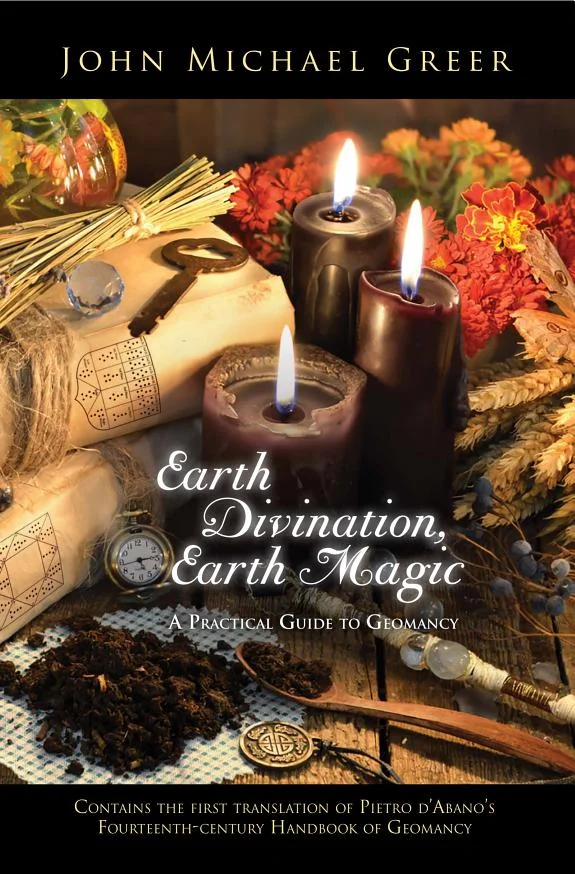
Earth Divination, Earth Magic
 84
84

Earth Divination, Earth Magic
John Michael Greer's "Earth Divination, Earth Magic" offers a refreshingly unpretentious guide to geomancy, a divinatory art often overshadowed by more complex systems. Greer's strength lies in his clear exposition of the 16 figures and their generation, demystifying a practice that historically served everyone from popes to peasants. The book excels at presenting geomancy not as an arcane mystery, but as a practical tool. A minor limitation is the text's focus on the mechanics; a deeper exploration of the philosophical underpinnings or varied historical interpretations might have enriched it further. The section detailing the "Shield of the Prince" as a key interpretive element is particularly well-handled, demonstrating the system's directness. Greer provides a solid foundation for engaging with this venerable art.
📝 Description
84
John Michael Greer's Earth Divination, Earth Magic explains geomancy's practical application in Western magic.
This book details geomancy as a practical divination system within the Western magical tradition. It explains how the arrangement of single and double points creates 16 distinct figures, each with symbolic meaning and capable of providing direct answers to questions. Greer emphasizes geomancy's accessibility, noting that it requires minimal tools and time to achieve useful results. The work is suited for those desiring a direct divinatory art, particularly those interested in practical magic, historical occultism, and systems that produce tangible outcomes without elaborate ritual. Students of Western esotericism, amateur diviners, and anyone curious about older methods of seeking guidance will find this text valuable. The system's historical context as a widely adopted practice during the Middle Ages and Renaissance, spanning various social classes for its perceived speed and accuracy, is also discussed. Its roots in Arabic divination and subsequent integration into European magical thought are traced.
The book focuses on the 16 geomantic figures, their generation via point patterns, and how to interpret them. It covers assigning planetary and elemental associations, constructing the geomantic house system, and casting and reading the figures for specific inquiries. The core idea is the direct, material connection between earthly events and celestial influences as shown in the figures.
Geomancy, as presented by Greer, is a significant practice within the Western esoteric tradition. It was a popular form of divination across Europe from the Middle Ages through the Renaissance, valued for its speed and perceived accuracy. The system's origins are traced to Arabic divination, and its adaptation into European magical thought demonstrates its enduring appeal. Greer situates geomancy as a concrete, material form of magic that connects earthly events to celestial influences, making it a practical tool for seeking counsel and understanding.
💡 Why Read This Book?
• Learn the precise method for generating the 16 geomantic figures, a core element of Western divination since the Middle Ages, and how they directly answer questions. • Understand the historical significance of geomancy as a practical oracle used by diverse populations across Europe during the Renaissance, offering a tangible connection to past divinatory practices. • Discover how to interpret the figures through their elemental and planetary associations, enabling you to gain direct, actionable insights for personal guidance.
⭐ Reader Reviews
Honest opinions from readers who have explored this book.
❓ Frequently Asked Questions
What is geomancy and how does it work in Earth Divination, Earth Magic?
Geomancy is a divination system using 16 symbolic figures derived from patterns of points. Earth Divination, Earth Magic explains how these figures are generated and interpreted to provide answers to specific questions.
Is geomancy difficult to learn from this book?
Greer presents geomancy as a simple, quick, and direct system. The book focuses on making the process accessible, suggesting that anyone can learn to read the patterns with practice.
What historical periods does the book cover regarding geomancy?
The book discusses geomancy's widespread use during the Middle Ages and Renaissance, noting its adoption by various social classes, from popes to peasants.
What are the 16 geomantic figures?
The 16 figures are the core symbolic representations in geomancy, formed by combinations of single and double points. Each figure has unique meanings and associations.
What kind of questions can geomancy answer according to the book?
The book suggests geomancy is capable of providing answers to a wide range of practical questions, emphasizing its direct and useful results for everyday concerns.
Who is John Michael Greer?
John Michael Greer is an author and occultist known for his extensive writings on magic, esotericism, and related subjects. Earth Divination, Earth Magic was first published in 2019.
🔮 Key Themes & Symbolism
The Sixteen Figures
The core of geomancy lies in the sixteen unique figures, each generated through a process involving single and double points, often likened to casting dice or drawing lines in sand. These figures—such as Via, Populus, Fortuna Major, and Acquisitio—are not arbitrary but possess rich symbolic meanings tied to celestial influences, elements, and planets. Greer meticulously details how to construct these figures and interpret their individual and combined significance, presenting them as a language through which the querent's question can be understood and answered with remarkable clarity.
Practical Divination
Unlike more ceremonial magical practices, geomancy is presented as a highly accessible and practical tool for obtaining direct answers. The book emphasizes its speed and simplicity, making it suitable for individuals without extensive training in esoteric arts. Greer highlights its historical use by all strata of society, underscoring its function as a reliable oracle for everyday concerns and significant decisions alike, providing concrete guidance when needed.
Western Esoteric Tradition
Greer situates geomancy firmly within the Western magical tradition, tracing its lineage and evolution. The work explores how this divinatory system integrates astrological principles, elemental correspondences, and numerological concepts. By grounding geomancy in this historical and philosophical context, the book allows readers to appreciate its place alongside other esoteric disciplines, offering a unique lens through which to view the interconnectedness of the cosmos and human affairs.
The Geomantic House System
Beyond interpreting individual figures, the book studies the construction and application of the geomantic house system, analogous to astrological houses. This framework allows for a more nuanced reading, assigning specific areas of life—such as self, possessions, siblings, or enemies—to different points in the geomantic spread. Understanding these houses provides context for the figures cast within them, enabling a comprehensive analysis of the question posed.
💬 Memorable Quotes
Direct passages from the work, attributed to the author.
“Geomancy is simple, quick, and direct—anyone can get answers to a question in a matter of moments.”
— This highlights the book's central thesis: geomancy is an accessible oracle. It emphasizes the system's efficiency and straightforwardness, contrasting it with potentially more complex or time-consuming divinatory methods.
“During the Middle Ages and Renaissance, geomancy was used by everyone from popes to peasants because it provided practical, useful results.”
— This historical note underscores the broad appeal and efficacy of geomancy. It suggests the system's value transcended social boundaries, serving as a reliable tool for practical decision-making across society.
“The 16 symbolic figures formed of single and double points.”
— This is a concise description of the fundamental building blocks of geomancy. It points to the systematic and pattern-based nature of the divination, where simple elements combine to create complex meanings.
“It provided practical, useful results.”
— This phrase captures the core utility of geomancy as presented in the book. It emphasizes that the system is not merely theoretical but yields tangible, actionable information for the user.
“A complete guide to the lost art of geomancy.”
— This positions the book as a definitive resource for reviving and understanding geomancy. It suggests that the art, while perhaps neglected, is made fully accessible through this work.
🌙 Esoteric Significance
Tradition
Geomancy is a foundational element of the Western Hermetic tradition, closely allied with astrology and other forms of divination. It is understood as a method of scrying the terrestrial plane to perceive celestial influences and divine patterns. Its systematic structure, based on the generation of figures through points, reflects a broader Hermetic interest in correspondences and the micro-macrocosm relationship. Greer's work places it within this lineage, emphasizing its role as a practical tool for understanding the will of the cosmos.
Symbolism
The 16 geomantic figures are rich in symbolism, each linked to planetary rulers, zodiacal signs, and elemental qualities. For instance, figures like 'Populus' (the People) might signify collective matters, while 'Acquisitio' (Acquisition) relates to gain and material success. The points themselves, single or double, can symbolize active or passive forces, spirit and matter, or the interplay of divine and earthly energies, offering a symbolic language for interpreting the patterns of existence.
Modern Relevance
Contemporary practitioners of Western esotericism, particularly those focused on Hermeticism, astrology, and practical magic, continue to utilize geomancy. It appeals to modern seekers looking for grounded, accessible divination systems that don't require extensive ritual or complex equipment. Thinkers and practitioners in occult communities, online forums, and modern magical orders often reference Greer's work as a clear exposition of this enduring divinatory art.
👥 Who Should Read This Book
['• Beginning students of divination seeking a straightforward yet effective system that provides direct answers, such as those exploring Tarot or runes for the first time.', '• Practitioners of Western esotericism interested in the historical and practical applications of magical arts, including students of Hermeticism and astrology.', '• Individuals looking for a practical tool for self-inquiry and decision-making who appreciate systems with clear methodologies and tangible results.']
📜 Historical Context
Geomancy flourished as a divinatory art across the Islamic world and later Europe during the Middle Ages and Renaissance. Its appeal lay in its perceived simplicity and directness compared to complex astrological calculations. Developed from earlier Arabic practices, it integrated into European magical thought, becoming a standard tool for many practitioners, including notable figures like Agrippa. The system's widespread adoption is evidenced by its appearance in numerous grimoires and its use by individuals across the social spectrum. While astrology was a dominant system, geomancy offered a quicker, more accessible alternative for everyday queries. Its practical application meant it was less subject to the intense theological scrutiny faced by other forms of divination, though like all esoteric arts, it operated within a complex intellectual landscape shaped by scholasticism and emerging humanism.
📔 Journal Prompts
The generation of the 16 geomantic figures through point patterns.
Interpreting the 'Shield of the Prince' in a geomantic reading.
The historical use of geomancy by popes and peasants.
Elemental and planetary associations of the geomantic figures.
Applying geomantic insights to a specific personal question.
🗂️ Glossary
Geomancy
A system of divination based on the interpretation of 16 symbolic figures generated from patterns of points, often considered part of the Western magical tradition.
Geomantic Figures
The 16 unique symbolic patterns formed by combinations of single and double points, each possessing specific meanings and associations within geomancy.
Points
The basic elements in geomancy, represented as single (single dots) or double (stacked dots), which combine to form the geomantic figures.
Houses
In geomancy, a system of 16 positions or 'houses' into which the geomantic figures are cast, analogous to astrological houses, representing different areas of life or inquiry.
Via
One of the 16 geomantic figures, often interpreted as representing the path or journey, carrying significant meaning in a reading.
Populus
A geomantic figure symbolizing the people or a multitude, often indicating matters related to groups or public affairs.
Acquisitio
A geomantic figure associated with gain, acquisition, and material success, indicating positive outcomes related to wealth or possessions.
This book appears in 1 collection
🔮 Readers Also Liked
Browse all →








From the “Geomancy” Collection
View all →







More Free Occult Philosophy Books
View all →