I Ching
 78
78

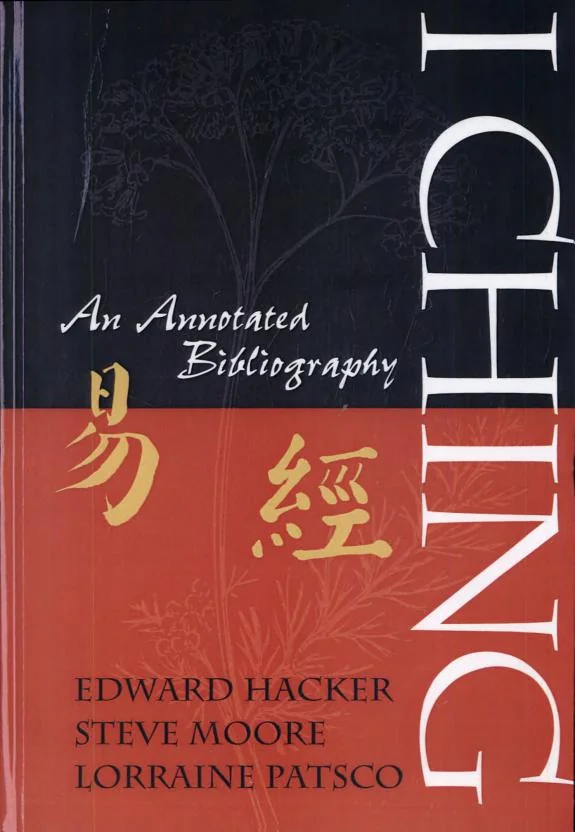
I Ching
The 2002 edition of the I Ching by Hacker, Moore, and Patsco offers a solid entry point into this foundational Chinese text. Its strength lies in its clarity, presenting the hexagrams and their associated judgments in a way that is accessible without sacrificing the text’s inherent depth. The historical context provided is brief but accurate, situating the work within its Western publishing framework. However, for seasoned practitioners or those seeking the nuanced commentaries of masters like William G. Smith or the extensive philosophical exegesis found in older traditions, this edition may feel somewhat abridged. A particular passage, the interpretation of Hexagram 1, 'The Creative,' is handled competently but lacks the profound resonance one might find in more dedicated scholarly works. It serves its purpose as an introduction, but doesn't redefine the landscape of I Ching scholarship.
This edition is a functional guide for newcomers to the Book of Changes.
📝 Description
78
Edward A. Hacker, Steve Moore, and Lorraine Patsco's 2002 edition of the I Ching presents a classic Chinese divination text.
This edition of the I Ching, also called the Book of Changes, is an ancient Chinese text for divination and philosophy. Its roots go back to the Western Zhou dynasty, roughly 1046–771 BCE, but it was developed over many centuries. The book's structure features 64 hexagrams, each made of six lines, either solid (yang) or broken (yin). These figures symbolize a wide range of natural events, human situations, and universal ideas.
The I Ching originated during a time of intellectual growth in China, alongside Confucianism and Taoism. Later commentaries, such as the Ten Wings attributed to Confucius, greatly influenced its philosophical meaning. By 2002, when this edition appeared, the I Ching had a long history of global study, impacting thinkers like Carl Jung and contemporary philosophers interested in systems thinking. It operates on principles of change, balance, and how things connect. The hexagrams show movement and shifts, not fixed states. Concepts such as Yin and Yang, representing fundamental feminine and masculine energies, are central, showing how opposites complement and depend on each other. Consulting the I Ching typically involves casting coins or yarrow stalks.
As a sacred text originating in ancient China, the I Ching is a cornerstone of Taoist and Confucian thought, though its use extends into divination and philosophical inquiry. Its system of hexagrams, derived from combinations of yin and yang lines, represents a framework for understanding cosmic patterns and human affairs. The commentary, particularly the Ten Wings, elevates it beyond a mere oracle to a complex philosophical system concerned with balance, change, and interconnectedness. Its influence is noted in Western thought, particularly in psychology and systems theory, demonstrating its enduring appeal as a tool for contemplating the dynamics of existence.
💡 Why Read This Book?
• Learn the fundamental principles of divination and philosophical inquiry as presented in the I Ching, understanding how the 64 hexagrams, like Hexagram 1 'The Creative', map cosmic principles to human affairs. • Gain practical insight into decision-making by exploring the I Ching's method of consulting its texts, a practice refined over centuries since its early Zhou dynasty origins. • Appreciate the philosophical underpinnings of Eastern thought, specifically how concepts like Yin and Yang are dynamically represented through the structured symbolism of the hexagrams.
⭐ Reader Reviews
Honest opinions from readers who have explored this book.
❓ Frequently Asked Questions
When was the I Ching first published by Edward A. Hacker, Steve Moore, and Lorraine Patsco?
The edition of the I Ching authored by Edward A. Hacker, Steve Moore, and Lorraine Patsco was first published in 2002. This edition is an imprint of Routledge, a company within Taylor & Francis.
What are the core components of the I Ching?
The core components are the 64 hexagrams, each composed of six lines that are either solid (yang) or broken (yin). Each hexagram is associated with textual commentary, including judgments and images, offering guidance and insight.
Who is considered a key figure in the philosophical interpretation of the I Ching?
While its origins are ancient, Confucius is traditionally credited with adding the Ten Wings, which significantly shaped the philosophical interpretation of the I Ching, moving it beyond mere divination.
What is the concept of Yin and Yang in the I Ching?
Yin and Yang represent the fundamental, complementary, and interdependent forces in the universe. In the I Ching, these are symbolized by broken (Yin) and solid (Yang) lines, forming the basis of all hexagrams and reflecting the dynamic interplay of existence.
How is the I Ching used for divination?
Traditionally, divination involves a method of randomization, such as tossing coins or yarrow stalks, to select specific lines and form a hexagram. The resulting hexagram and its associated text are then interpreted to provide guidance on a question or situation.
What is the historical period associated with the early development of the I Ching?
The foundational texts of the I Ching are believed to have emerged during the Western Zhou dynasty, which spanned from approximately 1046 to 771 BCE, with significant commentary and compilation occurring over subsequent centuries.
🔮 Key Themes & Symbolism
The Dynamics of Change
The I Ching fundamentally explores the nature of change as the sole constant in the universe. Its 64 hexagrams are not static images but represent transitional phases and evolving circumstances. This perspective, deeply rooted in observation of natural cycles, offers a framework for understanding and responding to life's flux. The text guides the user to recognize opportune moments for action, patience, or adaptation, moving beyond simple prognostication to a philosophy of skillful engagement with unfolding events. The interplay of Yin and Yang lines within each hexagram visually embodies this continuous transformation.
Cosmic Principles and Human Affairs
This work bridges the macrocosm and the microcosm, positing that universal principles governing nature also apply to human conduct and societal structures. The hexagrams, such as Hexagram 1 'The Creative' and Hexagram 2 'The Receptive,' are seen as archetypal patterns reflecting celestial and terrestrial forces. By consulting the I Ching, individuals seek alignment with these cosmic rhythms, aiming to make decisions that are in harmony with the natural order. This connection encourages a view of human life as an integral part of a larger, interconnected cosmic system.
The Art of Interpretation
Central to the I Ching is the practice of interpretation. The text provides judgments and images for each hexagram, but their application requires careful consideration and intuition. This process involves not just understanding the literal meaning of the words but also grasping the symbolic resonance and the subtle interplay of the lines. The act of consulting the I Ching, whether through coin casting or other methods, becomes a meditative practice that sharpens one's ability to perceive underlying patterns and make informed choices.
Complementary Opposites
The concept of Yin and Yang is pervasive, illustrating the principle that apparent opposites are in fact interdependent and complementary. Yin, represented by broken lines, embodies passivity, darkness, and receptivity, while Yang, represented by solid lines, signifies activity, light, and creativity. The I Ching demonstrates how these forces interact, generate each other, and maintain balance. Understanding this dynamic allows for a more nuanced perspective on life’s dualities, moving beyond simplistic dichotomies.
💬 Memorable Quotes
Direct passages from the work, attributed to the author.
“Hexagram 1: The Creative, the strength of the dragon.”
— This refers to the pure Yang hexagram, symbolizing ultimate creative power, dynamism, and potential. The dragon imagery suggests a force that is potent, majestic, and capable of great achievement when properly channeled.
“The superior man acts but does not rely on his own abilities.”
— This interpretation suggests that true leadership or wisdom involves acting in accordance with the natural flow and timing, rather than imposing one's will solely through personal strength or ego.
“The image: Heaven and Earth do not meet.”
— This refers to Hexagram 11, 'Peace,' where Heaven and Earth are seen as in harmony, signifying stability and auspicious conditions. The image here contrasts with potential disharmony, highlighting the conditions for peace.
“The superior man makes himself humble.”
— This highlights the virtue of humility as essential for growth and positive development, particularly when faced with power or success. It suggests that acknowledging one's limitations and remaining grounded is key to long-term prosperity.
💡 Key Ideas
Editorial paraphrase of the work's core concepts — not direct quotes.
Hexagram 2: The Receptive, the strength of the mare.
This quote points to the pure Yin hexagram, embodying receptivity, devotion, and nurturing. The mare symbolizes docility, endurance, and the capacity to bring forth and sustain life, acting as a perfect complement to the Creative.
🌙 Esoteric Significance
Tradition
The I Ching is a central to Chinese traditional thought, deeply interwoven with Taoism, Confucianism, and various folk religions. Esoterically, it functions as a cosmological map and a manual for aligning oneself with the Tao, the fundamental principle of the universe. Its system of divination is not merely fortune-telling but a method for understanding the energetic currents of existence and cultivating wisdom through attunement with natural cycles. It represents a sophisticated hermeneutic tradition focused on the interplay of forces.
Symbolism
The primary symbolism lies in the 64 hexagrams, each a binary code of six lines (yin/yang) representing archetypal situations and transformations. Yin (broken line) symbolizes receptivity, darkness, and the feminine, while Yang (solid line) represents activity, light, and the masculine. Other key symbols include the trigrams (three-line combinations) that form the hexagrams, and the imagery associated with each hexagram, such as the dragon (Hexagram 1) or the mare (Hexagram 2), which offer profound allegorical insights into cosmic and human dynamics.
Modern Relevance
Contemporary practitioners of Western esotericism, particularly those interested in systems thinking, comparative mythology, and depth psychology, draw heavily on the I Ching. Its principles of change, balance, and synchronicity resonate with modern fields like chaos theory and process philosophy. Thinkers and artists continue to utilize its framework for creative inspiration and personal development, seeing it as a sophisticated tool for navigating complexity and fostering a deeper connection to natural patterns.
👥 Who Should Read This Book
• Students of Chinese philosophy and comparative religion: Gain a foundational understanding of a text central to Eastern thought, exploring its philosophical depth beyond simple divination. • Individuals interested in divination and decision-making tools: Learn a time-tested method for seeking guidance and insight into complex situations, appreciating its symbolic language. • Scholars of Western Esotericism: Understand how the I Ching has influenced global esoteric thought and its parallels with concepts like synchronicity and archetypal psychology.
📜 Historical Context
The I Ching, or Book of Changes, boasts a lineage stretching back to the Western Zhou dynasty (c. 1046–771 BCE), making it one of the oldest continuously studied texts in the world. Its compilation and commentary spanned centuries, with the Ten Wings, traditionally attributed to Confucius, significantly shaping its philosophical interpretation and elevating it beyond a mere divinatory tool. By the time Edward A. Hacker, Steve Moore, and Lorraine Patsco published their edition in 2002, the I Ching had been integrated into global intellectual currents, notably influencing Carl Jung's theories of synchronicity. Its reception in the West has been broad, attracting scholars from various disciplines. Unlike strictly religious texts, its philosophical and divinatory aspects allowed it to engage with thinkers across different belief systems, though its complexity has also led to numerous translations and interpretations, some diverging significantly from traditional Chinese scholarship.
📔 Journal Prompts
The transformative potential of Hexagram 11, 'Peace,' and its application to contemporary challenges.
Reflecting on the balance between Yin and Yang in a personal project.
How the imagery of the dragon in Hexagram 1 informs your approach to creative endeavors.
Interpreting a personal situation through the lens of Hexagram 2, 'The Receptive.'
The role of humility, as suggested by the 'superior man,' in navigating difficult circumstances.
🗂️ Glossary
Hexagram
A figure composed of six stacked horizontal lines, each line being either solid (Yang) or broken (Yin). There are 64 unique hexagrams in the I Ching, representing fundamental archetypes and situations.
Yin
The principle of passivity, darkness, receptivity, and femininity, symbolized by a broken line (--) in the I Ching's hexagrams.
Yang
The principle of activity, light, creativity, and masculinity, symbolized by a solid line (—) in the I Ching's hexagrams.
Trigram
A figure composed of three stacked lines (Yin or Yang). The eight trigrams form the building blocks of the 64 hexagrams.
The Ten Wings
A collection of ten commentaries traditionally attributed to Confucius, which provide philosophical interpretation and structure to the I Ching's core text.
Divination
The practice of seeking knowledge of the future or the unknown by supernatural means. In the context of the I Ching, it involves interpreting hexagrams generated through methods like coin casting.
Taoism
A Chinese philosophy and religion emphasizing living in harmony with the Tao, the fundamental natural order of the universe. The I Ching shares many principles with Taoist thought.
This book appears in 1 collection
🔮 Readers Also Liked
Browse all →









From the “I Ching” Collection
View all →








More Free Occult Philosophy Books
View all →