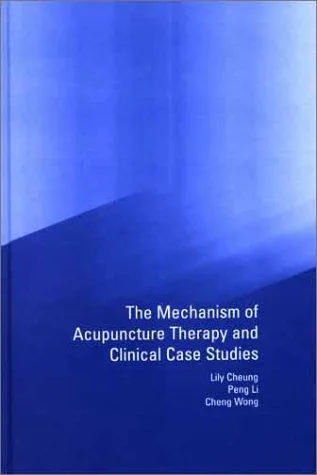
The mechanism of acupuncture therapy and clinical case studies
 73
73

The mechanism of acupuncture therapy and clinical case studies
Cheung, Li, and Wong's 2001 text presents a commendable effort to systematize the understanding of acupuncture, particularly through its detailed examination of mechanisms. The integration of clinical case studies offers a valuable bridge between theoretical concepts and practical application, making the material more accessible to practitioners. A particular strength lies in its methodical approach to explaining Qi not merely as an abstract notion, but as a concept linked to physiological processes. However, the work occasionally leans towards a descriptive rather than critically analytical stance in its case presentations, sometimes leaving the reader wanting a deeper interrogation of confounding factors. The section on the neurophysiological correlates of specific acupoints, while informative, could benefit from more recent research findings. Despite these minor limitations, the book remains a solid resource for those seeking a structured overview of acupuncture's mechanics and application.
📝 Description
73
Published in 2001, this volume systematically examines acupuncture therapy's underlying mechanisms.
Lily Cheung, Peng Li, and Cheng Wong's 2001 work dissects acupuncture therapy, moving beyond anecdotal evidence to explore its governing mechanisms. The authors aim to connect traditional understanding with modern scientific inquiry, offering readers a clear structure for grasping how acupuncture works.
This book suits medical students and practitioners interested in integrating complementary therapies, as well as researchers studying the physiological basis of traditional medicine. Advanced acupuncture practitioners and acupuncturists seeking to deepen their theoretical knowledge will also find its approach valuable. The text focuses on observable mechanisms, positioning itself against purely empirical or faith-based views.
This book emerged in 2001, a time when Traditional Chinese Medicine (TCM) gained global attention. Western medicine began to consider practices like acupuncture more seriously, partly due to research that aimed to legitimize its study. The authors address the scrutiny TCM faced regarding its efficacy and scientific basis, offering a perspective grounded in observable mechanisms rather than solely empirical or faith-based approaches. It sought to explain the therapeutic modalities of TCM through a more evidence-based lens.
💡 Why Read This Book?
• Gain a structured understanding of acupuncture mechanisms, learning how concepts like Qi are theorized to interact with the nervous and endocrine systems, as detailed in the 2001 publication. • Analyze specific clinical case studies presented by Cheung, Li, and Wong, allowing you to observe the practical application of theoretical principles for various conditions. • Explore the neurophysiological basis of acupoint stimulation, providing concrete scientific interpretations that move beyond traditional explanations.
⭐ Reader Reviews
Honest opinions from readers who have explored this book.
❓ Frequently Asked Questions
What is the primary focus of 'The Mechanism of Acupuncture Therapy and Clinical Case Studies'?
The book's primary focus is on explaining the underlying physiological and mechanistic principles of acupuncture therapy, supported by detailed clinical case studies, as first presented in its 2001 publication.
Who are the authors of this book?
The authors are Lily Cheung, Peng Li, and Cheng Wong. The work was first published in 2001.
Does the book discuss the concept of Qi?
Yes, the book explores the concept of Qi (vital energy) and attempts to link it to observable physiological processes within the body, offering a mechanistic perspective.
Are there practical examples of acupuncture in use?
Yes, the text includes numerous clinical case studies that illustrate the application of acupuncture for various conditions, demonstrating the practical use of its theoretical framework.
What makes this book different from other books on acupuncture?
This 2001 publication distinguishes itself by emphasizing the mechanistic explanations behind acupuncture, aiming to provide a scientific grounding for its therapeutic effects, rather than relying solely on traditional dogma.
Is this book suitable for beginners in acupuncture?
While it offers a structured approach, its depth in mechanisms and detailed case studies might be more suitable for students or practitioners with some foundational knowledge, rather than absolute beginners.
🔮 Key Themes & Symbolism
Meridian System Theory
The book systematically examines the concept of meridians, the intricate pathways through which vital energy, or Qi, is believed to flow in the body according to Traditional Chinese Medicine. It details the anatomical and functional understanding of these channels, presenting them not as purely abstract constructs but as integral to physiological regulation. The authors link meridian theory to specific acupoint locations and their purported effects on organ systems and bodily functions, providing a framework for understanding how acupuncture can influence health and disease.
Qi and Its Physiological Correlates
A central theme is the exploration of Qi, the fundamental energetic substance in TCM. This work attempts to bridge the gap between the traditional concept of Qi and modern physiological understanding. It discusses how the flow and balance of Qi are essential for health and how disruptions can lead to illness. The authors look at potential neurochemical and bioelectrical mechanisms that might underlie the subjective experience and therapeutic effects associated with Qi manipulation through acupuncture needling.
Acupoint Specificity and Function
The text analyzes the specific functions attributed to individual acupoints. It moves beyond a generalized understanding of points to explore their targeted effects on particular organs, physiological systems, and even psychological states. By presenting detailed case studies, the authors illustrate how selecting and stimulating specific acupoints can be tailored to address a wide range of health concerns, showcasing the precision and diagnostic acumen inherent in acupuncture practice.
Clinical Application and Case Studies
This theme underpins the entire work, providing concrete evidence for the efficacy and application of acupuncture. The book features a collection of clinical case studies that document patient histories, diagnostic findings, treatment protocols, and outcomes. These examples serve to illuminate the theoretical discussions, demonstrating how the principles of meridian theory, Qi dynamics, and acupoint selection are translated into practical therapeutic interventions across diverse medical conditions.
💬 Memorable Quotes
Direct passages from the work, attributed to the author.
“The stimulation of specific acupoints can elicit measurable physiological responses.”
— This statement highlights the book's core objective: to connect the practice of acupuncture to observable biological effects, moving beyond purely traditional explanations to a more empirically verifiable framework.
“Clinical case studies provide empirical evidence for acupuncture's therapeutic potential.”
— This interpretation points to the importance of the case studies within the text. They are presented as the practical demonstration of the theoretical mechanisms discussed, offering real-world examples of acupuncture's effectiveness.
“Qi is not merely a philosophical concept but is linked to bioenergetic processes.”
— This captures the authors' effort to modernize the understanding of Qi, suggesting it has tangible connections to physical energy processes within the body that can be explored through scientific inquiry.
💡 Key Ideas
Editorial paraphrase of the work's core concepts — not direct quotes.
Understanding the meridian system is key to comprehending the flow of vital energy.
This paraphrase emphasizes the foundational role of the meridian concept in the book's explanation of acupuncture. It suggests that grasping this intricate network is essential for understanding how Qi is regulated and how acupuncture influences it.
The precise selection of acupoints allows for targeted therapeutic intervention.
This quote underscores the specificity of acupuncture. It implies that the effectiveness of the therapy relies on a detailed knowledge of each point's unique function and its influence on particular bodily systems.
🌙 Esoteric Significance
Tradition
While grounded in Traditional Chinese Medicine, which has esoteric underpinnings, this work leans towards a rational, mechanistic interpretation rather than a purely spiritual or mystical one. Its lineage is primarily within the empirical and diagnostic traditions of Chinese medicine, seeking to reconcile these with Western scientific frameworks. It engages with concepts like Qi, which have deep roots in Taoist philosophy and cosmology, but the focus here is on their potential physiological manifestations and therapeutic applications within a clinical context.
Symbolism
The book implicitly engages with the symbolism of the human body as a microcosm reflecting the macrocosm, a common theme in esoteric thought. The meridian system itself can be viewed as a symbolic map of energetic flow, akin to energetic circuitry. Acupoints are not just physical locations but symbolic gateways or nodes through which vital energy (Qi) can be influenced, allowing for the restoration of balance and harmony within the individual's energetic landscape.
Modern Relevance
Contemporary research in neuroacupuncture, electroacupuncture, and the psychosomatic effects of acupuncture directly builds upon the foundational mechanistic inquiries presented in this book. Thinkers and practitioners exploring the mind-body connection, quantum biology, and integrative medicine often reference the need for robust explanations of how traditional practices like acupuncture exert their effects, a dialogue this 2001 publication actively contributes to.
👥 Who Should Read This Book
• Medical students and practitioners interested in integrating evidence-based complementary therapies into their practice will find the clinical case studies and mechanistic explanations invaluable. • Researchers in fields like neuroscience, physiology, and pharmacology seeking to understand the biological underpinnings of traditional healing systems will benefit from the book's detailed approach. • Advanced acupuncture students and licensed acupuncturists aiming to deepen their theoretical knowledge and articulate the scientific basis of their practice will find a structured resource.
📜 Historical Context
Published in 2001, "The Mechanism of Acupuncture Therapy and Clinical Case Studies" emerged during a central era for Traditional Chinese Medicine (TCM) in the West. The preceding decades had seen a growing, albeit often skeptical, interest in acupuncture, fueled by Nixon's 1971 visit to China and subsequent media attention. By the turn of the millennium, institutions like the National Institutes of Health (NIH) were funding research into its efficacy, signaling a shift towards scientific validation. This book positioned itself within this movement, aiming to provide a more mechanistic explanation for TCM's practices, contrasting with purely philosophical or anecdotal accounts. It appeared at a time when Western biomedicine was beginning to engage with complementary and alternative medicine (CAM), seeking to understand and integrate practices like acupuncture, albeit often through the lens of Western scientific paradigms. Contemporaries like the influential David Eisenberg, who published landmark studies on acupuncture in the New England Journal of Medicine, were instrumental in this dialogue.
📔 Journal Prompts
The meridian system as an energetic map: How does its structure inform the selection of acupoints for specific conditions?
Qi's described physiological correlates: Reflect on the potential bioenergetic processes mentioned in the text.
Acupoint specificity: Consider a case study and analyze why certain points were chosen over others.
The interplay between needling and neurochemical responses: What implications does this have for pain management?
Mechanisms of acupuncture: How does the book's explanation of Qi compare to Western physiological models?
🗂️ Glossary
Qi (Chi)
The fundamental vital energy or life force in Traditional Chinese Medicine. It is believed to circulate throughout the body via meridians, influencing all physiological and psychological functions.
Meridians
A network of pathways or channels through which Qi is believed to flow in the body. Each meridian is associated with specific organs and functions, forming a complex system for energy distribution.
Acupoints
Specific locations on the body, typically found along the meridians, where the flow of Qi can be accessed and manipulated through techniques like acupuncture needling or acupressure.
Needling
The insertion of fine needles into specific acupoints on the body as a therapeutic technique in acupuncture, intended to regulate the flow of Qi and restore balance.
Vital Energy
A term used to describe the fundamental life force or animating principle within living organisms, often synonymous with Qi in the context of Traditional Chinese Medicine.
Physiological Correlates
Observable and measurable bodily functions or processes that are associated with a particular concept or phenomenon, such as the potential physiological effects linked to the concept of Qi.
Neurochemical Response
The release or interaction of chemical substances (neurotransmitters, hormones) within the nervous system, which can be triggered by stimuli such as acupuncture needling.
🔮 Readers Also Liked
Browse all →









More by Lily Cheung, Peng Li, Cheng Wong
All books →

More Free Occult Philosophy Books
View all →