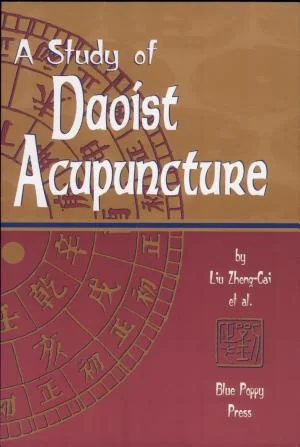
A Study of Daoist Acupuncture & Moxibustion
 82
82

A Study of Daoist Acupuncture & Moxibustion
Liu Zheng-cai’s A Study of Daoist Acupuncture & Moxibustion offers a focused lens on a specialized area, moving beyond the generalized TCM texts that often obscure the distinct Daoist contributions. The inclusion of short biographies of Daoist physicians provides valuable historical context, grounding the more esoteric techniques in real practitioners. The detailed explanations of chrono-acupuncture, particularly the midday/midnight point selection, are a standout feature, offering concrete methods rooted in cosmological understanding. However, the book’s density and specialized terminology may present a challenge for readers unfamiliar with advanced Daoist concepts or classical Chinese medical texts. While the blurb promises "secret Daoist acupuncture lore," the actual content, while detailed, feels more like academic explication than hidden revelation. Still, for practitioners and scholars seeking to understand the unique spiritual and energetic dimensions of these healing arts, the work provides substantial, if demanding, material. It is a valuable resource for understanding the Daoist path to health.
📝 Description
82
Liu Zheng-cai's 1999 book examines Daoism's unique contributions to acupuncture and moxibustion.
Published in 1999, A Study of Daoist Acupuncture & Moxibustion by Liu Zheng-cai details the specific philosophical foundations and practical methods that set the Daoist approach apart in traditional Chinese medicine. The author moves past common applications to isolate and clarify the esoteric dimensions of these healing arts. This work is for acupuncturists wishing to understand the Daoist lineage in their practice, scholars of Chinese medicine, and those interested in spiritual cultivation linked to physical health.
It specifically addresses chrono-acupuncture, longevity practices, and the historical fusion of medicine with Daoist thought. The book was released during a time of growing global interest in traditional Chinese medicine's more spiritual interpretations, contrasting with the rise of Western scientific paradigms. Liu Zheng-cai's research isolates and explains these particular Daoist elements, distinguishing them from more secularized or medically focused theories within broader Chinese medicine.
The book's central focus is identifying and explaining these Daoist contributions. This includes integrating cosmological principles, like selecting treatment points based on celestial and terrestrial cycles, and employing geomantic or energetic calculations. Significant attention is also given to longevity techniques and emergency moxibustion methods, often considered secret knowledge.
This study situates acupuncture and moxibustion within the specific cosmological and spiritual framework of Daoism. It highlights practices that are not merely therapeutic but are also understood as methods for aligning the individual with natural cycles and promoting longevity, a key Daoist aspiration. The book distinguishes these from more generalized applications of Chinese medicine, emphasizing techniques often passed down through specific lineages and considered to possess a deeper, internal cultivation aspect.
💡 Why Read This Book?
• Gain practical chrono-acupuncture techniques, such as midday/midnight point selection, enabling treatments aligned with specific energetic cycles derived from Daoist cosmology. • Understand moxibustion methods specifically geared towards longevity and emergency applications, drawing from the 'secret lore' of Daoist medical traditions. • Explore biographical sketches of historical Daoist physicians, providing context for how these specialized practices were developed and applied by key figures in the tradition.
⭐ Reader Reviews
Honest opinions from readers who have explored this book.
❓ Frequently Asked Questions
What makes Daoist acupuncture distinct from other forms of Chinese medicine?
Daoist acupuncture emphasizes integration with cosmological principles, such as celestial cycles for point selection (chrono-acupuncture), and focuses on cultivating longevity and spiritual alignment alongside physical health, often utilizing specific energetic pathways and secret lore.
What is chrono-acupuncture mentioned in the book?
Chrono-acupuncture, as discussed in Liu Zheng-cai's study, involves selecting acupuncture points based on specific temporal factors, notably the midday/midnight point selection method, which aligns treatment with the body's natural energetic rhythms and celestial influences.
Are there specific techniques for longevity discussed?
Yes, the book details moxibustion techniques specifically aimed at promoting longevity, often considered part of the 'secret Daoist acupuncture lore,' which go beyond general therapeutic applications to focus on vital energy preservation.
Who was Dr. Liu Zheng-cai?
Dr. Liu Zheng-cai is the author of 'A Study of Daoist Acupuncture & Moxibustion,' a work that clarifies the specific Daoist contributions to these medical practices, drawing from his expertise in the field.
What is the 'magic turtle eight methods'?
The 'magic turtle eight methods' refers to a specific, likely esoteric, technique within Daoist acupuncture, detailed in the book, which is used for clinical application and is part of the specialized lore explored by Liu Zheng-cai.
Does the book include biographies of historical figures?
Indeed, the study includes numerous short biographies of Daoist physicians, offering historical context and insight into the lineage and development of the specialized acupuncture and moxibustion techniques discussed.
🔮 Key Themes & Symbolism
Daoist Chrono-Acupuncture
This theme explores the integration of time and cosmology into acupuncture practice, a hallmark of the Daoist tradition. Liu Zheng-cai details techniques like midday/midnight point selection, where treatment timing is crucial and dictated by the energetic flow of the day and night, linked to the body's meridian system and celestial cycles. This approach views the human body as a microcosm reflecting the macrocosm, emphasizing energetic harmony with natural rhythms for optimal healing and vitality.
Longevity & Emergency Moxibustion
The work looks at specialized moxibustion techniques that are not merely for treating illness but for cultivating long life and addressing acute crises. These methods are often considered 'secret lore' within Daoist medical lineages, passed down through generations. They focus on strengthening vital energy (Qi), tonifying deficiencies, and expelling pathogenic factors using heat generated from burning mugwort, applied at specific points and times dictated by Daoist principles.
Biographies of Daoist Physicians
Useful the practical application of Daoist medicine, the book presents short biographies of key historical figures. These accounts serve to contextualize the theories and techniques discussed, showcasing how renowned physicians integrated Daoist philosophy with clinical practice. By highlighting these individuals, the study underscores the lineage and living tradition of Daoist healing arts, emphasizing their spiritual and practical dimensions.
Esoteric Medical Lore
Beyond standard medical texts, this theme captures the hidden or specialized knowledge within Daoist medicine. It includes unique point combinations, specific diagnostic approaches tied to energetic states, and ritualistic elements sometimes associated with healing. Liu Zheng-cai aims to bring such 'secret' practices to light, providing readers with access to a deeper, more esoteric layer of traditional Chinese medicine rooted in Daoist cosmology and spiritual cultivation.
💬 Memorable Quotes
Direct passages from the work, attributed to the author.
“Specifically Daoist contributions to the practice of acupuncture”
— This phrase highlights the book's core objective: to isolate and explain the unique elements that Daoism brought to the ancient practice of acupuncture, distinguishing it from broader Chinese medical traditions.
“Chrono-acupuncture techniques as midday/midnight point selection”
— This refers to a specialized method of choosing acupuncture points based on the time of day, linking treatment efficacy to the body's natural energetic rhythms and celestial influences, a concept central to Daoist medicine.
“Moxibustion techniques for longevity and emergencies”
— This points to advanced applications of moxibustion, a therapy involving burning mugwort, focused not just on treating disease but on extending life and managing critical conditions, often considered part of Daoist secret medical knowledge.
“Other secret Daoist acupuncture lore”
— This suggests the book contains specialized, perhaps previously less accessible, knowledge and practices within the Daoist medical tradition, going beyond commonly known acupuncture principles.
“Numerous short biographies of Daoist physicians”
— The inclusion of these biographical sketches serves to ground the theoretical and technical discussions in historical practice and the lives of key figures who developed and utilized these specific Daoist medical arts.
🌙 Esoteric Significance
Tradition
This work is firmly rooted in the Daoist tradition, specifically its medical branch. It aligns with the Daoist emphasis on living in harmony with the natural order (Dao) and cultivating vital energy (Qi) for health, longevity, and spiritual development. Unlike purely physiological approaches to acupuncture, Daoist medicine integrates cosmology, philosophy, and cultivation practices, viewing the body as a microcosm of the universe.
Symbolism
Key symbols include the midday/midnight cycle, representing the dynamic balance of Yin and Yang throughout the 24-hour period, crucial for chrono-acupuncture. The 'magic turtle' likely refers to the Luo Shu (Magic Square) or related cosmological diagrams used in geomancy and divination, which are often integrated into Daoist energetic and medical practices for strategic point selection or understanding energetic patterns.
Modern Relevance
Contemporary practitioners and scholars interested in the spiritual dimensions of healing, Qigong, and esoteric traditions find this work valuable. Thinkers exploring the integration of consciousness with physical medicine, or those seeking to revive more holistic and energetically-attuned healing modalities, draw upon the specific techniques and philosophical framework presented by Liu Zheng-cai.
👥 Who Should Read This Book
• Acupuncturists and practitioners of Traditional Chinese Medicine seeking to understand the specific Daoist philosophical and technical contributions to their field. • Scholars of comparative religion, esoteric traditions, and the history of medicine interested in the intersection of spirituality and healing arts in China. • Individuals engaged in personal cultivation practices, such as Daoism or Qigong, who wish to explore the therapeutic applications of these traditions for health and longevity.
📜 Historical Context
Published in 1999, Liu Zheng-cai's study emerged during a period of significant global interest in Traditional Chinese Medicine (TCM), coinciding with a broader resurgence of esoteric and spiritual practices. While Western scientific medicine continued its dominance, there was a parallel scholarly and popular movement seeking deeper, often spiritual, roots within ancient healing systems. This book’s significance lies in its precise focus on the Daoist lineage within acupuncture and moxibustion, differentiating it from the more generalized, often secularized, TCM curricula that had become standard. At the time, scholars like Unschuld were documenting the history of Chinese medicine, but Liu Zheng-cai’s work provided a specific lens on the Daoist esoteric dimension, which was less frequently detailed in Western-language publications. The work addressed a niche but growing interest in the philosophical and spiritual underpinnings of health practices, moving beyond purely physiological explanations.
📔 Journal Prompts
The specific Daoist contributions to acupuncture, as outlined by Liu Zheng-cai.
The application of chrono-acupuncture and its relation to the midday/midnight point selection.
The role of secret Daoist lore in moxibustion techniques for longevity.
Reflecting on the biographies of Daoist physicians and their clinical methods.
The integration of cosmological principles within the practice of acupuncture.
🗂️ Glossary
Daoism
A philosophical and religious tradition originating in ancient China, emphasizing living in harmony with the Dao (the fundamental principle and flow of the universe), often involving practices for health, longevity, and spiritual cultivation.
Acupuncture
A key component of Traditional Chinese Medicine involving the insertion of fine needles into specific points on the body to regulate the flow of vital energy (Qi) and restore balance.
Moxibustion
A therapeutic technique in Traditional Chinese Medicine involving the burning of dried mugwort (Artemisia vulgaris) near the skin at specific acupuncture points to warm and invigorate the body and promote healing.
Chrono-acupuncture
A specialized form of acupuncture where the selection of points and timing of treatment are based on temporal factors, such as the time of day or season, reflecting energetic rhythms.
Midday/Midnight Point Selection
A specific chrono-acupuncture technique that utilizes the energetic peaks and troughs of the 24-hour cycle (e.g., midday or midnight) to select optimal acupuncture points for treatment.
Qi (Chi)
The fundamental vital life force or energy believed to flow through the body in Traditional Chinese Medicine and Daoist philosophy, essential for health and vitality.
Longevity Techniques
Practices, often derived from Daoist traditions, aimed at extending lifespan and maintaining health and vitality throughout life, frequently involving diet, exercise, meditation, and specific medical therapies like moxibustion.
This book appears in 2 collections
🔮 Readers Also Liked
Browse all →









From the “Acupuncture” Collection
View all →







More Free Occult Philosophy Books
View all →