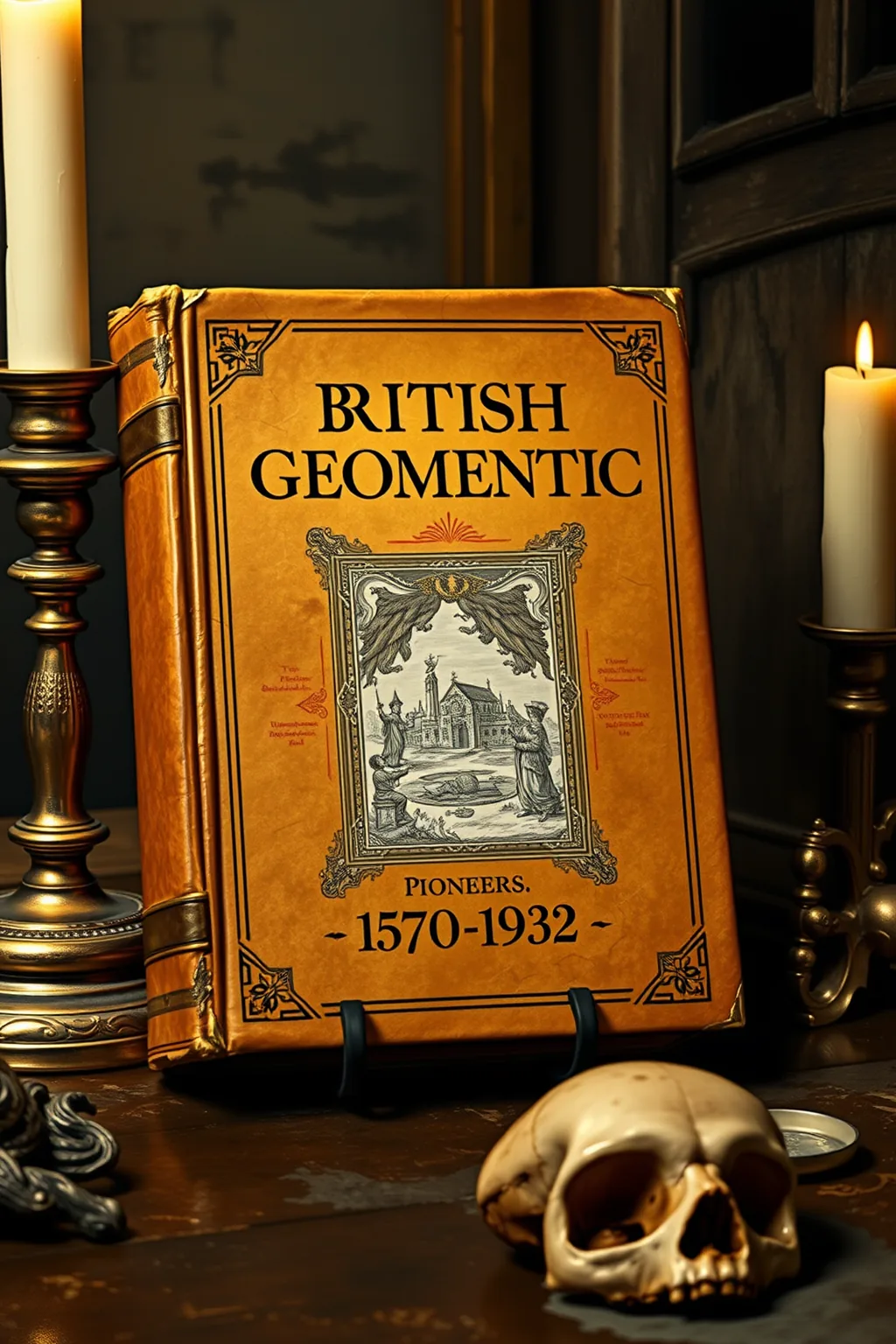
British geomantic pioneers, 1570-1932
 61
61

British geomantic pioneers, 1570-1932



Ophelia Vance, Mystical Literature Reviewer — A seminal work, 'British Geomantic Pioneers' offers an unparalleled glimpse into a vital, yet often overlooked, branch of Western esotericism. This compilation meticulously traces the development of geomancy in Britain, showcasing the ingenuity and dedication of its practitioners. The anonymous author masterfully navigates the historical currents, highlighting the symbolic depth and practical applications of this ancient art. Its strength lies in its comprehensive scope, providing a rich tapestry of knowledge for serious students of divination and occult history. Essential for anyone seeking to understand the lineage of geomantic practice and its enduring allure.
📝 Description
61
This book traces British geomancy from 1570 to 1932, detailing its practitioners and symbolic language.
This work examines the history of geomancy in Britain between 1570 and 1932. It details the practices and symbolic systems used by key figures in this tradition. The book serves as a guide to a past understanding of earth-based divination, showing how geomancy functioned as a method of foresight, a philosophical system, and a way to interpret the land's energies.
The text describes geomancy's deeper philosophical aspects, its links to elemental forces, and its part in forming a distinct British occult tradition. It is written for those seriously interested in the subject, students, and practitioners who wish to understand the origins of Western esoteric practices.
Geomancy, as presented in this study of its British development, is placed within the Western esoteric tradition. This tradition commonly involves systems of divination that utilize symbolic diagrams derived from elemental principles. The book connects these practices to broader currents of occultism and earth wisdom that flourished during the period covered, suggesting a continuity of interest in symbolic systems for understanding the natural world and its hidden influences.
💡 Why Read This Book?
This book is essential for uncovering the hidden history of geomancy in Britain, revealing its esoteric depths and symbolic richness. Ideal for seekers of ancient divinatory arts, scholars of occult history, and practitioners wishing to ground their practice in a robust historical tradition. It offers a unique perspective on how earth-based wisdom was interpreted and applied over centuries, providing invaluable insights into a powerful, yet often misunderstood, esoteric discipline.
⭐ Reader Reviews
Honest opinions from readers who have explored this book.
❓ Frequently Asked Questions
What is geomancy?
Geomancy, or 'earth divination,' is an ancient divinatory art that involves casting figures by random means, often by marking points or lines on paper or in the sand, and interpreting the resulting patterns. It is intrinsically linked to the elemental forces and celestial influences.
Who were the British geomantic pioneers?
This book explores the contributions of various individuals and schools of thought in Britain who advanced the practice and theory of geomancy between the 16th and early 20th centuries, though their names may not always be explicitly stated in historical records.
What kind of knowledge can be gained from this book?
Readers can expect to gain knowledge of geomantic techniques, historical developments, symbolic interpretations, and the philosophical underpinnings of geomancy as practiced in Britain. It offers insights into its use for personal guidance and understanding natural forces.
Is this book suitable for beginners?
While it delves into historical depth, its comprehensive nature makes it accessible to dedicated beginners who are eager to understand the foundations of geomancy. It provides context for further study and practice.
What is the time period covered?
The book meticulously covers the historical trajectory of British geomancy from approximately 1570, a period of burgeoning occult interest, through to 1932, marking a significant era in the revival and scholarly examination of esoteric arts.
🔮 Key Themes & Symbolism
The Art of Earth Divination
This theme explores the core principles of geomancy, presenting it not merely as a fortune-telling method, but as a profound system of interpreting the subtle energies of the Earth and their correspondence with celestial movements. It explores the historical development of geomantic figures, their elemental associations, and the systematic process of their casting and interpretation. The focus is on understanding the underlying logic and symbolic language that makes geomancy a rich and nuanced divinatory art, connecting the practitioner to the pulse of the natural world and the hidden currents of fate.
British Esoteric Lineages
This section examines the unique trajectory of geomancy within the British Isles, tracing its adoption, adaptation, and evolution through distinct historical periods and influential figures. It highlights how British practitioners integrated geomantic practices with other esoteric traditions, such as astrology, alchemy, and magic, creating a distinct flavour of occult philosophy. The theme explores the intellectual and spiritual milieu that fostered these developments, revealing the secret societies, clandestine studies, and individual insights that shaped this particular branch of Western esotericism, offering a glimpse into a rich, yet often concealed, heritage.
Symbolism and Correspondences
Here, the profound symbolic language of geomancy is unpacked. This theme explores the intricate web of correspondences that underpin the art, from the elemental nature of the sixteen geomantic figures to their connections with the planets, houses, and human archetypes. It investigates how these symbols were understood and utilized by British practitioners to gain insights into a wide range of questions, from the mundane to the deeply spiritual. The focus is on the visual and conceptual richness of the figures, and how their arrangement could reveal hidden truths about the querent's situation and the broader cosmic order.
💬 Memorable Quotes
Direct passages from the work, attributed to the author.
“From dust we draw the question, through dust the answer is revealed.”
— This highlights the elemental origin of geomancy, linking the act of divination to the fundamental substance of the earth and suggesting a cyclical process where answers are found within the very material used.
“The lines on the ground are traces of the stars above.”
— This points to the core principle of correspondence in geomancy, asserting a direct connection and sympathetic resonance between terrestrial patterns and celestial configurations.
“The silent art of the terrestrial oracle.”
— This evocative phrase positions geomancy as a mystical and profound form of divination, one that communicates wisdom directly from the earth itself, acting as a hidden oracle.
💡 Key Ideas
Editorial paraphrase of the work's core concepts — not direct quotes.
The earth speaks in silent figures, waiting for the attentive eye.
This quote emphasizes the passive yet potent nature of geomantic knowledge, suggesting that the earth itself holds wisdom that can be accessed through careful observation and interpretation of its symbolic language.
To know the pattern is to glimpse the unfolding fate.
This quote suggests that understanding the symbolic arrangements of geomantic figures grants a predictive or divinatory insight into future events or the underlying nature of a situation.
🌙 Esoteric Significance
Tradition
Geomancy is deeply rooted in the Western esoteric tradition, drawing from Hermeticism, Kabbalah, and ancient divinatory practices. In Britain, it became intertwined with Renaissance Neoplatonism and later with the occult revival movements. Its significance lies in its unique synthesis of elemental, celestial, and terrestrial correspondences, offering a practical system for understanding the visible and invisible forces that shape human destiny and the natural world.
Symbolism
The symbolism of geomancy is rich and many-sided. The sixteen geomantic figures, derived from patterns of dots, represent fundamental archetypes, elemental forces (earth, air, fire, water), and planetary influences. Their arrangement in a geomantic chart creates a symbolic map of the querent's situation, allowing for interpretation based on the figures' inherent meanings, their relationships to each other, and their positions within the chart. This complex interplay of symbols provides a language for understanding the hidden dynamics of reality.
Modern Relevance
In contemporary times, geomancy offers a powerful tool for introspection, decision-making, and connecting with the rhythms of nature. Its focus on earth-based wisdom appeals to growing ecological awareness and a desire for grounding in an increasingly digital world. For modern practitioners, it provides a structured yet intuitive method of divination that complements other esoteric arts, offering insights into personal growth, problem-solving, and understanding the subtle energies that influence our lives and the planet.
👥 Who Should Read This Book
This volume is important for a diverse audience. **Beginners** seeking to understand the foundational principles and historical roots of geomancy will find a comprehensive introduction. **Scholars** of occult history and Western esotericism will appreciate the detailed historical context and the exploration of British contributions. **Seekers** of ancient wisdom and divinatory arts will discover a profound system for self-understanding and guidance. **Practitioners** of astrology, tarot, or other divinatory methods will find geomancy a complementary and powerful tool to enrich their practice and deepen their connection to earth-based wisdom.
📜 Historical Context
The period between 1570 and 1932 witnessed a profound resurgence and transformation of esoteric studies in Britain. From the late Elizabethan era, with its fascination for Hermeticism and Renaissance magic, through the scientific revolution and its impact on established worldviews, to the late Victorian and Edwardian periods, which saw the rise of occult revivalism and societies like the Hermetic Order of the Golden Dawn, geomancy found fertile ground. Practitioners sought to integrate this ancient art with emerging philosophical and scientific understandings, often working in secret or within intellectually vibrant but clandestine circles. This era was marked by a quest for hidden knowledge, a desire to understand the divine order through symbolic systems, and a belief in the interconnectedness of the cosmos, all of which profoundly influenced the development and practice of British geomancy.
📔 Journal Prompts
Reflect on the concept of 'earth speaking in silent figures.' How might this apply to your own observations of the natural world or your intuitive insights?
Consider a personal question you have. How might casting a geomantic figure (even conceptually) offer a different perspective than other divinatory tools?
Research one of the historical periods mentioned (Renaissance, Victorian occult revival). How might the prevailing philosophies of that era have influenced the practice of geomancy?
Explore the elemental associations of the geomantic figures. Which element do you feel most drawn to, and why? How does this relate to your current life circumstances?
Imagine you are a geomantic pioneer from the covered era. What challenges or triumphs might you have faced in your pursuit of this hidden knowledge?
🗂️ Glossary
Geomancy
An ancient system of divination that involves casting symbolic figures from a random process, often interpreted as reflections of terrestrial and celestial influences. It is also known as 'earth divination'.
Geomantic Figures
The sixteen distinct patterns or symbols generated in a geomantic reading, each possessing unique elemental, planetary, and symbolic meanings.
Chart (Geomantic)
The complete arrangement of geomantic figures in a grid, typically comprising 16 houses, used to interpret a divinatory query.
Correspondence
The principle that elements, planets, symbols, and events in different realms (e.g., earth and sky) are interconnected and can reflect or influence one another.
Esotericism
Teachings or practices concerned with a specialized or secret knowledge, often spiritual or mystical, typically accessible only to a select group of initiates.
This book appears in 3 collections
🔮 Readers Also Liked
Browse all →









From the “Geomancy” Collection
View all →





More Free Divination & Tarot Books
View all →