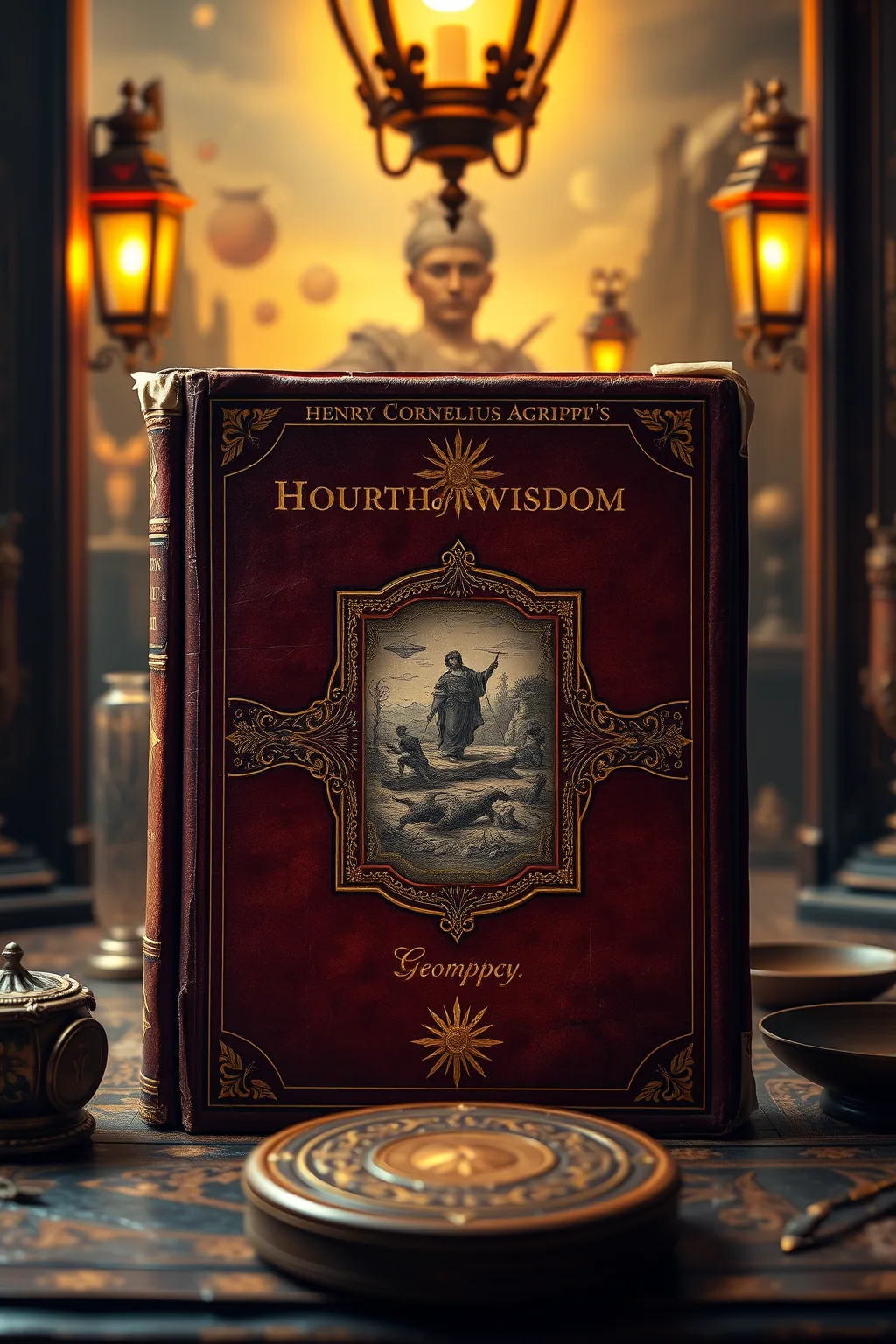
Henry Cornelius Agrippa's fourth book of occult philosophy and geomancy
 61
61

Henry Cornelius Agrippa's fourth book of occult philosophy and geomancy



By Cassian Rothmann (Senior Critic, Ancient Wisdom) — Agrippa's 'Fourth Book' is a monumental, albeit anonymous, contribution to esoteric literature. It masterfully synthesizes complex geomantic systems with the broader currents of occult philosophy, offering a rich tapestry of sigils, planetary correspondences, and divinatory techniques. The text's strength lies in its systematic approach to understanding the microcosm and macrocosm, providing practitioners with a robust framework for magical operation and spiritual exploration. While challenging, its rewards are immense for those dedicated to the rigorous study of the hidden arts. This is essential reading for serious occultists, scholars of comparative religion, and diviners seeking to deepen their practice with ancient, potent knowledge.
📝 Description
61
The 'Fourth Book of Occult Philosophy and Geomancy' appeared after Henry Cornelius Agrippa's death, its authorship unknown.
This text, attributed to Agrippa but written by an anonymous author, presents a collection of magical practices and spiritual philosophy. It guides readers through celestial influences and their connection to earthly events, using geomantic figures to illustrate cosmic principles. The book functions as more than a simple instruction manual; it aims to unlock an understanding of the fundamental forces shaping reality and symbolic systems that awaken inner perception.
It is written for serious students of occult subjects, philosophers looking for deeper insights, and practitioners seeking genuine knowledge. The volume intends to clarify occult concepts. Its philosophical structure aligns with Neoplatonic thought and Hermetic teachings, providing a specific viewpoint on the connections between all things. Readers can expect to find a path into the structure of existence, informed by ancient traditions and the power of sacred geometry.
This work belongs to the Hermetic and Neoplatonic traditions influential in the Renaissance. It follows in the vein of Agrippa's earlier, more famous works like 'Three Books of Occult Philosophy,' which synthesized Kabbalah, Neoplatonism, and natural magic. The anonymous author continues this synthesis, focusing on practical applications of geomancy and the relationship between the macrocosm and microcosm. It represents a late flowering of Renaissance occultism, attempting to codify magical knowledge.
💡 Why Read This Book?
This book is essential for unlocking the secrets of geomancy and its profound connection to occult philosophy. It provides a structured approach to ancient divinatory practices and a deeper understanding of cosmic correspondences. Ideal for serious practitioners, academic researchers, and spiritual seekers yearning to explore the foundational texts of Western esotericism.
⭐ Reader Reviews
Honest opinions from readers who have explored this book.
❓ Frequently Asked Questions
What is geomancy?
Geomancy is an ancient form of divination that interprets patterns formed by scattering earth or by casting coins. It uses 16 figures derived from these patterns to understand questions and predict outcomes, often viewed as a 'language of the earth.'
Is this book by Henry Cornelius Agrippa himself?
While attributed to Agrippa, the authorship of the Fourth Book is debated. It is generally considered to be a later compilation or a work by one of his disciples, building upon his foundational philosophies.
What are the main themes covered?
The book delves into the principles of geomancy, celestial influences, planetary magic, the creation of talismans, and the symbolic language of the elements and figures, offering a comprehensive system of occult knowledge.
Is prior knowledge of occultism required?
While prior exposure to occult concepts can be beneficial, the book's structured approach aims to guide dedicated readers. However, a serious commitment to study and interpretation is recommended.
How is this book useful for modern practitioners?
It provides foundational knowledge for understanding planetary magic, sigil craft, and advanced divination. Its principles can be adapted for contemporary magical practice and spiritual development.
🔮 Key Themes & Symbolism
The Art of Geomancy
This section is a deep dive into the practice and theory of geomancy, an earth-based divination system. It explores the creation of the 16 geomantic figures, their correspondences with celestial bodies and elements, and their application in seeking answers to specific questions. The text emphasizes the systematic nature of geomancy, presenting it not just as a divinatory tool but as a method for understanding the energetic currents of the cosmos and their manifestation in the terrestrial realm. Readers will learn how to interpret the complex interplay of these figures to gain insights into past, present, and future events, making it a starting point for any serious student of divination.
Celestial and Elemental Correspondences
A fundamental aspect of occult philosophy is understanding the interconnectedness between the macrocosm (the universe) and the microcosm (humanity and the Earth). This theme meticulously details the intricate web of correspondences that link planets, stars, elements, humors, and even specific herbs and stones. Agrippa's work, as presented here, provides a sophisticated framework for recognizing these divine patterns. By mastering these correspondences, practitioners can harness celestial energies for magical purposes, create potent talismans, and understand the deeper symbolic language that underpins all of creation, offering a path to greater harmony and efficacy in spiritual work.
The Nature of Occult Power
This theme examines the philosophical underpinnings of occult power, exploring how it is perceived, accessed, and wielded. It moves beyond mere ritualistic practice to examine the inherent forces that animate the universe and how these can be consciously engaged. The text discusses the role of intention, will, and symbolic representation in shaping these forces. It posits that true occult power stems from a deep understanding of natural laws and divine order, rather than from arbitrary manipulation. For the dedicated seeker, this exploration offers a profound perspective on the responsible and effective use of magical energies for personal growth and spiritual attainment.
💬 Memorable Quotes
Direct passages from the work, attributed to the author.
“As above, so below; as within, so without.”
— A foundational Hermetic principle, this emphasizes the interconnectedness of the spiritual and material realms, suggesting that understanding one can illuminate the other.
“The figures are the language of the Earth's soul.”
— This poetic statement captures the essence of geomancy, portraying the geomantic figures as direct communications from the spirit or consciousness of the planet.
“Each star hath its influence, and each influence hath its place.”
— This highlights the astrological and cosmic order discussed in the text, emphasizing the specific impact and jurisdiction of celestial bodies within the universal architecture.
💡 Key Ideas
Editorial paraphrase of the work's core concepts — not direct quotes.
The heavens declare the glory of God, and the firmament sheweth his handywork.
This quote highlights the theological underpinnings of occult study, suggesting that the celestial bodies are divine messages, revealing the Creator's order and power.
To know the secrets is to possess the keys.
This quote underscores the transformative power of esoteric knowledge, implying that true understanding unlocks hidden potentials and grants access to deeper realities.
🌙 Esoteric Significance
Tradition
This work is deeply rooted in the Hermetic and Neoplatonic traditions, synthesizing their philosophical underpinnings with practical applications derived from ancient divinatory arts, particularly geomancy. It reflects the Renaissance ideal of 'prisca theologia,' the belief in a single, ancient divine wisdom that underlies all religions and philosophies, accessible through rigorous study and spiritual discipline.
Symbolism
The text is replete with detailed symbolism, from the 16 geomantic figures representing archetypal forces and planetary influences, to the intricate diagrams and sigils intended to channel cosmic energies. Each element, number, and celestial body carries layers of meaning, forming a complex symbolic language that, when understood, unlocks the hidden architecture of reality and the principles of magical operation.
Modern Relevance
Despite its historical origins, the principles explored in this book remain remarkably relevant for contemporary seekers. The emphasis on understanding cosmic correspondences, the structured approach to divination, and the philosophical exploration of hidden forces offer valuable tools for personal growth, spiritual insight, and magical practice in the 21st century.
👥 Who Should Read This Book
This text is primarily for the dedicated student of Western esotericism. Seasoned occult practitioners will find a deep well of knowledge to refine their understanding of geomancy and planetary magic. Academic researchers and historians of magic will appreciate its historical context and contribution to occult traditions. Spiritual seekers interested in the philosophical underpinnings of divination and the interconnectedness of the cosmos will find it a challenging yet rewarding journey. Beginners are advised to approach with patience and a willingness to engage in deep study, perhaps alongside introductory texts on Hermeticism or astrology.
📜 Historical Context
Emerging from the intellectual ferment of the Renaissance, a period marked by a fervent rediscovery of classical wisdom and a burgeoning interest in the esoteric, Agrippa's 'Fourth Book' (though of debated authorship) stands as a evidence of the era's syncretic approach to knowledge. This era saw scholars and mystics alike attempting to reconcile Christian theology with Hermeticism, Neoplatonism, Kabbalah, and ancient magical traditions. The widespread belief in a divinely ordered cosmos, where celestial bodies exerted tangible influence on earthly affairs, fueled the study of astrology, alchemy, and divination. Works like this, circulating in manuscript form before widespread printing, provided practitioners and scholars with a comprehensive, albeit often complex, system for understanding and interacting with these perceived universal forces, shaping the trajectory of Western occultism for centuries to come.
📔 Journal Prompts
Reflect on a recent geomantic figure that manifested in your life and its potential meaning.
How do the celestial influences described in the text resonate with your personal experiences or current life circumstances?
Consider the concept of 'as above, so below' in relation to a challenge you are currently facing.
Design a simple talisman based on a geomantic figure and its correspondences, detailing your intentions.
Explore the relationship between intention, symbolism, and the manifestation of power as discussed in the book.
🗂️ Glossary
Geomancy
An ancient form of divination that interprets patterns formed by scattering earth or by casting coins, using 16 figures to answer questions and understand cosmic influences.
Macrocosm
The universe or the greater world, often contrasted with the microcosm, representing humanity or the smaller world.
Microcosm
The human being or the smaller world, seen as a reflection or miniature of the macrocosm.
Correspondences
The symbolic relationships between different elements of reality, such as planets, astrological signs, herbs, colors, and deities, used in occult practices.
Sigil
A magical symbol, often derived from a phrase or intention, used to invoke or represent specific energies or entities in occult rituals.
This book appears in 4 collections
🔮 Readers Also Liked
Browse all →







From the “Occultism” Collection
View all →





More Free Divination & Tarot Books
View all →