Die Legende des Baalschem

 82
82

Die Legende des Baalschem
Martin Buber's retelling of the Baal Shem Tov legends, first appearing in 1922, offers a unique window into the heart of early Hasidism. Buber, a master storyteller himself, imbues these tales with a palpable spiritual energy, presenting Israel ben Eliezer not merely as a historical figure but as an archetype of divine communion. The strength of the work lies in its evocative prose and its ability to transmit the ethical and mystical core of the movement through narrative. One particularly striking aspect is Buber's focus on the Baal Shem Tov's interactions with ordinary people, highlighting how spiritual insight can be found in the mundane. However, the work is not without its limitations for the critical historian; Buber's approach is interpretive and devotional, prioritizing spiritual essence over strict historical accuracy, which may leave some readers wanting more empirical detail. Nevertheless, Buber’s "Die Legende des Baalschem" serves as a vital, if stylized, introduction to a pivotal figure in Jewish mysticism. It is a work that speaks to the soul through its carefully chosen parables.
📝 Description
82
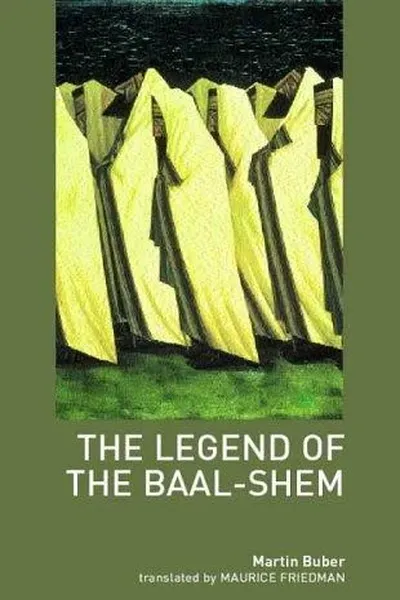
Martin Buber published "Die Legende des Baalschem" in 1922, retelling tales of the Baal Shem Tov.
Martin Buber's "Die Legende des Baalschem" (The Legend of Baal Shem) retells the life and teachings of Israel ben Eliezer, the 18th-century Hasidic rabbi known as the Baal Shem Tov. Published in 1922, Buber's book is not a historical record but a collection of stories and parables. These narratives aim to convey the spiritual core and ethical principles of the early Hasidic movement. The book focuses on the Baal Shem Tov's relationships with his students, his practical wisdom in daily life, and his deep connection to the divine. It offers insight into the man and his message, rather than a strict biographical account.
This work will interest readers curious about Hasidic Judaism's origins and growth, particularly its key figures and early mystical ideas. It is useful for students of religious philosophy, comparative spirituality, and those drawn to the stories of spiritual leaders who championed joy, God's presence everywhere, and social justice. Students of German-Jewish literature and early 20th-century intellectual history will also find it valuable. Buber himself was a central figure in German-Jewish thought, deeply involved with Kabbalistic traditions and Eastern European Hasidism. He sought to make Jewish mysticism understandable to a modern readership.
Published in 1922, "Die Legende des Baalschem" emerged from Martin Buber's engagement with Kabbalistic traditions and Eastern European Hasidism. Buber sought to interpret these mystical currents for a contemporary audience, moving beyond purely historical or dogmatic approaches. The book presents the Baal Shem Tov not just as a historical figure but as an exemplar of a spiritual path that emphasizes direct experience of the divine in everyday life. It reflects a broader European intellectual interest in folk spirituality and pre-modern wisdom during the early 20th century, a time of significant reevaluation of faith and tradition.
💡 Why Read This Book?
• Understand the spiritual approach of the Baal Shem Tov through Buber's narrative art, learning how divine immanence was understood in 18th-century Hasidism. • Gain insight into Martin Buber's own philosophical project from 1922, observing his engagement with Jewish mysticism and his effort to present it to a modern audience. • Explore the concept of the Tzaddik as a spiritual guide, as exemplified by the Baal Shem Tov's wisdom and interactions with his community, offering a model of ethical leadership.
⭐ Reader Reviews
Honest opinions from readers who have explored this book.
❓ Frequently Asked Questions
Is "Die Legende des Baalschem" a historically accurate biography of the Baal Shem Tov?
No, Martin Buber's work, published in 1922, is a collection of legends and parables. It aims to convey the spiritual essence and teachings of Israel ben Eliezer (the Baal Shem Tov) rather than provide a strictly factual historical account.
What is the primary focus of Martin Buber's "Die Legende des Baalschem"?
The book focuses on the life, wisdom, and spiritual teachings of the Baal Shem Tov, the founder of Hasidism. It highlights his connection to the divine, his ethical guidance, and his interactions with disciples and ordinary people.
When was "Die Legende des Baalschem" first published?
Martin Buber's "Die Legende des Baalschem" was first published in 1922.
What is Hasidism, and how does this book relate to it?
Hasidism is a mystical Jewish religious movement founded in the 18th century. This book centers on its most important early figure, the Baal Shem Tov, presenting the foundational legends and spiritual ethos of the movement.
Who was the Baal Shem Tov?
The Baal Shem Tov, whose real name was Israel ben Eliezer, was an 18th-century rabbi and mystic from Ukraine, widely regarded as the founder of the Hasidic movement.
Does the book contain actual historical documents or Buber's interpretations?
The book contains legends and stories, presented through Buber's interpretive and literary style. While based on traditional accounts, they are shaped by Buber's vision, reflecting his philosophical engagement with Jewish mysticism from the early 20th century.
🔮 Key Themes & Symbolism
The Baal Shem Tov as Spiritual Archetype
Buber's "Die Legende des Baalschem" presents Israel ben Eliezer not just as a historical figure but as an embodiment of divine connection and wisdom. The tales emphasize his ability to perceive the divine in all aspects of existence, from the grandest pronouncements to the simplest gestures. This portrayal serves to elevate the Baal Shem Tov to an archetypal status, representing the ideal Tzaddik (righteous one) who bridges the earthly and the divine, guiding his followers through profound spiritual insight and compassionate action. The legends focus on his miracles, his teachings on prayer, and his deep empathy for the suffering of his people.
Immanence of God in Daily Life
A central theme is the concept of God's presence (Shekhinah) pervading all of creation, a core tenet of Hasidic thought. Buber illustrates this through the Baal Shem Tov's interactions, showing how spiritual revelation is not confined to sacred texts or secluded prayer but is accessible in the everyday. Simple acts, conversations, and even moments of joy become conduits for experiencing the divine. This perspective encourages a devotional practice that integrates spiritual awareness into all activities, transforming the mundane into the sacred and fostering a sense of wonder and connection in the lives of the followers.
The Path of Joy and Song
The book frequently highlights the role of joy (simcha) and song in spiritual practice, a distinctive characteristic of Hasidism originating with the Baal Shem Tov. Buber depicts how the Baal Shem Tov used melodies and joyous celebration to overcome despair, foster community, and draw closer to God. These narratives suggest that uninhibited expression of emotion, particularly joy, is a powerful spiritual tool, capable of lifting the soul and useful the divine presence. This theme underscores Hasidism's emphasis on an exuberant and life-affirming approach to faith.
Wisdom Through Parable and Story
Buber masterfully employs the legend and parable as primary vehicles for conveying spiritual and ethical teachings. "Die Legende des Baalschem" is structured around these narratives, demonstrating their power to communicate complex ideas in an accessible and memorable manner. The stories function not only as historical accounts but as didactic tools, offering moral lessons and spiritual insights through allegorical representation. This approach reflects a long tradition within Jewish mysticism, where narrative and storytelling are integral to transmitting esoteric knowledge and fostering spiritual growth.
💬 Memorable Quotes
Direct passages from the work, attributed to the author.
“Even in the most ordinary moments, the divine can be perceived.”
— This reflects the core Hasidic doctrine of divine immanence, suggesting that God's presence is not limited to sacred spaces or times but is woven into the fabric of everyday existence, waiting to be recognized by the attentive soul.
“Joy is a powerful force for spiritual connection and overcoming adversity.”
— This captures the emphasis on simcha (joy) within the Hasidic tradition, highlighting its role as a spiritual practice that can elevate the spirit, foster community, and serve as a direct pathway to experiencing the divine presence.
“Through prayer and intention, one can sanctify oneself and the world.”
— This points to the importance of kavanah (intention) in Jewish practice, particularly within Hasidism, where focused prayer and mindful action are seen as means to achieve spiritual elevation and imbue the mundane with sacredness.
💡 Key Ideas
Editorial paraphrase of the work's core concepts — not direct quotes.
The Baal Shem Tov taught that every person can achieve closeness to God.
This paraphrased concept captures the democratic spirit of Hasidism, emphasizing that spiritual attainment is not exclusive to an elite but accessible to all individuals through sincere devotion and practice, as exemplified by the Baal Shem Tov's teachings.
The Tzaddik serves as a link between the earthly and the heavenly realms.
This paraphrased concept describes the role of the righteous leader in Hasidism, the Tzaddik, who acts as an intermediary, guiding his community and channeling divine influence through his spiritual stature and actions.
🌙 Esoteric Significance
Tradition
Buber's work engages with the Kabbalistic and Hasidic traditions within Jewish mysticism. It interprets Hasidism through a philosophical lens, emphasizing its ethical and existential dimensions alongside its mystical core. Buber sought to present Hasidism not as an archaic set of beliefs but as a dynamic spiritual path relevant to modern consciousness, focusing on concepts like divine immanence and the transformative power of lived experience, often aligning with broader European philosophical trends of the early 20th century.
Symbolism
The figure of the Baal Shem Tov himself is a potent symbol, representing the Tzaddik – the righteous intermediary between God and humanity. His miracles and teachings symbolize the potential for divine intervention and spiritual awakening in ordinary life. Light (or divine radiance) is a recurring motif, symbolizing God's presence and the illumination that spiritual understanding brings. Song and dance also function symbolically, representing uninhibited joy and the ecstatic connection to the divine that characterizes Hasidic practice.
Modern Relevance
Buber's work continues to influence contemporary thinkers and spiritual seekers interested in Jewish mysticism, existential philosophy, and interfaith dialogue. His emphasis on dialogue, authentic living, and the immanence of the divine in human relationships finds echoes in modern therapeutic practices, philosophical existentialism, and contemporary explorations of mindfulness and spiritual psychology. Movements focused on revitalizing Jewish spirituality and reinterpreting mystical traditions often draw upon Buber's philosophical framework and his poetic rendering of Hasidic lore.
👥 Who Should Read This Book
• Students of Jewish mysticism and Hasidism seeking an accessible yet profound introduction to the Baal Shem Tov and his teachings. • Readers interested in the philosophy of Martin Buber and his efforts to bridge traditional Jewish thought with modern existential concerns. • Those drawn to spiritual literature that emphasizes the divine presence in everyday life, joy, and ethical action, regardless of their specific religious background.
📜 Historical Context
Published in 1922, Martin Buber's "Die Legende des Baalschem" emerged during a period of profound intellectual and spiritual searching in post-World War I Europe. Buber, already a significant voice in German-Jewish thought and a proponent of Hasidic philosophy, sought to distill the essence of the Baal Shem Tov's teachings for a modern, often secularized, audience. This era saw a resurgence of interest in mysticism and folk traditions across Europe, partly as a reaction against the perceived limitations of rationalism and positivism. Contemporaries like Franz Rosenzweig were re-engaging with Jewish tradition, albeit with different emphases. Buber's work participated in this broader cultural current, presenting Hasidism not as a relic of the past but as a living source of spiritual vitality. While not facing direct censorship, Buber's reinterpretation of Jewish mysticism was part of a larger academic and philosophical discourse, distinguishing itself from purely historical or strictly theological approaches.
📔 Journal Prompts
The Baal Shem Tov's perception of the divine in everyday moments.
Reflections on the role of joy and song in spiritual practice.
The concept of the Tzaddik as a spiritual intermediary.
How the legends of Baal Shem Tov challenge conventional notions of holiness.
Personal experiences of perceiving divine immanence.
🗂️ Glossary
Baal Shem Tov
Literally 'Master of God's Name,' the title of Rabbi Israel ben Eliezer (c. 1698–1760), the founder of the Hasidic movement in Eastern Europe.
Hasidism
A Jewish religious movement founded in 18th-century Eastern Europe, emphasizing spiritual devotion, joy, prayer, and the immanence of God in all things.
Tzaddik
A righteous person, often a spiritual leader in Hasidism, believed to serve as a conduit between God and the community, possessing exceptional spiritual insight.
Shekhinah
The Hebrew term for the divine presence of God, often described as feminine and immanent in the world.
Kavanah
Intention or concentration, particularly in Jewish prayer and ritual, emphasizing the mental and spiritual focus required for meaningful observance.
Simcha
Hebrew word for joy or happiness, a central tenet and practice in Hasidism, seen as a vital expression of spiritual connection.
Mitzvah
A commandment or good deed in Judaism, understood in Hasidism as an opportunity to connect with the divine through action.
🔮 Readers Also Liked
Browse all →



More by Martin Buber
All books →



More Free Mysticism & Contemplation Books
View all →