Ich und du
 73
73

Ich und du


Aurelia Blackwood (Occult Philosophy Critic) — Martin Buber's 'Ich und Du' is an indispensable text for anyone seeking to grasp the esoteric underpinnings of Jewish mysticism and its profound impact on existential thought. Buber’s revolutionary concept of the ‘I-Thou’ relationship offers a potent framework for understanding divine immanence, moving beyond abstract theology to a lived, experiential encounter with the sacred. This work is not merely philosophical; it is a spiritual guide, revealing how true knowledge of God is attained through reciprocal relationship and presence. Its strengths lie in its lyrical prose and its ability to illuminate the mystical core of everyday existence, making it a vital read for scholars and spiritual seekers alike.
📝 Description
73
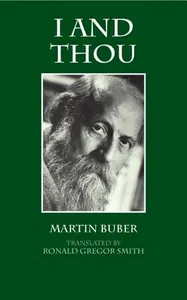
Martin Buber first published 'Ich und Du' in 1923, challenging conventional philosophy.
Martin Buber’s 1923 work, 'Ich und Du' (I and Thou), examines the nature of human existence through the concept of direct encounter. Buber distinguishes between two fundamental modes of relating to the world: the 'I-It' and the 'I-Thou'. The 'I-It' mode treats others and the world as objects to be used, analyzed, and controlled. In contrast, the 'I-Thou' mode is a relationship of full presence, where the self confronts the other as a whole being, without division or analysis.
This 'I-Thou' encounter, Buber argues, is the basis for genuine connection and spiritual experience. It can occur with other people, with nature, or with God. By engaging in the 'I-Thou' relationship, individuals can move beyond the alienation of the 'I-It' world toward a more authentic and sacred way of being. The book outlines how this type of relationship reveals the totality of existence and offers a path to deeper self understanding and connection with the divine.
Written in 1923, 'Ich und Du' emerged from a period of intense philosophical and spiritual inquiry, particularly within Central European Jewish thought. Buber’s work draws upon, yet reinterprets, mystical traditions, including elements reminiscent of Kabbalistic ideas about divine immanence. It speaks to a broader esoteric interest in direct, unmediated spiritual experience and the transformative power of authentic relationship, moving beyond purely intellectual or dogmatic approaches to spirituality. The emphasis on encountering the 'eternal Thou' resonates with traditions that seek a personal, living connection to the divine, rather than an abstract concept.
💡 Why Read This Book?
Embark on a transformative journey to understand the essence of divine encounter. 'Ich und Du' offers a unique perspective on the mystical relationship between the self and the eternal, revealing how true knowing arises from authentic connection. It is essential for anyone seeking to deepen their spiritual practice, explore the philosophical roots of Jewish mysticism, or simply understand the profound beauty of living in relationship with the Divine.
⭐ Reader Reviews
Honest opinions from readers who have explored this book.
❓ Frequently Asked Questions
What is the central concept of 'Ich und Du'?
The central concept is the 'I-Thou' relationship, a mode of direct, unmediated encounter where one experiences the other (including God) as a whole, living being, rather than an object ('I-It').
How does 'Ich und Du' relate to Kabbalah?
While not a direct Kabbalistic text, 'Ich und Du' resonates deeply with Kabbalistic themes of divine immanence, the nature of God's presence in the world, and the importance of intentional, loving connection for spiritual realization.
Who is the intended audience for this book?
The book is intended for those interested in philosophy, theology, mysticism, and Jewish thought, particularly individuals seeking a deeper understanding of human existence and its connection to the Divine.
What is the significance of the 'I-It' relationship?
The 'I-It' relationship is characterized by observation, analysis, and objectification. It is how we engage with the world of things and concepts, necessary for practical life but insufficient for genuine spiritual communion.
What does Buber mean by 'eternal Thou'?
The 'eternal Thou' refers to God, who is always present and accessible through the 'I-Thou' mode of address. Encountering the 'eternal Thou' is the ultimate spiritual experience, revealing God not as an abstract entity but as a living presence.
🔮 Key Themes & Symbolism
The I-Thou Encounter
This core theme posits that true existence and genuine understanding of God arise not from detached observation but from direct, reciprocal relationship. The 'I-Thou' encounter is a moment of total presence, where the self meets the other in their full being, dissolving the boundaries of self and other. It is in this sacred space of dialogue that one can apprehend the Divine, not as an object to be known, but as a Thou to be addressed, fostering a profound sense of unity and immanence.
The Nature of God and Divine Immanence
Buber redefines our understanding of God, moving away from abstract theological constructs towards a God who is intimately present in every moment of genuine encounter. This perspective aligns with mystical traditions that perceive the Divine not as an external force, but as interwoven with the fabric of creation. The book explores how the Divine is revealed through the relationships we form, suggesting that the path to knowing God is through the depth and authenticity of our connections with the world and its inhabitants.
Existential Authenticity and Spiritual Knowing
The pursuit of an 'I-Thou' existence is presented as the path to true authenticity and spiritual fulfillment. By embracing direct engagement with life, rather than retreating into the analytical and detached 'I-It' mode, individuals can achieve a more profound sense of self and a deeper connection to the sacred. This theme emphasizes that spiritual knowing is not acquired through intellectual pursuit alone, but through the lived experience of relationship and the willingness to be fully present and vulnerable.
💬 Memorable Quotes
Direct passages from the work, attributed to the author.
“All real living is meeting.”
— This concise statement expresses Buber's philosophy. It suggests that true vitality and meaning are found not in solitary contemplation or objective analysis, but in the direct, reciprocal engagement with others and with the world.
“The world is twofold for man in accordance with his twofold attitude.”
— Buber distinguishes between the 'I-It' and 'I-Thou' modes of being. Our perception and experience of reality are fundamentally shaped by whether we approach it with detachment and analysis or with open, relational engagement.
“In the beginning is the relation.”
— This powerful assertion highlights the primacy of connection. Buber proposes that relationship is not an outcome of existence, but its foundational element, the very ground upon which meaning and being are built.
“God is the ‘eternal Thou’.”
— This profound declaration links the mystical experience of God to the 'I-Thou' relationship. God is not an abstract concept but a present, relational being encountered through authentic dialogue and presence.
💡 Key Ideas
Editorial paraphrase of the work's core concepts — not direct quotes.
When I confront a human being as my You, and speak to him the primary word, I do not experience him as a thing with which I make contact, but I step into a living relation which is of You-it.
This quote clarifies the 'I-Thou' experience. It emphasizes the shift from objectification to direct relation, where the human being is met in their wholeness, not as an object to be analyzed, but as a subject with whom one enters a living connection.
🌙 Esoteric Significance
Tradition
The esoteric significance of 'Ich und Du' lies primarily within the mystical currents of Jewish thought, particularly Hasidism and certain interpretations of Kabbalah. Buber's concept of the 'I-Thou' relationship can be seen as a modern articulation of the Kabbalistic idea of *devekut* (cleaving to God) and the importance of direct, intimate communion with the Divine. It reflects the mystical pursuit of experiencing God's immanence within all of creation, emphasizing that the sacred is not distant but intimately interwoven with human experience.
Symbolism
The core symbolism revolves around the duality of the 'I-It' and 'I-Thou' relationship. The 'I-It' symbolizes the objectified, analyzed, and instrumentalized world, a area of separation and control. Conversely, the 'I-Thou' represents the sacred, unmediated encounter, a area of wholeness, presence, and reciprocal recognition. The 'eternal Thou' is the ultimate symbol of the Divine, not as a fixed entity, but as a constantly available, relational presence that can be met in every genuine moment of connection.
Modern Relevance
In an age characterized by digital mediation, social atomization, and the constant pressure of performance, Buber's 'Ich und Du' offers profound contemporary relevance. It serves as a powerful antidote to alienation, reminding us of the fundamental human need for genuine connection and the spiritual sustenance found in authentic relationships. Its insights into the nature of knowing and being are crucial for therapists, educators, spiritual seekers, and anyone grappling with the challenges of fostering meaningful community and personal integrity in a complex world.
👥 Who Should Read This Book
This profound work is essential for a diverse readership. For **seekers of spiritual truth**, it offers a path to understanding divine presence not as an abstract dogma but as a lived reality accessible through intimate encounter. **Scholars of philosophy, theology, and Jewish studies** will find it a cornerstone text, providing critical insights into existentialism, mysticism, and Buber's unique contribution to modern thought. **Practitioners of contemplative disciplines** will discover a framework for deepening their practice, emphasizing the relational aspect of spiritual growth. Even **beginners in metaphysical exploration** will find Buber's accessible yet profound language a welcoming gateway into the mysteries of existence and the nature of the sacred.
📜 Historical Context
Published in 1923 amidst the intellectual ferment of post-WWI Europe, Martin Buber's 'Ich und Du' emerged as a powerful counterpoint to the burgeoning existentialism and phenomenological trends. The era was marked by a deep questioning of traditional values and a search for meaning in a seemingly fragmented world. Buber's work offered a distinctively Jewish philosophical response, drawing on the rich heritage of Hasidism and Kabbalistic thought while engaging with contemporary philosophical debates. His emphasis on personal encounter and the irreducibility of the 'I-Thou' relationship provided a clear source of hope and a profound reorientation towards authentic human connection and the divine presence in a world increasingly dominated by instrumental reason and alienation.
📔 Journal Prompts
In what areas of your life do you primarily operate from an 'I-It' perspective? How might shifting to an 'I-Thou' approach transform these interactions?
Describe a recent moment where you felt a profound sense of 'meeting' with another person, animal, or even an object. What made this encounter significant?
How does the concept of the 'eternal Thou' resonate with your personal understanding or experience of the Divine?
Consider a time when you felt alienated or disconnected. How did this feeling relate to the 'I-It' mode of experiencing the world?
What does 'all real living is meeting' mean to you on a practical, day-to-day level?
🗂️ Glossary
I-Thou
A mode of relationship characterized by direct, unmediated, and wholehearted encounter with the other as a living being, rather than an object of analysis or use.
I-It
A mode of relationship where the self confronts the other as an object, characterized by observation, analysis, categorization, and instrumentalization.
Eternal Thou
The concept of God as the ultimate 'Thou', a perpetually present and accessible relational partner whom one can encounter through the 'I-Thou' relationship.
Devekut
A Hebrew term from Kabbalah and Hasidism meaning 'cleaving' or 'attachment' to God, signifying a state of intimate communion and spiritual closeness.
Immanence
The philosophical and theological concept that the Divine is present within the universe and human experience, rather than being transcendent and separate from it.
This book appears in 1 collection
🔮 Readers Also Liked
Browse all →









More by Martin Buber
All books →




From the “Kabbalah” Collection
View all →







More Free Kabbalah & Jewish Mysticism Books
View all →