Dictionary of Alchemy
 64
64

Dictionary of Alchemy



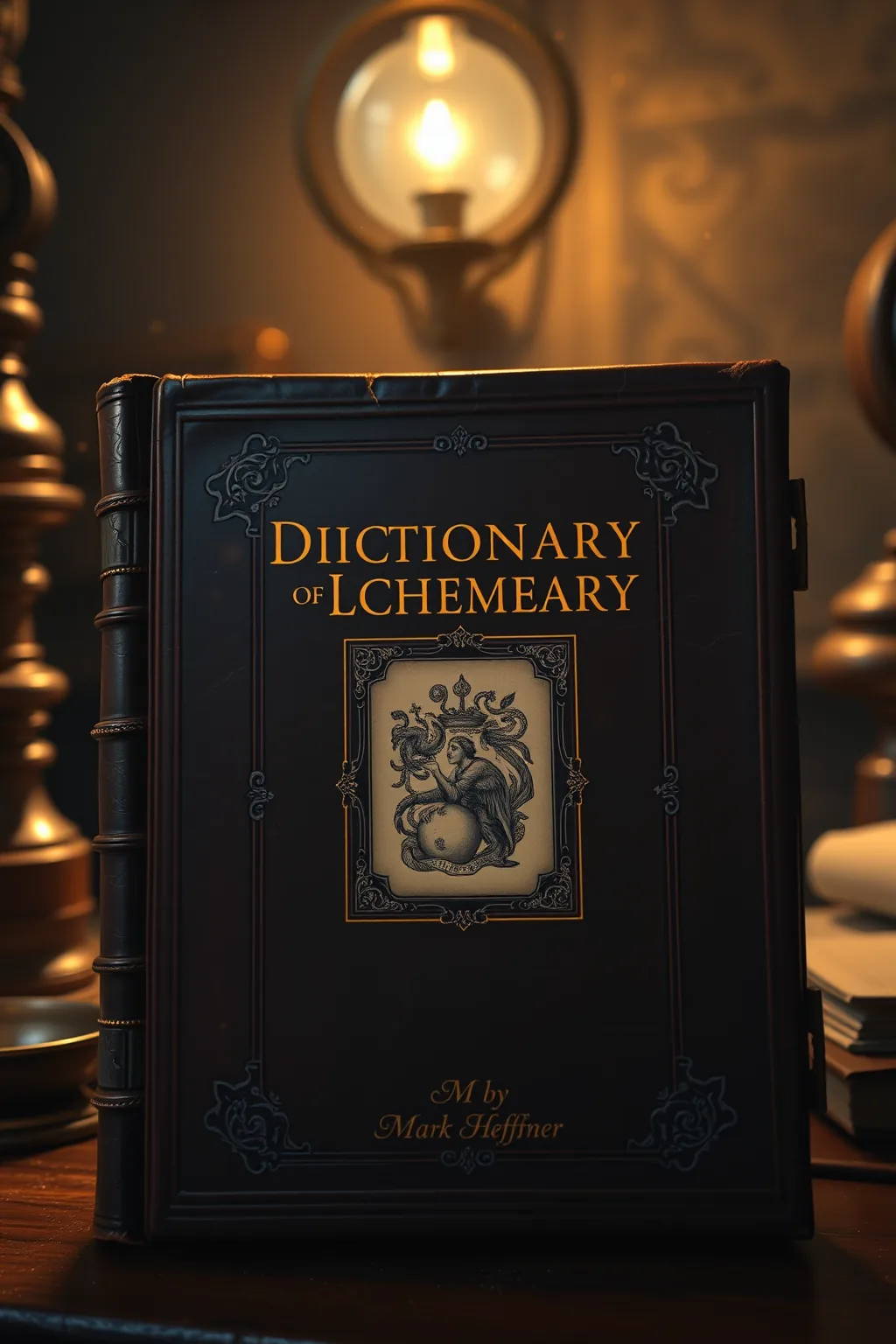
'Dictionary of Alchemy' by Mark Haeffner is a masterful compendium that stands as a testament to the author's deep understanding of the alchemical arts. This dictionary is not merely a collection of definitions but a treasure trove of esoteric insights that illuminate the mystical path. Haeffner's work is particularly strong in its exploration of alchemical symbolism and its philosophical underpinnings, making it an invaluable resource for both scholars and practitioners. The entries are richly detailed, providing historical context and modern interpretations that bridge the gap between ancient wisdom and contemporary thought. This book is a must-have for anyone serious about delving into the mysteries of alchemy and the hermetic tradition.
📝 Description
64
Mark Haeffner's 2006 'Dictionary of Alchemy' deciphers over 2,000 alchemical terms and symbols.
This volume functions as a detailed lexicon for the practice and theory of alchemy. It covers a wide array of terms, from common alchemical operations and substances to the names of key figures and philosophical concepts. The entries are designed to clarify the often-obscure language found in historical alchemical texts and manuscripts. Each definition aims to provide context, explaining the historical usage and symbolic meaning of the term within the alchemical tradition.
The book addresses concepts like the Great Work, the Philosopher's Stone, and various stages of alchemical processes. It also includes entries on the apparatus and materials alchemists employed, as well as the spiritual and philosophical interpretations associated with their work. Haeffner's approach organizes this material alphabetically, making it accessible for reference and study. The goal is to illuminate the complex world of alchemy for those interested in its historical and symbolic dimensions.
Alchemy is a philosophical and proto-scientific tradition concerned with the transformation of matter. It is deeply embedded in hermeticism, a spiritual tradition drawing from ancient Egyptian, Greek, and Gnostic sources. Within this context, alchemical operations were often seen as allegories for spiritual purification and enlightenment. The pursuit of the Philosopher's Stone was not merely about creating gold, but about achieving a perfected state of being. This dictionary aids in understanding the specific language and symbolism used to articulate these complex ideas within the broader scope of Western esotericism.
💡 Why Read This Book?
Why read this book? 'Dictionary of Alchemy' is essential for seekers of hidden knowledge, scholars of the occult, and practitioners of alchemical arts. It offers a comprehensive guide to the symbols, processes, and philosophical concepts that define alchemy. Whether you are looking to deepen your understanding of the hermetic tradition or seeking practical insights into alchemical practices, this dictionary provides the tools and knowledge necessary for your journey.
⭐ Reader Reviews
Honest opinions from readers who have explored this book.
❓ Frequently Asked Questions
What makes 'Dictionary of Alchemy' unique?
This dictionary stands out for its in-depth exploration of alchemical symbolism and its philosophical significance. It is a comprehensive guide that bridges ancient wisdom with modern interpretations.
Who is the intended audience for this book?
The book is ideal for seekers of hidden knowledge, scholars of the occult, and practitioners of alchemy. It is suitable for both beginners and advanced students of the mystical arts.
Does the book include historical context?
Yes, each entry provides historical context, making it easier to understand the evolution of alchemical practices and their significance over time.
Are there practical applications discussed in the book?
While the primary focus is on esoteric knowledge, the book does offer insights into practical alchemical processes and their symbolic meanings.
Can this book be read online for free?
Check the official Esoteric Library website for options to read free excerpts or for subscription details to access the full text online.
🔮 Key Themes & Symbolism
Symbolism in Alchemy
Alchemy is rich in symbolism, and this dictionary delves deep into the meanings behind the symbols. From the philosopher's stone to the serpent Ouroboros, each symbol is explored for its esoteric significance and its role in the alchemical process. Understanding these symbols is crucial for anyone seeking to unlock the secrets of alchemy and its mystical traditions.
Philosophical Underpinnings
Beyond the practical aspects, alchemy is deeply rooted in philosophy. This dictionary examines the philosophical concepts that underpin alchemical practices, such as the unification of opposites and the pursuit of spiritual enlightenment. These themes are explored through the lens of hermetic and mystical traditions, providing a comprehensive view of alchemy's philosophical landscape.
Historical Context and Evolution
Alchemy has a long and complex history, evolving over centuries and across cultures. This dictionary provides a historical context for each entry, tracing the development of alchemical practices and their significance in different eras. This historical perspective enriches the understanding of alchemy as a living tradition that continues to influence modern thought and practice.
💬 Memorable Quotes
Direct passages from the work, attributed to the author.
“The serpent Ouroboros represents the cycle of life, death, and rebirth.”
— This symbol is central to alchemical thought, embodying the idea of continual transformation and renewal.
💡 Key Ideas
Editorial paraphrase of the work's core concepts — not direct quotes.
The alchemist's journey is one of transformation, both of matter and of the self.
This quote underscores the dual nature of alchemy, which seeks to transform base metals into gold while also purifying the soul.
The philosopher's stone is not merely a physical substance but a symbol of spiritual enlightenment.
This line highlights the mystical aspect of alchemy, where the ultimate goal is not just material wealth but spiritual attainment.
In the crucible of alchemy, the secrets of the universe are revealed.
This quote emphasizes the alchemist's role as a seeker of hidden knowledge, using the alchemical process to uncover the mysteries of the cosmos.
Alchemy is the art of making gold, but it is also the science of the soul.
This quote captures the essence of alchemy as both a practical and spiritual pursuit, blending chemistry and mysticism.
🌙 Esoteric Significance
Tradition
The 'Dictionary of Alchemy' belongs to the Hermetic tradition, which emphasizes the pursuit of hidden knowledge and spiritual enlightenment. Hermeticism is rooted in the teachings of Hermes Trismegistus, combining elements of ancient Egyptian, Greek, and Jewish mysticism. This tradition sees alchemy as a path to self-transformation and the attainment of divine wisdom.
Symbolism
Key symbols in alchemy include the philosopher's stone, the serpent Ouroboros, and the four elements. The philosopher's stone represents the ultimate goal of alchemical transmutation and spiritual enlightenment. The Ouroboros symbolizes the cycle of life, death, and rebirth, while the four elements (earth, air, fire, and water) are fundamental to alchemical processes and their mystical interpretations.
Modern Relevance
Alchemy continues to be relevant in modern esoteric and mystical practices. Practitioners and seekers of hidden knowledge use alchemical principles to guide their spiritual journeys. Modern alchemists explore the symbolism and philosophical underpinnings of alchemy, applying these insights to contemporary issues and personal growth. The 'Dictionary of Alchemy' serves as a valuable resource for these practitioners, providing a comprehensive guide to the esoteric traditions of alchemy.
👥 Who Should Read This Book
This book is ideal for a range of readers, including beginners who are just starting to explore the mysteries of alchemy, scholars who seek a deeper understanding of its historical and philosophical aspects, spiritual seekers who are drawn to the mystical traditions, and practitioners who wish to apply alchemical principles to their own lives. Beginners will find the dictionary's clear explanations and historical context particularly helpful, while scholars will appreciate the depth of esoteric insights and philosophical discussions. Spiritual seekers will be inspired by the book's exploration of symbolism and its emphasis on self-transformation, and practitioners will find practical applications and modern interpretations that enrich their alchemical practices.
📜 Historical Context
Alchemy has its roots in ancient Egypt and Greece, evolving through the Middle Ages and the Renaissance. During these periods, alchemists sought to transmute base metals into gold and to discover the elixir of life. The 'Dictionary of Alchemy' provides a comprehensive historical context for these practices, tracing their development and influence. In the 17th and 18th centuries, alchemy began to give way to modern chemistry, but its mystical and philosophical aspects continued to inspire thinkers and seekers of hidden knowledge. Today, alchemy remains a vital part of the esoteric tradition, influencing modern practices and thought.
📔 Journal Prompts
Reflect on the significance of the philosopher's stone in your own spiritual journey.
How do the symbols of alchemy, such as the Ouroboros, resonate with your personal experiences of transformation?
Consider the role of alchemy in bridging ancient wisdom with modern thought.
Explore the philosophical concepts of alchemy and their relevance to contemporary issues.
What insights have you gained from the historical context of alchemy, and how do they influence your understanding of the mystical arts?
🗂️ Glossary
Philosopher's Stone
The ultimate goal of alchemy, representing spiritual enlightenment and the transmutation of base metals into gold.
Ouroboros
A serpent swallowing its own tail, symbolizing the cycle of life, death, and rebirth.
Hermetic Tradition
A mystical tradition rooted in the teachings of Hermes Trismegistus, emphasizing hidden knowledge and spiritual transformation.
Spagiric
Relating to the alchemical process of separating and recombining elements to create new substances.
Alchemical Transmutation
The process of transforming base metals into gold, symbolizing spiritual and material transformation.
This book appears in 3 collections
🔮 Readers Also Liked
Browse all →







More by Mark Haeffner
All books →

From the “Hermeticism” Collection
View all →








More Free Alchemy & Hermeticism Books
View all →