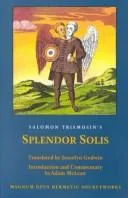
Alchemy
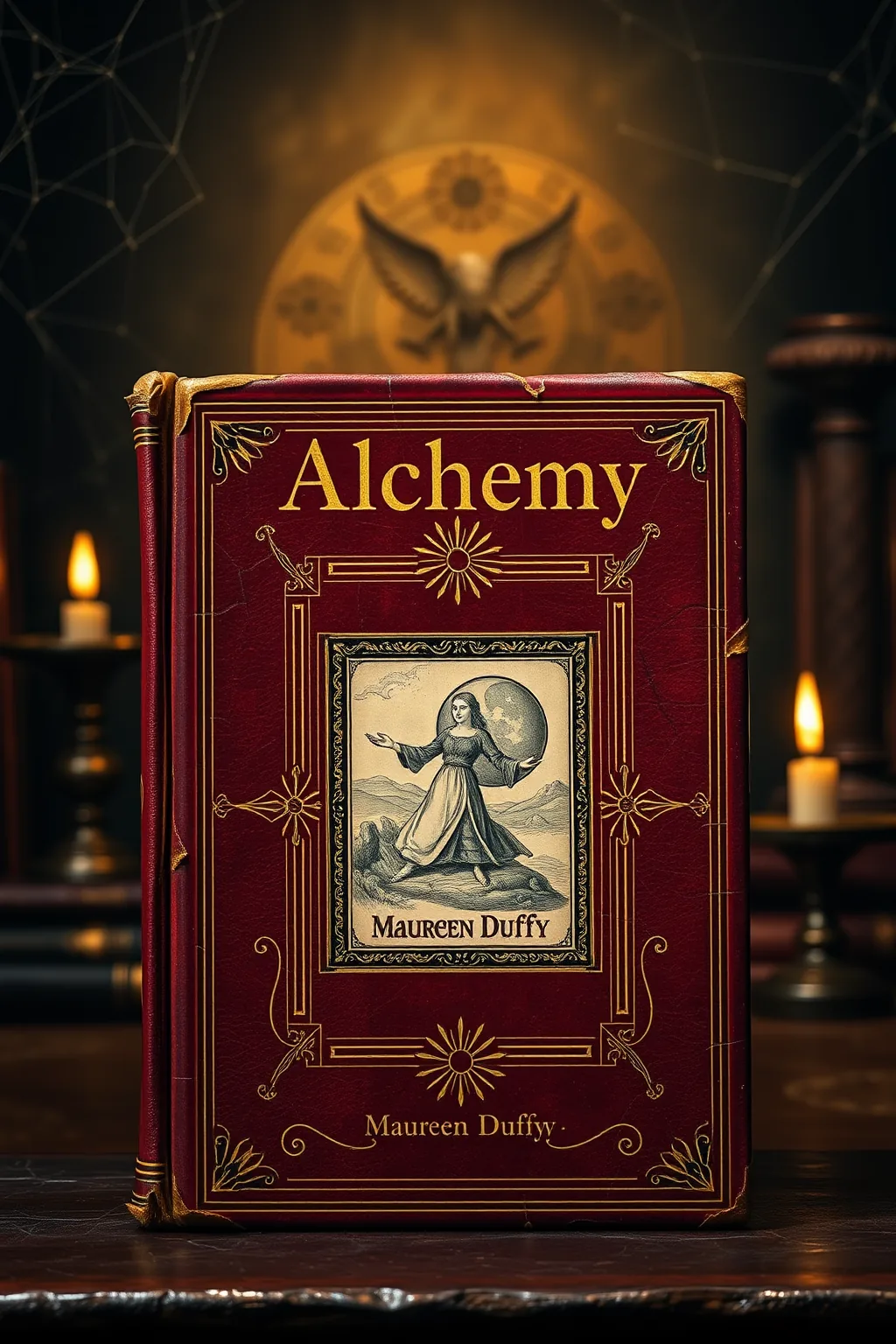
 73
73

Alchemy
Maureen Duffy's "Alchemy" provides a grounded introduction to a subject often shrouded in mystification. The book's strength lies in its clear articulation of alchemical theories and historical development, presenting a coherent narrative arc from ancient origins to its decline as a dominant intellectual force. Duffy avoids sensationalism, focusing instead on the philosophical and practical aims of practitioners. A notable passage details the intricate process of calcination and dissolution as symbolic stages of purification, underscoring the spiritual dimension of the work. However, the book's primary limitation is its somewhat academic tone, which, while informative, might leave readers seeking more experiential or esoteric instruction wanting. Despite this, "Alchemy" serves as a solid scholarly primer for understanding the historical significance of this complex discipline.
📝 Description
73
Maureen Duffy's 1993 book examines alchemy beyond its reputation for turning lead into gold.
Duffy's "Alchemy" presents the historical and philosophical foundations of the practice, moving past the common image of transmuting metals. The book details alchemy as a complex system of spiritual transformation and early scientific investigation. It traces the development of alchemical ideas from their Hellenistic origins through medieval and Renaissance Europe, explaining its symbolic language and theoretical structures.
This work is for readers interested in the history of science, Western esotericism, and the philosophical basis of spiritual traditions. It speaks to those who see alchemy not just as a historical oddity but as a symbolic language and a path for personal growth. Students of comparative religion, the philosophy of science, and occult studies will find its context and analysis useful. Duffy places alchemy within the larger currents of pre-modern thought, acknowledging influences from Neoplatonism, Gnosticism, and early Christian mysticism. The book notes the era when magical and scientific inquiries were not distinct, highlighting key figures and texts in alchemical literature while contrasting them with the emerging empirical science of the 17th century.
Maureen Duffy's "Alchemy" situates the practice within the broader currents of pre-modern thought, acknowledging its connections to Neoplatonism, Gnosticism, and early Christian mysticism. It addresses the historical period when magical and scientific inquiry were not rigidly separated, highlighting figures and texts important to alchemical literature. The book contrasts these earlier approaches with the emerging empirical scientific methods of the 17th century, placing alchemical thought within a transitional intellectual landscape.
💡 Why Read This Book?
• Gain a clear understanding of the *Magnum Opus*, the Great Work of alchemy, and its symbolic stages, moving beyond common misconceptions about literal gold production. • Comprehend the historical context of alchemy, recognizing its place within Renaissance intellectualism and its relationship with early scientific inquiry, particularly before the formalization of modern chemistry. • Explore the concept of the *prima materia*, understanding its role as the fundamental substance and the starting point for alchemical transformation, as presented in the text.
⭐ Reader Reviews
Honest opinions from readers who have explored this book.
❓ Frequently Asked Questions
What is the primary aim of alchemy as described by Maureen Duffy?
Maureen Duffy's "Alchemy" presents the primary aim as spiritual and personal transformation, not merely the transmutation of base metals into gold. The Great Work involved purifying the soul and achieving a higher state of consciousness.
When was Maureen Duffy's 'Alchemy' first published?
Maureen Duffy's "Alchemy" was first published in 2004, offering a modern scholarly perspective on this ancient tradition.
Does the book cover the symbolic language of alchemy?
Yes, the book extensively covers the symbolic language of alchemy, detailing the meaning behind concepts like the Philosopher's Stone, the elements, and the various stages of the alchemical process.
Is 'Alchemy' by Duffy suitable for beginners in esoteric studies?
Yes, "Alchemy" by Duffy is well-suited for beginners. It provides a clear, historically grounded introduction to the subject without assuming prior knowledge of esoteric traditions.
What historical periods does Duffy's 'Alchemy' focus on?
Duffy's "Alchemy" focuses primarily on the historical development of alchemical thought from its Hellenistic roots through medieval and Renaissance Europe, touching upon its later transformations.
Does the book mention specific alchemical texts or figures?
The book likely references foundational alchemical texts and key historical figures associated with the practice, placing them within their intellectual and historical contexts for the reader.
🔮 Key Themes & Symbolism
Spiritual Transformation
Duffy's "Alchemy" emphasizes that the alchemical pursuit was fundamentally about internal change. The physical processes described in alchemical texts—like dissolution and coagulation—are interpreted as metaphors for psychological and spiritual purification. The ultimate goal, the attainment of the Philosopher's Stone, represents not just material perfection but also spiritual enlightenment and union with the divine. This theme underscores alchemy's role as a spiritual discipline distinct from mere proto-chemistry.
Historical Development
The work meticulously traces the evolution of alchemical thought across centuries, from its Hellenistic origins in Alexandria to its flourishing in medieval Islamic and European courts, and its complex position during the Renaissance. It highlights how alchemical ideas intersected with philosophy, religion, and nascent scientific exploration, charting its path through different cultural and intellectual landscapes before its eventual marginalization by modern scientific paradigms.
Symbolic Language
Central to understanding alchemy is its rich and often cryptic symbolic language. Duffy's "Alchemy" deciphers key symbols such as the *prima materia*, the Philosopher's Stone, and the union of opposites (often represented by the sun and moon, or king and queen). These symbols were not arbitrary but encoded profound philosophical and spiritual truths, providing a framework for practitioners to contemplate the nature of reality and the process of creation and transformation.
Proto-Science and Philosophy
The book situates alchemy as a precursor to modern science, acknowledging its experimental aspects and its attempts to understand the fundamental nature of matter. However, it differentiates alchemy by its inseparable philosophical and spiritual dimensions. Duffy explores how alchemists grappled with concepts of elemental transformation, the nature of substances, and the interconnectedness of the cosmos, contributing to a worldview that predates the strict materialism of later scientific eras.
💬 Memorable Quotes
Direct passages from the work, attributed to the author.
“Alchemy sought to understand the hidden principles of nature.”
— This idea underscores alchemy's philosophical ambition. It posits that alchemists were not just experimenting with substances but were deeply engaged in uncovering the fundamental laws and interconnectedness of the universe, viewing matter as imbued with spiritual significance.
“The Philosopher's Stone represented perfection.”
— This statement points to the ultimate goal of the alchemical quest. The Stone was conceived not just as a substance for transmutation but as a symbol of ultimate spiritual attainment, wholeness, and the realization of divine potential within the practitioner.
“Alchemical texts employed complex allegorical imagery.”
— This emphasizes the coded nature of alchemical literature. The use of elaborate metaphors and symbolic narratives served to protect esoteric knowledge and to guide practitioners through a process that was as much intellectual and spiritual as it was practical.
“The separation and union of elements were crucial stages.”
— This refers to the core operations within the alchemical laboratory, such as calcination, dissolution, and conjunction. These stages were understood as mirroring the necessary processes of breaking down and reforming, both in matter and in the self, for transformation to occur.
💡 Key Ideas
Editorial paraphrase of the work's core concepts — not direct quotes.
The Great Work was a process of purification.
This paraphrased concept highlights the central alchemical aim. It suggests that the complex laboratory procedures were symbolic representations of the practitioner's inner journey towards spiritual refinement and enlightenment, moving beyond mere material manipulation.
🌙 Esoteric Significance
Tradition
Duffy's "Alchemy" aligns with the Hermetic tradition, which views the universe and humanity as interconnected through divine principles. It interprets alchemical practices as a path towards spiritual gnosis and self-realization, often drawing parallels with Neoplatonic and Gnostic ideas. While acknowledging its proto-scientific aspects, the work emphasizes alchemy's role as a spiritual discipline aimed at achieving a higher state of consciousness, distinct from purely materialist pursuits.
Symbolism
Key symbols explored include the *prima materia*, representing primordial, undifferentiated substance from which all things arise, and the Philosopher's Stone, the ultimate goal symbolizing perfection, spiritual enlightenment, and the unification of opposites. The serpent (Ouroboros) is another significant motif, representing the cyclical nature of existence, eternity, and the self-contained universe of the alchemical process.
Modern Relevance
Contemporary interest in alchemy, influenced by thinkers like Carl Jung who saw alchemical symbolism as a map of the psyche, continues to draw from works like Duffy's. Modern esoteric practitioners, Jungian analysts, and scholars of comparative religion find value in understanding alchemy's symbolic language and its potential for psychological and spiritual exploration, viewing it as a precursor to depth psychology and a perennial philosophy.
👥 Who Should Read This Book
• Students of Western Esotericism: Individuals seeking a comprehensive and historically accurate overview of alchemical traditions, its key figures, and its philosophical underpinnings. • History of Science Enthusiasts: Readers interested in understanding the evolution of scientific thought, particularly the period when magical and philosophical inquiries were intertwined with early experimentation. • Comparative Religion Scholars: Those exploring the symbolic languages and spiritual aims of various historical traditions, seeking to understand alchemy's unique place within the broader field of human spiritual quest.
📜 Historical Context
Maureen Duffy's "Alchemy" emerges from a scholarly environment increasingly interested in the history of science and Western esotericism, particularly in the late 20th and early 21st centuries. Written in 2004, it reflects a period where scholars like Frances Yates had already paved the way for understanding Hermeticism and the Renaissance. The book situates alchemy within the intellectual currents of Hellenistic Egypt, medieval Islamic scholarship, and Renaissance Europe, a time when the boundaries between magic, philosophy, and nascent science were fluid. Contemporaries like Allen Debus were also exploring the chemical philosophies of the period. Duffy's work implicitly engages with the legacy of figures like Paracelsus, whose ideas profoundly influenced alchemical thought. While not a period of widespread censorship against alchemy itself, the rise of empirical science, notably championed by figures like Robert Boyle in the 17th century, began to marginalize alchemical methods and theories, setting the stage for their eventual reinterpretation.
📔 Journal Prompts
The transformation of the *prima materia*: How might this concept relate to personal growth?
Reflect on the alchemical union of opposites. What internal conflicts do you observe?
The symbolism of the Philosopher's Stone: What does 'perfection' signify in your life?
Consider the historical separation of alchemy from science. What knowledge has been gained or lost?
Analyze the alchemical process as a metaphor for creative endeavors.
🗂️ Glossary
Prima Materia
The fundamental, undifferentiated substance from which all matter is believed to originate in alchemical theory. It is the raw material for the Great Work.
Major work
Latin for 'Great Work,' referring to the entire alchemical process of transmutation, spiritual purification, and the creation of the Philosopher's Stone.
Philosopher's Stone
A legendary alchemical substance believed to be capable of transmuting base metals into gold or silver, and also to produce the elixir of life.
Calcination
An alchemical process involving heating a substance to a high temperature to remove impurities or change its form, often interpreted as a spiritual purification by fire.
Dissolution
An alchemical operation involving dissolving a substance, typically in water or a solvent, symbolizing the breakdown of form and the return to a more fluid state.
Conjunction
The alchemical stage where separated elements or opposites are reunited, symbolizing integration, balance, and the culmination of the transformative process.
Elixir of Life
A mythical potion associated with the Philosopher's Stone, believed to grant immortality or prolong life indefinitely.
🔮 Readers Also Liked
Browse all →









More by Duffy, Maureen.
All books →
More Free Alchemy & Hermeticism Books
View all →