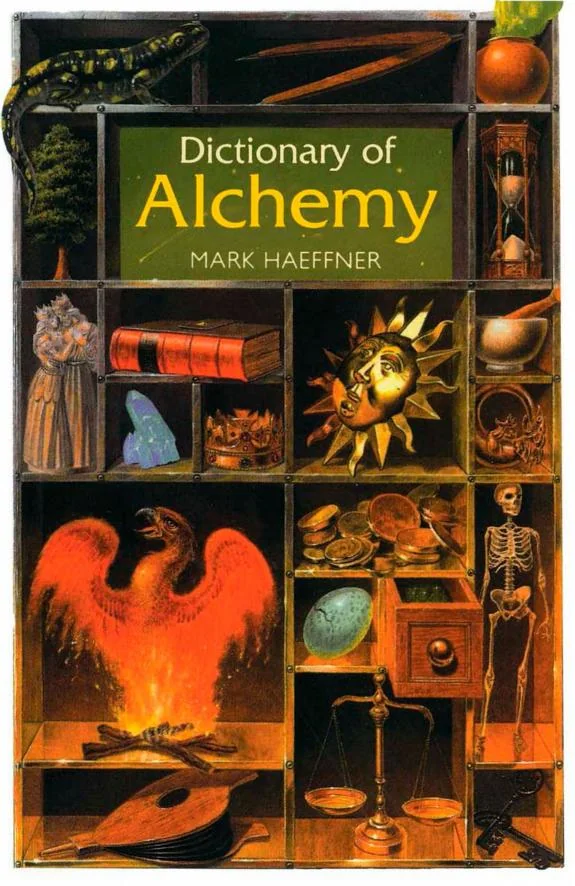
Dictionary of Alchemy
 76
76

Dictionary of Alchemy
Mark Haeffner's "Dictionary of Alchemy" is a formidable undertaking, offering a much-needed systematic approach to a field notoriously resistant to easy definition. Its strength lies in its sheer comprehensiveness, cataloging terms and symbols from Western, Indo-Tibetan, and Chinese traditions with admirable rigor. For instance, its detailed entry on the *Prima Materia*, referencing its various interpretations across distinct cultural alchemical streams, is particularly illuminating. However, the work's encyclopedic nature can also be its limitation; it prioritizes definition over narrative, sometimes leaving the reader to connect the dots between disparate entries. A more explicit exploration of the interplay between, say, the *nigredo* stage and specific religious or philosophical underpinnings in a particular tradition might have further enriched its utility. Nevertheless, for any serious student of alchemy, this dictionary is an indispensable tool for navigating its intricate vocabulary.
📝 Description
76
Mark Haeffner's "Dictionary of Alchemy" was first published in 2004.
Mark Haeffner's "Dictionary of Alchemy" is a reference work that clarifies the language and symbols used in alchemical practice and theory. It systematically arranges a wide range of terms, figures, and symbols from the main branches of alchemy. The book draws on extensive research of historical texts to explain the often obscure vocabulary and imagery associated with this ancient discipline. It serves as a primary resource for understanding alchemical concepts and writings.
This dictionary is useful for students and practitioners of esoteric traditions, especially those interested in Western Christian, Indo-Tibetan, or Chinese Taoist alchemy. Researchers in comparative religion, the history of science, and occult studies will find its detailed scope valuable. Anyone looking to interpret alchemical symbolism in art, literature, or philosophy will also gain from its comprehensive coverage.
Alchemy's history spans antiquity, with distinct traditions developing globally. Western alchemy, for example, is linked to Hermeticism and Neoplatonism. Chinese Taoist alchemy aims for immortality via elixirs, while the Indo-Tibetan tradition often incorporates yogic and tantric elements. Haeffner's 2004 dictionary synthesizes research across centuries, offering a structured view of this varied and persistent field of inquiry.
💡 Why Read This Book?
• Gain clarity on the *Prima Materia*, understanding its diverse interpretations across Western, Indo-Tibetan, and Chinese alchemical traditions as detailed in Haeffner's extensive research. • Decode the symbolic language of alchemy, such as the conjunction of opposites represented by Sol and Luna, by referencing specific entries and their explained meanings. • Grasp the stages of the *Magnum Opus*, from *nigredo* to *rubedo*, and their significance within the alchemical process, as systematically presented in the dictionary's comprehensive entries.
⭐ Reader Reviews
Honest opinions from readers who have explored this book.
❓ Frequently Asked Questions
What is the "Prima Materia" in alchemy?
The "Prima Materia" is the fundamental, undifferentiated substance from which all other substances are believed to originate in alchemical philosophy. It is a central concept explored across various alchemical traditions, often described as chaotic or elemental, awaiting transformation.
Who is Mark Haeffner and what is his background?
Mark Haeffner is an independent researcher with a focus on alchemy. His work on the "Dictionary of Alchemy" represents years of dedicated study into the extensive and often arcane literature of this esoteric tradition.
What are the main traditions of alchemy discussed in the book?
The book covers three primary alchemical traditions: Western Christian, Indo-Tibetan, and Chinese Taoist. It analyzes common features and distinct characteristics within these diverse lineages.
How does the "Dictionary of Alchemy" explain the Philosopher's Stone?
The dictionary would define the Philosopher's Stone as the legendary substance sought in alchemy, primarily for its purported ability to transmute base metals into gold and to grant immortality. Its entry likely details various historical and symbolic interpretations.
Is this book suitable for beginners in alchemy?
Yes, its dictionary format makes it an excellent starting point for beginners. It provides definitions and context for terms and symbols encountered in introductory alchemical texts, helping to demystify the subject.
What is the significance of the term "Magnum Opus"?
The "Magnum Opus," or Great Work, refers to the entire alchemical process of transformation. The dictionary would likely detail its stages, such as *nigredo* (blackening), *albedo* (whitening), and *rubedo* (reddening), as central to achieving the Philosopher's Stone.
🔮 Key Themes & Symbolism
Alchemical Terminology
The dictionary meticulously defines the specialized language of alchemy, a field rife with metaphor and allegory. Terms like 'alkahest' (universal solvent), 'azoth' (a universal life force), and 'chymistry' are clarified, revealing their historical and practical applications. Understanding this precise vocabulary is crucial for interpreting alchemical manuscripts, which often employ coded language to protect their secrets from the uninitiated.
Symbolism and Iconography
Alchemy is deeply visual, employing a body of symbols to represent complex processes and philosophical concepts. Haeffner's work deciphers iconic imagery such as the Ouroboros (serpent eating its tail, symbolizing cyclicality), the hermaphroditic androgyne (representing the union of opposites), and the seven planetary metals. These symbols are not mere decoration but integral components of alchemical theory and practice.
The Great Work (Main work)
Central to alchemical pursuit is the *Main work*, the Great Work, which encompasses the stages of transformation leading to the creation of the Philosopher's Stone. The dictionary provides context for its phases, often described as *nigredo* (decomposition), *albedo* (purification), *citrinitas* (yellowing), and *rubedo* (reddening). Each stage carries profound spiritual and material implications.
Cross-Cultural Traditions
Haeffner highlights the global reach of alchemy, detailing its distinct manifestations in Western Europe, India, and China. The book contrasts the goals and methods of these traditions, such as the Taoist focus on immortality elixirs versus the Western emphasis on transmutation of metals, while also identifying shared underlying principles and symbolic resonances.
💬 Memorable Quotes
Direct passages from the work, attributed to the author.
“The Prima Materia is the chaotic, undifferentiated foundation.”
— This foundational concept represents the raw, unformed potential from which all alchemical transformations begin. It is the essential starting point for the Great Work, the ultimate matter awaiting the alchemist's skillful manipulation.
“The conjunction of opposites is key to the Great Work.”
— This refers to the alchemical principle of uniting seemingly irreconcilable elements, such as masculine and feminine or sun and moon, to achieve a higher, unified state. This union is seen as crucial for creating the Philosopher's Stone.
“Alchemy encompasses Western Christian, Indo-Tibetan, and Chinese Taoist paths.”
— This highlights the expansive scope of alchemical traditions, acknowledging distinct yet often interconnected lineages. It underscores that the pursuit of alchemical knowledge is not monolithic but culturally diverse.
“Symbolism like the Ouroboros denotes cyclical processes.”
— The Ouroboros, a snake consuming its own tail, serves as a potent symbol for eternity, self-sufficiency, and the cyclical nature of creation and destruction inherent in alchemical operations.
“The stages of the Main work include nigredo, albedo, and rubedo.”
— These terms represent distinct phases in the alchemical Great Work: the blackening (nigredo), purification (albedo), and reddening (rubedo). Each phase signifies a critical transformation of the material and spiritual aspects of the alchemical process.
🌙 Esoteric Significance
Tradition
This dictionary firmly situates itself within the broad Hermetic and esoteric lineage, serving as a bridge between historical alchemical practice and contemporary occult studies. It acknowledges the diverse branches—Western Christian, Indo-Tibetan, and Chinese Taoist—without privileging one over the others. By systematically cataloging terms and symbols, it reinforces the idea of alchemy as a unified, albeit complex, path of spiritual and material transformation.
Symbolism
Key symbols meticulously detailed include the *Prima Materia*, representing the undifferentiated potential; the Philosopher's Stone, the ultimate goal of transmutation; and the *Main work*, the Great Work, encompassing the stages from *nigredo* to *rubedo*. The dictionary also elucidates the meaning of dualistic symbols, such as the union of Sol (sun/masculine) and Luna (moon/feminine), vital for understanding the process of achieving balance and completion.
Modern Relevance
Contemporary practitioners of Western esotericism, including Hermeticists and ceremonial magicians, continue to draw upon the symbolic and conceptual frameworks detailed in Haeffner's work. Its comprehensive nature makes it an invaluable reference for understanding alchemical references in modern occult literature, comparative mythology studies, and even in fields like Jungian psychology, where alchemical symbolism is seen as reflecting universal archetypes.
👥 Who Should Read This Book
• Aspiring alchemists and students of Western Esotericism seeking a foundational glossary to explain complex terminology and symbolism. • Comparative religion scholars interested in the distinct yet related practices of Western Christian, Indo-Tibetan, and Chinese Taoist alchemical traditions. • Researchers into the history of science and philosophy needing precise definitions of alchemical terms and concepts as they evolved historically.
📜 Historical Context
Mark Haeffner's "Dictionary of Alchemy" emerged in 2004, a period when academic and popular interest in esoteric traditions was experiencing a resurgence. While alchemy has roots stretching back to Hellenistic Egypt and flourished significantly during the Renaissance and the Scientific Revolution, by the early 20th century, its study was often relegated to the fringes of scholarship, sometimes overshadowed by figures like Carl Jung, who famously interpreted alchemical processes psychologically. Haeffner's work positions itself against this tendency by providing a detailed, historically grounded lexicon of the practice itself, drawing from a vast corpus of primary texts. It offers a crucial corrective to purely allegorical interpretations by grounding concepts in the specific terminology and symbolism developed over centuries across distinct traditions, notably Western Hermeticism, Taoist alchemy, and Indo-Tibetan practices.
📔 Journal Prompts
The concept of the Prima Materia: how does its description vary across traditions?
Alchemical symbols like the Ouroboros and their cyclical meaning.
The stages of the Main work: Nigredo, Albedo, and Rubedo.
Key figures in alchemy and their contributions.
The interplay between spiritual and material goals in alchemical practice.
🗂️ Glossary
Prima Materia
The fundamental, chaotic, and undifferentiated substance from which all things are believed to be created in alchemical theory. It is the essential starting point for the Great Work.
Philosopher's Stone
A legendary alchemical substance capable of transmuting base metals into gold or silver and sometimes associated with the elixir of life, granting longevity or immortality.
Main work
The Great Work, referring to the entire alchemical process of transformation, culminating in the creation of the Philosopher's Stone. It involves distinct stages of purification and conjunction.
Nigredo
The first stage of the Main work, often symbolized by blackness or putrefaction. It represents dissolution, decomposition, and the breaking down of the initial matter.
Albedo
The second stage of the Main work, known as the 'whitening.' It signifies purification, washing away impurities, and achieving a lunar or feminine principle.
Rubedo
The final stage of the Main work, the 'reddening.' It represents the culmination of the work, the achievement of the Philosopher's Stone, and the integration of solar or masculine principles.
Ouroboros
An ancient symbol depicting a serpent or dragon eating its own tail, representing cyclicality, eternity, self-sufficiency, and the primordial unity of all things.
This book appears in 1 collection
🔮 Readers Also Liked
Browse all →







From the “Hermetic Alchemy” Collection
View all →








More Free Alchemy & Hermeticism Books
View all →