Dictionary of Alchemy
 83
83

Dictionary of Alchemy
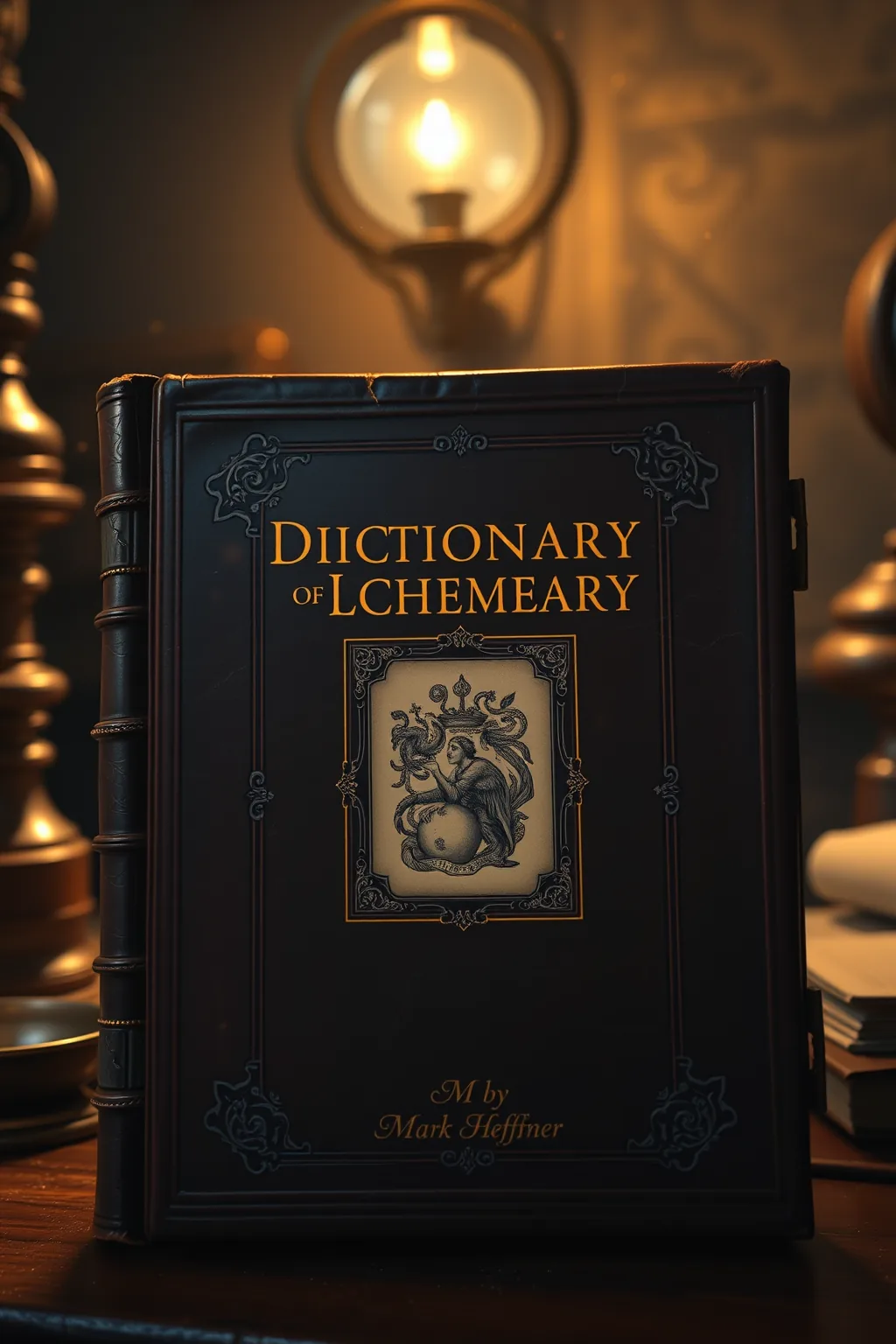
Mark Haeffner's *Dictionary of Alchemy* is less a narrative and more an essential toolkit for anyone serious about engaging with alchemical literature. Its strength lies in its methodical organization and the clarity it brings to a field deliberately shrouded in allegory. The sheer breadth of terms covered, from the mundane (like specific apparatus) to the profoundly symbolic (like the *Ouroboros*), is impressive. It provides much-needed definitions for concepts that can easily lead to misinterpretation, such as the distinction between the 'spiritual' and 'physical' aspects of the Great Work. A potential limitation is that, by its nature as a dictionary, it doesn't always elaborate on the philosophical implications or historical debates surrounding each term, which is understandable given its scope. However, the entry for *Solve et Coagula*, for instance, effectively outlines its dual meaning in both material separation and spiritual integration, serving as a microcosm of the book's utility. This reference work is a solid, dependable guide for navigating the labyrinthine language of the alchemical tradition.
📝 Description
83
Mark Haeffner's *Dictionary of Alchemy* was published in 1992 to clarify alchemical terminology.
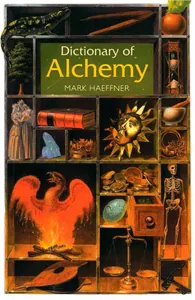
Mark Haeffner's *Dictionary of Alchemy* is a reference work that defines terms, symbols, and concepts central to historical alchemy. Published in 1992, it addresses the philosophical, practical, and spiritual aspects of alchemical pursuit. The book aims to make alchemical literature more accessible by explaining terms often obscured by metaphor and specialized language. Its structure as a reference guide allows readers to look up specific entries and understand them within the larger framework of alchemical thought. This work is useful for students, researchers, and practitioners interested in esoteric traditions. It assists those studying Hermeticism, Rosicrucianism, Kabbalah, and other mystical philosophies in interpreting ancient and modern texts. Scholars of history, religious studies, and the history of science will find it helpful for understanding alchemical references in their fields. It also benefits general readers curious about the origins of chemistry or the philosophical ideas behind Western esotericism, offering a thorough yet approachable resource.
Haeffner's dictionary appeared at a time of growing interest in esoteric subjects in the late 20th century. While academic study of alchemy, influenced by figures like Carl Jung and his analyses of alchemical symbolism, had been progressing, a dedicated and comprehensive dictionary was still a welcome addition. The book provided a practical tool for engaging directly with alchemical writings, complementing more theoretical historical accounts and offering definitions for a wide range of alchemical terms and concepts.
💡 Why Read This Book?
• Gain precise definitions for alchemical terms like *Prima Materia* and *Philosopher's Stone*, enabling a deeper comprehension of historical texts and modern esoteric discussions. • Understand the symbolic meanings behind alchemical processes such as *calcination* and *dissolution*, moving beyond purely literal interpretations to grasp their spiritual applications. • Identify and learn about key figures and foundational texts within alchemy, such as the writings attributed to Hermes Trismegistus, providing crucial historical and intellectual context.
⭐ Reader Reviews
Honest opinions from readers who have explored this book.
❓ Frequently Asked Questions
What is the primary purpose of Mark Haeffner's Dictionary of Alchemy?
The dictionary's primary purpose is to demystify the complex language and symbolism of alchemy by providing clear, concise definitions for its vast array of terms, symbols, and concepts, serving as a reference for historical texts and esoteric study.
When was Mark Haeffner's Dictionary of Alchemy first published?
Mark Haeffner's Dictionary of Alchemy was first published in 1992, offering a comprehensive lexicon during a period of renewed interest in esoteric studies.
Does the dictionary explain alchemical processes as well as terms?
Yes, the dictionary explains key alchemical processes such as calcination, dissolution, and distillation, detailing both their practical applications and their symbolic significance within the alchemical tradition.
Who would find this dictionary most useful?
Students and practitioners of esoteric traditions like Hermeticism, Rosicrucianism, and Kabbalah, as well as scholars of history and religious studies who encounter alchemical references, will find this dictionary particularly useful.
Are symbols like the Ouroboros explained in the Dictionary of Alchemy?
Yes, common and significant alchemical symbols, such as the Ouroboros, are explained within the dictionary, providing context for their meaning within the alchemical worldview.
Can this book help someone understand the difference between historical alchemy and modern chemistry?
While not its primary focus, by defining alchemical concepts and historical practices, the dictionary helps clarify the distinct philosophical and experimental aims of historical alchemy from those of modern chemistry.
🔮 Key Themes & Symbolism
The Language of Transmutation
This dictionary deciphers the specialized vocabulary developed by alchemists to describe their processes of material and spiritual transformation. Terms like *Azoth*, representing the universal solvent, or *Chrysopoeia*, the art of making gold, are not merely defined but contextualized within the alchemist's quest. It highlights how language itself became a tool and a barrier, a coded means of transmitting knowledge that required initiation to fully comprehend. The work illuminates how alchemists used everyday words in unique ways, often imbuing them with layers of symbolic meaning related to purification, perfection, and the attainment of the *Major work*.
Symbolic Apparatus and Processes
Beyond textual terms, Haeffner's work catalogues and explains the symbolic significance of alchemical apparatus and processes. The *athanor*, the furnace designed for sustained, gentle heat, is presented not just as equipment but as a symbol of patient, controlled transformation. Processes like *sublimation*, the transformation of a solid into a gas and back, are detailed with their spiritual correlatives, representing the ascent and descent of consciousness or elements. The dictionary provides a framework for understanding that the physical operations in the laboratory were often seen as a microcosm for cosmic and personal spiritual development.
The Great Work and Its Agents
Central to alchemical discourse is the concept of the Great Work (*Major work*), the ultimate goal of alchemical endeavor. This dictionary provides crucial definitions for the agents and stages involved in this pursuit. It clarifies the nature of the *Prima Materia*, the undifferentiated primeval substance, and the legendary *Philosopher's Stone*, the catalyst for transmutation. The various stages, often depicted through the *Nigredo* (blackening), *Albedo* (whitening), *Citrinitas* (yellowing), and *Rubedo* (reddening), are meticulously defined, offering a roadmap to understanding the alchemist's transformative journey.
Key Figures and Hermetic Roots
The dictionary acknowledges the lineage and key proponents of alchemical thought. While Haeffner's work is primarily a lexicon, it implicitly references the foundational role of Hermetic philosophy and figures like Hermes Trismegistus, whose attributed texts form a bedrock of esoteric traditions. By defining terms and concepts that echo through centuries of alchemical writings, the dictionary connects the reader to a continuous stream of knowledge. It helps situate alchemical practices within a broader Western esoteric tradition, underscoring its philosophical and spiritual dimensions beyond mere metallurgy.
💬 Memorable Quotes
Direct passages from the work, attributed to the author.
“Prima Materia”
— This refers to the fundamental, undifferentiated substance from which all other materials are believed to be derived, often sought as the initial step in the alchemical Great Work.
“Philosopher's Stone”
— The legendary substance capable of transmuting base metals into gold or silver, and often associated with granting immortality or perfect health; a central goal of alchemical pursuit.
“Solve et Coagula”
— Latin for 'dissolve and coagulate,' this principle is fundamental, representing the process of breaking down substances (solve) and then recombining them (coagula) in a perfected form, applicable to both material and spiritual realms.
“Athanor”
— A type of furnace used by alchemists, designed to maintain a constant, low temperature for extended periods, symbolizing patience and the controlled nature of the alchemical process.
“Major work”
— The Great Work, encompassing the entire alchemical process aimed at achieving the Philosopher's Stone, spiritual enlightenment, or a profound personal transformation.
🌙 Esoteric Significance
Tradition
This dictionary firmly belongs within the Hermetic and Western Esoteric tradition. Alchemy, as a practice deeply intertwined with Hermetic philosophy, seeks not only material transmutation but also spiritual perfection and gnosis. Haeffner's work acts as a guide to the language that alchemists used to articulate these complex aims. It aligns with the broader Hermetic principle of 'as above, so below,' where the processes observed in the material world are seen as reflections of cosmic laws and spiritual truths, providing a lexicon for understanding this intricate correspondence.
Symbolism
Key symbols elucidated include the *Ouroboros*, representing the cyclical nature of existence, eternity, and the unity of opposites—the serpent devouring its own tail. The *Prima Materia* itself is a potent symbol of potentiality, the primordial chaos from which order is created. Processes like *calcination* (burning to ashes) symbolize purification and the destruction of the impure or gross aspects of the self or substance, a vital step in the alchemical journey towards perfection.
Modern Relevance
Contemporary practitioners of ceremonial magic, Hermeticism, and even certain schools of depth psychology continue to draw upon the language and concepts defined in works like Haeffner's dictionary. Thinkers exploring the intersection of consciousness, symbolism, and ancient practices find its clear definitions important for understanding historical texts and their modern applications. It serves as a bridge for those engaging with contemporary esoteric authors who reference alchemical principles, ensuring a foundational understanding of the source material.
👥 Who Should Read This Book
• Students of Western Esotericism: Those beginning or continuing their studies in Hermeticism, Rosicrucianism, or general occult philosophy will find this dictionary essential for understanding specialized terminology. • Researchers of Historical Science and Philosophy: Academics and independent scholars examining the history of science, medieval thought, or the philosophical underpinnings of early modern Europe will benefit from clear definitions of alchemical concepts. • Aspiring Alchemists and Symbolists: Individuals seeking to engage with alchemical texts on a deeper level, whether for theoretical understanding or practical application (within historical context), will gain clarity on the language and symbols central to the Great Work.
📜 Historical Context
Mark Haeffner's *Dictionary of Alchemy* emerged in 1992, a time when academic and popular interest in Western esotericism was experiencing a significant resurgence. Following the intellectual groundwork laid by scholars like Frances Yates in the mid-20th century, who explored the Hermetic tradition and its influence on figures like Giordano Bruno and John Dee, there was a growing desire for accessible resources. The book appeared in a landscape where popular occultism was expanding, yet detailed, reliable reference works on specific traditions were still relatively scarce. It provided a necessary counterpoint to speculative or purely historical accounts, offering a direct tool for engaging with primary alchemical literature. Unlike the more philosophical interpretations offered by Carl Jung in his explorations of alchemical symbolism starting in the 1940s, Haeffner's work is grounded in defining the specific terminology and concepts used by practitioners themselves.
📔 Journal Prompts
The *Prima Materia*'s nature as potentiality.
The dual meaning of *Solve et Coagula* in personal transformation.
The symbolic representation of the *Athanor*'s steady heat.
The goal of the *Major work*.
Interpreting the *Ouroboros* as a symbol of cyclical processes.
🗂️ Glossary
Azoth
In alchemy, the Azoth is often described as the universal solvent or the universal medicine, a vital principle that could solve and transmute all substances, representing a key element in the Great Work.
Calcination
A process involving heating a substance to high temperatures in air to remove impurities or moisture, often symbolizing the purification and reduction of gross matter in alchemical practice.
Chrysopoeia
From the Greek 'khrusos' (gold) and 'poiein' (to make), this term refers specifically to the art or process of making gold, a prominent aspect of alchemical pursuit.
Dissolution
The act or process of dissolving, breaking down, or liquefying a solid substance. In alchemy, it often symbolizes the breakdown of a flawed or impure state as a precursor to purification.
Hermes Trismegistus
A legendary allegorical figure who synthesized Greek and Egyptian traditions, credited with a body of esoteric texts (the Hermetica) that form a foundational influence on Western esotericism and alchemy.
Nigredo
The first stage of the alchemical Great Work, known as the blackening or putrefaction. It symbolizes dissolution, decay, and the breaking down of the initial substance or the ego.
Rubedo
The final stage of the alchemical Great Work, the reddening. It signifies perfection, the attainment of the Philosopher's Stone, and spiritual enlightenment or completion.
🔮 Readers Also Liked
Browse all →









More by Mark Haeffner
All books →
More Free Alchemy & Hermeticism Books
View all →