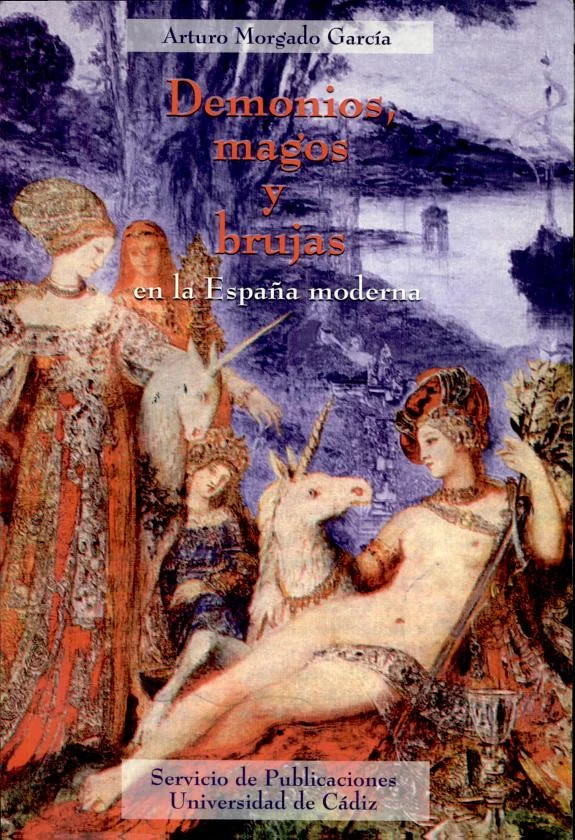
Demonios, magos y brujas en la España moderna
 76
76

Demonios, magos y brujas en la España moderna
Arturo Morgado García’s *Demonios, magos y brujas en la España moderna* offers a granular look at the mechanics of belief and persecution in early modern Spain. Rather than presenting a sweeping narrative, the work excels in its dissection of judicial processes and the specific theological frameworks that underpinned the condemnation of alleged sorcerers. A particular strength lies in its careful examination of how the Spanish Inquisition navigated the complex terrain between folk superstition and perceived heresy, often distinguishing between minor transgressions and outright demonic pacts. One limitation, however, is that the academic rigor, while commendable, can sometimes render the prose dense for the casual reader. The detailed analysis of inquisitorial records from regions like Andalusia, for instance, illuminates the practical application of demonological theory, but requires sustained attention. This is a work for the dedicated researcher, not for those seeking a quick overview of Spanish witchcraft.
Verdict: An indispensable, albeit demanding, scholarly resource on the realities of demonology and sorcery prosecution in early modern Spain.
📝 Description
76
Arturo Morgado García's 1999 book examines demons, magicians, and witches in early modern Spain.
Demonios, magos y brujas en la España moderna analyzes the presence and perception of witchcraft, magic, and demonic beliefs in Spain during its early modern period. Arturo Morgado García uses legal documents, popular writings, and theological arguments to map the connections between these beliefs and the culture, religion, and politics of the era. The book aims for a clear understanding of how sorcery accusations and supernatural encounters fit into Spanish society at the time, moving past sensationalism.
This study is for academics focusing on early modern Europe, religious studies, and anthropology, particularly those interested in folklore and belief systems. It is suitable for readers who value in-depth archival research and a critical perspective on how 'occult' ideas were formed within society. A basic knowledge of European history and the Catholic Church's role in early modern Spain is beneficial.
This work engages with the academic re-evaluation of witchcraft trials and demonology that gained traction in the late 20th century. It moves beyond earlier, more speculative views to analyze historical records critically. The book positions itself within scholarship that questions the literal reality of witchcraft, instead examining its social and psychological construction within specific historical circumstances, particularly in contrast to purely folkloric interpretations.
💡 Why Read This Book?
• Gain a concrete understanding of the legal and theological apparatus used to prosecute witchcraft in Spain, particularly the nuanced approach of the Spanish Inquisition, as detailed in the book's analysis of inquisitorial records from the period. • Explore the historical evolution of demonological concepts and their societal impact, learning how beliefs about demonic pacts were applied and debated within Spanish society up to the 18th century. • Appreciate the distinction between learned magic and popular sorcery, understanding how accusations were framed and utilized within the social and political structures of early modern Spain.
⭐ Reader Reviews
Honest opinions from readers who have explored this book.
❓ Frequently Asked Questions
What specific time period does 'Demonios, magos y brujas en la España moderna' cover?
The book primarily focuses on the 'modern' period in Spain, generally understood as the era from the late 15th century through the 18th century, examining the evolution of beliefs and legal responses to witchcraft and demonology.
Does the book discuss specific figures or trials?
Yes, Arturo Morgado García's work analyzes numerous cases and discusses the theoretical frameworks employed by inquisitors and theologians, referencing specific regions and the general trends in accusations during the period.
What is the role of the Spanish Inquisition in the book?
The Spanish Inquisition plays a central role, as the book details its procedures, doctrinal enforcement, and how its actions shaped the perception and prosecution of alleged demonic practices and witchcraft across Spain.
Is this book about magical spells and rituals?
While it touches upon the *belief* in magical practices and demonic influence, the book is primarily a historical and sociological study of how these beliefs were understood, prosecuted, and debated, rather than a practical guide to magic.
What distinguishes the 'modern' period's approach to witchcraft from earlier times, according to the book?
The book highlights how the modern period, particularly under the influence of the Inquisition, saw a more systematized theological and legal approach to witchcraft, often linking it more directly to heresy and demonic pacts than in earlier, more localized folk traditions.
What kind of sources does Arturo Morgado García use?
The author relies heavily on primary sources, including inquisitorial archives, legal documents, theological treatises, and contemporary literature, to reconstruct the historical reality of beliefs surrounding demons, magicians, and witches.
🔮 Key Themes & Symbolism
Inquisitorial Justice
The book meticulously dissects the judicial machinery employed by the Spanish Inquisition and other tribunals in their pursuit of alleged sorcerers and heretics. It examines the legal procedures, evidentiary standards, and sentencing practices that characterized these investigations. By analyzing archival records, Morgado García illustrates how accusations of demonic pacts and witchcraft were processed, differentiating between minor folk magic and perceived threats to religious orthodoxy. This theme underscores the formal mechanisms through which societal anxieties about the supernatural were translated into legal action and control.
Demonological Doctrine
Central to the work is the exploration of demonological theory as it was understood and applied in early modern Spain. This includes examining theological treatises and inquisitorial manuals that defined the nature of demons, the concept of the diabolical pact, and the characteristics attributed to witches. The book traces how these doctrines, often rooted in scholasticism and Counter-Reformation thought, provided the intellectual framework for identifying and condemning individuals accused of consorting with infernal powers. It highlights the scholastic debate surrounding the reality of witchcraft.
Social Construction of Witchcraft
Morgado García investigates how beliefs about witchcraft were not merely abstract theological concepts but were deeply embedded in the social fabric of Spain. The work explores the social anxieties, local superstitions, and power dynamics that contributed to accusations of sorcery. It examines how gender, social status, and community conflicts often played a role in who became a target. This theme emphasizes that witchcraft, as perceived and prosecuted, was a social construct shaped by collective fears and prejudices, rather than solely an objective reality.
Magic and Superstition
The book differentiates between various forms of perceived magic, from learned ceremonial practices sometimes associated with Renaissance esotericism to the more common, often superstitious, folk magic practiced by the populace. It details how the Inquisition often sought to distinguish between these, with popular magic sometimes viewed with suspicion and potentially linked to demonic influence, especially if it involved perceived pacts or rituals aimed at malevolent ends. This theme clarifies the spectrum of beliefs regarding supernatural intervention in everyday life.
💬 Memorable Quotes
Direct passages from the work, attributed to the author.
“The inquisitorial process sought to distinguish between minor superstitions and true demonic pacts.”
— This highlights the nuanced approach of the Spanish Inquisition, which, while vigilant against heresy, attempted to categorize different forms of alleged supernatural involvement. It points to the legal and theological distinctions made between folk beliefs and what was considered a direct alliance with malevolent spiritual forces.
“Accusations of witchcraft often reflected underlying social tensions and anxieties.”
— This interpretation suggests that the phenomenon of witchcraft accusations was not solely about genuine belief in sorcery but was also a mechanism for addressing societal conflicts, scapegoating individuals, and expressing collective fears about disorder or misfortune.
“Demonology provided the theoretical framework for understanding and prosecuting perceived demonic influence.”
— This points to the academic and theological underpinnings of the witch hunts. The established body of knowledge on demons and their activities offered a conceptual lens through which unusual events or behaviors could be interpreted as the work of the devil.
“The line between popular magic and dangerous heresy was often blurred in practice.”
— This suggests that while official doctrines might have sought clear distinctions, the reality on the ground was more complex. Local practices, accusations, and inquisitorial interpretations could easily conflate everyday superstitions with more serious offenses against religious doctrine.
“The examination of legal records reveals the practical application of abstract theological concepts.”
— This emphasizes the book's methodology: bridging theoretical religious and demonological ideas with their concrete manifestation in the justice system. It shows how abstract doctrines translated into tangible accusations, interrogations, and judgments in early modern Spain.
🌙 Esoteric Significance
Tradition
While not strictly an esoteric text in the vein of grimoires or ceremonial magic manuals, *Demonios, magos y brujas en la España moderna* engages with the historical and theological underpinnings of beliefs that have profoundly shaped Western esoteric traditions. It examines the demonological frameworks that informed later occult practices and fears. Its lineage is primarily historical-hermeneutical, analyzing how religious and folk beliefs about supernatural entities and powers were codified and acted upon within a specific cultural context.
Symbolism
The book implicitly deals with symbols of demonic power, such as pacts with the devil, the witch's mark, and the sabbat, as these were understood and prosecuted. These are not symbols for esoteric invocation but rather signifiers of perceived evil and transgression within the early modern Christian worldview. The 'magician' also functions as a symbol, representing forbidden knowledge or the human desire to transgress natural and divine laws through arcane means.
Modern Relevance
Contemporary practitioners and scholars of Western esotericism, particularly those interested in historical demonology, witchcraft studies, and the evolution of magical beliefs, find value in Morgado García's work. It provides crucial historical context for understanding the origins of certain symbolic figures and concepts that persist in modern occultism. Researchers exploring the roots of contemporary Wicca or modern interpretations of demonology often consult such historical analyses to ground their studies in actual historical practices and beliefs, rather than solely on later theoretical constructs.
👥 Who Should Read This Book
• Historians of early modern Europe and Spain: Gain a detailed understanding of the legal and theological frameworks surrounding witchcraft and demonology in an important historical period. • Scholars of religious studies and anthropology: Explore the social construction of belief, the impact of religious institutions like the Inquisition, and the dynamics of superstition and fear. • Students of Western esotericism: Understand the historical roots of demonological concepts and witchcraft accusations that have influenced later occult traditions and popular culture.
📜 Historical Context
Arturo Morgado García's *Demonios, magos y brujas en la España moderna*, first published in 1999, emerges from a rich academic tradition of re-examining the European witch trials. Its publication occurred during a period when historians were increasingly moving beyond earlier, more sensationalist accounts to focus on the social, cultural, and legal intricacies of demonology and sorcery accusations. The work situates itself within the specific context of early modern Spain, a nation deeply influenced by the Counter-Reformation and the potent authority of the Spanish Inquisition. Unlike some earlier approaches that might have focused broadly on European trends, Morgado García offers a deep dive into the Iberian Peninsula's unique historical trajectory. The intellectual currents of the late 20th century, which emphasized the social construction of reality and the analysis of power structures, inform the book's critical approach. It implicitly engages with the ongoing scholarly debate concerning the extent to which witchcraft was a real phenomenon versus a product of societal anxieties and persecution, particularly as enforced by institutions like the Inquisition, which maintained a distinct approach compared to, for example, the Protestant witch trials in Northern Europe.
📔 Journal Prompts
The inquisitorial process and its distinction between superstition and demonic pacts.
The social anxieties fueling witchcraft accusations in 17th-century Spain.
The theological definition of a 'diabolical pact'.
How learned magic differed from popular sorcery in perception.
The role of the Spanish Inquisition in shaping demonological discourse.
🗂️ Glossary
Demonología
The systematic theological study and discourse concerning demons, their nature, hierarchy, powers, and influence on the human world, particularly as developed in Christian thought.
Inquisición Española
The tribunal established in 1478 by Catholic Monarchs Ferdinand II of Aragon and Isabella I of Castile, intended to maintain Catholic orthodoxy and combat heresy throughout their kingdoms.
Pacto Diabólico
A formal agreement or covenant, believed to be made between an individual and a demon, often involving the exchange of the person's soul for supernatural powers, knowledge, or assistance.
Hechicería
A broad term encompassing witchcraft, sorcery, and magical practices, often associated with folk traditions and perceived as harmful or illicit, especially when believed to involve demonic aid.
Superstición
Belief or practice resulting from ignorance, fear of the unknown, or trust in magic or chance, often contrasted with established religious doctrine and considered potentially heretical by authorities.
Magia
The practice of purported supernatural abilities or manipulation of natural forces through ritual, incantation, or other means. The book distinguishes between learned and popular forms.
Brujería
Specifically 'witchcraft,' often implying malevolent intent and the practice of magic, particularly through association with demonic forces, as understood in the context of historical trials.
This book appears in 1 collection
🔮 Readers Also Liked
Browse all →








From the “Demons” Collection
View all →




More Free Occult Philosophy Books
View all →