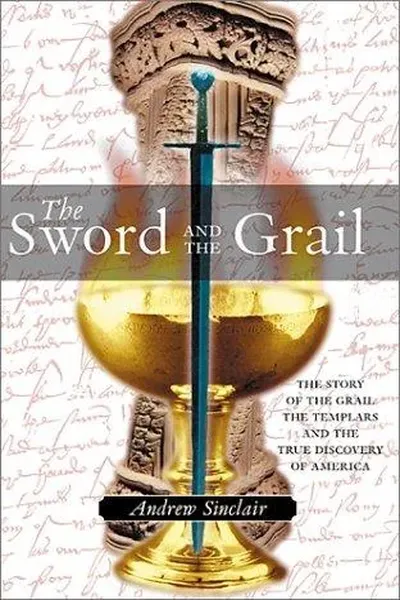
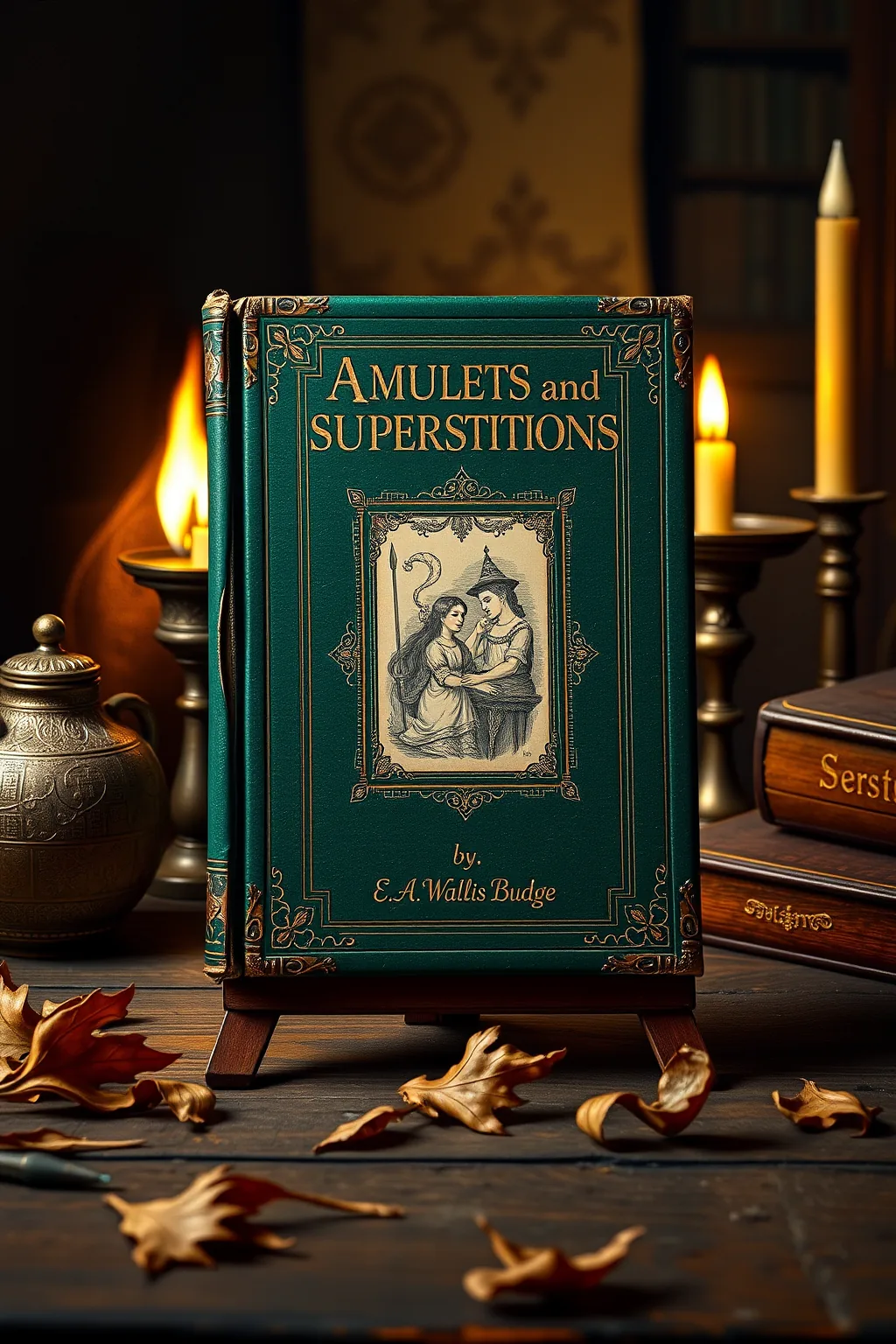
Amulets and Superstitions
 73
73

Amulets and Superstitions
E. A. Wallis Budge's Amulets and Superstitions offers a dense, scholarly survey of ancient protective objects and the beliefs that animated them. Its strength lies in the sheer breadth of material covered, drawing from Egyptian, Mesopotamian, Greek, and Roman traditions with meticulous detail. Budge's encyclopedic knowledge is evident on every page. However, the original publication date, while updated for this edition, means the text can sometimes feel dated in its theoretical framework, lacking the nuanced critical approaches developed in later archaeological and anthropological scholarship. A particularly illustrative section details the various forms of the Egyptian scarab beetle, explaining its connection to resurrection and the sun god Ra, and the common inscriptions found upon them. This book is an indispensable resource for serious researchers, though less accessible for casual readers.
📝 Description
73
E. A. Wallis Budge's 1913 work details protective charms and ancient beliefs.
First published in 1913, Amulets and Superstitions offers a thorough look at protective charms, magical objects, and popular beliefs across ancient cultures. Budge meticulously details the shapes, materials, and intended uses of amulets, as well as the superstitious practices tied to them. He draws on historical texts and archaeological evidence to create a structured view of these elements. The book is for academics of ancient history, religious studies, and archaeology, and for those seriously interested in esoteric traditions who wish to understand the historical basis of magical objects. It suits anyone wanting an academic perspective on the material culture of protection and the belief systems that supported ancient societies.
Budge, a known Egyptologist and orientalist, compiled this book during a time of significant interest in ancient languages and the religious and magical practices of civilizations like Egypt, Mesopotamia, and Greece. His own extensive work at the British Museum, including artifact acquisition, shaped his approach. Comparative mythology and folklore studies were gaining academic ground when this book appeared. It examines sympathetic magic, where objects are thought to affect distant people or things, and the use of specific materials like lapis lazuli or gold for their perceived inherent power. The book also covers divine or demonic imagery in amulet design and the widespread nature of rituals surrounding their creation and use.
This book sits within the tradition of late 19th and early 20th-century scholarship that sought to catalog and understand the magical, religious, and folk practices of ancient civilizations. Budge, a prominent figure in Egyptology, approached these subjects with the rigor of an academic, cataloging artifacts and analyzing texts. His work reflects a period when Western scholars were actively collecting and interpreting the material and textual evidence of ancient magical systems, often from an antiquarian perspective, aiming to document a world of beliefs and practices that seemed both alien and fascinating.
💡 Why Read This Book?
• Gain a foundational understanding of sympathetic magic as applied to ancient protective objects, a concept central to early belief systems. • Explore the specific uses and symbolic meanings of materials like lapis lazuli and gold in amulet construction, as detailed in the text. • Study the iconographic significance of figures such as the scarab beetle, understanding its connection to ancient Egyptian cosmology and rebirth.
⭐ Reader Reviews
Honest opinions from readers who have explored this book.
❓ Frequently Asked Questions
What cultures are primarily covered in Amulets and Superstitions?
The book extensively covers ancient Egyptian, Mesopotamian, Greek, and Roman cultures. E. A. Wallis Budge draws upon his extensive knowledge of these civilizations to detail their respective amuletic practices and superstitions.
What is the significance of the scarab beetle mentioned in the book?
In ancient Egypt, the scarab beetle was a potent symbol of rebirth and the sun god Ra. The book details how scarab amulets were used for protection and to ensure resurrection in the afterlife.
Does the book discuss the materials used for amulets?
Yes, Amulets and Superstitions delves into the materials chosen for amulets, explaining that substances like lapis lazuli and gold were believed to possess inherent protective or magical properties.
Who was E. A. Wallis Budge?
Sir E. A. Wallis Budge was a prolific Egyptologist and orientalist, known for his extensive work with ancient Near Eastern artifacts and texts, particularly during his tenure at the British Museum.
Is this book suitable for beginners in occult studies?
While comprehensive, the book's scholarly tone and focus on historical context make it more suited for serious students and researchers rather than absolute beginners seeking practical magical instruction.
What is sympathetic magic as explained in the book?
Sympathetic magic, as explored by Budge, is the belief that an object or action can influence a distant person or thing through a perceived connection, often forming the basis for amuletic power.
🔮 Key Themes & Symbolism
Protective Iconography
The work meticulously details how specific images and symbols were incorporated into amulets to ward off evil or attract good fortune. Budge examines figures from Egyptian pantheons, Mesopotamian deities, and Greek mythological beings, explaining their perceived powers and how their visual representation on an amulet was intended to invoke their protective influence.
Material Symbolism
A significant focus is placed on the intrinsic qualities attributed to materials used in amulet creation. The book elaborates on why certain stones, metals, and even organic substances were chosen, linking their perceived properties—such as the hardness of a gem or the luster of gold—to their efficacy in magical practice and spiritual belief.
Ritualistic Practices
Beyond the objects themselves, Budge explores the rituals surrounding their creation, consecration, and use. This includes the specific times for crafting amulets, the incantations required, and the methods by which they were worn or displayed to maximize their superstitious efficacy in daily life and death.
The Concept of Ma'at
While not always explicitly named, the ancient Egyptian concept of Ma'at—order, truth, and cosmic balance—underpins much of the discussion on Egyptian amulets. The book illustrates how many protective charms were designed to maintain this balance against chaos, reflecting a deep-seated cultural need for order in the universe.
💬 Memorable Quotes
Direct passages from the work, attributed to the author.
“The amulet was intended to act as a substitute for the presence of the deity.”
— This highlights the function of amulets as conduits of divine power or presence. They served as portable representations of the sacred, offering a tangible link to the supernatural for personal protection and favor.
“Superstition was deeply interwoven with the daily life and religious observance of ancient peoples.”
— This observation underscores that magical beliefs and practices were not separate from mainstream life but an integral part of it, influencing actions and providing frameworks for understanding the world.
“The choice of material often dictated the amulet's perceived potency.”
— This emphasizes the materialist aspect of ancient magic, where the physical properties of substances like precious metals or specific stones were believed to hold inherent magical energy or divine association.
“Iconography provided a direct visual appeal to the powers invoked.”
— This points to the power of images in ancient belief systems. The specific depiction of a god, goddess, or protective symbol on an amulet was not merely decorative but a direct invocation of that entity's force.
“The scarab beetle symbolized resurrection and the morning sun.”
— This succinctly captures the potent symbolism of one of the most common amulets, linking the insect's life cycle to fundamental concepts of renewal, rebirth, and the daily triumph of light over darkness.
🌙 Esoteric Significance
Tradition
This work is foundational to the study of Western esotericism, particularly within the Hermetic and Theosophical traditions that gained prominence in the late 19th and early 20th centuries. Budge's meticulous cataloging of ancient magical objects and beliefs provided source material for occultists seeking to understand the historical lineage of their practices and symbolism.
Symbolism
Key symbols include the scarab beetle, representing rebirth and the sun god Ra in ancient Egypt, and the Eye of Horus (Udjat), a powerful symbol of protection, royal power, and good health. The book details how these and other motifs were not merely decorative but potent carriers of magical intent and divine power.
Modern Relevance
Contemporary practitioners of modern witchcraft, paganism, and ceremonial magic often reference Budge's research when constructing amulets or exploring ancient protective rituals. His detailed descriptions of material symbolism and iconographic power continue to inform the creation of talismans and charms in various esoteric circles.
👥 Who Should Read This Book
• Students of ancient Egyptian, Mesopotamian, Greek, and Roman religions and magic: Gain direct access to scholarly descriptions of amulets and superstitions from primary sources. • Occult historians and researchers: Understand the foundational texts that shaped the study of ancient magical practices and esoteric traditions. • Aspiring amulet makers and talismanic magicians: Learn the historical context, symbolism, and perceived efficacy of ancient protective objects to inform contemporary practice.
📜 Historical Context
E. A. Wallis Budge's Amulets and Superstitions emerged from a fervent period of archaeological discovery and textual translation in the late 19th and early 20th centuries. Scholars like Budge, working with vast collections at institutions such as the British Museum, sought to systematically catalogue and interpret the material culture and religious practices of ancient civilizations. This era saw intense competition among European powers for Egyptian and Mesopotamian antiquities. Budge's work was contemporaneous with figures like Flinders Petrie, another key Egyptologist, and contributed to the burgeoning field of comparative religion. The reception of such works often reflected colonial attitudes, viewing ancient practices through a lens of 'primitive' belief, though they simultaneously opened windows into complex cosmological systems. The book itself, first published in 1930, synthesized decades of research into a comprehensive survey.
📔 Journal Prompts
The function of the Udjat amulet in ancient Egyptian belief.
Material symbolism: How lapis lazuli was believed to enhance amuletic power.
The role of sympathetic magic in the creation of protective charms.
Ancient superstitions surrounding common objects and their potential magical influence.
Comparing the protective iconography of Egyptian amulets with those from other cultures discussed.
🗂️ Glossary
Amulet
An object believed to possess the power to protect its wearer from harm, danger, or evil influences.
Superstition
An irrational belief or practice arising from ignorance, fear of the unknown, or trust in magic or chance.
Sympathetic Magic
A belief system where objects or actions are thought to influence distant people or events through a supposed connection, often based on resemblance or contagion.
Iconography
The visual images and symbols used in the study or interpretation of works of art or ancient texts, particularly their meaning and significance.
Scarab
An amulet in the form of a beetle, particularly associated with ancient Egypt, symbolizing rebirth and the sun god Ra.
Udjat
The Eye of Horus, an ancient Egyptian symbol of protection, royal power, and good health, frequently used in amulets.
Ma'at
The ancient Egyptian concept of truth, balance, order, law, morality, and justice, personified as a goddess.
🔮 Readers Also Liked
Browse all →









More by E. A. Wallis Budge
All books →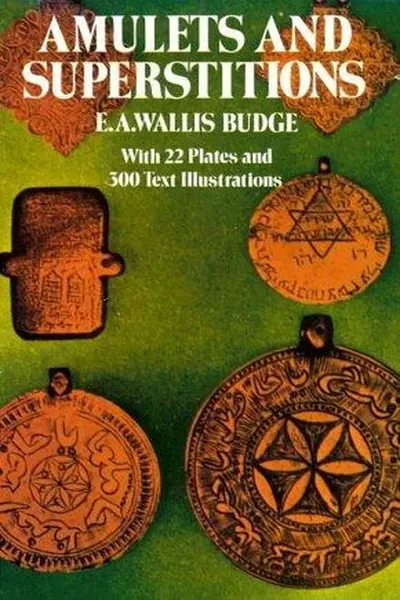



More Free Occult Philosophy Books
View all →