Nostradamus, Bibliomancer
 78
78

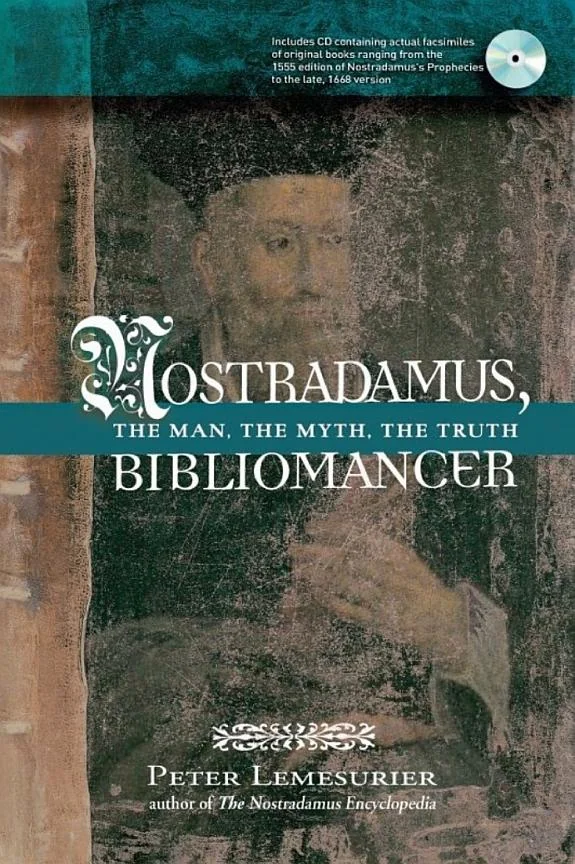
Nostradamus, Bibliomancer
Peter Lemesurier’s *Nostradamus, Bibliomancer* offers a bracingly rationalist antidote to centuries of mystical speculation. By meticulously dissecting the available evidence, Lemesurier proposes that Michel de Nostredame was not a seer but a scholar of history, using a cyclical model of human events as his predictive tool. This approach is compelling, particularly the argument that Nostradamus himself admitted he was not a prophet. However, the book occasionally leans so heavily into debunking that it risks underselling the genuine intellectual curiosity and perhaps even the psychological impact of Nostradamus's work on his contemporaries. The strength lies in its rigorous source analysis; a limitation is its sometimes dry presentation of complex historical arguments. The interpretation of Nostradamus's method as a form of 'bibliomancy'—divination through books—is a particularly sharp insight. It’s a necessary corrective, though one wishes for a touch more exploration of the *why* behind Nostradamus's chosen method.
📝 Description
78
Peter Lemesurier's 2018 book argues Nostradamus was a historical analyst, not a mystic.
This volume reconsiders Michel de Nostredame, the 16th-century figure known as Nostradamus. Peter Lemesurier challenges the common view of him as a supernatural prophet. Through analysis of original sources, Lemesurier suggests Nostradamus employed a systematic, if unusual, method based on historical patterns rather than occult insight. The book is for those interested in the historical basis of prediction and the mechanics behind figures once seen as seers.
It appeals to readers skeptical of supernatural claims but curious about rational explanations for historical phenomena. Students of Renaissance intellectual history and early modern predictive arts will find this work especially relevant. Lemesurier places Nostradamus within the intellectual currents of 16th-century France, contrasting his approach with sensationalist interpretations that have long persisted.
Nostradamus's work has long been a subject of esoteric fascination, often interpreted through astrological and prophetic lenses. Lemesurier's book situates this tradition within the broader context of Renaissance intellectual life, where the boundaries between scientific inquiry, astrology, and divination were blurred. It examines how a systematic approach to historical patterns, as proposed by Lemesurier, intersects with, and offers an alternative to, more mystical explanations of prophecy that have defined Nostradamus's legacy for centuries.
💡 Why Read This Book?
• Understand Nostradamus not as a prophet, but as a historian employing a cyclical theory of history, a concept explored through Lemesurier's analysis of 16th-century sources. • Gain a critical perspective on predictive arts by examining the methods Nostradamus allegedly used, distinct from supernatural claims, as detailed in the book's examination of his writings. • Re-evaluate historical prophecy through the lens of bibliomancy, a concept central to Lemesurier's argument that Nostradamus divined through historical texts, not divine inspiration.
⭐ Reader Reviews
Honest opinions from readers who have explored this book.
❓ Frequently Asked Questions
Was Nostradamus a doctor or an astrologer according to this book?
No, Peter Lemesurier's analysis in *Nostradamus, Bibliomancer* concludes that Nostradamus was neither a doctor nor an astrologer, contrary to popular belief. The book argues he was an ordinary man using a specific historical method.
What was Nostradamus's primary belief about history, as presented by Lemesurier?
Lemesurier suggests Nostradamus believed history repeats itself in cycles. This conviction formed the basis of his method for anticipating future events, as detailed in the book.
Does this book claim Nostradamus was a prophet?
The book explicitly argues against Nostradamus being a prophet, even citing his own admissions. It posits his predictions stemmed from historical analysis, not divine foresight.
What is 'bibliomancy' in the context of this book?
In *Nostradamus, Bibliomancer*, bibliomancy refers to Nostradamus's alleged method of divination through books, specifically by studying historical patterns to predict future events.
Who is Peter Lemesurier and what is his approach?
Peter Lemesurier is the author who critically re-examines Nostradamus's original sources. His approach is rationalist, seeking to demystify the figure of Nostradamus and explain his methods historically.
When was Nostradamus, Bibliomancer first published?
The book *Nostradamus, Bibliomancer* by Peter Lemesurier was first published on August 20, 2018.
🔮 Key Themes & Symbolism
Historical Cyclicism
The book centers on the interpretation of Nostradamus's core belief: that history progresses in repeating cycles. Lemesurier argues that Nostradamus meticulously studied past events, not for their own sake, but to identify patterns and anticipate future occurrences. This cyclical view, a common philosophical concept throughout history, is presented here not as a mystical revelation but as a systematic analytical tool employed by Nostradamus to construct his prophecies, fundamentally reframing his work from divine foresight to historical extrapolation.
Bibliomancy as Method
Lemesurier introduces the concept of bibliomancy – divination through books – as Nostradamus's primary technique. This challenges the notion of clairvoyance or occult powers. Instead, the book suggests Nostradamus used existing texts, historical accounts, and astrological charts as source material. By 'reading' these texts deeply and applying his theory of historical repetition, he compiled his quatrains. This method grounds Nostradamus's predictions in a form of scholarly research, albeit one with an esoteric objective.
Clarifying Prophecy
A central theme is the demystification of Nostradamus, stripping away the layers of myth and sensationalism. Lemesurier aims to present him as a man of his time, influenced by Renaissance intellectual currents but ultimately an ordinary individual. By exposing the rational, albeit unconventional, underpinnings of his predictive method, the book seeks to offer a more grounded understanding of prophetic figures and the historical context in which they operated, encouraging critical engagement with claims of supernatural insight.
Renaissance Intellectualism
The work situates Nostradamus within the broader intellectual field of the 16th century. It acknowledges the era's fascination with astrology, alchemy, and esotericism, but emphasizes Nostradamus's unique contribution. His engagement with historical texts and cyclical theories reflects a Renaissance mindset that sought to reconcile classical knowledge with contemporary concerns. The book highlights how figures like Nostradamus, even when engaging in predictive arts, were products of and contributors to a period of intense intellectual ferment and exploration.
💬 Memorable Quotes
Direct passages from the work, attributed to the author.
“He merely believed that history repeats itself, thus...”
— This is the core thesis. It suggests Nostradamus wasn't receiving divine messages but was observing historical patterns and applying them predictively, viewing the past as a blueprint for the future.
“Nostradamus was in fact neither a doctor nor an astrologer, nor even (by his own admission) a prophet.”
— This directly challenges common perceptions, highlighting Lemesurier's focus on empirical evidence and Nostradamus's own statements to re-evaluate his identity and methods.
“an ordinary man using an equally ordinary technique”
— This phrase emphasizes Lemesurier's rationalist interpretation, stripping away the supernatural aura and suggesting Nostradamus's 'magic' was a form of systematic, albeit esoteric, scholarship.
“After re-examining the original sources...”
— This points to the book's methodological foundation. Lemesurier bases his conclusions on primary documents, aiming for historical accuracy over speculative myth-making about Nostradamus.
“Peter Lemesurier's revelation that he was really just an ordinary man...”
— This frames the book's central argument as a significant 'revelation,' promising to overturn established narratives about Nostradamus with a more prosaic, historically grounded explanation.
🌙 Esoteric Significance
Tradition
While not aligning with a specific esoteric lineage like Hermeticism or Kabbalah, *Nostradamus, Bibliomancer* engages with the broader Western tradition of predictive arts and divination. It sits within a lineage of critical analysis applied to esoteric figures, aiming to understand their practices through historical and psychological lenses rather than purely supernatural ones. The book's approach is more akin to historical skepticism applied to esoteric claims, seeking to uncover the human rather than the divine mechanisms behind prophecy.
Symbolism
The book's focus is less on symbolic interpretation of Nostradamus's quatrains and more on the symbolic weight of his purported method. The 'book' itself, as implied by 'Bibliomancer,' becomes a primary symbol, representing knowledge, history, and the human intellect as the source of prediction. The 'cycle' of history is another key motif, symbolizing the recurring nature of human events that Nostradamus allegedly identified, presenting a structured, albeit deterministic, view of time.
Modern Relevance
In contemporary discourse, where conspiracy theories and alternative histories proliferate, Lemesurier's work offers a vital critical tool. Thinkers and writers focused on historical methodology, critical thinking, and the psychology of belief systems can draw on this analysis. It provides a case study for examining how historical figures become mythologized and how rational explanations can be applied to phenomena often relegated to the supernatural. It speaks to a modern desire for verifiable information and demystification.
👥 Who Should Read This Book
• Skeptical historians and researchers of Renaissance France seeking a rational re-evaluation of Nostradamus's predictive methods. • Students of divination and prophecy interested in understanding alternative, non-supernatural approaches to foretelling the future, particularly bibliomancy. • Readers intrigued by the historical context of 16th-century intellectual life and the transition from medieval to early modern thought regarding fate and foresight.
📜 Historical Context
Published in 2018, Peter Lemesurier's *Nostradamus, Bibliomancer* arrived at a time when Nostradamus was largely viewed through a lens of sensationalized prophecy and occult mysticism. The book directly confronts this popular image, placing it against the backdrop of 16th-century intellectual currents. During Nostradamus's life (1503-1566), France was a hotbed of both nascent scientific inquiry and persistent belief in astrology and divination. Lemesurier contrasts his rationalist interpretation with the pervasive Neoplatonic and Hermetic influences of the era, which often blurred the lines between natural philosophy and magic. While many contemporaries, such as the astrologer and physician Jérôme Cardan, engaged with similar divinatory arts, Lemesurier’s work specifically targets the *method* Nostradamus employed, arguing it was less about esoteric insight and more about historical analysis. The book implicitly engages with a long tradition of scholarship, from the early editions of Nostradamus's *Propheties* to modern interpretations, seeking to anchor the figure in historical fact rather than legend.
📔 Journal Prompts
Nostradamus's belief in historical cycles: How might this concept influence one's own perspective on present-day events?
The 'bibliomancy' method: Reflect on instances where deep study of existing texts might lead to predictive insights.
The distinction between prophet and historian: Consider the implications of viewing Nostradamus as an analytical historian.
Re-examining original sources: How does Lemesurier's methodology challenge established narratives about Nostradamus?
The 'ordinary man' thesis: Explore the psychological impact of clarifying a legendary figure like Nostradamus.
🗂️ Glossary
Bibliomancy
A form of divination by means of books. In this context, it refers to Nostradamus's alleged method of predicting future events by studying historical texts and identifying cyclical patterns.
Quatrains
Four-line stanzas, the poetic form in which Nostradamus wrote his prophecies. The book analyzes the content and presumed method behind these verses.
Prophet of Provence
A common epithet for Nostradamus, referring to his origins and his reputed ability to foretell the future. Lemesurier challenges this title.
Cyclical History
The philosophical concept that history repeats itself in recurring patterns or cycles. This is presented as Nostradamus's core belief and analytical framework.
Renaissance Intellectualism
The philosophical, scientific, and artistic thought of the Renaissance period (roughly 14th-17th centuries), characterized by a revival of classical learning and new modes of inquiry.
Esoteric Sciences
Disciplines or bodies of knowledge considered secret or intended for a select group, often dealing with mystical, occult, or metaphysical subjects. The book analyzes Nostradamus within this broader category.
Original Sources
Primary documents or materials from the time period being studied. Lemesurier's analysis relies heavily on re-examining these sources related to Nostradamus.
This book appears in 1 collection
🔮 Readers Also Liked
Browse all →








From the “Bibliomancy” Collection
View all →








More Free Occult Philosophy Books
View all →