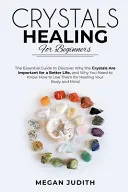
Tai Chi

 75
75

Tai Chi
Robert Parry’s "Tai Chi" (2001) approaches the subject with a scholarly rigor often absent in popular guides. Parry’s strength lies in his meticulous deconstruction of the art’s foundational principles, particularly the application of Taoist concepts like Yin and Yang to the physical practice. His explanation of 'Qi' as a palpable force, not just abstract energy, offers a tangible framework for practitioners. However, the book occasionally leans too heavily into dense philosophical exposition, potentially leaving those primarily seeking practical martial instruction wanting more direct guidance on combat applications. A notable passage discusses the internal mechanics of 'push hands' training, illustrating the subtle energetic exchanges. While dense, the work provides a robust intellectual underpinning for the practice. Parry’s "Tai Chi" serves as a valuable academic resource for understanding the art's deeper metaphysical dimensions.
📝 Description
75
Robert Parry's 2001 book examines Tai Chi not just as exercise, but as contemplative practice.
Robert Parry's Tai Chi, published in 2001, approaches the Chinese martial art as more than just a physical discipline. The book details its philosophical underpinnings and practical methods, examining its historical development. Parry traces Tai Chi's lineage from older Chinese martial arts, noting its connections to Taoist alchemy and traditional Chinese medicine. These influences, he shows, are woven into its movements and core theories. The text systematically explains key concepts like Yin and Yang in posture, the flow of 'Qi', and the martial aspects of its forms. It also discusses the biomechanics that contribute to its effectiveness and meditative qualities.
Parry's work situates Tai Chi within a lineage of Chinese internal arts that often blend physical discipline with spiritual cultivation. Its exploration of 'Qi' and its connection to Taoist concepts of balance and energy flow places it within traditions that seek to harmonize the body, mind, and spirit. The book acknowledges how elements like alchemy and medicine informed its development, reflecting a broader historical trend in China where esoteric practices were often integrated with health, philosophy, and martial training.
💡 Why Read This Book?
• Gain a practical understanding of 'Qi' flow and its role in Tai Chi movements, as detailed in Parry's analysis of energy cultivation. • Explore the application of Taoist principles, such as Yin and Yang, to posture and strategy, offering a philosophical framework beyond mere physical form. • Appreciate the historical lineage of Tai Chi, understanding its development from ancient Chinese martial arts and its connection to Taoist practices as presented in the book.
⭐ Reader Reviews
Honest opinions from readers who have explored this book.
❓ Frequently Asked Questions
When was Robert Parry's book on Tai Chi first published?
Robert Parry's work on Tai Chi was first published in 2001, offering a contemporary perspective on this ancient art.
What esoteric traditions does Tai Chi connect with according to the book?
The book connects Tai Chi with Taoist philosophy and practices, including concepts of Yin and Yang and the cultivation of 'Qi'.
Does the book focus on the martial aspects of Tai Chi?
Yes, while emphasizing its contemplative nature, the book explores the inherent martial applications within Tai Chi forms.
What is 'Qi' as explained in Parry's Tai Chi book?
'Qi' is explained as vital energy or life force that practitioners aim to cultivate and circulate through specific movements and breathing techniques.
Is this book suitable for absolute beginners in Tai Chi?
While offering foundational concepts, the book's depth in philosophy and historical context may be best suited for those with some prior exposure or a strong academic interest.
What are the core principles discussed in Robert Parry's Tai Chi?
The book delves into core principles such as the balance of Yin and Yang, the importance of centeredness, and the dynamic interaction of internal and external forces.
🔮 Key Themes & Symbolism
Qi Cultivation and Flow
Parry emphasizes 'Qi' not as an abstract concept but as a vital energy to be consciously cultivated and directed. The book details how specific postures and transitions in Tai Chi are designed to harmonize and enhance the flow of this internal energy, a central tenet in Taoist energetic practices. This focus on internal circulation connects the physical form to the energetic body, offering a path towards vitality and balance as understood in traditional Chinese medicine and esoteric Taoism.
Yin and Yang Dynamics
The principle of Yin and Yang is presented as the fundamental dynamic governing Tai Chi. Parry illustrates how opposing forces, such as yielding and asserting, stillness and movement, are not in conflict but are complementary and interdependent within the practice. This duality is examined in relation to posture, strategy, and the overall philosophy of balance, reflecting its importance in broader Taoist cosmology and esoteric thought.
Martial Applications and Philosophy
Contrary to its often meditative perception, the book highlights the deep martial roots of Tai Chi. Parry unpacks how the seemingly gentle movements conceal potent self-defense principles, rooted in redirecting an opponent's force rather than meeting it head-on. This philosophical approach to conflict resolution, emphasizing strategy and internal power over brute strength, aligns with esoteric martial traditions that seek wisdom and efficacy through balance.
The Taoist Underpinnings
Fundamentally, Parry's work explores Tai Chi as a living embodiment of Taoist philosophy. Concepts such as 'wu wei' (non-action or effortless action), naturalness, and harmony with the Tao are shown to be integral to the practice. The book suggests that mastering Tai Chi is not just about physical proficiency but about aligning oneself with the natural order of the universe, a key aspiration in many esoteric traditions.
💬 Memorable Quotes
Direct passages from the work, attributed to the author.
“Understanding 'Qi' is essential for true mastery.”
— This statement underscores the book's emphasis on internal energy cultivation, positioning 'Qi' as a critical element beyond mere physical technique for achieving depth in Tai Chi.
“The art's defensive strategies are rooted in yielding and redirection.”
— This interpretation emphasizes the non-confrontational, strategic aspect of Tai Chi's martial application, aligning with a philosophy of using an opponent's energy against them.
💡 Key Ideas
Editorial paraphrase of the work's core concepts — not direct quotes.
The movements of Tai Chi are a physical manifestation of Taoist principles.
This paraphrase captures the essence of how Parry links the physical practice to its philosophical underpinnings, suggesting that the art serves as a tangible expression of Taoist cosmology and ethics.
Balance is achieved through the dynamic interplay of opposing forces.
This paraphrase highlights the book's exploration of Yin and Yang, illustrating how balance in Tai Chi is not static but a result of continuous, fluid adaptation between complementary energies.
Tai Chi offers a path to both physical health and spiritual cultivation.
This quote-like paraphrase summarizes the dual benefit of the practice as presented in the book, encompassing both somatic well-being and esoteric development.
🌙 Esoteric Significance
Tradition
Tai Chi, as explored by Parry, is deeply rooted in Taoism, a primary tradition within Chinese esoteric thought. It aligns with Taoist principles of harmony with nature, the cultivation of internal energy ('Qi'), and the balanced interplay of Yin and Yang. The practice serves as a somatic method for embodying philosophical concepts, distinguishing it from purely intellectual or ritualistic esoteric systems. Parry's work positions Tai Chi as a practical path towards achieving balance and alignment with the Tao.
Symbolism
Key symbols include the concept of 'Qi', representing the vital life force that animates the universe and the body, which practitioners learn to circulate. The dynamic balance of Yin and Yang is fundamental, symbolizing complementary opposites like soft/hard, passive/active, which are constantly transforming within the movements. The circularity of the forms themselves symbolizes the cyclical nature of existence and the continuous flow of energy.
Modern Relevance
Parry's work remains relevant for contemporary practitioners of internal martial arts and Qigong who seek to understand the philosophical and energetic underpinnings of their practice. It informs modern interpretations of embodied spirituality and mindfulness, resonating with fields like somatic psychology and contemplative science that explore the mind-body connection. Thinkers and practitioners interested in the integration of ancient wisdom traditions with modern well-being practices often draw upon the detailed explanations of Taoist principles found in works like Parry's.
👥 Who Should Read This Book
• Dedicated Tai Chi practitioners seeking to deepen their theoretical understanding beyond the physical movements, connecting practice to Taoist philosophy. • Students of comparative religion and esoteric traditions interested in embodied spiritual practices and Chinese metaphysical systems. • Individuals exploring mindfulness and contemplative practices who are drawn to the intersection of physical discipline, energy cultivation, and philosophical inquiry.
📜 Historical Context
Published in 2001, Robert Parry's "Tai Chi" emerged during a period where Western interest in Eastern martial arts and philosophies was well-established, yet often superficial. The intellectual climate saw a growing, albeit niche, appreciation for the deeper esoteric and philosophical dimensions of practices like Tai Chi, moving beyond their purely physical or combat applications. Parry's work was contemporaneous with scholars like Benjamin Hoff, whose "The Tao of Pooh" (1982) popularized Taoist concepts, though Parry aimed for a more direct engagement with the martial art itself. While not subject to widespread censorship, works delving deeply into the metaphysical aspects of martial arts sometimes faced skepticism from purely scientific or martial-focused communities. Parry's book contributed to a more nuanced understanding, positioning Tai Chi within its Taoist lineage and highlighting its contemplative value.
📔 Journal Prompts
The concept of 'Qi' flow and its manifestation in your practice.
How the principles of Yin and Yang inform your daily interactions.
The relationship between Tai Chi's form and its underlying martial intent.
Reflecting on the Taoist ideal of 'effortless action' within physical disciplines.
Exploring the balance between stillness and movement as depicted in Tai Chi.
🗂️ Glossary
Qi (Chi)
Vital life force or energy that permeates the universe and living beings. In Tai Chi, its cultivation and circulation are central to health and practice.
Yin and Yang
Fundamental Taoist concept representing complementary, interdependent opposites (e.g., dark/light, passive/active) whose dynamic balance governs the cosmos.
Tao (Dao)
The fundamental principle of the universe in Taoism; the natural order, the Way. Tai Chi practice aims to align with the Tao.
Wu Wei
Literally 'non-action' or 'effortless action.' A Taoist principle of acting in accordance with the natural flow of things, without forcing.
Push Hands
A Tai Chi training exercise involving two partners practicing sensitivity, balance, and yielding to redirect an opponent's force.
Form
The sequence of choreographed movements in Tai Chi, each designed to cultivate specific principles of energy, balance, and application.
Shen
Often translated as 'spirit' or 'mind.' In Tai Chi, it refers to the mental and spiritual awareness that guides the physical movements and energy.
🔮 Readers Also Liked
Browse all →









More by Robert Parry
All books →




More Free Occult Philosophy Books
View all →